
Violence and Rational Dialogue
Already it has begun, with the bodies of the Christchurch victims not yet buried, and the emotional calls for condemnation even of the very hints of ‘Islamophobia’. Every one of our own political leaders has chimed in unison: Listen to the plaintive cries of the sentimentalists: Criticism of the ‘religion of the Prophet’, even a hint thereof, will soon be not only against the law, but against any semblance of good taste. Here in Canada, Motion-103, which condemns any disparaging words on Mohammed or his followers, may soon have new life as a full-born law, with police officers combing through twitter feeds. Witness the merciless dystopia of Britain, if you believe me not.
Mark Steyn has it correct, that shutting down debate will only lead to more violence. Watch the brief embedded video in his article, with Chelsea Clinton – yes, that one, whose liberal and ‘tolerant’ credential are well-nigh unstained – being berated by a finger-jabbing Muslim woman, blaming the privileged princess for the massacre, at one point an aggressive man yells threateningly, and poor Chelsea (I would have thought she would have Secret Service protection, but I guess not) gushing an apology, her hands over her oh-so-guileless heart.
Chelsea’s crime? Sending a critical tweet on the anti-Jewish comments of Ilhan Omar, an Islamic Somali woman elected to Congress in 2016. Ms. Omar has a rather dissident view of her faith, supporting, amongst other things that any ‘orthodox’ view of her religion would reject, LGBTQ+ rights. One might think there are a few logical leaps from tweet to massacre, but logic has never been a strong point in Islam.
While on terminology, the perpetrator of the massacre is being labelled as ‘right wing’, but he is anything but: In his schizophrenic 75-page manifesto rant – I wouldn’t bother reading it – he claims China as the model way to run a country and he is, paradoxically, an environmentalist. Then again, like the myriad culture-of-death supporters, he is against having children. There is a fine line between evil and insanity, and a consistent life ethic nor worldview does not seem his strong point.
Pope Benedict’s 2006 Regensburg address becomes more prophetic as time marches on. His central point is that a vigorous debate, on the basis of universally-agreed reason, is necessary to any pursuit of truth. As the Pope quotes the Emperor Manuel II Paleologus:
Faith is born of the soul, not the body. Whoever would lead someone to faith needs the ability to speak well and to reason properly, without violence and threats… To convince a reasonable soul, one does not need a strong arm, or weapons of any kind, or any other means of threatening a person with death
Indeed. If we suppress even discussing the truth – even with and amongst those far from the truth – all we will have left is the ‘strong arm’ of violence, and not the kind that will bear away the kingdom of heaven, but rather sow a whirlwind of hell on earth.

Carney’s Amoral Majority
After five defections – euphemistically described as ‘crossing the floor’ – and three by-elections, Mark Carney and his Liberals how have their coveted majority. One wonders what bowls of pottage were offered in back-room deals. In the archaic monarchical system that is the Dominion of Canada, this majority allows the newly-minted Prime Minister to rule[…]Continue reading→

Saint Kateri , Canada’s Protectress
This was the title given to Saint Kateri Tekakwitha, by Pope Benedict XVI, when he canonized her on October 28th, 2012, along with six others, in Saint Peter’ Square (she had been beatified by Pope John Paul II back in 1980). With Saint Joseph as our protector, along with the Canadian martyrs, we seem to[…]Continue reading→

A Tale of Two Benedicts
A grace-filled Holy Week to all our readers! As we await and prepare for the Resurrection about to dawn upon us, we might keep in mind two Benedicts: Pope Emeritus Benedict XVI, requiescat in pace, elected on this day in 2005; and today’s commemoration of the mystic pilgrim, Benedict Joseph Labre, who died on this[…]Continue reading→

My Name is Bernadette
April 16th is a propitious day, for besides the anniversary of Father de Valk’s death, who founded Catholic Insight in its print form decades ago, and the commemoration of the ‘two Benedicts’, mentioned in accompanying posts, today we also recall Saint Bernadette Soubirous, the young visionary to whom the Virgin Mary appeared numerous times at[…]Continue reading→

Saint Lydwina of Schiedam and Suffering Joyfully
Saint Lydwina of Schiedam (1380 – 1433) was one of the countless and glorious ‘victim souls’ in the history of the Church, those whose lives are filled with suffering, often of an unimaginable intensity, but who suffer joyfully. She was a fifteen-year old Dutch girl, out skating one day, when she fell and broke one[…]Continue reading→

The Glorious Martyrdoms of Martin and Maximus
As we enter into Eastertide, we recall on this 13th of April Pope Saint Martin I (+655), one of the noblest, if most tragic, of the successors of Saint Peter. Born in Umbria, Italy, he was of noble lineage, with great intelligence combined with charity and love of the poor and the Church. While still[…]Continue reading→

Saint Stanislaus of Szczepanów
We celebrate Saint Stanislaus today (+ April 11, 1079), in light of this Easter Octave, a bishop and martyr who accepted the episcopacy only at the direct order of Pope Alexander II. He proved a wise and courageous leader of his flock, put to death by his own king, Boleslaus, for rebuking the monarch’s ‘immoral[…]Continue reading→

Saint Gemma Galgani
On this April 11th, in 1903 – the same year that the Italian Guiseppe Sarto was elected Pope later that summer as Pius X – a lovely, young Italian woman died, by the name of Gemma Galgani. She lived a brief life of 24 years, as did a number of other young saints, including Pier[…]Continue reading→
An Ideological and Improper Translation
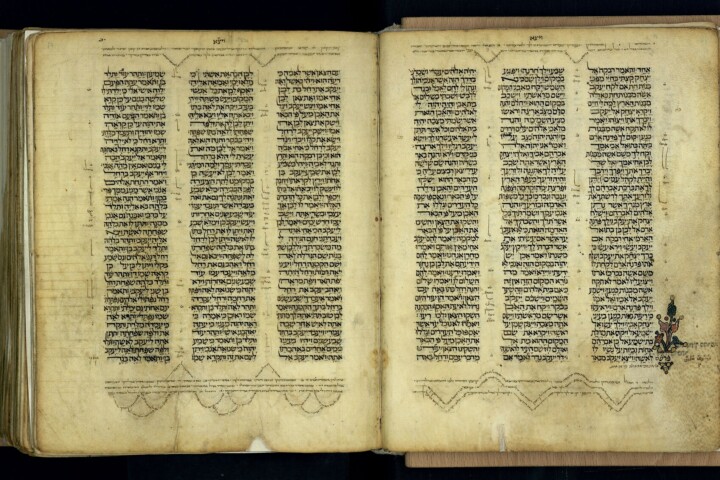
I noticed something odd with the psalm reading at Mass the other day. Our bishops’ conference here in Canada has decreed that the Mass in English – Novus Ordo – use the ‘NRSV’, the ‘New Revised Standard Version’, an ‘updated’ translation of the original RSV, first published in 1952. This ‘new translation’ has the tendency[…]Continue reading→
Saint Jean-Baptiste de la Salle: A Teacher for Teachers
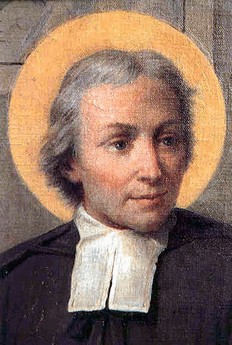
Jean-Baptiste de la Salle (1651 – 1719), a French nobleman, ordained a priest, founded the first order in the Church’s history entirely without priests, and this came about almost by accident. I say ‘almost’, for, of course, there are no accidents with God. Destined for ordination from an early age, Jean-Baptiste never looked back, even[…]Continue reading→