

Will a Real Women’s Day Please Stand Up?
I am all for honouring women, but International Women’s Day – which I am at least glad to read they have not (yet?) modified to ‘Womxn’s’ Day – is an international disaster. Born at the dawn of the twentieth century, the day has its roots in the atheistic philosophy of Communism, which has amongst its many evil intents not just the destruction of the Catholic Church – and any religion that opposes complete subjugation of man to the state – but also the annihilation of the family. Hence, as Pope Pius XI pointed out in his 1937 encyclical Divini Redemptoris, the Communists also wanted to ensure that women were ‘emancipated’ from the home – from that noble task of raising and educating children – so they could join the ‘workforce’, thus atomizing the family. Of course, the bereft children would then all be ‘raised’ by the State, and sexualized and corrupted early, so they could never return to any semblance of stable family – to say nothing of Christian – life, nor ever begin and raise their own families. The destruction would be complete at the very root.
The first official women’s day was celebrated at the instigation of the Socialist Party in New York, in 1909, and Vladmir Lenin, after the revolution a decade later, made it an official holiday in Soviet Russia. Is it a coincidence that the same Russia soon had the highest abortion rates in the world, for every baby fortunate enough to be born, two were cut to pieces in the womb? Russia, like most other nations, continues in its downward demographic spiral, as most women, infected with the communistic spiritual virus to some degree, now see motherhood and ‘homemaking’ (remember that?) as sheer drudgery. It’s all about a ‘career’, which in general means enslaving oneself to some sort of governmental-state employment and its concomitant ideology – a la Jody Wilson-Raybould and Chrystia Freeland, the plethora of political ‘staffers’, CBC commentators, health care – the only place left, really to make money (of course, other people’s) and advance one’s all-too-often childless ‘career’.
There are far better ways than this travesty of a day – banging drums, hollering and protesting and berating the bête noir of ‘patriarchy’- to honour women, who, in whatever path they follow, are called to be ‘mothers’ in some way; and the same with men, who are meant to fulfil a fatherly role. For the family – not individual men and women – is the foundational and primordial society, without which the rest of society quite simply falls to pieces.
Providential, that Our Lady appeared at Fatima just after the onset of the Bolshevik revolution, warning that Russia would spread the errors of Communism throughout the world, not least her ‘errors’ about women.
Pope Saint John Paul’s masterly Mulieris Dignitatem offers a true glimpse into the dignity of women, and perhaps a women’s day could be held to celebrate its promulgation on the solemnity of the Assumption in the Marian year of 1987. As he put it, as the family goes – which in a very deep sense means as women go – so goes society. And all too many women – and I don’t exclude the men, but today’s about the women – are going the wrong way.
Carney’s Amoral Majority
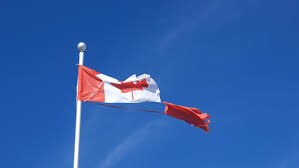
After five defections – euphemistically described as ‘crossing the floor’ – and three by-elections, Mark Carney and his Liberals how have their coveted majority. One wonders what bowls of pottage were offered in back-room deals. In the archaic monarchical system that is the Dominion of Canada, this majority allows the newly-minted Prime Minister to rule[…]Continue reading→

Saint Kateri , Canada’s Protectress
This was the title given to Saint Kateri Tekakwitha, by Pope Benedict XVI, when he canonized her on October 28th, 2012, along with six others, in Saint Peter’ Square (she had been beatified by Pope John Paul II back in 1980). With Saint Joseph as our protector, along with the Canadian martyrs, we seem to[…]Continue reading→
A Tale of Two Benedicts
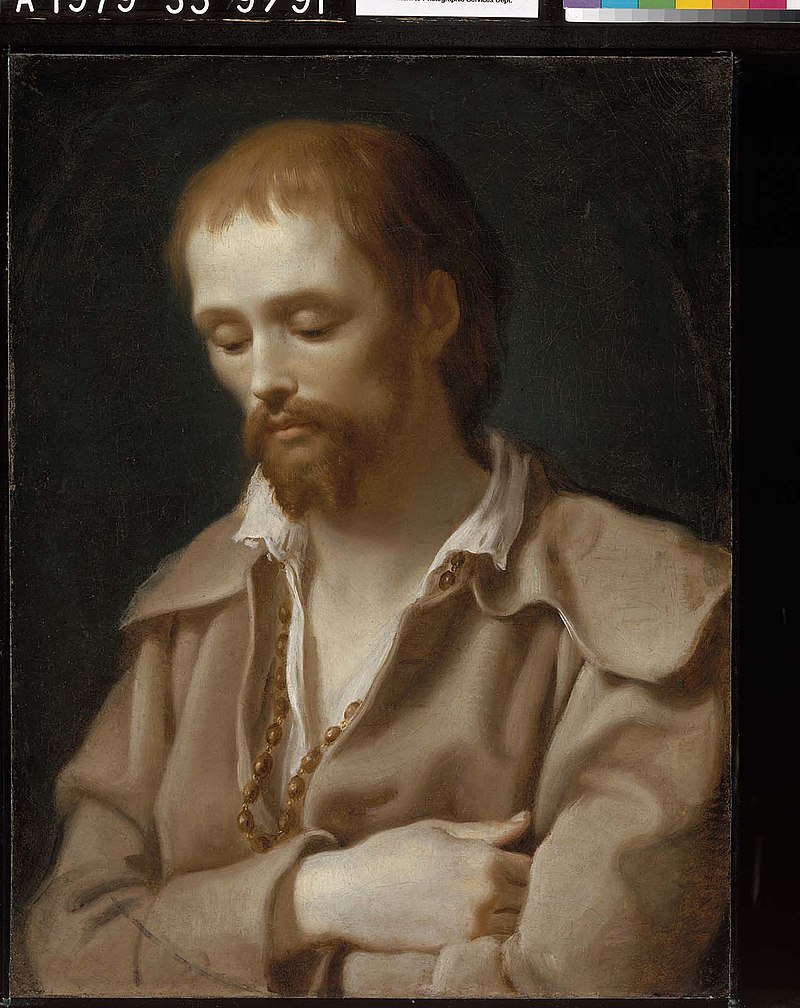
A grace-filled Holy Week to all our readers! As we await and prepare for the Resurrection about to dawn upon us, we might keep in mind two Benedicts: Pope Emeritus Benedict XVI, requiescat in pace, elected on this day in 2005; and today’s commemoration of the mystic pilgrim, Benedict Joseph Labre, who died on this[…]Continue reading→

My Name is Bernadette
April 16th is a propitious day, for besides the anniversary of Father de Valk’s death, who founded Catholic Insight in its print form decades ago, and the commemoration of the ‘two Benedicts’, mentioned in accompanying posts, today we also recall Saint Bernadette Soubirous, the young visionary to whom the Virgin Mary appeared numerous times at[…]Continue reading→
Saint Lydwina of Schiedam and Suffering Joyfully
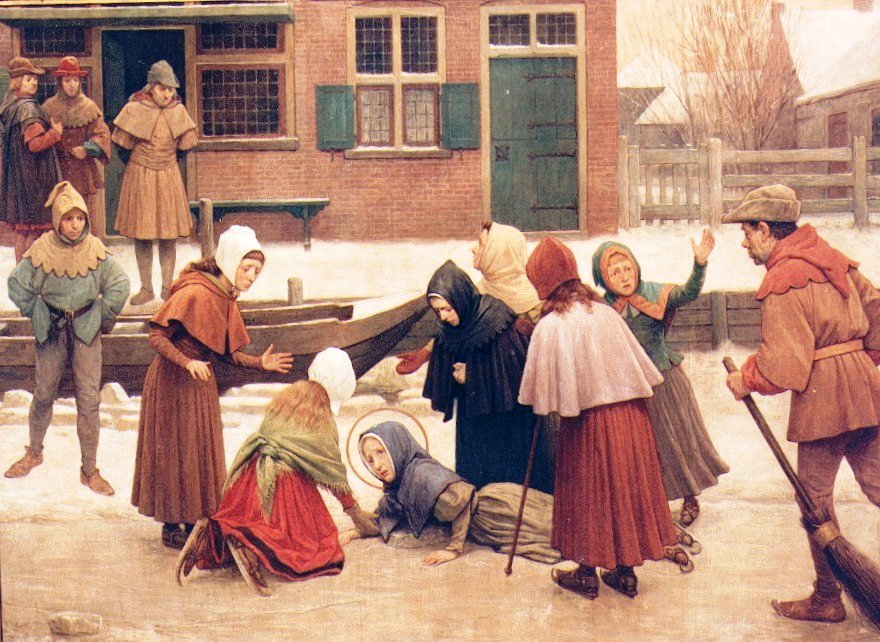
Saint Lydwina of Schiedam (1380 – 1433) was one of the countless and glorious ‘victim souls’ in the history of the Church, those whose lives are filled with suffering, often of an unimaginable intensity, but who suffer joyfully. She was a fifteen-year old Dutch girl, out skating one day, when she fell and broke one[…]Continue reading→
The Glorious Martyrdoms of Martin and Maximus
As we enter into Eastertide, we recall on this 13th of April Pope Saint Martin I (+655), one of the noblest, if most tragic, of the successors of Saint Peter. Born in Umbria, Italy, he was of noble lineage, with great intelligence combined with charity and love of the poor and the Church. While still[…]Continue reading→

Saint Stanislaus of Szczepanów
We celebrate Saint Stanislaus today (+ April 11, 1079), in light of this Easter Octave, a bishop and martyr who accepted the episcopacy only at the direct order of Pope Alexander II. He proved a wise and courageous leader of his flock, put to death by his own king, Boleslaus, for rebuking the monarch’s ‘immoral[…]Continue reading→
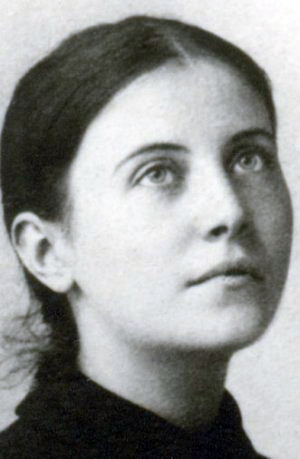
Saint Gemma Galgani
On this April 11th, in 1903 – the same year that the Italian Guiseppe Sarto was elected Pope later that summer as Pius X – a lovely, young Italian woman died, by the name of Gemma Galgani. She lived a brief life of 24 years, as did a number of other young saints, including Pier[…]Continue reading→
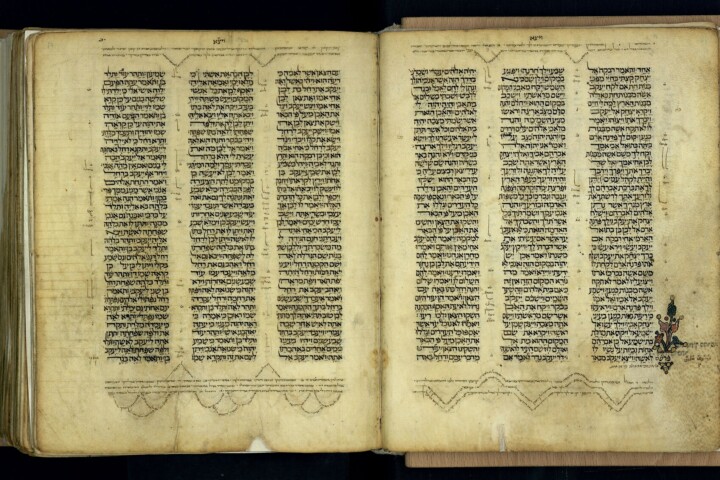
An Ideological and Improper Translation
I noticed something odd with the psalm reading at Mass the other day. Our bishops’ conference here in Canada has decreed that the Mass in English – Novus Ordo – use the ‘NRSV’, the ‘New Revised Standard Version’, an ‘updated’ translation of the original RSV, first published in 1952. This ‘new translation’ has the tendency[…]Continue reading→
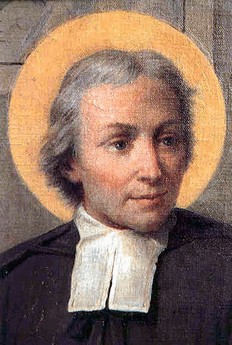
Saint Jean-Baptiste de la Salle: A Teacher for Teachers
Jean-Baptiste de la Salle (1651 – 1719), a French nobleman, ordained a priest, founded the first order in the Church’s history entirely without priests, and this came about almost by accident. I say ‘almost’, for, of course, there are no accidents with God. Destined for ordination from an early age, Jean-Baptiste never looked back, even[…]Continue reading→