
Minors and Majors
The Vatican synod currently underway has as its theme the ‘protection of minors’, a category that in our current intellectual milieu triggers a vivid emotional response; for what comes to mind are little children and, if one is of a religious persuasion, the condemnation of Our Lord of those who scandalize such vulnerable souls.
Yet when we apply the term to the nitty-gritty concrete reality of life, the term becomes somewhat more vague. How to define a ‘minor’?
The Latin term minor means ‘lesser’, and although age is one of the primary ways in which some are minor, it is not the only way.
The law needs strict dividing lines, so, in Canada, a minor is one who is less than 19 years old, and a ‘major’, one over that rather arbitrary boundary. Hence, a strapping lad of 18 years, 364 days, 11 hours and 59 minutes – who can marry, raise his own children, drive a car, fly a plane, buy a house, fight in a war – is a ‘child’, while sixty seconds later, he would be an ‘adult’. As a victim or a perpetrator of a crime, he would – in theory – be treated accordingly in each case (although there are exceptions).
One can see where all this is going, for the real issue before us goes well beyond ‘adult – child’ sexual relations, the image that is conjured up in the minds of most people when they hear ‘abuse of minors’. We should recall that the majority of abuse cases in the Church have been between adults and either younger adults (seminarians and such) or those who are no longer little children, but not yet adults (pubescents in their teen years). Hence, what we have before us are not the rather rare cases of paedophilia – the ‘little children’ – but, in the vast majority, hebephilia, ephebophilia and pederasty – to say nothing of homosexuality of its various sorts – all part of that whole family (if such be the term) of paraphilias disordering the sexual appetite.
Really, the ‘sex abuse crisis’ is a bitter fruit of the vitiation of our sexual appetites and the expression thereof – tacitly tolerated it many parts of the Church – made more grave by the misuse of priestly authority to feed the insatiable lustful beast, which is, I think, where the vague and much-bandied charge of ‘clericalism’ fits in.
And, what is more, although it is particularly heinous for adults to sexually abuse those who are far ‘lesser’ than they, it is not the only form of ‘sexual abuse’. In fact, any disordered use of our sexuality is a form of abuse, of ourselves and of others, with some relationships being more ‘abusive’ than others. Here is Mary Rice Hasson from a recent Catholic Herald opinion piece on the (over) emphasis on ‘minors’ as the focus of the problem:
This arbitrary line-drawing relegates everything but the abuse of minors to the perimeter—the sexual abuse of seminarians, vulnerable adults (with impaired reason), religious sisters, and adult women, as well as the problem of clergy “consensual” sexual activity with adults—as if the evil at work could be counted on to respect the Vatican’s neat and tidy categories. Those involved in planning the February summit claimed that getting the abuse-of-minors problem fixed would have spillover effects in addressing other forms of sexual abuse and misconduct. That remains to be seen (as the abuse-of-minors scandal remains to be fully addressed). But it’s worth asking if the Church’s “minors only” approach has been unduly influenced by the views of outside experts on child abuse. For within the secular professions the bright line that separates a minor from an adult imposes its own secular pseudo-morality: on the minor’s side of the age divide, sex with adults is abuse; on the adult side of the line, sex with any adult (male or female), of any kind (no matter how kinky) is “morally” neutral, assuming it is consensual.
Any disordered use of sex leads to further disordered sex, for our appetites never sit still, but seek ever-further stimulation. The only way to control such concupiscence in this fallen world is to ‘chastise’ our passions through the etymologically related virtue of chastity, either through continent celibacy in some sort of consecrated life, or through conjugal chastity within a sacramental marriage. Such virtue is not and will never be gained through policies, procedures and fifteen-point bulletin statements, but rather by a life of prayer, discipline, grace and sacramental participation.
Hence, at the root of the crisis is the widespread denial and rejection – in practice, if not even in theory – of the fact that the expression of sexuality is permitted only within the vows of such a monogamous marriage, between husband and wife, when that relationship is equal, mutual, consensual, faithful, permanent, life-giving and life-long.
Anything else has led us and will continue to lead us on a rather short path to chaos and misery, what the Church in her tradition has called ‘hell’.
Carney’s Amoral Majority
After five defections – euphemistically described as ‘crossing the floor’ – and three by-elections, Mark Carney and his Liberals how have their coveted majority. One wonders what bowls of pottage were offered in back-room deals. In the archaic monarchical system that is the Dominion of Canada, this majority allows the newly-minted Prime Minister to rule[…]Continue reading→

Saint Kateri , Canada’s Protectress
This was the title given to Saint Kateri Tekakwitha, by Pope Benedict XVI, when he canonized her on October 28th, 2012, along with six others, in Saint Peter’ Square (she had been beatified by Pope John Paul II back in 1980). With Saint Joseph as our protector, along with the Canadian martyrs, we seem to[…]Continue reading→
A Tale of Two Benedicts
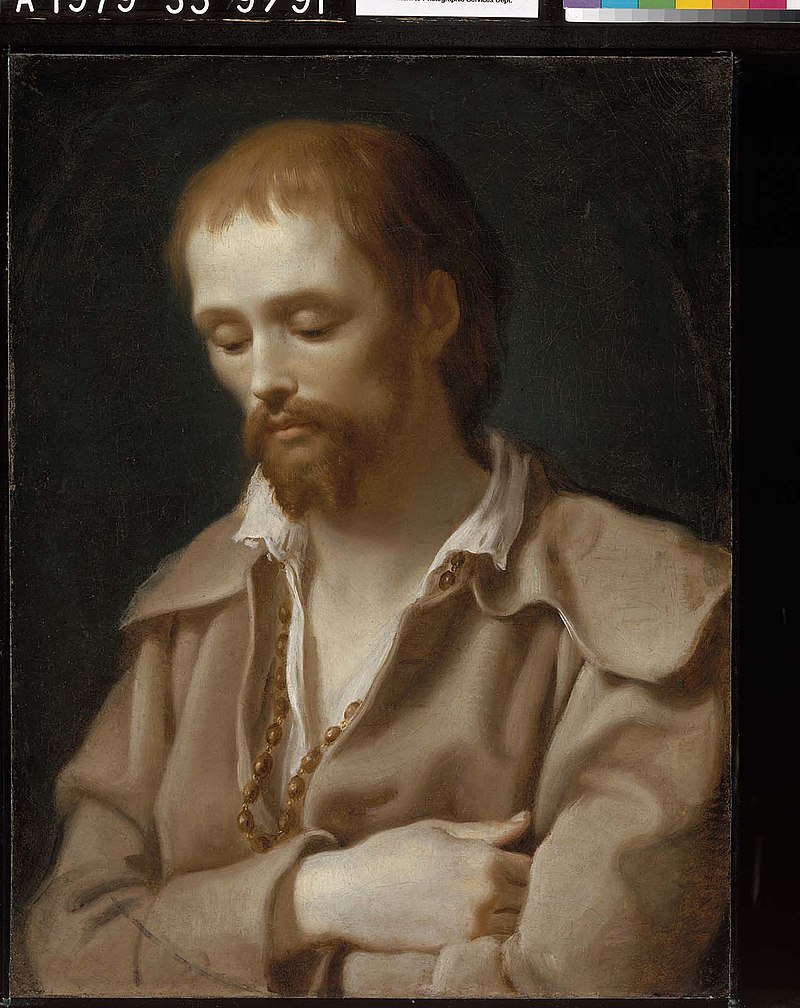
A grace-filled Holy Week to all our readers! As we await and prepare for the Resurrection about to dawn upon us, we might keep in mind two Benedicts: Pope Emeritus Benedict XVI, requiescat in pace, elected on this day in 2005; and today’s commemoration of the mystic pilgrim, Benedict Joseph Labre, who died on this[…]Continue reading→

My Name is Bernadette
April 16th is a propitious day, for besides the anniversary of Father de Valk’s death, who founded Catholic Insight in its print form decades ago, and the commemoration of the ‘two Benedicts’, mentioned in accompanying posts, today we also recall Saint Bernadette Soubirous, the young visionary to whom the Virgin Mary appeared numerous times at[…]Continue reading→
Saint Lydwina of Schiedam and Suffering Joyfully
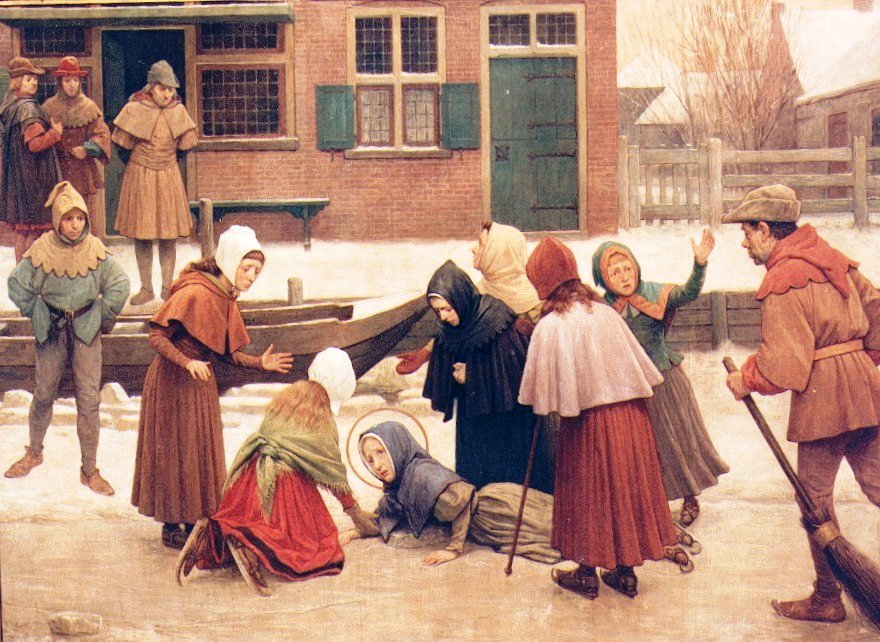
Saint Lydwina of Schiedam (1380 – 1433) was one of the countless and glorious ‘victim souls’ in the history of the Church, those whose lives are filled with suffering, often of an unimaginable intensity, but who suffer joyfully. She was a fifteen-year old Dutch girl, out skating one day, when she fell and broke one[…]Continue reading→
The Glorious Martyrdoms of Martin and Maximus
As we enter into Eastertide, we recall on this 13th of April Pope Saint Martin I (+655), one of the noblest, if most tragic, of the successors of Saint Peter. Born in Umbria, Italy, he was of noble lineage, with great intelligence combined with charity and love of the poor and the Church. While still[…]Continue reading→

Saint Stanislaus of Szczepanów
We celebrate Saint Stanislaus today (+ April 11, 1079), in light of this Easter Octave, a bishop and martyr who accepted the episcopacy only at the direct order of Pope Alexander II. He proved a wise and courageous leader of his flock, put to death by his own king, Boleslaus, for rebuking the monarch’s ‘immoral[…]Continue reading→
Saint Gemma Galgani
On this April 11th, in 1903 – the same year that the Italian Guiseppe Sarto was elected Pope later that summer as Pius X – a lovely, young Italian woman died, by the name of Gemma Galgani. She lived a brief life of 24 years, as did a number of other young saints, including Pier[…]Continue reading→
An Ideological and Improper Translation
I noticed something odd with the psalm reading at Mass the other day. Our bishops’ conference here in Canada has decreed that the Mass in English – Novus Ordo – use the ‘NRSV’, the ‘New Revised Standard Version’, an ‘updated’ translation of the original RSV, first published in 1952. This ‘new translation’ has the tendency[…]Continue reading→
Saint Jean-Baptiste de la Salle: A Teacher for Teachers
Jean-Baptiste de la Salle (1651 – 1719), a French nobleman, ordained a priest, founded the first order in the Church’s history entirely without priests, and this came about almost by accident. I say ‘almost’, for, of course, there are no accidents with God. Destined for ordination from an early age, Jean-Baptiste never looked back, even[…]Continue reading→