
Green Day, Ignatius and ‘Rigid’ Catholics
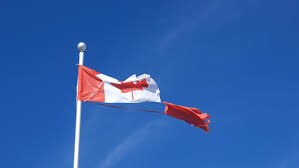
Welcome to the land of now-legal marijuana, for on this Wednesday, Canada, in her continuing cultural descent under Trudeau, becomes the second sovereign nation to legalize the green weed (Uruguay recently beat us to the punch). I have an article in Crisis this morning on the moral difference between alcoholic beverages, permitted in our Catholic faith, and recreational drugs, which are intrinsically immoral. Please do peruse, and comments are always welcome.
While the CBC celebrates this dawn of Aquarius, calling it ‘sort of like New Year’s’ in its morning program, we in the Catholic Church celebrate Saint Ignatius of Antioch (+107) who went to his martyrdom in the Coliseum just after the death of Saint John the Evangelist and last Apostle. His seven letters, to seven communities of early Christians, are some of the most clear and direct evidence of the Catholic Church’s structure right after the time of Christ, with bishops, priests, dioceses, and irrefutable belief in the Real Presence. No wonder Blessed Cardinal Newman, in his own vain attempt to find ‘Anglicanism’, a ‘via media’, somewhere in the early past, quipped that to ‘delve into history is to cease to be a Protestant’. There never was a simple sort of ‘Baptist-Evangelical’ church, or, rather, community, with just the Bible and a ‘pastor’. From the very beginning, there was the One, Holy, Catholic and Apostolic Church, centred in Rome under Saint Peter, with all the sacraments and all the Liturgy and all the means of holiness and truth, even if obscured at times.
And while on Peter, I don’t often comment on the Holy Father, for various reasons, preferring to wait and see how things unfold, but the media has latched onto his sermon this morning, as the Pope commented on Christ’s condemnation of the Pharisees as hypocrites, empty tombs inside, whom the Holy Father compares to ‘rigid’ Christians, who see themselves as ‘perfect’, lacking a ‘spirit of liberty’, and he also puts down those ‘paid to give bad news’.
My initial reaction, as any number of times in this pontificate, is that I wish he would define his terms. After all, the spiritual life, like any warfare, requires some rigidity, at least on central principles, along with some flexibility, so that we might adapt. One must make the proper distinctions, to know on what one may compromise, and what one may not (as in intrinsic evil, which, as John Paul II taught, following Saint Ignatius and any number of martyrs come to think of it, we must be prepared to die rather than commit).
There is also a proper sense of liberty, using our freedom well in the light of truth (the whole point of John Paul’s Veritatis Splendor, which I am not sure Pope Francis has ever quoted), and a very improper sense, of freedom, as in libertinism, and justifying one’s sins and sinful ‘lifestyle’ before God, which is the very thing for which Christ condemned the Pharisees. Ponder today’s first reading from Saint Paul to the Galatians for his take on this them; or Robert Cardinal Sarah’s intervention at the Synod. We need more such clarity, not vagueness. That is why we have fences, as Chesterton quips, and why, as John Paul II states, the moral law must have a ‘thus far, and no farther’ level of at least minimal objectivity. For it is the clear truth that unites, and uncertainty which divides.
Carney’s Amoral Majority
After five defections – euphemistically described as ‘crossing the floor’ – and three by-elections, Mark Carney and his Liberals how have their coveted majority. One wonders what bowls of pottage were offered in back-room deals. In the archaic monarchical system that is the Dominion of Canada, this majority allows the newly-minted Prime Minister to rule[…]Continue reading→

Saint Kateri , Canada’s Protectress
This was the title given to Saint Kateri Tekakwitha, by Pope Benedict XVI, when he canonized her on October 28th, 2012, along with six others, in Saint Peter’ Square (she had been beatified by Pope John Paul II back in 1980). With Saint Joseph as our protector, along with the Canadian martyrs, we seem to[…]Continue reading→
A Closed, Unsustainable, Descending Loop
As a follow-up to my thoughts on Payette’s payout, here be a stark image of where are here in Canada. As the graph shows in, well, graphic terms, since 2025, the public sector has contributed to 95.5% of economic growth. The private sector – which funds the public sector, or is supposed to – has[…]Continue reading→

Remembering Father Alphonse de Valk
(Today marks the sixth anniversary of the death of Father Alphonse de Valk, C.S.B., a faithful, courageous and indefatigable Basilian priest, pro-life-and-family apostle, and the founder of Catholic Insight magazine. Here is what we wrote those on his entering into eternity five years ago, as we continue to remember him in our prayers and thoughts)[…]Continue reading→

A Tale of Two Benedicts
A grace-filled Holy Week to all our readers! As we await and prepare for the Resurrection about to dawn upon us, we might keep in mind two Benedicts: Pope Emeritus Benedict XVI, requiescat in pace, elected on this day in 2005; and today’s commemoration of the mystic pilgrim, Benedict Joseph Labre, who died on this[…]Continue reading→

My Name is Bernadette
April 16th is a propitious day, for besides the anniversary of Father de Valk’s death, who founded Catholic Insight in its print form decades ago, and the commemoration of the ‘two Benedicts’, mentioned in accompanying posts, today we also recall Saint Bernadette Soubirous, the young visionary to whom the Virgin Mary appeared numerous times at[…]Continue reading→
Presidential Pardon of Weronika Krawczyk
As a good news, follow-up to our story from Poland, of the persecution of Weronika Krawczyk for her pro-life views, we heard that she has been granted a presidential pardon. One might still wonder why one needs a presidential pardon for simply holding the long-held belief that the child within the womb is a child,[…]Continue reading→

Saint Lydwina of Schiedam and Suffering Joyfully
Saint Lydwina of Schiedam (1380 – 1433) was one of the countless and glorious ‘victim souls’ in the history of the Church, those whose lives are filled with suffering, often of an unimaginable intensity, but who suffer joyfully. She was a fifteen-year old Dutch girl, out skating one day, when she fell and broke one[…]Continue reading→

The Glorious Martyrdoms of Martin and Maximus
As we enter into Eastertide, we recall on this 13th of April Pope Saint Martin I (+655), one of the noblest, if most tragic, of the successors of Saint Peter. Born in Umbria, Italy, he was of noble lineage, with great intelligence combined with charity and love of the poor and the Church. While still[…]Continue reading→

Canonizing Sister Faustina and Divine Mercy
HOMILY OF THE HOLY FATHER MASS IN ST PETER’S SQUARE FOR THE CANONIZATION OF SR MARY FAUSTINA KOWALSKA Sunday, 30 April 2000 1. “Confitemini Domino quoniam bonus, quoniam in saeculum misericordia eius”; “Give thanks to the Lord for he is good; his steadfast love endures for ever” (Ps 118: 1). So the Church sings on the Octave of[…]Continue reading→