
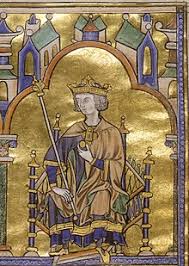
A Manly King, and a Kingly Man
An article this morning in CWR quotes a recent speech by none other than Cardinal Sarah, recounting to young scouting pilgrims, on pilgrimage to Vezelay in France, how they should emulate the noble virtues of King Saint Louis IX, providing a timeless model of the virtues not just of royal leadership, but of laymen in general, in the good King’s integration of Christian principles and virtues into secular and worldly affairs, a very central message of Vatican II.
Louis the King was contemporaneous, and friends, with another saint, Thomas Aquinas, and it is almost as though Louis incarnated Thomas’ treatise on virtuous governance, De Regno.
There is much that could be said of Louis, his fidelity to his wife, Margaret of Provence (unlike so many royal marriages of his day and beyond, they actually enjoyed each other’s company, and seem truly to have been in love); his openness to life (they had eleven children, two of whom died in infancy, but the rest, raised well and good, went to become virtuous leaders in their own right, with royal marriages and dynasties); his truthfulness, ideals of governance, care for the poor, widows and indigent; his support of virtue amongst his subjects, and his intolerance of vice and evil; his acts of penance in reparation (his hairshirt and scourge can still be seen at Notre-Dame basilica in Paris); his chivalry, and noble crusading spirit, which eventually took his life by pestilence in Egypt on what is called the Eighth Crusade. Like any good ruler, Louis would always strive to do what he asked his subjects to do, fighting in that age of warfare alongside them, not like those condemned by Christ in today’s Gospel, who lay heavy burdens upon men’s backs, but lift not a finger to help lift them.
We may look back upon the past with rose-coloured glasses, and there were any number of real and incipient difficulties in any age, but there was something ideal, almost dream-like, about that time, the high point of the Middle Ages, the 1200’s which William Walsh described in his own recounting as the ‘greatest of centuries’.
There is much to learn from those who came before us, as I mentioned recently, and I would recommend that our current crop of leaders, for want of a better term, delve into the life of King Louis, and the aforementioned treatise of Thomas. I would make some knowledge of both requisite for taking office; but, then, that may be, what was that word, idealistic.
But, to paraphrase Chesterton, without ideals, we cannot have anything practical that works, including a kingdom, nation, country, school, or household.
So, semper altius, dear reader.
King Saint Louis IX, ora pro nobis!

Carney’s Amoral Majority
After five defections – euphemistically described as ‘crossing the floor’ – and three by-elections, Mark Carney and his Liberals how have their coveted majority. One wonders what bowls of pottage were offered in back-room deals. In the archaic monarchical system that is the Dominion of Canada, this majority allows the newly-minted Prime Minister to rule[…]Continue reading→

Saint Kateri , Canada’s Protectress
This was the title given to Saint Kateri Tekakwitha, by Pope Benedict XVI, when he canonized her on October 28th, 2012, along with six others, in Saint Peter’ Square (she had been beatified by Pope John Paul II back in 1980). With Saint Joseph as our protector, along with the Canadian martyrs, we seem to[…]Continue reading→
A Closed, Unsustainable, Descending Loop
As a follow-up to my thoughts on Payette’s payout, here be a stark image of where are here in Canada. As the graph shows in, well, graphic terms, since 2025, the public sector has contributed to 95.5% of economic growth. The private sector – which funds the public sector, or is supposed to – has[…]Continue reading→

A Tale of Two Benedicts
A grace-filled Holy Week to all our readers! As we await and prepare for the Resurrection about to dawn upon us, we might keep in mind two Benedicts: Pope Emeritus Benedict XVI, requiescat in pace, elected on this day in 2005; and today’s commemoration of the mystic pilgrim, Benedict Joseph Labre, who died on this[…]Continue reading→

My Name is Bernadette
April 16th is a propitious day, for besides the anniversary of Father de Valk’s death, who founded Catholic Insight in its print form decades ago, and the commemoration of the ‘two Benedicts’, mentioned in accompanying posts, today we also recall Saint Bernadette Soubirous, the young visionary to whom the Virgin Mary appeared numerous times at[…]Continue reading→

Saint Lydwina of Schiedam and Suffering Joyfully
Saint Lydwina of Schiedam (1380 – 1433) was one of the countless and glorious ‘victim souls’ in the history of the Church, those whose lives are filled with suffering, often of an unimaginable intensity, but who suffer joyfully. She was a fifteen-year old Dutch girl, out skating one day, when she fell and broke one[…]Continue reading→

The Glorious Martyrdoms of Martin and Maximus
As we enter into Eastertide, we recall on this 13th of April Pope Saint Martin I (+655), one of the noblest, if most tragic, of the successors of Saint Peter. Born in Umbria, Italy, he was of noble lineage, with great intelligence combined with charity and love of the poor and the Church. While still[…]Continue reading→
Pope Leo and a Rosary for Peace
Pope Leo XIV has asked Catholics across the world to join him in a Rosary for peace today, at 18:00 Rome time (6 pm), which would be noon from where I write (EST). If you are able, whether at that time or another, and in whatever way you pray, to join in intercession with the[…]Continue reading→
Payette’s Payout
I was glancing through some headlines, and noticed a mention of Julie Payette – engineer and astronaut and sometime the Queen’s representative in Canada – which brought back vague memories. She was appointed Governor-General by Justin Trudeau in 2017. Ms. Payette resigned in 2021, amidst claims that she created a ‘toxic work environment’, with allegations[…]Continue reading→

Saint Stanislaus of Szczepanów
We celebrate Saint Stanislaus today (+ April 11, 1079), in light of this Easter Octave, a bishop and martyr who accepted the episcopacy only at the direct order of Pope Alexander II. He proved a wise and courageous leader of his flock, put to death by his own king, Boleslaus, for rebuking the monarch’s ‘immoral[…]Continue reading→