
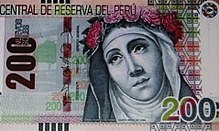
Rose of Lima and the ‘Art’ of Tattoos
Saint Rose of Lima (+1617) was a consecrated virgin, and the first native-born canonized saint of the Americas. She was renowned during her lifetime for her generosity and charity, flowing from a life of self-denial and asceticism and prayer. Although beautiful and desired, she from the earliest age renounced any thought of marriage, cutting her hair and smearing pepper on her face, so that she would appear less appealing to members of the less-fair sex. Her father forbade her entrance into the convent, so she remained in the lay-state, but consecrated herself through participation in the third-order Dominicans, helping the poor, selling the fine needle-work she would make.
When we read of her rather extreme penances, fasting three times a week, sleeping two hours a night, wearing a crown of thorns, we should see these as motivated by the love of God. For her, they were not ‘negative’, but rather affirmative ways of removing all that stood in the way of complete devotion and self-gift to the One Who has given all to us. I consider all things as dross, as Saint Paul confessed.
And God did not stint in his reciprocity, favouring Rose with ecstasies, visions and heavenly delights, and she foretold her own death, and entrance in that same heaven, at the tender age of 31. She was canonized by April 12, 1671 by Pope Clement X.
She is the patron saint of embroiderers, the Philippines and, of course, Peru, where she appears on their highest currency, the 200 soles bill, ironic for one who never owned any money, nor anything much at all. For all she had, she gave to God, something we should ponder in this age of immersion in the world.
Saint Rose of Lima, oren pro nosostros!
And speaking of worldly immersion, I am not entirely sure what Rose would have thought of tattooing, whose origins lie in indigenous cultures, especially Tahiti and Hawaii, but I am rather sure she would frown upon the practice, even if she did temporarily disfigure her own face pro caritate Dei. Father George Rutler today has a wide-ranging historical piece on the art , if such be the word, of tattooing, weaving in some elements of its morality. (I am not sure where Father Rutler gets all of his historical minutiae, such as George V having a dragon tattoo on his arm; the good priest should compile a tome on such facts alone).
Alas, the central moral question might get lost in such details, and my own piece on tattooing was somewhat more direct, arguing that scarring and inking one’s body in such a way was a kind of mutilation, a violation, if not always a mortal one, of the natural, moral law. I was distressed to read at the end of Father Rutler’s article, the current Holy Father apparently endorsed such, to my mind, mutilation. One commentator recommended that anyone pondering a tattoo be forced to watch a video of what they look like when their skin begins to fold and sag, as is the way of all flesh.
And, as another recalled, when a young woman asked his advice about getting tattooed, he said to that putting such a stamp on a beautiful woman is like putting a bumper sticker on a Ferrari. An analogy, to be sure, and one that limps, for even our bodies are worth many Ferraris, and it matters not whether they be young and beautiful, or not. For we are all made in the image of God.
But, anon, here is Father Rutler’s account of the papal exchange, and you may draw your own conclusions.
At a gathering of three hundred young adults in Rome on May 19, 2018, a seminarian from Ukraine, where a tattoo festival is held annually in Kyiv, asked Pope Francis for a pontifical opinion on tattooing. In a development of the imputed anti-tattoo doctrine of Pope Adrian I, while supposedly not contradicting it, His Holiness said, “Don’t be afraid of tattoos” and cited the example of Eritrean Christians tattooed with crosses. He added: “Of course, there can be exaggerations,” but a tattoo “is a sign of belonging” and talking about it can begin “a dialogue about priorities.”
Ah, yes, belonging and priorities. But, I might clarify for the reader, your body belongs to God, as a temple of the Holy Spirit, and one’s priorities should be to glorify God in that body in the way He created it. Why try to improve upon God’s handiwork?
Indeed, I repeat, Saint Rose of Lima, oren pro nosostros!
Carney’s Amoral Majority
After five defections – euphemistically described as ‘crossing the floor’ – and three by-elections, Mark Carney and his Liberals how have their coveted majority. One wonders what bowls of pottage were offered in back-room deals. In the archaic monarchical system that is the Dominion of Canada, this majority allows the newly-minted Prime Minister to rule[…]Continue reading→

Saint Kateri , Canada’s Protectress
This was the title given to Saint Kateri Tekakwitha, by Pope Benedict XVI, when he canonized her on October 28th, 2012, along with six others, in Saint Peter’ Square (she had been beatified by Pope John Paul II back in 1980). With Saint Joseph as our protector, along with the Canadian martyrs, we seem to[…]Continue reading→
A Closed, Unsustainable, Descending Loop
As a follow-up to my thoughts on Payette’s payout, here be a stark image of where are here in Canada. As the graph shows in, well, graphic terms, since 2025, the public sector has contributed to 95.5% of economic growth. The private sector – which funds the public sector, or is supposed to – has[…]Continue reading→

Remembering Father Alphonse de Valk
(Today marks the sixth anniversary of the death of Father Alphonse de Valk, C.S.B., a faithful, courageous and indefatigable Basilian priest, pro-life-and-family apostle, and the founder of Catholic Insight magazine. Here is what we wrote those on his entering into eternity five years ago, as we continue to remember him in our prayers and thoughts)[…]Continue reading→
A Tale of Two Benedicts
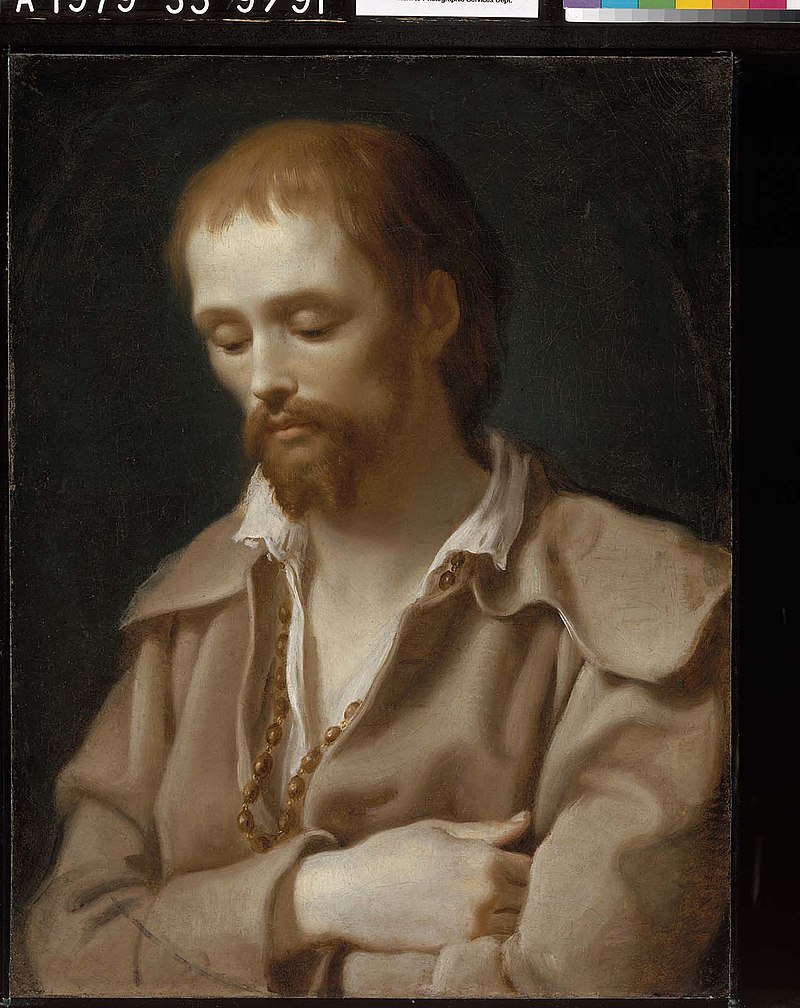
A grace-filled Holy Week to all our readers! As we await and prepare for the Resurrection about to dawn upon us, we might keep in mind two Benedicts: Pope Emeritus Benedict XVI, requiescat in pace, elected on this day in 2005; and today’s commemoration of the mystic pilgrim, Benedict Joseph Labre, who died on this[…]Continue reading→

My Name is Bernadette
April 16th is a propitious day, for besides the anniversary of Father de Valk’s death, who founded Catholic Insight in its print form decades ago, and the commemoration of the ‘two Benedicts’, mentioned in accompanying posts, today we also recall Saint Bernadette Soubirous, the young visionary to whom the Virgin Mary appeared numerous times at[…]Continue reading→
Presidential Pardon of Weronika Krawczyk
As a good news, follow-up to our story from Poland, of the persecution of Weronika Krawczyk for her pro-life views, we heard that she has been granted a presidential pardon. One might still wonder why one needs a presidential pardon for simply holding the long-held belief that the child within the womb is a child,[…]Continue reading→
Saint Lydwina of Schiedam and Suffering Joyfully
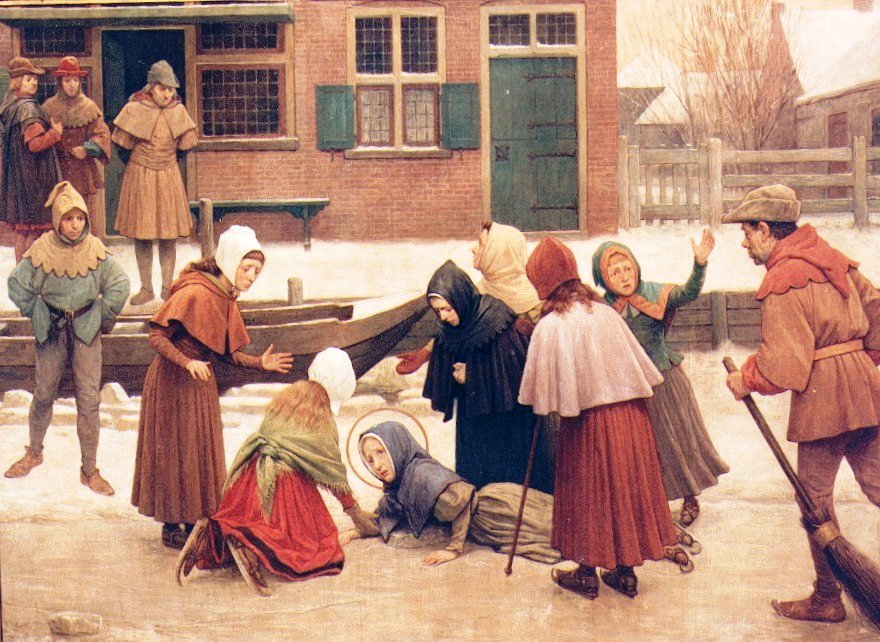
Saint Lydwina of Schiedam (1380 – 1433) was one of the countless and glorious ‘victim souls’ in the history of the Church, those whose lives are filled with suffering, often of an unimaginable intensity, but who suffer joyfully. She was a fifteen-year old Dutch girl, out skating one day, when she fell and broke one[…]Continue reading→
The Glorious Martyrdoms of Martin and Maximus
As we enter into Eastertide, we recall on this 13th of April Pope Saint Martin I (+655), one of the noblest, if most tragic, of the successors of Saint Peter. Born in Umbria, Italy, he was of noble lineage, with great intelligence combined with charity and love of the poor and the Church. While still[…]Continue reading→
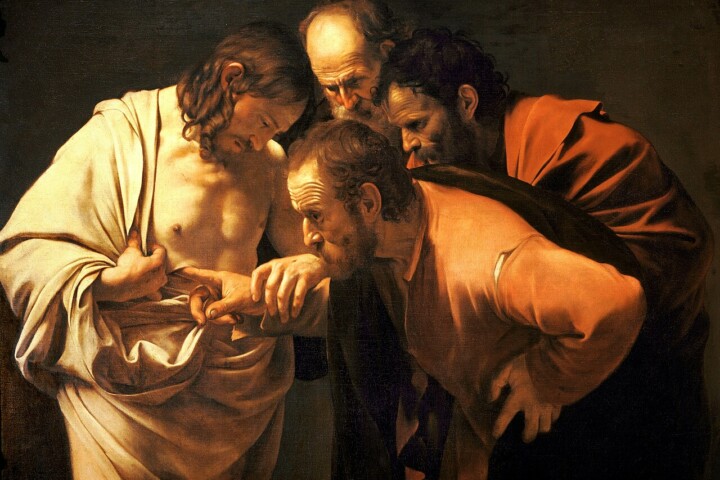
Divine Mercy Sunday – An Echo of Every Mass
Reach out your hand and put it in my side. Do not doubt but believe’… ‘My Lord and my God!’ (Jn. 20:18)). Today is Divine Mercy Sunday, and as we celebrate the end of the Easter Octave, we contemplate the wounded side of our Saviour, the Church’s source of life. On Good Friday in the[…]Continue reading→