
Dictatorship of Relativism
On April 18, 2005, in a homily for the Mass ‘pro eligendo Romano Pontifice’, for electing the (next) Roman Pontiff (at which he himself would be elected as Benedict XVI) Josef Cardinal Ratzinger, Dean of the College of Cardinals, warned against what he presciently described as the ‘dictatorship of relativism’, a phrase that has echoed ominously in the past near decade-and-a-half since. Ratzinger was one to choose his words carefully, with the precision and clarity required of theology, and ‘dictatorship’ was sure to evoke memories of the Nazi regime in which he grew up, a regime intolerant of any opposition. Theirs was a ‘dictatorship of racism’; ours, one of ‘relativism’, but they both lead to the same nefarious end: An immoral hegemony of ‘elites’ imposing its evil will and practices upon the populace. Lies, murder and mayhem are the order of the day, in one way or another. We just now kill children and old people, and woe to those who stand in the way of such a ‘right’ either to kill or be killed, all under the auspices of false notions of choice, freedom, and autonomy; in their minds, who are we to impose ‘our’ truths upon others? Have we not got with the program, that absolute truth does not exist, except the ‘absolute’ truth that all truths are relative? Oh, and that a woman has an ‘absolute’ right over body and the child, or whatever they consider the entity, growing therein; that there is no absolute gender; no absolute moral law, nor binding moral principles, no sexual right or wrong (except, for now, incest and paedophilia, loosely defined). What is permitted or forbidden are only those actions the ‘dictatorship’ decrees to be so. As in Animal Farm, the rules, with the times, keep on a changin’, until anything goes, and chaos reigns.
Paula Adamick is right: That the further we drift from our Christian foundation, the more unmoored, the more immoral, and even demonic, we will become, as a people, and as a society. The walls may stand for a time, for they were built strong by our ancestors, but they are already crumbling, and will fall at last, and then the howling winds will blow.
God is not a dictator, but a loving Father, and His law is not one imposed, but one revealed and proposed, an invitation to His wedding feast, to that communion of love, in which He wills, even desires with His divine heart, that we all share. The greatest sign of this is His Incarnation, His taking our own nature, and uniting it with His own, so that we might become like He is. Each time we receive Holy Communion, His very substance, we are transformed more and more into His likeness, and this divnization is augmented by all the other sacraments, and by all the practices of that whole mystery of the Christian life,.
That is why Saint Paul says that those motivated by love, and by that we mean the love of God, really have no need of ‘law’, which is, or should be, just a reminder of how to love rightly and truly.
So live in love, by willing the true good of the other, to all those we may meet in our journeys, and all manner of things will be well. Leave the dictatorship to the other side, and they will find out soon enough who the real tyrant is.
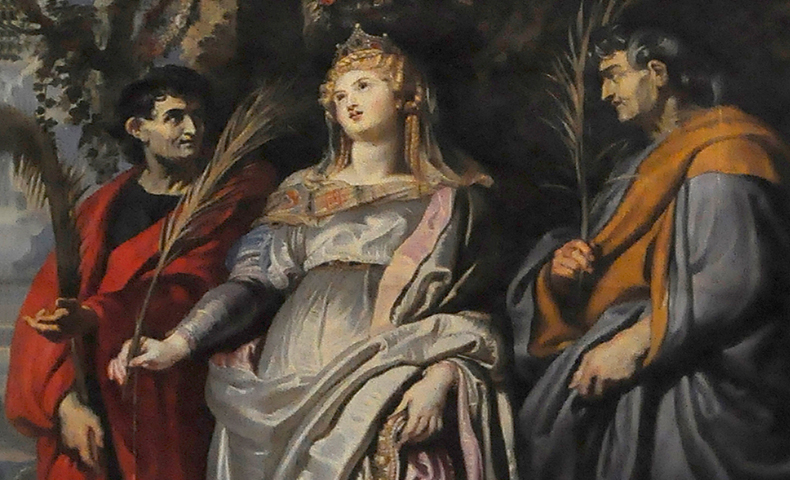
While on tyrants, today is the feast of the early martyrs Nereus and Achilleus, likely put to death under Emperor Domitian in the late 1st century, or other sources claim Diocletian in the third; their lives, like many of those of the first martyrs, are shrouded in legend, but Saint Philip Neri, the founder of the Oratory named after him in the sixteenth century, had a great and abiding devotion to them. What they signify, at the very least, is that from the very beginning of the Church’s life Christians have faced persecution for the truth, as Christ said they would. The Son of God was no relativist; rather, not only did He preach the Truth, but claimed to be the Truth Himself, the Way to peace, freedom and eternal life in heaven, where we all may meet merrily one day, Deo volente.
Sancti Nereus et Achileus, orate pro nobis!

Carney’s Amoral Majority
After five defections – euphemistically described as ‘crossing the floor’ – and three by-elections, Mark Carney and his Liberals how have their coveted majority. One wonders what bowls of pottage were offered in back-room deals. In the archaic monarchical system that is the Dominion of Canada, this majority allows the newly-minted Prime Minister to rule[…]Continue reading→

Saint Kateri , Canada’s Protectress
This was the title given to Saint Kateri Tekakwitha, by Pope Benedict XVI, when he canonized her on October 28th, 2012, along with six others, in Saint Peter’ Square (she had been beatified by Pope John Paul II back in 1980). With Saint Joseph as our protector, along with the Canadian martyrs, we seem to[…]Continue reading→

A Tale of Two Benedicts
A grace-filled Holy Week to all our readers! As we await and prepare for the Resurrection about to dawn upon us, we might keep in mind two Benedicts: Pope Emeritus Benedict XVI, requiescat in pace, elected on this day in 2005; and today’s commemoration of the mystic pilgrim, Benedict Joseph Labre, who died on this[…]Continue reading→

My Name is Bernadette
April 16th is a propitious day, for besides the anniversary of Father de Valk’s death, who founded Catholic Insight in its print form decades ago, and the commemoration of the ‘two Benedicts’, mentioned in accompanying posts, today we also recall Saint Bernadette Soubirous, the young visionary to whom the Virgin Mary appeared numerous times at[…]Continue reading→

Saint Lydwina of Schiedam and Suffering Joyfully
Saint Lydwina of Schiedam (1380 – 1433) was one of the countless and glorious ‘victim souls’ in the history of the Church, those whose lives are filled with suffering, often of an unimaginable intensity, but who suffer joyfully. She was a fifteen-year old Dutch girl, out skating one day, when she fell and broke one[…]Continue reading→

The Glorious Martyrdoms of Martin and Maximus
As we enter into Eastertide, we recall on this 13th of April Pope Saint Martin I (+655), one of the noblest, if most tragic, of the successors of Saint Peter. Born in Umbria, Italy, he was of noble lineage, with great intelligence combined with charity and love of the poor and the Church. While still[…]Continue reading→

Saint Stanislaus of Szczepanów
We celebrate Saint Stanislaus today (+ April 11, 1079), in light of this Easter Octave, a bishop and martyr who accepted the episcopacy only at the direct order of Pope Alexander II. He proved a wise and courageous leader of his flock, put to death by his own king, Boleslaus, for rebuking the monarch’s ‘immoral[…]Continue reading→
Saint Gemma Galgani
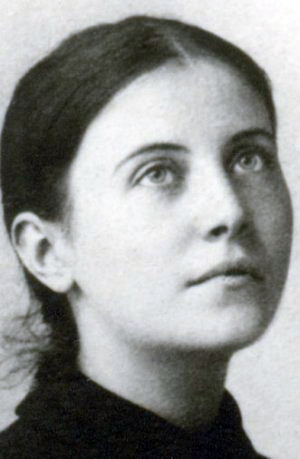
On this April 11th, in 1903 – the same year that the Italian Guiseppe Sarto was elected Pope later that summer as Pius X – a lovely, young Italian woman died, by the name of Gemma Galgani. She lived a brief life of 24 years, as did a number of other young saints, including Pier[…]Continue reading→
An Ideological and Improper Translation
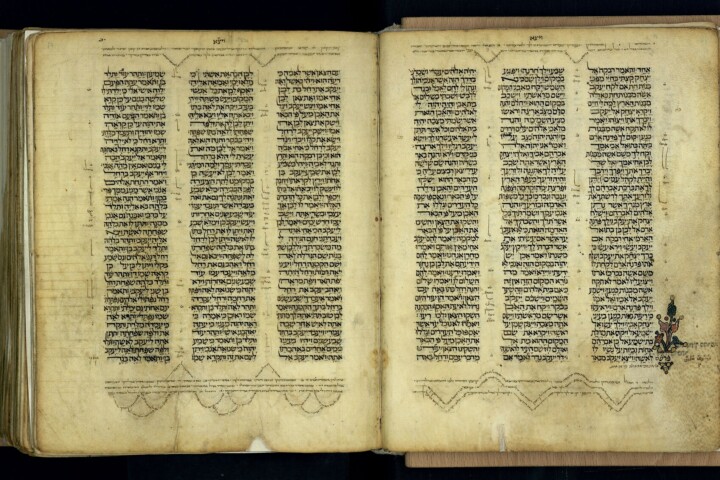
I noticed something odd with the psalm reading at Mass the other day. Our bishops’ conference here in Canada has decreed that the Mass in English – Novus Ordo – use the ‘NRSV’, the ‘New Revised Standard Version’, an ‘updated’ translation of the original RSV, first published in 1952. This ‘new translation’ has the tendency[…]Continue reading→
Saint Jean-Baptiste de la Salle: A Teacher for Teachers
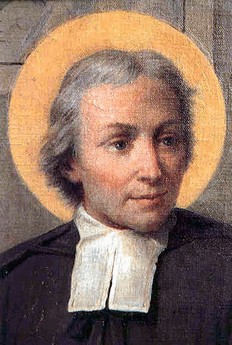
Jean-Baptiste de la Salle (1651 – 1719), a French nobleman, ordained a priest, founded the first order in the Church’s history entirely without priests, and this came about almost by accident. I say ‘almost’, for, of course, there are no accidents with God. Destined for ordination from an early age, Jean-Baptiste never looked back, even[…]Continue reading→