
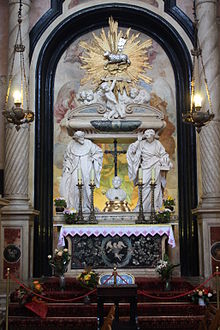
Canisius, Cantius and Catechetics
In this last week of Advent, there are two saints, oft overlooked, celebrated in a muted way each year: Peter Canisius (1521 – 1597), a Dutch Jesuit who traversed thousands of miles across Europe in his ministry, and John of Cantius (1390 – 1473), a Polish priest and professor at the University of Krakow. They were active in the years just after and just before the Protestant reformation, respectively.
Besides his ministry in preaching and administering and founding colleges, St. Peter Canisius is also widely known for his three catechisms, in the vernacular languages of his time, distilled from his own intelligent and highly-read mind (he has been proclaimed a Doctor of the Church), which helped clarify Christian doctrine and dispel the gloom of the Protestant errors for an untold number of Catholics wobbling in their faith, new and bold Protestants, as well as countless others entering the Church.
Catechetics has developed a sort of a bad name in our own day, something for children, one might think, but far from it, as John Paul II and numerous other Pontiffs have declared: Catechetics may be defined in various ways, but I sort of think of it as theology without all the source material, a summary of all that Christ has revealed, in a coherent and integral manner. Indispensable, really, for all of the things we might spend time learning, the most vital are those truths ‘necessary for salvation’, which are offered to us by the Church, so that all may know them with ‘ease, firm certainty and no admixture of error’.
Hopefully, a basis in catechetics will then lead to further study of the ‘source material’, the writings of the Popes (the addresses and encyclicals of John Paul and Benedict are excellent places to start); the Fathers of the Church; the Summa Theologica; the lives of saints, books, articles, essays and on it goes. Reading and learning are some of the greatest joys of life.
John of Cantius was also a very well-read man, but, unlike Canisius, he spent most of his life in one place, stationed at the University of Krakow, teaching philosophy to undergraduates (he helped formulate the theory of impetus, the basis of Newton’s first law, and the undergirding of modern physics). Cantius lived a holy and rather quiet regime of prayer, study and charity until the ripe old age of 83.
Both saints, in their own respective ways, were dedicated to teaching the truth in tumultuous times, and, need it be said, we are again in a crisis of truth, and of ignorance thereof, for which many perish, as the prophet Hosea decried. Those outside the Church know little of the faith (as any perusal of atheists such as Richard Dawkins will attest); but what is more sad, most Catholics also know little of what Christ has revealed; and what is saddest of all, many do not seem to care, something I find very puzzling and, in my darker moments, rather disheartening.
For only the truth can set us free, free our minds from the slavery of ignorance; to hold and ponder thoughts, dreams, hopes and memories beyond the superficial and transitory, to be a participant in all the best that has been written or thought.
We, as creatures made in God’s very image, by our reason truly transcend the prison of the present tense, to reflect upon the past, and ponder the future, to enter in some way into eternity by that scintilla, or spark, of the divine Mind itself that He has given us.
So in this season of light, we should make a resolution to develop our mind, to fan into flame that spark, to follow in some small way the example of Saints Peter Canisius and John Cantius. Begin a reading program, however it might fit into your schedule. In these days of woeful ignorance, we have a duty, according to each of our vocations, to know the faith that we profess to hold, how it allies with all the truths of reason and history, and how to explain and defend what we know to be true to others (cf., 1 Peter 3:15).
And, in the midst of all that we now do, may these last days of Advent bring you many graces, as we prepare for the great feast of Christmas.
Carney’s Amoral Majority
After five defections – euphemistically described as ‘crossing the floor’ – and three by-elections, Mark Carney and his Liberals how have their coveted majority. One wonders what bowls of pottage were offered in back-room deals. In the archaic monarchical system that is the Dominion of Canada, this majority allows the newly-minted Prime Minister to rule[…]Continue reading→

Saint Kateri , Canada’s Protectress
This was the title given to Saint Kateri Tekakwitha, by Pope Benedict XVI, when he canonized her on October 28th, 2012, along with six others, in Saint Peter’ Square (she had been beatified by Pope John Paul II back in 1980). With Saint Joseph as our protector, along with the Canadian martyrs, we seem to[…]Continue reading→
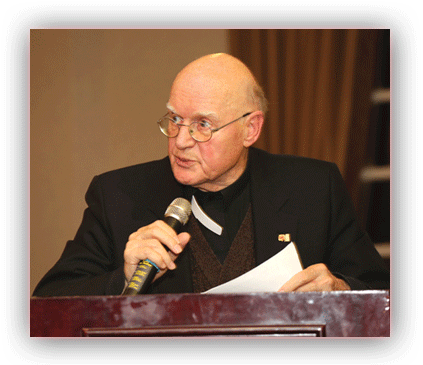
Remembering Father Alphonse de Valk
(Today marks the sixth anniversary of the death of Father Alphonse de Valk, C.S.B., a faithful, courageous and indefatigable Basilian priest, pro-life-and-family apostle, and the founder of Catholic Insight magazine. Here is what we wrote those on his entering into eternity five years ago, as we continue to remember him in our prayers and thoughts)[…]Continue reading→
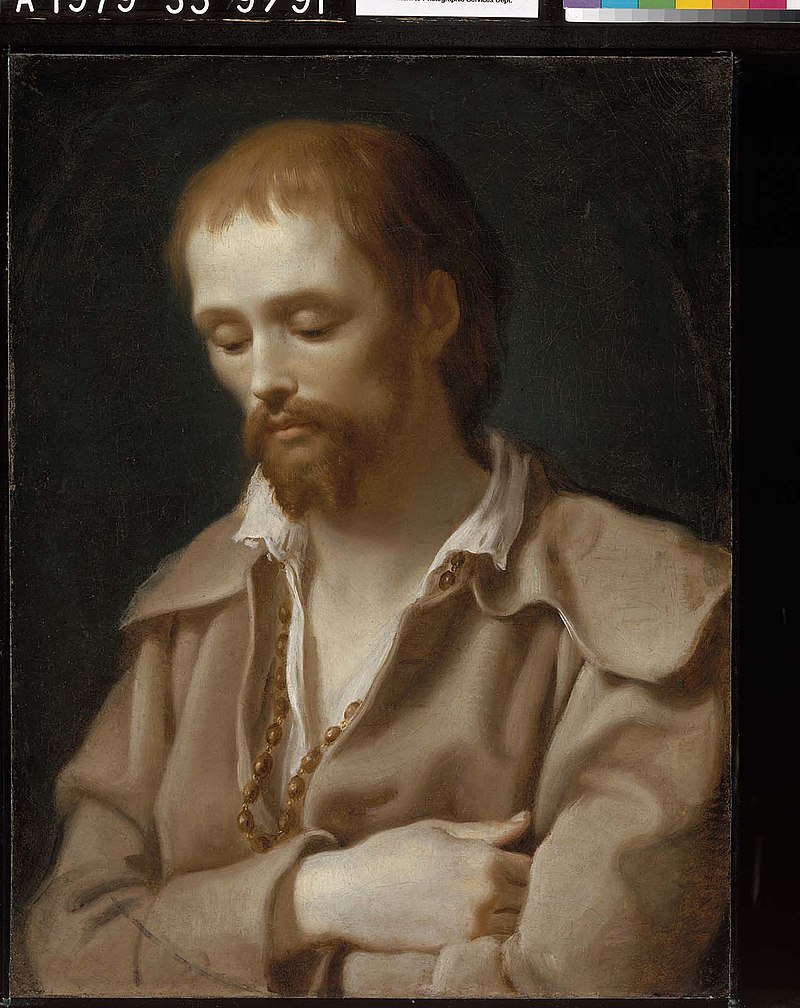
A Tale of Two Benedicts
A grace-filled Holy Week to all our readers! As we await and prepare for the Resurrection about to dawn upon us, we might keep in mind two Benedicts: Pope Emeritus Benedict XVI, requiescat in pace, elected on this day in 2005; and today’s commemoration of the mystic pilgrim, Benedict Joseph Labre, who died on this[…]Continue reading→

My Name is Bernadette
April 16th is a propitious day, for besides the anniversary of Father de Valk’s death, who founded Catholic Insight in its print form decades ago, and the commemoration of the ‘two Benedicts’, mentioned in accompanying posts, today we also recall Saint Bernadette Soubirous, the young visionary to whom the Virgin Mary appeared numerous times at[…]Continue reading→
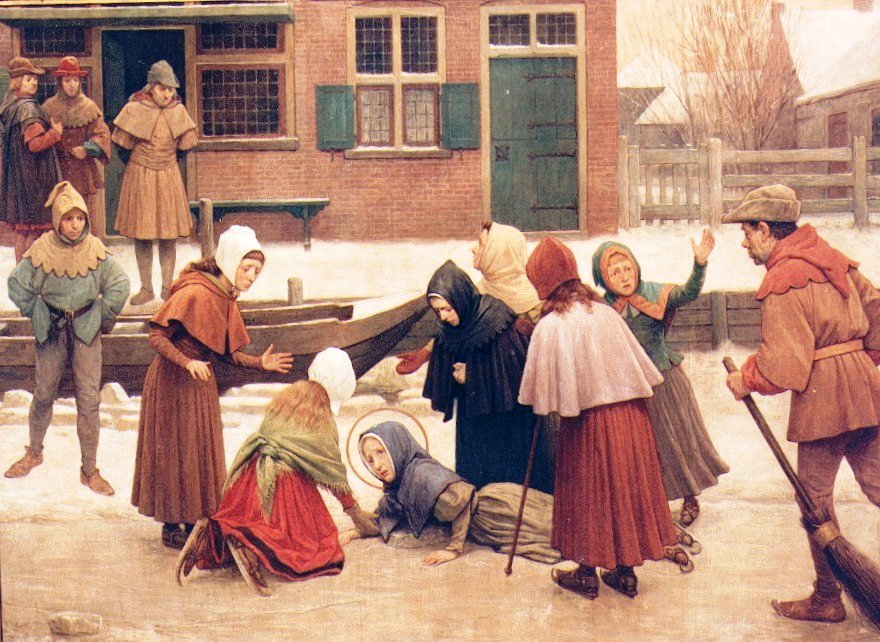
Saint Lydwina of Schiedam and Suffering Joyfully
Saint Lydwina of Schiedam (1380 – 1433) was one of the countless and glorious ‘victim souls’ in the history of the Church, those whose lives are filled with suffering, often of an unimaginable intensity, but who suffer joyfully. She was a fifteen-year old Dutch girl, out skating one day, when she fell and broke one[…]Continue reading→
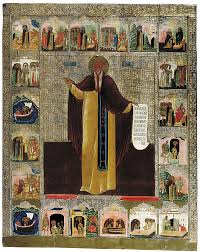
The Glorious Martyrdoms of Martin and Maximus
As we enter into Eastertide, we recall on this 13th of April Pope Saint Martin I (+655), one of the noblest, if most tragic, of the successors of Saint Peter. Born in Umbria, Italy, he was of noble lineage, with great intelligence combined with charity and love of the poor and the Church. While still[…]Continue reading→
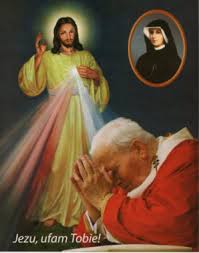
Canonizing Sister Faustina and Divine Mercy
HOMILY OF THE HOLY FATHER MASS IN ST PETER’S SQUARE FOR THE CANONIZATION OF SR MARY FAUSTINA KOWALSKA Sunday, 30 April 2000 1. “Confitemini Domino quoniam bonus, quoniam in saeculum misericordia eius”; “Give thanks to the Lord for he is good; his steadfast love endures for ever” (Ps 118: 1). So the Church sings on the Octave of[…]Continue reading→
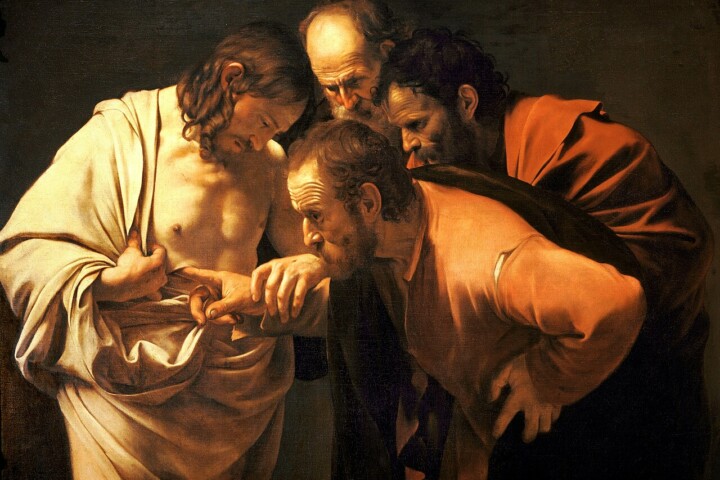
Divine Mercy Sunday – An Echo of Every Mass
Reach out your hand and put it in my side. Do not doubt but believe’… ‘My Lord and my God!’ (Jn. 20:18)). Today is Divine Mercy Sunday, and as we celebrate the end of the Easter Octave, we contemplate the wounded side of our Saviour, the Church’s source of life. On Good Friday in the[…]Continue reading→

Saint Stanislaus of Szczepanów
We celebrate Saint Stanislaus today (+ April 11, 1079), in light of this Easter Octave, a bishop and martyr who accepted the episcopacy only at the direct order of Pope Alexander II. He proved a wise and courageous leader of his flock, put to death by his own king, Boleslaus, for rebuking the monarch’s ‘immoral[…]Continue reading→