
Prayerful Protest and Niqabs?
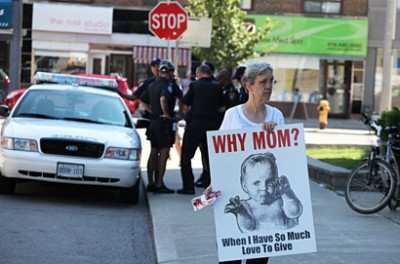
Although I agree with much of what Father Raymond de Souza says in his recent column in the National Post, I must respectfully disagree with his comparison between the recent ‘bubble zone’ law in the Ontario, and the ‘niqab’ law in Quebec. He is correct, that both laws stem from regimes that can be described as totalitarian, with both Liberal parties expanding the reach of the State into areas where it dare not tread, and not in benign ways.
Yet how to compare those claiming the right to protest the ongoing holocaust of abortion (and hopefully saving some mothers and children from this heinous act), with the purported right for female Muslims never to reveal their faces?
The first right is not, strictly speaking, a religious question, but one of direct and plain natural law, based on the very right to life of the most innocent and defenceless humans, which all of us, Catholic or not, have the concomitant right and duty to protect and uphold. With this 50 to 150 metre zone of enforced ‘silence’, even the last bastion of such defence has been removed.
The second (purported) right is purely a religious question, and not a very defensible one. As I wrote recently, people have a duty at certain times and places to reveal their identity, without which society cannot function. Father de Souza’s rather tendentious example of a Muslim woman, presumably wearing a little decorative niqab, picking up little Muhammad at the daycare, like she has done so many times before and where is so well-known, is not really what is at stake.
What if the Muslim mother has gone full burqa, the day-care provider new on the job, and furthermore has no idea whether there is a woman or man underneath the layers of cloth? To extend the example, what if the same woman wants to board a plane in the same attire? Or be hired for a job? Or use a Costco membership card? Perhaps I misconstrue, but are we to understand from Father de Souza’s implicit argument that there are no cases wherein people, Muslim or otherwise, can be coerced to reveal their faces? Even the fact that they must be so forced indicates the cultural divide already evident.
I am all for limits to the State, and share Father’s sympathies against totalitarian creep, but there are times when even totalitarian regimes can enact laws that approximate sanity.
Yet, and yet: As I myself implied in that same recent article, I agree that the executive branch, police officers and officials, will have a tough time enforcing this law. As Saint Thomas wrote, custom has the force of law, abolishes law and is the interpreter of law, and custom is based on culture, which in turn is based on religion.
Quebec’s cultures and customs are no longer Christian, indeed no longer much of anything, except perhaps a vague and inchoate spirit of ‘Quebecois-ness’, founded primarily on a near-fanatical, dare I say religious, adherence to their language. So the stronger culture, founded on the much firmer bedrock of their religion, seems to be filling in the vacuum, which a flailing reactionary law founded on not much of anything will do little to hinder.

Carney’s Amoral Majority
After five defections – euphemistically described as ‘crossing the floor’ – and three by-elections, Mark Carney and his Liberals how have their coveted majority. One wonders what bowls of pottage were offered in back-room deals. In the archaic monarchical system that is the Dominion of Canada, this majority allows the newly-minted Prime Minister to rule[…]Continue reading→

Saint Kateri , Canada’s Protectress
This was the title given to Saint Kateri Tekakwitha, by Pope Benedict XVI, when he canonized her on October 28th, 2012, along with six others, in Saint Peter’ Square (she had been beatified by Pope John Paul II back in 1980). With Saint Joseph as our protector, along with the Canadian martyrs, we seem to[…]Continue reading→

A Tale of Two Benedicts
A grace-filled Holy Week to all our readers! As we await and prepare for the Resurrection about to dawn upon us, we might keep in mind two Benedicts: Pope Emeritus Benedict XVI, requiescat in pace, elected on this day in 2005; and today’s commemoration of the mystic pilgrim, Benedict Joseph Labre, who died on this[…]Continue reading→

My Name is Bernadette
April 16th is a propitious day, for besides the anniversary of Father de Valk’s death, who founded Catholic Insight in its print form decades ago, and the commemoration of the ‘two Benedicts’, mentioned in accompanying posts, today we also recall Saint Bernadette Soubirous, the young visionary to whom the Virgin Mary appeared numerous times at[…]Continue reading→

Saint Lydwina of Schiedam and Suffering Joyfully
Saint Lydwina of Schiedam (1380 – 1433) was one of the countless and glorious ‘victim souls’ in the history of the Church, those whose lives are filled with suffering, often of an unimaginable intensity, but who suffer joyfully. She was a fifteen-year old Dutch girl, out skating one day, when she fell and broke one[…]Continue reading→

The Glorious Martyrdoms of Martin and Maximus
As we enter into Eastertide, we recall on this 13th of April Pope Saint Martin I (+655), one of the noblest, if most tragic, of the successors of Saint Peter. Born in Umbria, Italy, he was of noble lineage, with great intelligence combined with charity and love of the poor and the Church. While still[…]Continue reading→

Saint Stanislaus of Szczepanów
We celebrate Saint Stanislaus today (+ April 11, 1079), in light of this Easter Octave, a bishop and martyr who accepted the episcopacy only at the direct order of Pope Alexander II. He proved a wise and courageous leader of his flock, put to death by his own king, Boleslaus, for rebuking the monarch’s ‘immoral[…]Continue reading→

Saint Gemma Galgani
On this April 11th, in 1903 – the same year that the Italian Guiseppe Sarto was elected Pope later that summer as Pius X – a lovely, young Italian woman died, by the name of Gemma Galgani. She lived a brief life of 24 years, as did a number of other young saints, including Pier[…]Continue reading→
An Ideological and Improper Translation
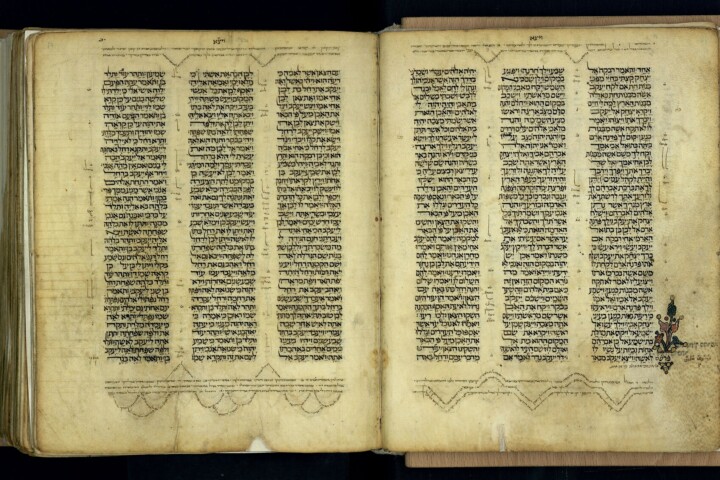
I noticed something odd with the psalm reading at Mass the other day. Our bishops’ conference here in Canada has decreed that the Mass in English – Novus Ordo – use the ‘NRSV’, the ‘New Revised Standard Version’, an ‘updated’ translation of the original RSV, first published in 1952. This ‘new translation’ has the tendency[…]Continue reading→
Saint Jean-Baptiste de la Salle: A Teacher for Teachers
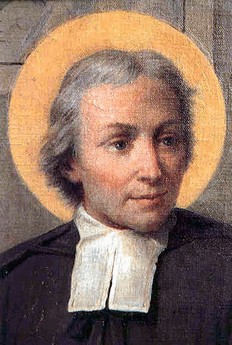
Jean-Baptiste de la Salle (1651 – 1719), a French nobleman, ordained a priest, founded the first order in the Church’s history entirely without priests, and this came about almost by accident. I say ‘almost’, for, of course, there are no accidents with God. Destined for ordination from an early age, Jean-Baptiste never looked back, even[…]Continue reading→