

A Catholic Goes to the Movies
Conclusion
(What follows is the conclusion to Father Daniel Callum’s, C.S.B, new book, “A Catholic Goes to the Movies”, just published by Justin Press. For details on the book, and the upcoming book launch on November 19th at Holy Rosary Church in Toronto, please see the Nota in Brevis section.) Editor.
The ancient Greeks, whom we have learnt to admire, had two cosmologies. One of them, proposed by the philosopher Zeno of Elea, held that motion is an illusion. The world is utterly static; nothing ever changes or ever could. The second view, propounded by the historians Herodotus and Thucydides, was cyclic in character. History repeats itself, like a giant wheel, which after aeons finds itself at its starting point, at which point the whole business recommences A literary parallel is found in James Joyce’s Finnegans Wake in which the last sentence is identical with the first one. Thus the reader, ready to close with a sigh of relief this long and difficult book, finds himself thrown back to the beginning, required to begin afresh, reading and rereading it in endless cycles. The basis for these radically different approaches is, paradoxically, the same for each of them: a conviction that the cosmos is eternal. The immediate implication of this belief is that everything that could happen already has happened, for no matter how long an event may have been in the coming, it will already have taken place in the distant past. The only way, then, to account for the changes we encounter is either to deny them (Zeno) or to imagine endless repetitions of the same original chain of events (Herodotus and Thucydides).
Christianity is different. Our history is linear, with a starting point—creation—and a conclusion—judgment. Also, in Christian cosmology history is essentially a matter of morality, as the word “judgment” indicates. One day, the prophets tell us, justice will be done: “Many of those who sleep in the dust of the earth shall awake, some to everlasting life, and some to shame and everlasting contempt.” This apocalyptic vision, which developed in late Judaism, continues in the New Testament with the book of Revelation, the Apocalypse, whose theme is the fearful events at the end of time. One consequence of this view of history is the recognitions that literature, generally speaking, is Christian; a story has a beginning a development and an end, which will be deemed satisfactory if virtue is rewarded and vice is punished. Consider fairy tales. Cinderella marries the prince, and the wicked stepsisters are, if not punished, certainly contrite. The “happily ever after” of folklore corresponds to the beatific vision of heaven, for the ultimate romance is the story recounted in the Bible, from Genesis to the Apocalypse. In it, boy meets girl, boy loses girl, boy gets girl. The “boy” is God, the bridegroom of his people, the bride. In Eden, the marriage of heaven and earth was celebrated. The relationship was initially ruptured by Original Sin, a rupture then intensified by the repeated idolatry of the chosen people, which the prophets compare to infidelity in marriage: “. . . the land commits great harlotry by forsaking the Lord.” In Jesus Christ, the new bridegroom, come to claim his bride, the marriage bond is permanently restored:
And I saw the holy city, new Jerusalem, coming down out of heaven from God, prepared as a bride adorned for her husband; and I heard a loud voice from the throne saying, “Behold, the dwelling of God is with men.”
All the great old tales have this pattern. A prime instance would be the murder mysteries from the 1920s to the 1950s, “the golden age.” A well-ordered society has had its peace shattered by a murder, the greatest of all crimes. The detective, as a type of redeemer, identifies and then expels the culprit, thus restoring the community to its innocent, beatific state. Agatha Christie’s Miss Marple is a strikingly successful embodiment of this principle. But so is Shakespeare, in the final scene when the stage, littered with bodies or filled with couples, portrays the beginning of a new era. Things are now as they should be. Jane Austen knew what she was about when Darcy and Elizabeth marry; even Dickens, despite an almost Manichaean portrayal of the power of evil, insists on dispensing justice and reward in that obligatory final chapter.
One might want to object that these conventions from the past have been abandoned in contemporary narratives that leave matters unresolved at the end of the story. By and large, I would say, the discrepancy is only apparent. Many of Flannery O’Connor’s stories, such as The Life You Save May Be Your Own, at first reading seem to be open-ended, but on closer examination one discovers that she has given us all we need to know about her characters. The details of their subsequent histories are not necessary, for they are already implied in what has been provided. The often-violent nature of her work is also consonant with the seriousness of her intent, for, as Muriel Spark noted, “. . . a vision of evil may be as effective to conversion as a vision of good.” The theatre of the absurd may seem to be another exception to the view that I am advancing, but it does in fact have a thesis, even if it is only to conclude—the operative word—that life is without meaning. The curtain eventually has to drop, the actors to leave the stage, remove their makeup and then trudge home, all actions that give the lie to the absurdities they have been busy communicating on the stage. But movies are a different matter; for the most part, they are realistic in their presentations and traditional in their plots, and, once the intrigues of the story are resolved, we can leave the cinema reassured that heroism or ingenuity can overcome the disruptive forces that threaten the well-being of the characters, society or the entire world. Movies are a popular form of entertainment, functioning as folklore for contemporary men and women. Basic plots may be endlessly recycled, but each will have its climax and ultimate resolution. As such, movies reward close examination, and I trust that the reviews you have read in the book will have provided the insights we need to recognize Gospel truth in unconventional settings.

Remembering Father Alphonse de Valk
(Today marks the sixth anniversary of the death of Father Alphonse de Valk, C.S.B., a faithful, courageous and indefatigable Basilian priest, pro-life-and-family apostle, and the founder of Catholic Insight magazine. Here is what we wrote those on his entering into eternity five years ago, as we continue to remember him in our prayers and thoughts)[…]Continue reading→

Divine Mercy Sunday – An Echo of Every Mass
Reach out your hand and put it in my side. Do not doubt but believe’… ‘My Lord and my God!’ (Jn. 20:18)). Today is Divine Mercy Sunday, and as we celebrate the end of the Easter Octave, we contemplate the wounded side of our Saviour, the Church’s source of life. On Good Friday in the[…]Continue reading→

In the Glorious Light of Easter, Alleluia!
Set your minds on things that are above, not on things that are on earth, for you have died, and your life is hidden with Christ in God. When Christ who is your life is revealed, then you also will be revealed with him in glory (Col. 3:3-4). The Resurrection of Our Lord and Saviour[…]Continue reading→

An Ancient Homily for Holy Saturday
The time between Good Friday and Easter Sunday is one of waiting, in silence, as the world wonders – anticipates – what will happen, after the death of Christ. We re-live this time each year in the anamnesis of our liturgy, and in turn look forward to the glorious re-creation of all things at the[…]Continue reading→
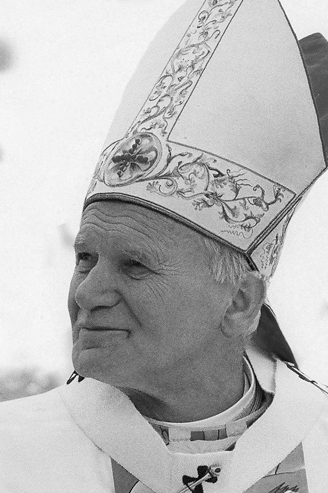
Pope Saint John Paul II’s First Good Friday Homily
ADDRESS OF HIS HOLINESS JOHN PAUL II AT THE CONCLUSION OF THE STATIONS OF THE CROSS AT THE COLOSSEUM Good Friday, 13 April 1979 When we make the Way of the Cross from one station to the next, in spirit we are always at the spot wherethis journey had its “historical” place: where it[…]Continue reading→
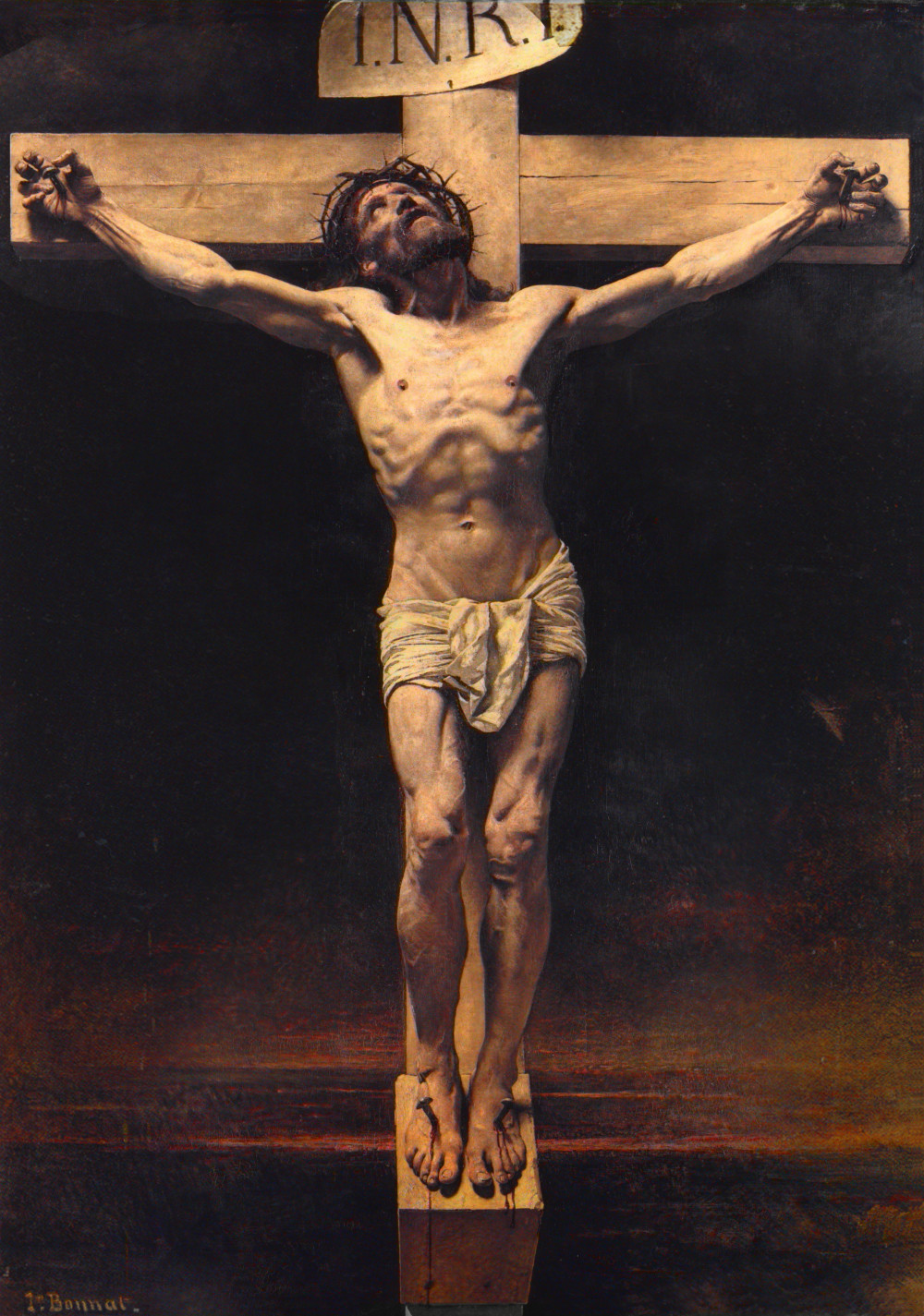
A Meditation for Good Friday: How To Undo the Effects of Sin?
Cardinal Newman, now Saint John Henry Newman, was a towering figure of nineteenth-century Catholicism who is almost universally admired. I say “almost” because not everyone likes him. I knew a priest once, Arthur Caulkins, who has become disenchanted with Newman. As an undergraduate Arthur had been enamoured of Newman, and this interest continued when he[…]Continue reading→
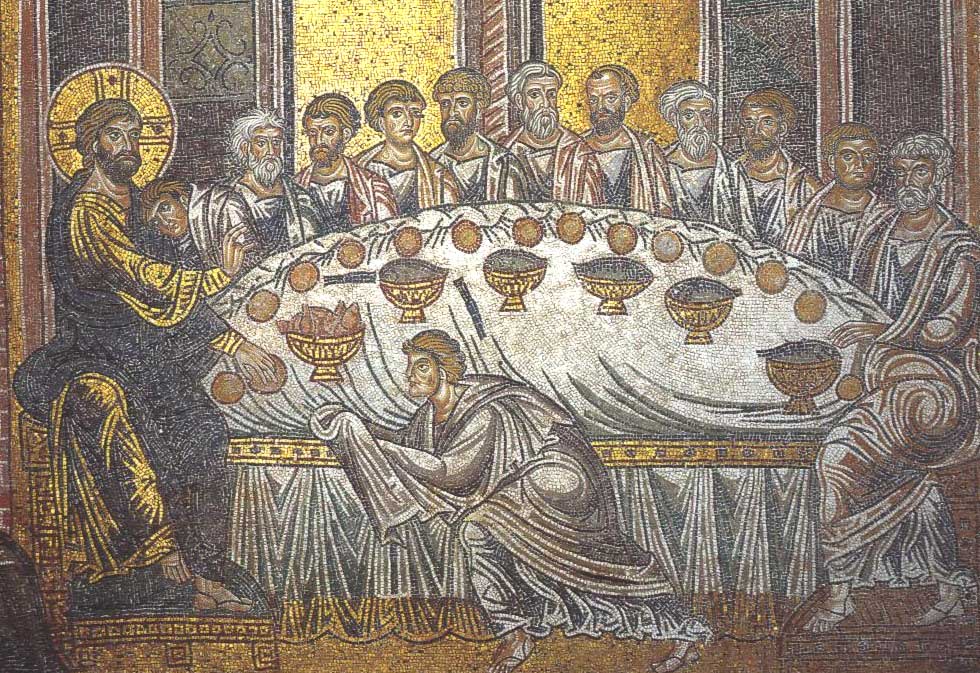
Pope Benedict’s Last Holy Thursday Homily
MASS OF THE LORD’S SUPPER HOMILY OF HIS HOLINESS BENEDICT XVI Basilica of St John Lateran Holy Thursday, 5 April 2012 Photo Gallery (Video) Dear Brothers and Sisters! Holy Thursday is not only the day of the institution of the Most Holy Eucharist, whose splendour bathes all else and in some ways draws it to[…]Continue reading→
Homily of John Paul II in the Basilica of the Annunciation
A blessed Solemnity of the Annunciation to one and all! Verbum caro factum est! Here is a meditation of the late, great John Paul II, staunchly devoted to Our Lady, from the Jubilee Year, just over a quarter of century ago, to provide food for thought, as we celebrate, and pray. Editor. JUBILEE PILGRIMAGE OF[…]Continue reading→
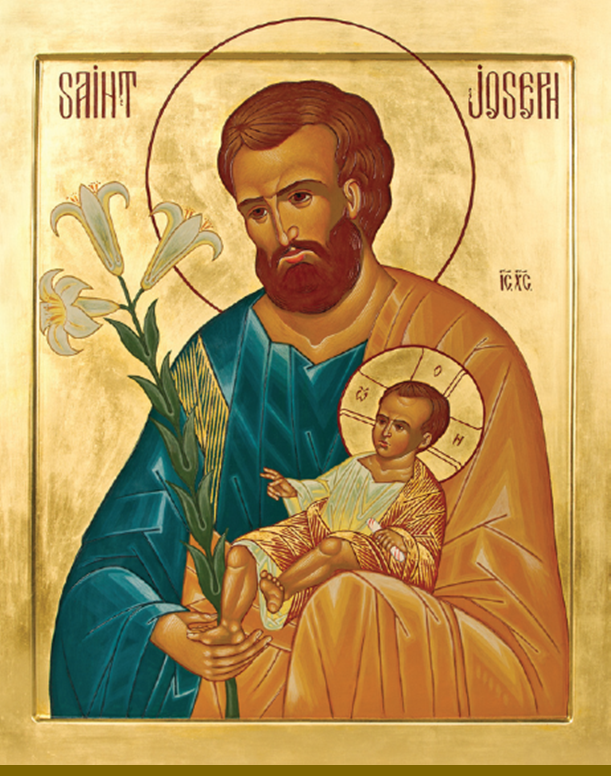
Homily of Pope Benedict on Saint Joseph
APOSTOLIC JOURNEY OF THE HOLY FATHER BENEDICT XVI TO CAMEROON AND ANGOLA (MARCH 17-23, 2009) EUCHARISTIC CELEBRATION ON THE OCCASION OF THE PUBLICATION OF THE INSTRUMENTUM LABORIS HOMILY OF THE HOLY FATHER BENEDICT XVI Amadou Ahidjo Stadium of Yaoundé Thursady, 19 March 2009 Dear Brother Bishops, Dear Brothers and Sisters, Praised be Jesus Christ who has gathered[…]Continue reading→
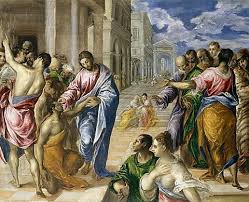
Fourth Sunday of Lent: Siloam and Spiritual Blindness
Once you were darkness, but now in the Lord you are light. Live as children of light – for the fruit of the light is found in all that is good and true (Eph. 5:8-9). The account of the cure of the blind man at the pool of Siloam, like the account of the conversation[…]Continue reading→