
Fourth Sunday of Lent: Siloam and Spiritual Blindness
Once you were darkness, but now in the Lord you are light. Live as children of light – for the fruit of the light is found in all that is good and true (Eph. 5:8-9).
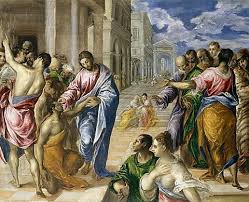
The account of the cure of the blind man at the pool of Siloam, like the account of the conversation of Our Lord with the Samaritan woman that we reflected on last Sunday is about faith. The focus is on faith because originally, Lent was a time of preparation for the sacrament of Baptism; and this story of the blind man teaches us much about the virtue of faith infused into our souls at Baptism, and how this life of faith develops and matures. We can appreciate account from two perspectives or senses. According to Sacred Tradition, when we read Sacred Scripture, we can distinguish between two senses (or levels) of meaning: the literal sense and the spiritual sense. The literal sense is the meaning conveyed by the words of Scripture, what the text actually says. The spiritual sense interprets the events and realities in the text. We interpret them in Christ; that is to say, by the light of Our Lord’s life and truth. We try to understand and see the events recorded in light of the truth of Jesus, that He is the Lord, the Way, the Truth and the Life; that He is the light of the world (Jn. 8:12). All His actions show His wisdom and love.
At the literal level, we have just heard the story of a man, blind from birth. Our Lord has pity on him and He cures him. St. John records the healing briefly, in three verses. Neither the blind man nor his parents and neighbours ask for a cure. Our Lord is moved with compassion for him and cures him. The initiative on Our Lord’s part reminds us that God’s love is so great that even when we turn away from Him in sin, it is always He who takes the first step in bringing us back to Him. As the story continues, we see that something happens to the blind man as a result of his encounter with Our Lord. The man born blind becomes capable of sight not only in the literal meaning of the term, but also in the spiritual sense: his eyes open to faith and he recognises who Jesus really is and what He has done for Him. It is a gradual realisation. When questioned about his healing, the man now cured refers to Our Lord first as the man called Jesus, then, a prophet, and finally, he recognises Him as the Son of God, calling Him Lord. He has come to faith and so he professes, ‘Lord, I believe’. And he worshipped Him (Jn. 9:38).
As we observe the discipline of Lent and prepare to renew our Baptismal promises on Easter Sunday, it is our hope that as we have lived our Christian life, there has been a deepening in our relationship with Our Lord; that our worship of God in spirit and truth has matured and become an indispensable aspect of who we are; such that it can be said that we are immersed in the mystery of God. The sacrament of Baptism which is the basis for the whole Christian life receives its name from a word meaning to plunge or to immerse. It is also called enlightenment (Catechism of the Catholic Church, 1216) because those who are baptized have been enlightened by Christ, the Light of the world.
We see in the waters of Siloam the healing waters of Baptism and in the man healed of his blindness we see ourselves. Though his sight was quickly restored, his inner eyes were opened progressively and so he was brought to faith. So it is with us. In Baptism we were healed of our sin, regenerated, delivered from slavery and enlightened by Christ. Nevertheless, our whole life is an ongoing effort to come to a deeper and more mature faith and a more intimate knowledge of God Himself. This is the grace of every new liturgical year, and most certainly the grace of every holy season of Lent.
We must not be like the Pharisees who, sure of their knowledge, found themselves charged with guilt and ignorance. Theirs was a spiritual blindness or complacency that prevented them from receiving the grace made present in Christ Our Lord. We too must be careful lest we become complacent and even resentful when presented with opportunities for spiritual growth. Complacency is a sure way to dampen the fire of devotion and hence, the fire of love for both God and neighbour. Our Lord desires that we love Him with the intensity of love and devotion that His Sacred Passion reveals to us. A sure way to deepen our love for Him and to rid ourselves of complacency is the sacrament of Confession which some of the early Church Fathers referred to as a baptism of tears. In the Confessional also we are enlightened, instructed and healed; so that we rightly worship Our Lord in spirit and truth. We are bound by Church law to confess our sins at least once a year during the Lenten season. St. John, the Beloved Disciple wrote in his first epistle: If we say we have no sin, we deceive ourselves, and the truth is not in us. If we confess our sins, he is faithful and just, and will forgive our sins and cleanse us from all unrighteousness (1 Jn. 1:8-9).
Let us be mindful that one of the effects of sin, especially sin that we have not repented of is the darkening of the intellect, a spiritual blindness of sorts which in turn, causes our hearts to grow cold and even to abhor the things of God. I shudder at the thought. Pray for the conversion of sinners. In all humility let us also pray for our own ongoing conversion in grace and let us never cease to thank God who has led us into the radiance of the faith. Once you were darkness, but now in the Lord you are light. Live as children of light – for the fruit of the light is found in all that is good and true (Eph. 5:8-9).

Remembering Father Alphonse de Valk
(Today marks the sixth anniversary of the death of Father Alphonse de Valk, C.S.B., a faithful, courageous and indefatigable Basilian priest, pro-life-and-family apostle, and the founder of Catholic Insight magazine. Here is what we wrote those on his entering into eternity five years ago, as we continue to remember him in our prayers and thoughts)[…]Continue reading→

Divine Mercy Sunday – An Echo of Every Mass
Reach out your hand and put it in my side. Do not doubt but believe’… ‘My Lord and my God!’ (Jn. 20:18)). Today is Divine Mercy Sunday, and as we celebrate the end of the Easter Octave, we contemplate the wounded side of our Saviour, the Church’s source of life. On Good Friday in the[…]Continue reading→

Saint Stanislaus of Szczepanów
We celebrate Saint Stanislaus today (+ April 11, 1079), in light of this Easter Octave, a bishop and martyr who accepted the episcopacy only at the direct order of Pope Alexander II. He proved a wise and courageous leader of his flock, put to death by his own king, Boleslaus, for rebuking the monarch’s ‘immoral[…]Continue reading→
First Holy Communion: Sermon from May 16, 1943
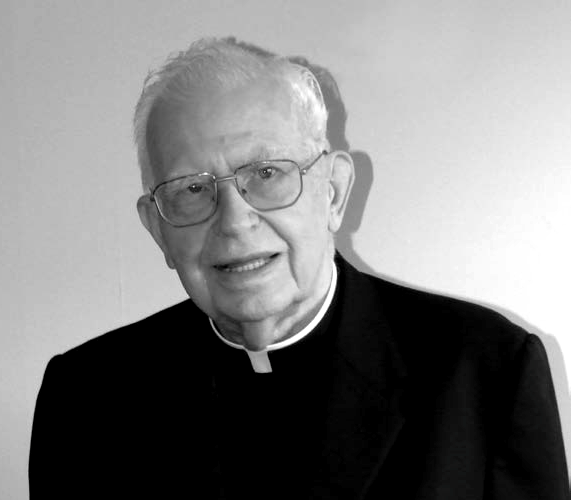
Here is a sermon from the good old days by +Rev. Msgr. Vincent Nicholas Foy (August 14, 1915 – March 13, 2017), from 1943. Readers may recall that Pope Saint Pius X, by the decree Quam Singulari in 1910, lowered the customary age of reception of Holy Communion – after the rigours of the plague[…]Continue reading→
In the Glorious Light of Easter, Alleluia!
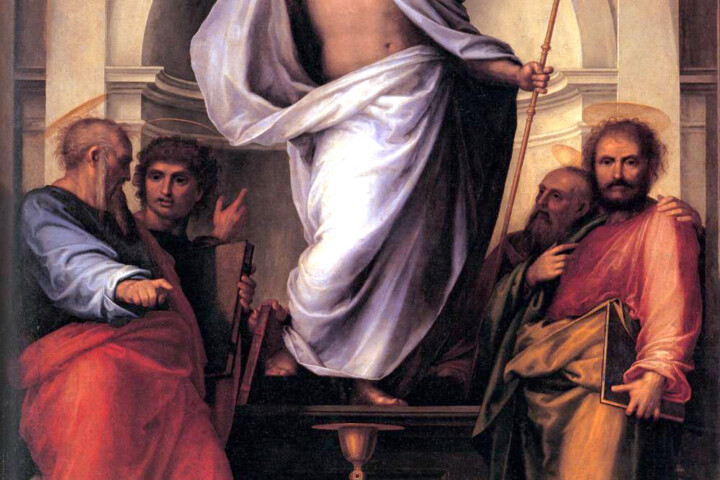
Set your minds on things that are above, not on things that are on earth, for you have died, and your life is hidden with Christ in God. When Christ who is your life is revealed, then you also will be revealed with him in glory (Col. 3:3-4). The Resurrection of Our Lord and Saviour[…]Continue reading→
An Ancient Homily for Holy Saturday
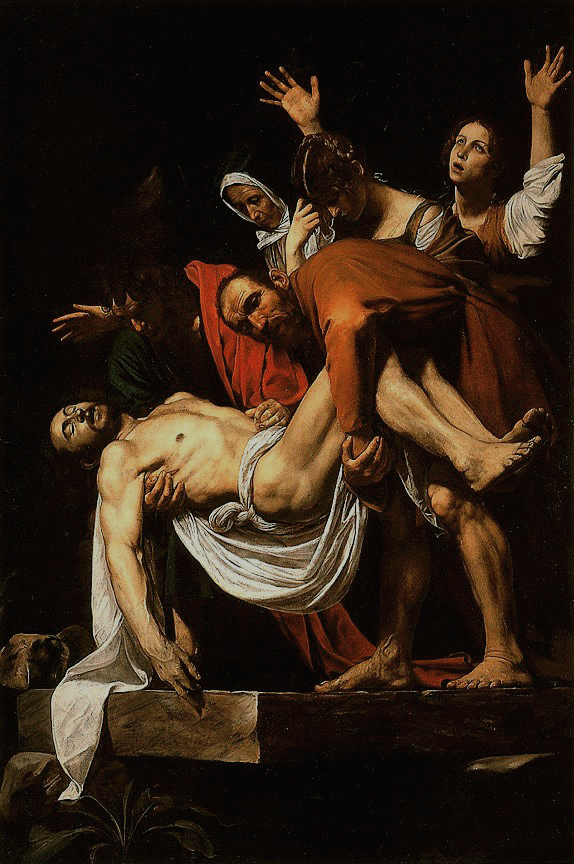
The time between Good Friday and Easter Sunday is one of waiting, in silence, as the world wonders – anticipates – what will happen, after the death of Christ. We re-live this time each year in the anamnesis of our liturgy, and in turn look forward to the glorious re-creation of all things at the[…]Continue reading→
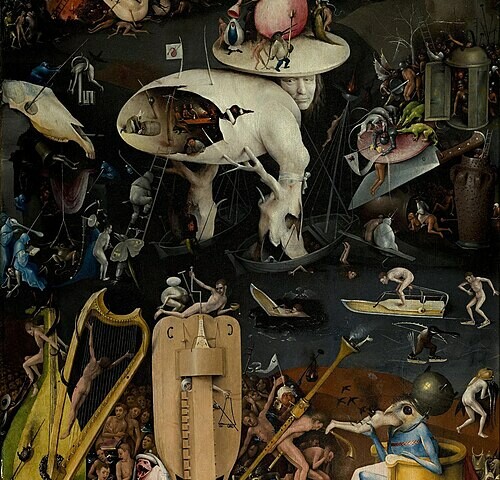
Europe’s Long Descent
(As we meditate on this day on Christ’s burial, and His descent into hell, it is fitting to ponder here with contributor Peter Marcus how the world seems to be heading there as well. The difference is that, although God cannot ‘redeem’ hell, nor those therein, He can and did redeem the world. There is[…]Continue reading→
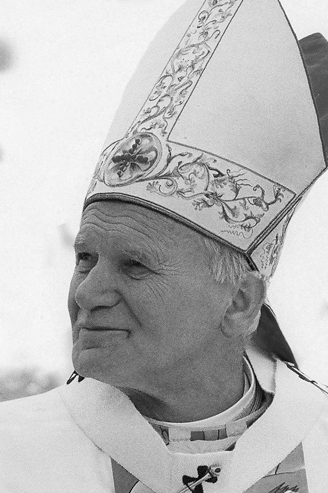
Pope Saint John Paul II’s First Good Friday Homily
ADDRESS OF HIS HOLINESS JOHN PAUL II AT THE CONCLUSION OF THE STATIONS OF THE CROSS AT THE COLOSSEUM Good Friday, 13 April 1979 When we make the Way of the Cross from one station to the next, in spirit we are always at the spot wherethis journey had its “historical” place: where it[…]Continue reading→
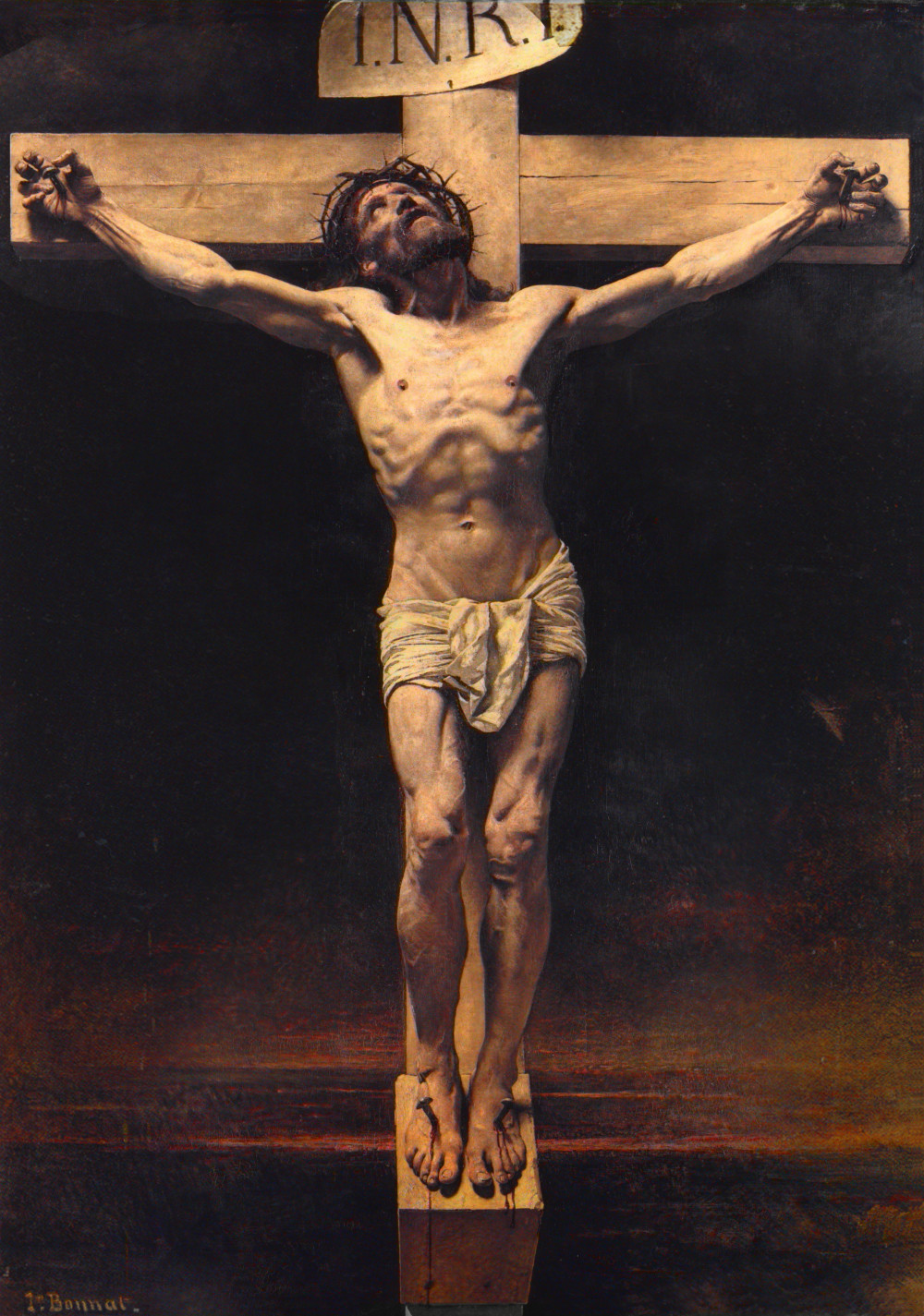
A Meditation for Good Friday: How To Undo the Effects of Sin?
Cardinal Newman, now Saint John Henry Newman, was a towering figure of nineteenth-century Catholicism who is almost universally admired. I say “almost” because not everyone likes him. I knew a priest once, Arthur Caulkins, who has become disenchanted with Newman. As an undergraduate Arthur had been enamoured of Newman, and this interest continued when he[…]Continue reading→
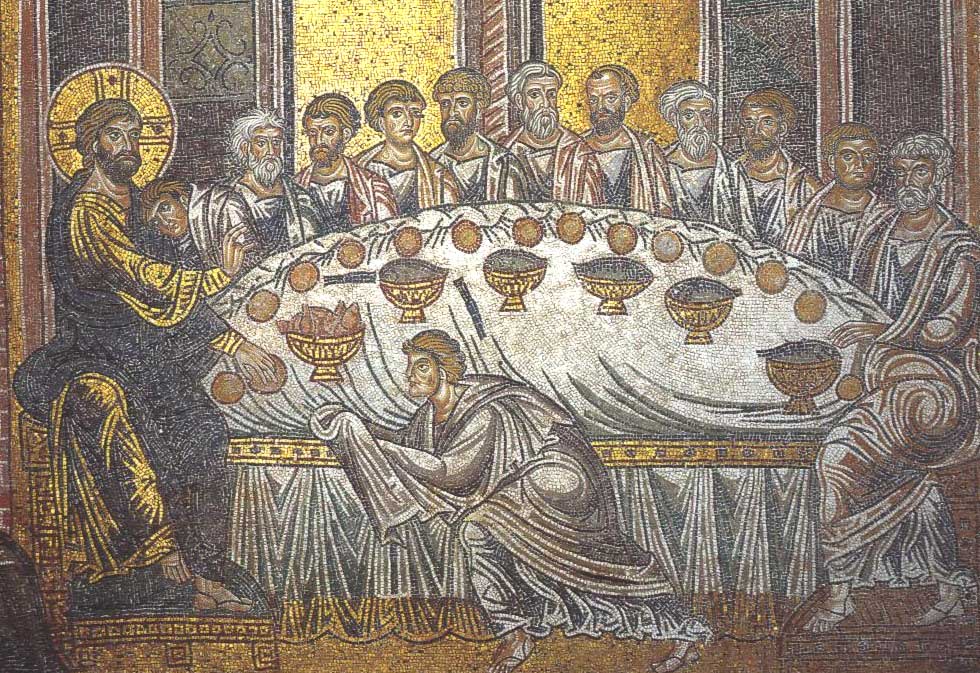
Pope Benedict’s Last Holy Thursday Homily
MASS OF THE LORD’S SUPPER HOMILY OF HIS HOLINESS BENEDICT XVI Basilica of St John Lateran Holy Thursday, 5 April 2012 Photo Gallery (Video) Dear Brothers and Sisters! Holy Thursday is not only the day of the institution of the Most Holy Eucharist, whose splendour bathes all else and in some ways draws it to[…]Continue reading→