
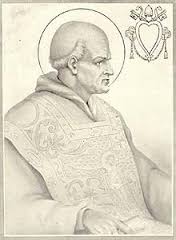
The Eternal Perspective of Pope Saint John I
Today is the feast of Pope Saint John I (470-526), the first Pope to visit Constantinople, on an ambassadorial mission to Emperor Justin on behalf of the Arian King Theodoric, now ruler of the Western empire. The purpose of the mission was to mitigate Justin’s decrees against Arians, a fourth-century heresy which denied the divinity of Christ, condemned by two ecumenical councils, but which still lingered in the Church, particularly amongst Germanic ‘barbarian’ converts like Theodoric.
Pope John made the arduous journey of over 1300 miles with a large and venerable retinue, and was received warmly by the Emperor. By any unbiased account, the Holy Father accomplished his mission, but was accused by Theodoric of conspiring with the emperor (relations between East and West were already fraying), put into a dank prison at Ravenna, where good Pope John, already old and frail, died of neglect and ill-treatment on this day in the year of Our Lord 526.
Providentially, another Pope who took half of his name, the great John Paul II, was born on this day in 1920. In Poland, and other European cultures, they do not celebrate their birthdays so much as the days of their patron saints (which for Karol Wojtyla was November 4th, Saint Charles Borromeo). But I am sure that Pope John was in some ways guiding the life of the young Karol, knowing he was destined to take on the mantle of the papacy, and travel, pray and suffer, more than his eponymous predecessor, for the Church universal. Curiously, John Paul II’s would-be assassin was from Turkey, where is found Constantinople, now named Istanbul.
It is only in the breadth of eternity that we can truly discern the events not only of this world, but in each of our individual lives. What in the rather limited scale of secularity appears as ‘failure’ may in fact be our greatest success, which is why we honour martyrs like Pope John. Like John Paul II 1500 years after him, his ending seems tragic, but their equanimity in persecution, misunderstanding, even apparent futility, sickness and death, is their greatest triumph.
It is also in this light that we should view the political events unfolding, in Washington and elsewhere. In his own way, Mark Steyn is correct in his column this morning, that what we witness with President Trump and the all the ‘deep state’ operatives out to ‘get him’ , all the tweets and emails and whispers, who said what to whom and when, vaguely remembered ‘memos, are more or less machinations in a hamster cage, missing the bigger picture: They accuse Trump of ‘treason’, while outside the hamster cage of Washington the very definition of ‘America’ is being dissolved by untrammelled immigration, demographic collapse and ungoverned debt now in the tens of trillions, and these are just the secular problems, outside all the moral degradation and the abandonment not only of Christian principles, but of reason itself.
The same here in Canada, as big-C ‘Conservatives’ vie for the leadership, few of whom get in any way the bigger picture. Canada is celebrating her 150th sesquicentennial birthday, and although this country offers much that is good, that good is being squandered, as we descend further into moral apathy and eventual anarchy.
The ‘real’ Canada happens not in Parliament Hill, and all their own machinations and manoeuvres which absorb the focus of our news sources, but in the homes and churches across this land, where children are raised in virtue and goodness, the Holy Eucharist offered each day, all the prayers and sacrifices of all people of good will who to some degree get the ‘bigger picture’, even if, especially if, their efforts seem small in the world’s eyes. Four men were ordained for the diocese of Toronto last week, a Jesuit friend will be ordained this Saturday, and four other young men, two of whom we had the honour and privilege of teaching here at Our Lady Seat of Wisdom, will be ordained on June 24th for the small diocese of Pembroke; and this says nothing of all the truly Christian marriages, that great and noble adventure, which will provide all the souls for the future of the Church, which these priests will help guide into eternity. This is what will save Canada in these troubled and tumultuous times, just as Pope John’s sacrifice helped ‘save’ the universal Church from its seemingly inevitable demise at the dawn of the ‘Dark Ages’, (if, indeed, Canada is to be saved). Whatever the future, God has all things in His most merciful hands.
Saint John and Saint John Paul, orate pro nobis, and pro patribus nostris!
Carney’s Amoral Majority
After five defections – euphemistically described as ‘crossing the floor’ – and three by-elections, Mark Carney and his Liberals how have their coveted majority. One wonders what bowls of pottage were offered in back-room deals. In the archaic monarchical system that is the Dominion of Canada, this majority allows the newly-minted Prime Minister to rule[…]Continue reading→

Saint Kateri , Canada’s Protectress
This was the title given to Saint Kateri Tekakwitha, by Pope Benedict XVI, when he canonized her on October 28th, 2012, along with six others, in Saint Peter’ Square (she had been beatified by Pope John Paul II back in 1980). With Saint Joseph as our protector, along with the Canadian martyrs, we seem to[…]Continue reading→
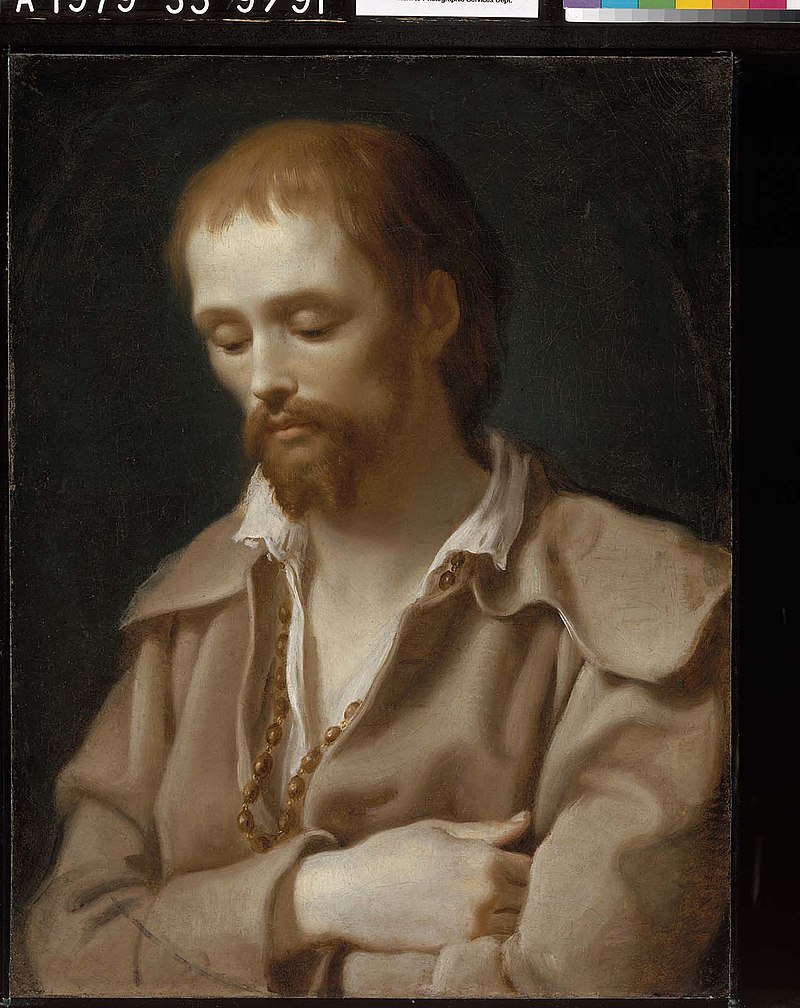
A Tale of Two Benedicts
A grace-filled Holy Week to all our readers! As we await and prepare for the Resurrection about to dawn upon us, we might keep in mind two Benedicts: Pope Emeritus Benedict XVI, requiescat in pace, elected on this day in 2005; and today’s commemoration of the mystic pilgrim, Benedict Joseph Labre, who died on this[…]Continue reading→

My Name is Bernadette
April 16th is a propitious day, for besides the anniversary of Father de Valk’s death, who founded Catholic Insight in its print form decades ago, and the commemoration of the ‘two Benedicts’, mentioned in accompanying posts, today we also recall Saint Bernadette Soubirous, the young visionary to whom the Virgin Mary appeared numerous times at[…]Continue reading→
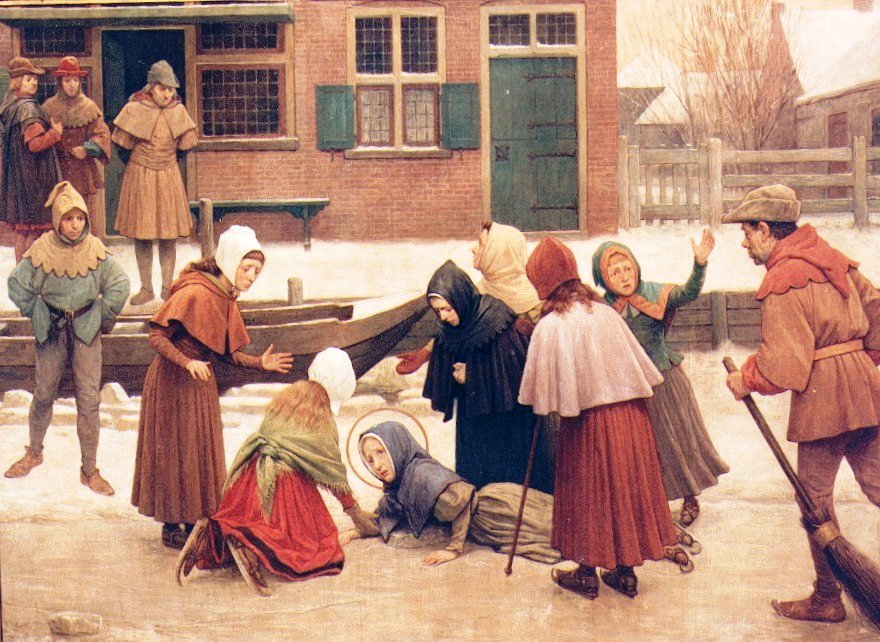
Saint Lydwina of Schiedam and Suffering Joyfully
Saint Lydwina of Schiedam (1380 – 1433) was one of the countless and glorious ‘victim souls’ in the history of the Church, those whose lives are filled with suffering, often of an unimaginable intensity, but who suffer joyfully. She was a fifteen-year old Dutch girl, out skating one day, when she fell and broke one[…]Continue reading→
The Glorious Martyrdoms of Martin and Maximus
As we enter into Eastertide, we recall on this 13th of April Pope Saint Martin I (+655), one of the noblest, if most tragic, of the successors of Saint Peter. Born in Umbria, Italy, he was of noble lineage, with great intelligence combined with charity and love of the poor and the Church. While still[…]Continue reading→

Saint Stanislaus of Szczepanów
We celebrate Saint Stanislaus today (+ April 11, 1079), in light of this Easter Octave, a bishop and martyr who accepted the episcopacy only at the direct order of Pope Alexander II. He proved a wise and courageous leader of his flock, put to death by his own king, Boleslaus, for rebuking the monarch’s ‘immoral[…]Continue reading→
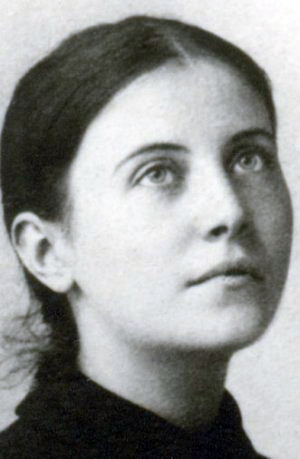
Saint Gemma Galgani
On this April 11th, in 1903 – the same year that the Italian Guiseppe Sarto was elected Pope later that summer as Pius X – a lovely, young Italian woman died, by the name of Gemma Galgani. She lived a brief life of 24 years, as did a number of other young saints, including Pier[…]Continue reading→
An Ideological and Improper Translation
I noticed something odd with the psalm reading at Mass the other day. Our bishops’ conference here in Canada has decreed that the Mass in English – Novus Ordo – use the ‘NRSV’, the ‘New Revised Standard Version’, an ‘updated’ translation of the original RSV, first published in 1952. This ‘new translation’ has the tendency[…]Continue reading→
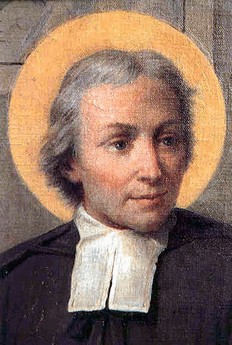
Saint Jean-Baptiste de la Salle: A Teacher for Teachers
Jean-Baptiste de la Salle (1651 – 1719), a French nobleman, ordained a priest, founded the first order in the Church’s history entirely without priests, and this came about almost by accident. I say ‘almost’, for, of course, there are no accidents with God. Destined for ordination from an early age, Jean-Baptiste never looked back, even[…]Continue reading→