
Trump Emends the Johnson Amendment
President Trump, to his credit, yesterday eased the restrictions of the Johnson Amendment, named after Lyndon B. Johnson, who in his time as Senator in 1954 proposed that non-profit organizations, including universities and churches, should be restricted from speaking on politics. In particular, they would not be permitted to ‘oppose’ a political candidate.
Johnson’s amendment was an attempt to maintain the fictitious and impossible ‘wall of separation’ between church and state, a misinterpretation of the original Constitution, which would be reiterated by the future President Kennedy in a speech in Dallas in 1960. Americans feared Kennedy would impose the teachings of the Catholic Church on the land.
Is it ever possible for man to detach himself from his religion and his conscience? Man is a seamless being, unitary in body and soul. We can leave neither our conscience nor our religion at home, when we go to work or vote or do anything else in the world. The documents of Vatican II declare that our conscience must be ‘integral’, not porous, haphazard. And that conscience should be formed in various ways, not least in the churches we attend, where priests, pastors and rabbis should be permitted to speak their own minds, applying the supernatural truths of religion to all aspects of life, not least politics.
Of course, as Pope Leo XIII taught, we have an obligation to have our consciences formed by the ‘one true religion’, and the State a corresponding duty to support, defend this same religion. In the modern era, this ideal is a far way off, so in the meantime, we do what we can, jostling within a pluralistic society.
The least the State can do is offer freedom for the truth to be proclaimed, within and outside of churches. There is no compartmentalization between politics and morality, not least since every decision we make is ‘moral’, involving our conscience.
The myth of separation between Church, State, between morality and politics, is a heresy, not only because it is not true, but because it is impossible.
Of course, there is a deeper problem here, with churches and other non-profit organizations dependent on the government for ‘tax breaks’. That still gives the government the right, the very whim, to determine what organizations are ‘charitable’, and the restrictions placed upon them for what constitutes their ‘charitable’ work.
But until those deeper problems are fixed, thank you to Trump, for bringing us some of the way back to normalcy.
Carney’s Amoral Majority
After five defections – euphemistically described as ‘crossing the floor’ – and three by-elections, Mark Carney and his Liberals how have their coveted majority. One wonders what bowls of pottage were offered in back-room deals. In the archaic monarchical system that is the Dominion of Canada, this majority allows the newly-minted Prime Minister to rule[…]Continue reading→

Saint Kateri , Canada’s Protectress
This was the title given to Saint Kateri Tekakwitha, by Pope Benedict XVI, when he canonized her on October 28th, 2012, along with six others, in Saint Peter’ Square (she had been beatified by Pope John Paul II back in 1980). With Saint Joseph as our protector, along with the Canadian martyrs, we seem to[…]Continue reading→
A Tale of Two Benedicts
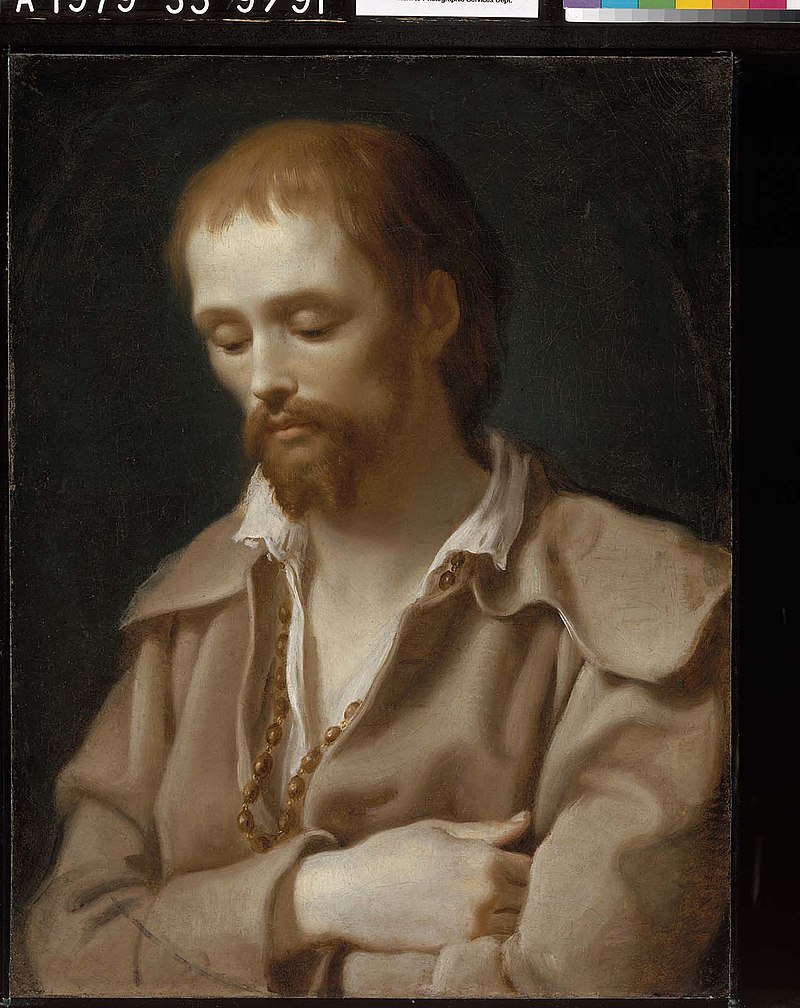
A grace-filled Holy Week to all our readers! As we await and prepare for the Resurrection about to dawn upon us, we might keep in mind two Benedicts: Pope Emeritus Benedict XVI, requiescat in pace, elected on this day in 2005; and today’s commemoration of the mystic pilgrim, Benedict Joseph Labre, who died on this[…]Continue reading→

My Name is Bernadette
April 16th is a propitious day, for besides the anniversary of Father de Valk’s death, who founded Catholic Insight in its print form decades ago, and the commemoration of the ‘two Benedicts’, mentioned in accompanying posts, today we also recall Saint Bernadette Soubirous, the young visionary to whom the Virgin Mary appeared numerous times at[…]Continue reading→
Saint Lydwina of Schiedam and Suffering Joyfully
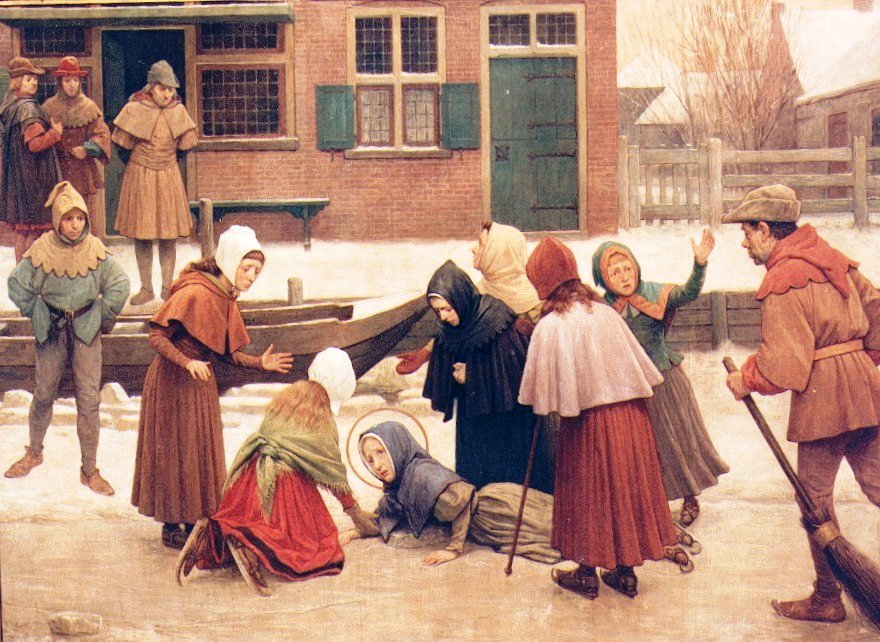
Saint Lydwina of Schiedam (1380 – 1433) was one of the countless and glorious ‘victim souls’ in the history of the Church, those whose lives are filled with suffering, often of an unimaginable intensity, but who suffer joyfully. She was a fifteen-year old Dutch girl, out skating one day, when she fell and broke one[…]Continue reading→
The Glorious Martyrdoms of Martin and Maximus
As we enter into Eastertide, we recall on this 13th of April Pope Saint Martin I (+655), one of the noblest, if most tragic, of the successors of Saint Peter. Born in Umbria, Italy, he was of noble lineage, with great intelligence combined with charity and love of the poor and the Church. While still[…]Continue reading→

Saint Stanislaus of Szczepanów
We celebrate Saint Stanislaus today (+ April 11, 1079), in light of this Easter Octave, a bishop and martyr who accepted the episcopacy only at the direct order of Pope Alexander II. He proved a wise and courageous leader of his flock, put to death by his own king, Boleslaus, for rebuking the monarch’s ‘immoral[…]Continue reading→
Saint Gemma Galgani
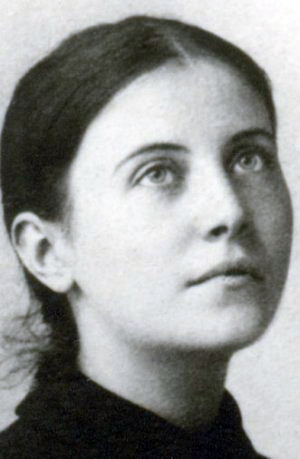
On this April 11th, in 1903 – the same year that the Italian Guiseppe Sarto was elected Pope later that summer as Pius X – a lovely, young Italian woman died, by the name of Gemma Galgani. She lived a brief life of 24 years, as did a number of other young saints, including Pier[…]Continue reading→
An Ideological and Improper Translation
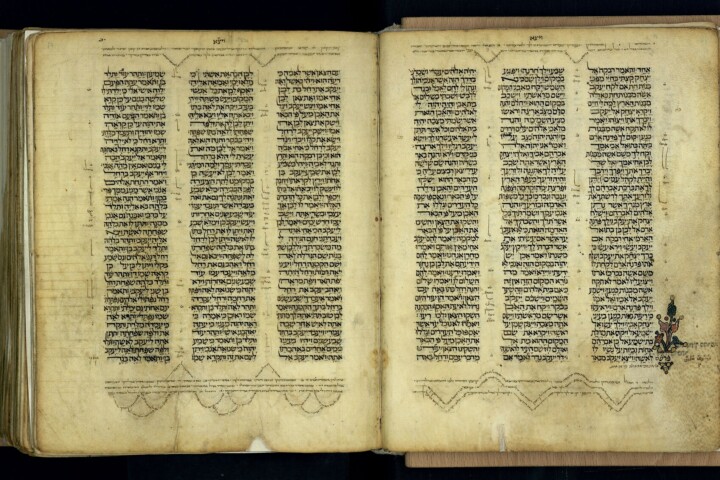
I noticed something odd with the psalm reading at Mass the other day. Our bishops’ conference here in Canada has decreed that the Mass in English – Novus Ordo – use the ‘NRSV’, the ‘New Revised Standard Version’, an ‘updated’ translation of the original RSV, first published in 1952. This ‘new translation’ has the tendency[…]Continue reading→
Saint Jean-Baptiste de la Salle: A Teacher for Teachers
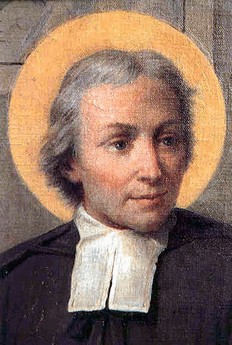
Jean-Baptiste de la Salle (1651 – 1719), a French nobleman, ordained a priest, founded the first order in the Church’s history entirely without priests, and this came about almost by accident. I say ‘almost’, for, of course, there are no accidents with God. Destined for ordination from an early age, Jean-Baptiste never looked back, even[…]Continue reading→