

M-87 and the Demise of Free Speech
Not one MPP, yes, nary a one of our elected representatives in provincial parliament, not on Conservative, not even the much-vaunted Sam Oosterhoof and all the rest of the Conservatives, raised a voice of protest, even a token one, against the recent provincial motion M-37 condemning, you guessed it, Islamophobia. Emotionally-driven legislating is never good at the best of times, and this is not the best of times. Newly minted representative Nathalie Des Rosiers put forward the motion, which passed with flying colours this week, as mentioned, unanimously. Here is the motivation for the motion in neophyte Des Rosiers’s own words:
I decided to table this motion as one of my first gestures as a new MPP, partly because in my riding of Ottawa-Vanier, I had the occasion to hear many of the members of the Muslim community who confided in me about the way in which they had suffered different incidents of racism
The last time I checked, Islam was a religion, not a race. Agreed, that a lot of members of a certain race, or part of the world, happen to be Muslim, but we should be clear about our terms, especially when law is concerned. There are also a lot of Muslims who are not from the Middle East, and there are a lot of people from the Middle East who are not Muslim. Are we to understand that religion and race are now inextricably confounded? That could cause a lot of confusion. In fact, there used to be a strong and vibrant Christian presence in that part of the world, now diminished almost to non-existence due to the strenuous efforts of a certain other religion, whose tenets our benign leaders now want to make above reproach.
To be clear, a ‘motion’, as many sympathetic commentators have emphasized, does not make anything technically illegal. But a motion such as this is propaedeutic to law, and certainly creates an environment of fear, hesitancy suspicion in speaking, writing, even thinking, anything on the topic at hand, especially if one is on the wrong side of the State enforcers.
Here are at least a few problems with the Motion that come to mind:
How can one make fear illegal? If it is not phobia they want to legislate, that should be made clear.
Does ‘Islamophobia’ actually therefore mean any a priori distrust or antipathy for Islam, or for Muslims, or both?
Given that there are any number of varieties of ‘Islam’, divisions between which are fueling a number of conflicts and wars across this globe, is there are any allowance for, say, a ‘phobia’ of Islam as propounded by ISIS? Or is that perforce not ‘Islam’, because there is no Islamic terrorism, by definition? ISIS members seem to think that they are authentic Muslims, indeed the only ones. Who is to say?
What constitutes Islamophobia? Written comments that are construed as ‘critical’ or ‘hurtful’? Is this a subjective criterion, or will there be a list of objective offenses, which is really the only things the law can cover (which I don’t think it should cover at all)? One would think that any serious public slander, and certainly any harm, is already prohibited by the Criminal Code. Why legislate further, and what is this attempting to legislate?
And why only Islam? Any number of groups receive criticism and abuse on a daily basis here in Canada and elsewhere, and anti-Jewish crimes are more prevalent than any anti-Islam. And one need not read too deeply nor broadly to come across anti-Catholic detraction and slander of the most vitriolic variety (which is really the only acceptable intolerance left).
Just today the papers reported that a Dutch man is being prosecuted for blasphemy for burning a Koran. Whatever one thinks of the prudence or charity of such an act, we should keep in mind that it is not really blasphemy (since it is not a divinely revealed book), nor, besides this, should such an act be remotely prosecutable in public law. Is burning Bibles illegal? The Book of Mormon? The Torah? The Wiccan Guide to Hexes and Spells? Why the Koran? To ask the question is just about to answer it.
Need it even be said that broad, vague laws, even motions which are a prelude to law, especially those about speech and thought and one’s interior states, give far too much power to the State? M-37, and its federal sister M-103 (soon to be voted on) are a quick path to authoritarianism. Shades of 1984, we are headed for a Ministry of Truth, wherein faceless bureaucrats will determine what is worthy of public discourse, and what will be out-of-bonds, even illegal.
My advice? Resist, and speak thy mind freely, until they come a knockin’. And then speak more vociferously.
Carney’s Amoral Majority
After five defections – euphemistically described as ‘crossing the floor’ – and three by-elections, Mark Carney and his Liberals how have their coveted majority. One wonders what bowls of pottage were offered in back-room deals. In the archaic monarchical system that is the Dominion of Canada, this majority allows the newly-minted Prime Minister to rule[…]Continue reading→

Saint Kateri , Canada’s Protectress
This was the title given to Saint Kateri Tekakwitha, by Pope Benedict XVI, when he canonized her on October 28th, 2012, along with six others, in Saint Peter’ Square (she had been beatified by Pope John Paul II back in 1980). With Saint Joseph as our protector, along with the Canadian martyrs, we seem to[…]Continue reading→
A Tale of Two Benedicts
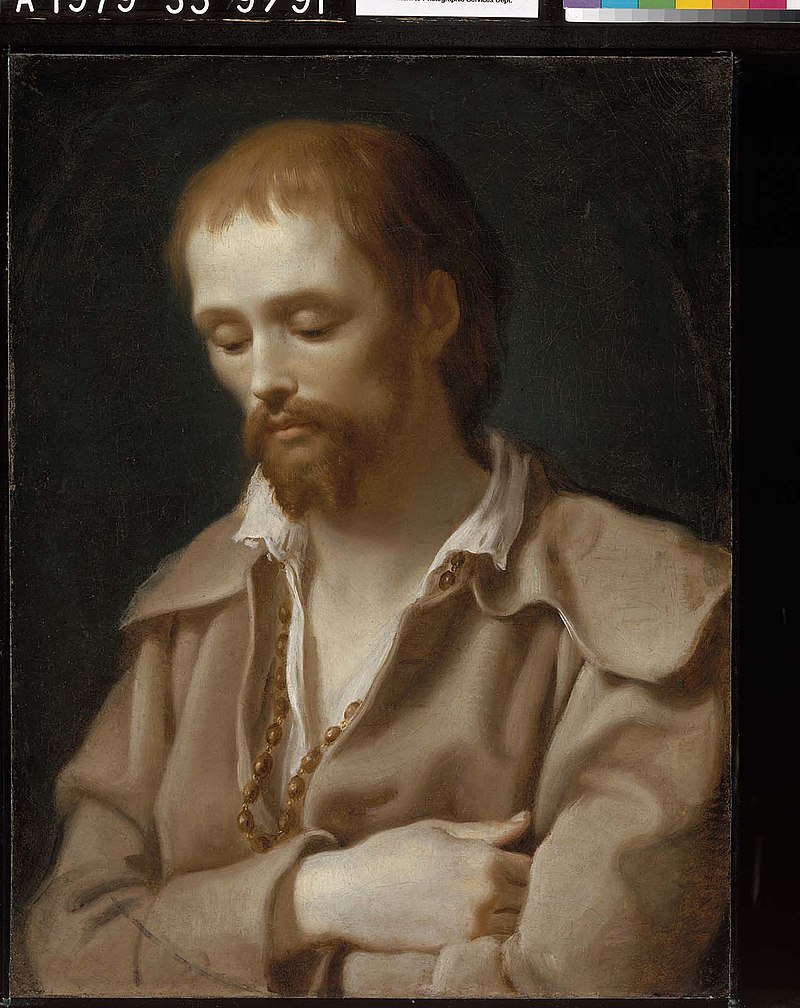
A grace-filled Holy Week to all our readers! As we await and prepare for the Resurrection about to dawn upon us, we might keep in mind two Benedicts: Pope Emeritus Benedict XVI, requiescat in pace, elected on this day in 2005; and today’s commemoration of the mystic pilgrim, Benedict Joseph Labre, who died on this[…]Continue reading→

My Name is Bernadette
April 16th is a propitious day, for besides the anniversary of Father de Valk’s death, who founded Catholic Insight in its print form decades ago, and the commemoration of the ‘two Benedicts’, mentioned in accompanying posts, today we also recall Saint Bernadette Soubirous, the young visionary to whom the Virgin Mary appeared numerous times at[…]Continue reading→
Saint Lydwina of Schiedam and Suffering Joyfully
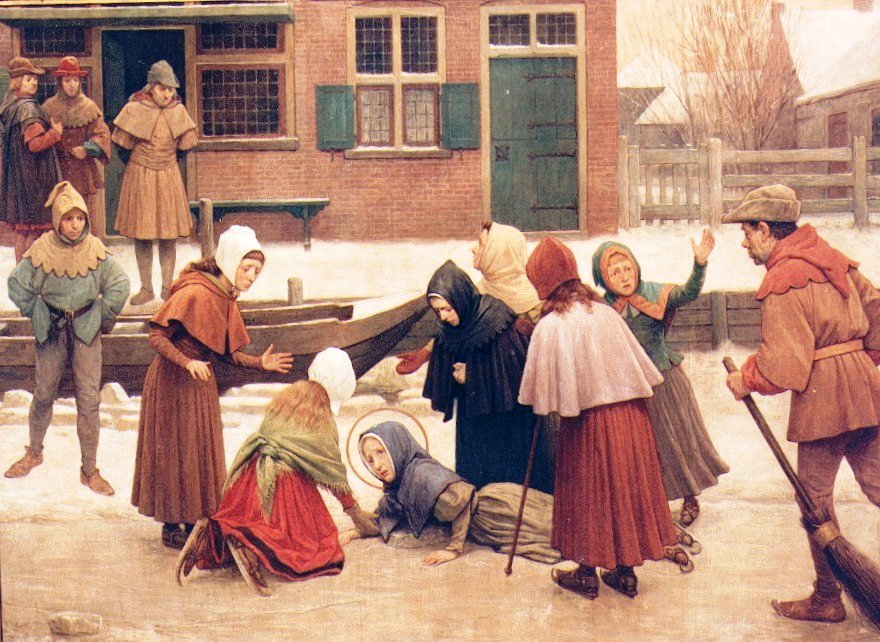
Saint Lydwina of Schiedam (1380 – 1433) was one of the countless and glorious ‘victim souls’ in the history of the Church, those whose lives are filled with suffering, often of an unimaginable intensity, but who suffer joyfully. She was a fifteen-year old Dutch girl, out skating one day, when she fell and broke one[…]Continue reading→
The Glorious Martyrdoms of Martin and Maximus
As we enter into Eastertide, we recall on this 13th of April Pope Saint Martin I (+655), one of the noblest, if most tragic, of the successors of Saint Peter. Born in Umbria, Italy, he was of noble lineage, with great intelligence combined with charity and love of the poor and the Church. While still[…]Continue reading→

Saint Stanislaus of Szczepanów
We celebrate Saint Stanislaus today (+ April 11, 1079), in light of this Easter Octave, a bishop and martyr who accepted the episcopacy only at the direct order of Pope Alexander II. He proved a wise and courageous leader of his flock, put to death by his own king, Boleslaus, for rebuking the monarch’s ‘immoral[…]Continue reading→
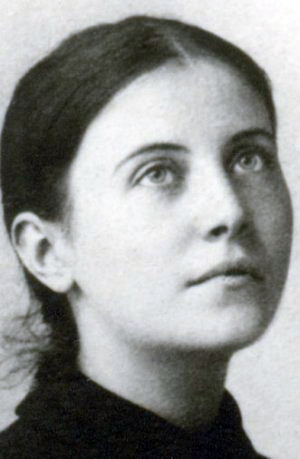
Saint Gemma Galgani
On this April 11th, in 1903 – the same year that the Italian Guiseppe Sarto was elected Pope later that summer as Pius X – a lovely, young Italian woman died, by the name of Gemma Galgani. She lived a brief life of 24 years, as did a number of other young saints, including Pier[…]Continue reading→
An Ideological and Improper Translation
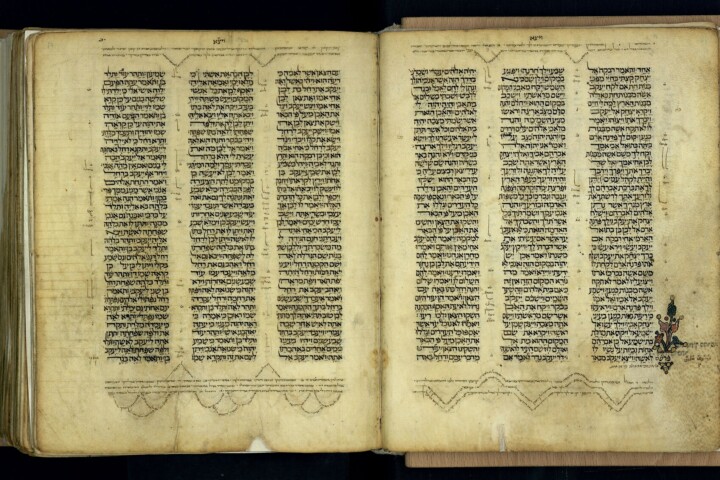
I noticed something odd with the psalm reading at Mass the other day. Our bishops’ conference here in Canada has decreed that the Mass in English – Novus Ordo – use the ‘NRSV’, the ‘New Revised Standard Version’, an ‘updated’ translation of the original RSV, first published in 1952. This ‘new translation’ has the tendency[…]Continue reading→
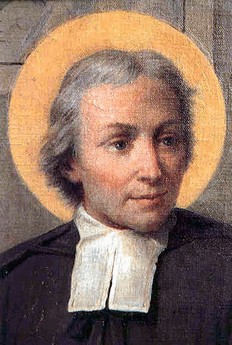
Saint Jean-Baptiste de la Salle: A Teacher for Teachers
Jean-Baptiste de la Salle (1651 – 1719), a French nobleman, ordained a priest, founded the first order in the Church’s history entirely without priests, and this came about almost by accident. I say ‘almost’, for, of course, there are no accidents with God. Destined for ordination from an early age, Jean-Baptiste never looked back, even[…]Continue reading→