
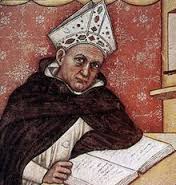
Albertus Magnus
Saint Albert was called the ‘great’ even during his lifetime, rumoured to have known everything there was to be known, which may have been sort of possible in the early thirteenth century. He certainly wrote on almost every subject, and his insights provided much of the basis of what we now know as ‘science’. One of the first Dominicans, a preacher, scientist, philosopher, prodigious writer, indefatigable walker across thousands of miles of Europe (in their spirit of poverty, the Dominicans were forbidden to use horses), eventually bishop of Cologne and, not least, the teacher of the pupil who would outshine even his own fame, Thomas Aquinas. They were lifelong friends and, even though older, Albert outlived his younger disciple, and wept upon hearing news of Thomas’ death his former ‘dumb ox’ (as he was nicknamed in school, thinking his silence implied mental deficiency) journeyed towards the Council of Lyons in 1274. Albert would follow Thomas into paradise after a long and fruitful life, in 1280.
Both Albert and Thomas are the patron saints of ‘learning’ in the broad sense, of teachers, students, scientists, all those who pursue the truth. But being open to the truth requires a rightly-ordered will, that one desires the good that is at the basis of all truth. For even ‘truth’ can be distorted and warped by, and to, our own whims and desires. Purity of mind requires purity of body and soul, or as the Catechism puts it: There is a connection between purity of heart, of body and of faith (#2518).
Just after this is a quotation from Saint Augustine, upon whom both Thomas and Albert based much of their own thought:
The faithful must believe the articles of the Creed “so that by believing they may obey God, by obeying they may live well, by living well may purify their hearts, and with pure hearts may understand what they believe”
Orthodoxy and orthopraxy, right thinking and right living, stand or fall together. That is why the great John Paul II declared that clarity in the realms both of faith and of reason are required for the formation of the human mind and soul. Without faith, reason becomes rationalism, a over-dependence upon Man’s vacillating and weak intellect, and we have see the evil fruits of that in the atheistic totalitarian regimes, building utopias without God and without charity; in the application of technologies without a solid moral framework.
Without reason, faith becomes fideism, descending into something bizarre and erratic, justifying much evil in the name of ‘God’, as we see in branches of Islam and other religions, that refuse to see that reason itself is a work of God, and a manifestation of the very mind of the Almighty.
The only answer is a harmony between the two, faith and reason, found most perfectly in the principles offered by great scholastics, embodied in Albert and Thomas, who integrated in their own lives the harmony between and perfection of soul and mind, holiness and intelligence.
Here are the words of Pope John Paul describing Saint Thomas, whose own singular and unique mind and writings were perhaps the greatest testament to work of Saint Albert:
Saint Thomas is an authentic model for all who seek the truth. In his thinking, the demands of reason and the power of faith found the most elevated synthesis ever attained by human thought, for he could defend the radical newness introduced by Revelation without ever demeaning the venture proper to reason. (FR, 78)
Sancte Albertus Magnus, ora pro nobis!
Carney’s Amoral Majority
After five defections – euphemistically described as ‘crossing the floor’ – and three by-elections, Mark Carney and his Liberals how have their coveted majority. One wonders what bowls of pottage were offered in back-room deals. In the archaic monarchical system that is the Dominion of Canada, this majority allows the newly-minted Prime Minister to rule[…]Continue reading→

Saint Kateri , Canada’s Protectress
This was the title given to Saint Kateri Tekakwitha, by Pope Benedict XVI, when he canonized her on October 28th, 2012, along with six others, in Saint Peter’ Square (she had been beatified by Pope John Paul II back in 1980). With Saint Joseph as our protector, along with the Canadian martyrs, we seem to[…]Continue reading→

Remembering Father Alphonse de Valk
(Today marks the sixth anniversary of the death of Father Alphonse de Valk, C.S.B., a faithful, courageous and indefatigable Basilian priest, pro-life-and-family apostle, and the founder of Catholic Insight magazine. Here is what we wrote those on his entering into eternity five years ago, as we continue to remember him in our prayers and thoughts)[…]Continue reading→
A Tale of Two Benedicts
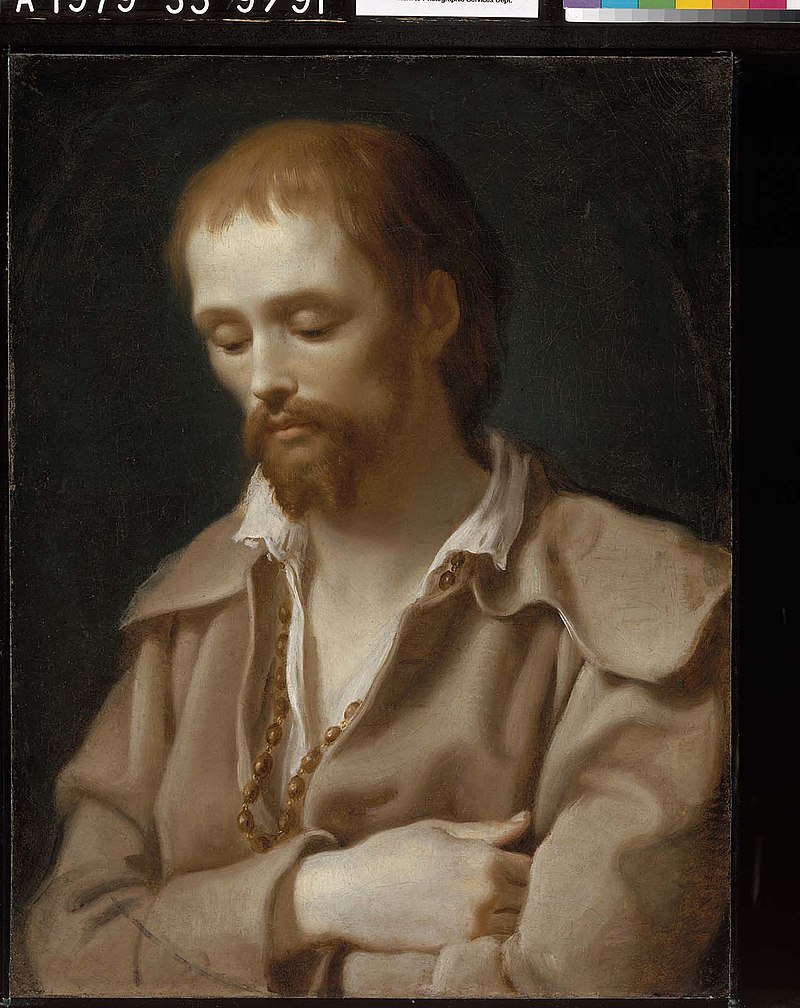
A grace-filled Holy Week to all our readers! As we await and prepare for the Resurrection about to dawn upon us, we might keep in mind two Benedicts: Pope Emeritus Benedict XVI, requiescat in pace, elected on this day in 2005; and today’s commemoration of the mystic pilgrim, Benedict Joseph Labre, who died on this[…]Continue reading→

My Name is Bernadette
April 16th is a propitious day, for besides the anniversary of Father de Valk’s death, who founded Catholic Insight in its print form decades ago, and the commemoration of the ‘two Benedicts’, mentioned in accompanying posts, today we also recall Saint Bernadette Soubirous, the young visionary to whom the Virgin Mary appeared numerous times at[…]Continue reading→
Saint Lydwina of Schiedam and Suffering Joyfully
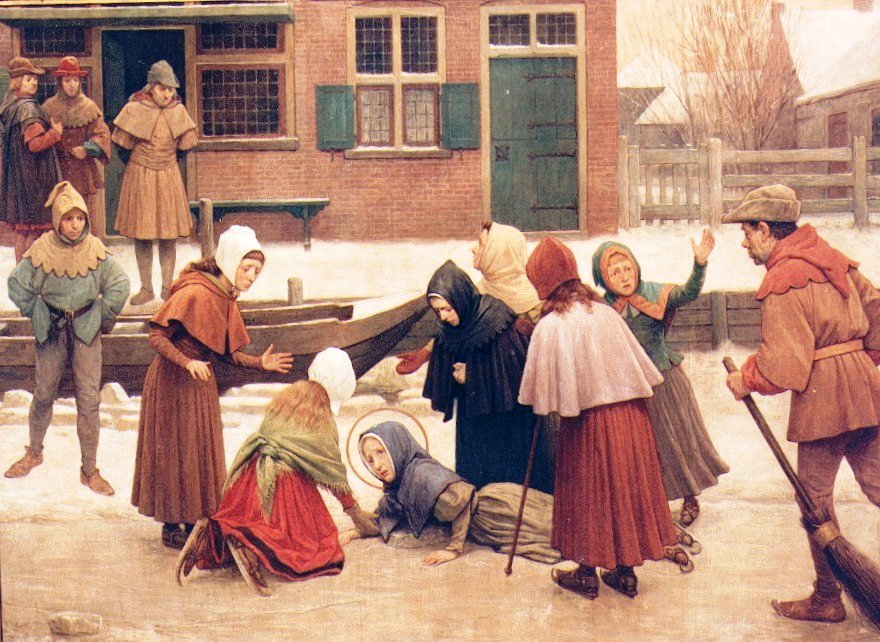
Saint Lydwina of Schiedam (1380 – 1433) was one of the countless and glorious ‘victim souls’ in the history of the Church, those whose lives are filled with suffering, often of an unimaginable intensity, but who suffer joyfully. She was a fifteen-year old Dutch girl, out skating one day, when she fell and broke one[…]Continue reading→
The Glorious Martyrdoms of Martin and Maximus
As we enter into Eastertide, we recall on this 13th of April Pope Saint Martin I (+655), one of the noblest, if most tragic, of the successors of Saint Peter. Born in Umbria, Italy, he was of noble lineage, with great intelligence combined with charity and love of the poor and the Church. While still[…]Continue reading→
Canonizing Sister Faustina and Divine Mercy
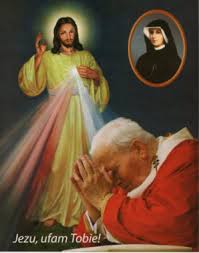
HOMILY OF THE HOLY FATHER MASS IN ST PETER’S SQUARE FOR THE CANONIZATION OF SR MARY FAUSTINA KOWALSKA Sunday, 30 April 2000 1. “Confitemini Domino quoniam bonus, quoniam in saeculum misericordia eius”; “Give thanks to the Lord for he is good; his steadfast love endures for ever” (Ps 118: 1). So the Church sings on the Octave of[…]Continue reading→

Divine Mercy Sunday – An Echo of Every Mass
Reach out your hand and put it in my side. Do not doubt but believe’… ‘My Lord and my God!’ (Jn. 20:18)). Today is Divine Mercy Sunday, and as we celebrate the end of the Easter Octave, we contemplate the wounded side of our Saviour, the Church’s source of life. On Good Friday in the[…]Continue reading→

Saint Stanislaus of Szczepanów
We celebrate Saint Stanislaus today (+ April 11, 1079), in light of this Easter Octave, a bishop and martyr who accepted the episcopacy only at the direct order of Pope Alexander II. He proved a wise and courageous leader of his flock, put to death by his own king, Boleslaus, for rebuking the monarch’s ‘immoral[…]Continue reading→