
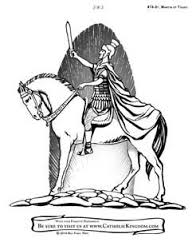
Remember Saint Martin
Today we celebrate Remembrance Day (in the United States, Memorial Day), commemorating the cessation of hostilities in World War I, on the eleventh hour, on the eleventh day, in the eleventh month, with the signing of the Armistice in Germany between 5:12 and 5:20 in the morning, their time (even though the war officially did not end until the signing of the Treaty of Versailles on June 28, 1919).
Again, in the mysterious designs of providence, on this day in the Church we also commemorate Saint Martin of Tours, a pagan and a soldier who converted to Catholicism very early in life, perhaps at the tender age of ten, and against the wishes of his still-pagan parents at that. He was conscripted into the Roman army, and served well. One day, he came across a shivering beggar, and, moved by his Christian conscience, tore his cloak in cloak in half for him; later, in a vision, the beggar turned out to be Christ Himself, a sight that greatly deepened Martin’s conversion. He left the army soon afterward and adopted the life of a hermit. Word of this former-soldier-turned-penitent grew. Lured to Tours in 371 by a claim that there was someone sick who needed help, Martin was constrained by the townspeople, who recognized his great sanctity, to become their bishop. The good soldier-monk tried to hide in a barn (see my post on fleeing from high office), but the flock of geese also hiding therein gave him away by their squawking. God chooses whom He may by what means He may, we may suppose, and even geese do the will of their Maker. The good bishop Martin lived an exemplary life of prayer, repentance and almsgiving and, after his death in 397, was soon adopted into the Church’s calendar as the first officially canonized saint.
Martin has also been recognized as the first conscientious objector, serving his emperor, but, so the story goes, refusing to shed blood, a position that is permitted by the Church (cf., CCC, #2311). This is an a propos topic, not just for today, commemorating all those who did ‘shed blood’ and died serving their country, but also in light of the new film by director Mel Gibson, Hacksaw Ridge, a fictional account of real-life conscientious objector Desmond Doss, whose Seventh Day Adventist faith, he considered, obliged him never to bear arms; he served heroically as a medic, desiring to save life, not to take it.
The Catholic Church, as is often the case, has a more nuanced position than the one Doss’ faith held, for even though one can give up one’s own life, there are cases where one must defend others, an obligation that becomes a “grave duty for one who is responsible for the lives of others” (CCC # 2265), like a father protecting his wife and children. Sometimes, as the passage goes on to state, “the common good requires that an unjust aggressor be rendered unable to cause harm”, even if this requires, sadly, lethal means.
So we pray for all those who gave their lives for their country, one way or the other, in battle or not. As even the ancient Romans recognized, dulce et decorum est pro patribus mori, ‘it is a sweet and decorous thing to die for one’s country’, but, in a more proper translation, for one’s fathers and ancestors. We should recall that in ‘defending our country’, even to point of killing and being killed if need be, we do so to protect others, real flesh and blood human beings, not some abstract ideal or flag. The only just war is a defensive war, and all of our actions, even within such a war, must be acts of charity, of the love of God and of neighbour, especially for those closest to us, for hearth and home.
It is a sad and mysterious thing that there is so much evil out there, and a lot of men under its demonic spell, so as another Roman saying goes, si vis pacem, para bellum, if you want peace, prepare for war. Every man should know and have what it takes to defend his own ‘hearth and home’. We honour those who died, protecting our peace and freedom, and it is up to us to do what we can to maintain that peace and freedom, and not continue to squander it away in a new, more subtle and perhaps even worse forms of a atheistic and messianic totalitarianism which they gave their lives resisting.
God indeed keep our land, glorious and free.
Requiescant in pace, and may we all meet in a blessed eternity.
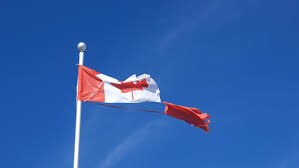
Carney’s Amoral Majority
After five defections – euphemistically described as ‘crossing the floor’ – and three by-elections, Mark Carney and his Liberals how have their coveted majority. One wonders what bowls of pottage were offered in back-room deals. In the archaic monarchical system that is the Dominion of Canada, this majority allows the newly-minted Prime Minister to rule[…]Continue reading→

Saint Kateri , Canada’s Protectress
This was the title given to Saint Kateri Tekakwitha, by Pope Benedict XVI, when he canonized her on October 28th, 2012, along with six others, in Saint Peter’ Square (she had been beatified by Pope John Paul II back in 1980). With Saint Joseph as our protector, along with the Canadian martyrs, we seem to[…]Continue reading→

Remembering Father Alphonse de Valk
(Today marks the sixth anniversary of the death of Father Alphonse de Valk, C.S.B., a faithful, courageous and indefatigable Basilian priest, pro-life-and-family apostle, and the founder of Catholic Insight magazine. Here is what we wrote those on his entering into eternity five years ago, as we continue to remember him in our prayers and thoughts)[…]Continue reading→
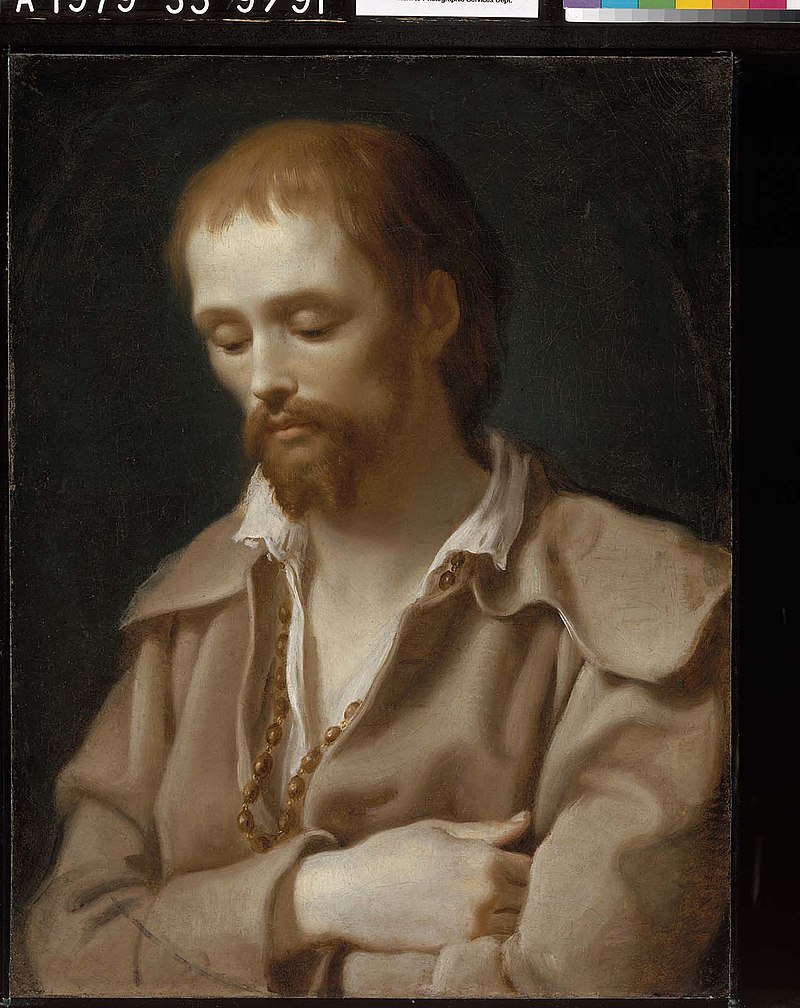
A Tale of Two Benedicts
A grace-filled Holy Week to all our readers! As we await and prepare for the Resurrection about to dawn upon us, we might keep in mind two Benedicts: Pope Emeritus Benedict XVI, requiescat in pace, elected on this day in 2005; and today’s commemoration of the mystic pilgrim, Benedict Joseph Labre, who died on this[…]Continue reading→

My Name is Bernadette
April 16th is a propitious day, for besides the anniversary of Father de Valk’s death, who founded Catholic Insight in its print form decades ago, and the commemoration of the ‘two Benedicts’, mentioned in accompanying posts, today we also recall Saint Bernadette Soubirous, the young visionary to whom the Virgin Mary appeared numerous times at[…]Continue reading→
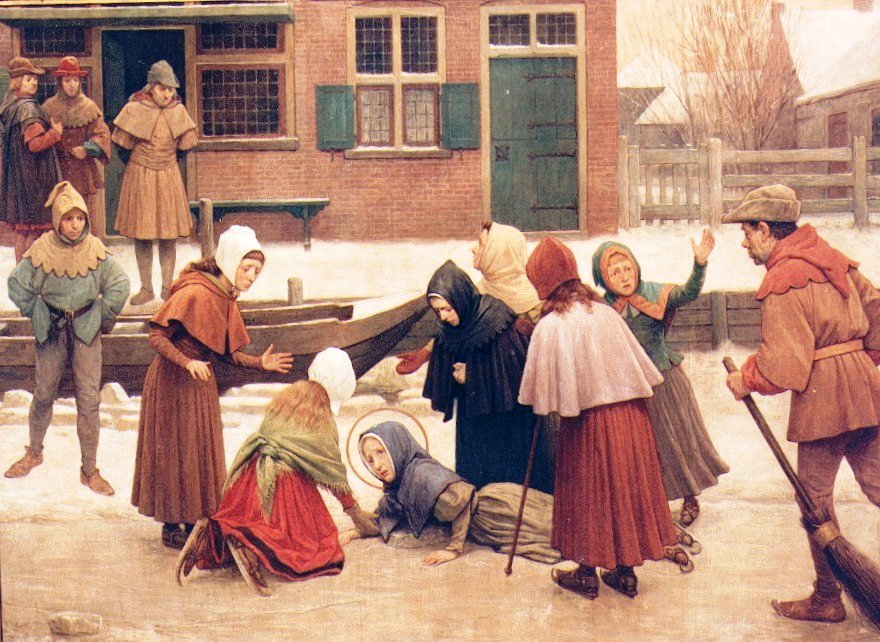
Saint Lydwina of Schiedam and Suffering Joyfully
Saint Lydwina of Schiedam (1380 – 1433) was one of the countless and glorious ‘victim souls’ in the history of the Church, those whose lives are filled with suffering, often of an unimaginable intensity, but who suffer joyfully. She was a fifteen-year old Dutch girl, out skating one day, when she fell and broke one[…]Continue reading→
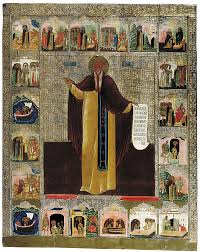
The Glorious Martyrdoms of Martin and Maximus
As we enter into Eastertide, we recall on this 13th of April Pope Saint Martin I (+655), one of the noblest, if most tragic, of the successors of Saint Peter. Born in Umbria, Italy, he was of noble lineage, with great intelligence combined with charity and love of the poor and the Church. While still[…]Continue reading→
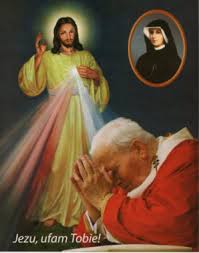
Canonizing Sister Faustina and Divine Mercy
HOMILY OF THE HOLY FATHER MASS IN ST PETER’S SQUARE FOR THE CANONIZATION OF SR MARY FAUSTINA KOWALSKA Sunday, 30 April 2000 1. “Confitemini Domino quoniam bonus, quoniam in saeculum misericordia eius”; “Give thanks to the Lord for he is good; his steadfast love endures for ever” (Ps 118: 1). So the Church sings on the Octave of[…]Continue reading→

Divine Mercy Sunday – An Echo of Every Mass
Reach out your hand and put it in my side. Do not doubt but believe’… ‘My Lord and my God!’ (Jn. 20:18)). Today is Divine Mercy Sunday, and as we celebrate the end of the Easter Octave, we contemplate the wounded side of our Saviour, the Church’s source of life. On Good Friday in the[…]Continue reading→

Saint Stanislaus of Szczepanów
We celebrate Saint Stanislaus today (+ April 11, 1079), in light of this Easter Octave, a bishop and martyr who accepted the episcopacy only at the direct order of Pope Alexander II. He proved a wise and courageous leader of his flock, put to death by his own king, Boleslaus, for rebuking the monarch’s ‘immoral[…]Continue reading→