
Papal Reverence
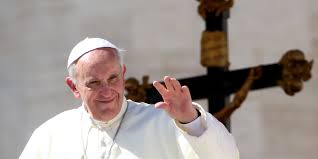
We are in the midst of an enigmatic papacy, and many Catholics know not how to respond to Pope Francis. Well, some think they do, and are rather vociferous in their comments, on either side of the spectrum.
Just to be clear: When I write of the Pope, or the Church in general, my intent is not to criticize the Holy Father or undermine his authority, but to seek clarity in his sometimes ambiguous, or even his not-so-ambiguous, words.
Many have an a priori image of who or what the Pope is or trying to be: A liberal, a socialist, a conservative hiding behind such Potemkin facades, a quasi-Machiavellian Jesuit, a fool for Christ in the image of his Franciscan namesake, and so on. Whatever ‘model’ is chosen, such individuals strive to maintain their view, to ‘save the phenomena’ in Plato’s terminology, in similar fashion to Ptolemy scribbling and calculating to maintain his geocentric universe, with the ever-more complex mathematics of the equants and epicycles.
I would posit that the focus should not be on who or what Pope Francis is, or his agenda, but rather precisely what he teaches and writes, how he does so, and how his words apply to us. We are not bound in conscience by his impromptu comments in interviews, but may, and at times should, read over, ponder and question them, using them as a starting point for discussion (which may be how he intends them). The Pope’s official writings are another question, and should indeed inform our conscience, according to their degree of authority: Encyclicals are more binding than his addresses or homilies. Even here, however, we may parse out what is his opinion in a non-Magisterial capacity (such as on carbon emissions and global warming), his exhortations to moral behaviour (such as being more temperate and just towards others in our use of resources), and his reiterations of principles of our faith (such as on the indissolubility of marriage, and the impossibility of homosexual marriage).
Most of us, or at least most readers of these columns, likely wish the Holy Father would at times be more clear and precise (a la Saint Dominic and his successors!), or focus on issues we deem more fundamental (and perhaps are), or not give sound-bite fodder to the secularist media and enemies of the Church (but they will always select and interpret most unfavorably). We as Catholics are called to make our way to heaven not only by our faith, but also by our reason, by the ‘tangle of our wits’ as Saint Thomas More said, and are therefore not only free, but in some degree bound, to ‘read into’ and interpret what he says, always in the light of the Church’s perennial Tradition. But in the midst of our questioning, even our suffering and confusion, we should remember that he is the Vicar of Christ, deserving of our reverence and obedience, as well as, of course, our charity and daily prayers.
Just a clarification, and please do correct me if I go astray on my own principle.
Saint Dominic, ora pro nobis!

Carney’s Amoral Majority
After five defections – euphemistically described as ‘crossing the floor’ – and three by-elections, Mark Carney and his Liberals how have their coveted majority. One wonders what bowls of pottage were offered in back-room deals. In the archaic monarchical system that is the Dominion of Canada, this majority allows the newly-minted Prime Minister to rule[…]Continue reading→

Saint Kateri , Canada’s Protectress
This was the title given to Saint Kateri Tekakwitha, by Pope Benedict XVI, when he canonized her on October 28th, 2012, along with six others, in Saint Peter’ Square (she had been beatified by Pope John Paul II back in 1980). With Saint Joseph as our protector, along with the Canadian martyrs, we seem to[…]Continue reading→

A Tale of Two Benedicts
A grace-filled Holy Week to all our readers! As we await and prepare for the Resurrection about to dawn upon us, we might keep in mind two Benedicts: Pope Emeritus Benedict XVI, requiescat in pace, elected on this day in 2005; and today’s commemoration of the mystic pilgrim, Benedict Joseph Labre, who died on this[…]Continue reading→

My Name is Bernadette
April 16th is a propitious day, for besides the anniversary of Father de Valk’s death, who founded Catholic Insight in its print form decades ago, and the commemoration of the ‘two Benedicts’, mentioned in accompanying posts, today we also recall Saint Bernadette Soubirous, the young visionary to whom the Virgin Mary appeared numerous times at[…]Continue reading→

Saint Lydwina of Schiedam and Suffering Joyfully
Saint Lydwina of Schiedam (1380 – 1433) was one of the countless and glorious ‘victim souls’ in the history of the Church, those whose lives are filled with suffering, often of an unimaginable intensity, but who suffer joyfully. She was a fifteen-year old Dutch girl, out skating one day, when she fell and broke one[…]Continue reading→

The Glorious Martyrdoms of Martin and Maximus
As we enter into Eastertide, we recall on this 13th of April Pope Saint Martin I (+655), one of the noblest, if most tragic, of the successors of Saint Peter. Born in Umbria, Italy, he was of noble lineage, with great intelligence combined with charity and love of the poor and the Church. While still[…]Continue reading→

Saint Stanislaus of Szczepanów
We celebrate Saint Stanislaus today (+ April 11, 1079), in light of this Easter Octave, a bishop and martyr who accepted the episcopacy only at the direct order of Pope Alexander II. He proved a wise and courageous leader of his flock, put to death by his own king, Boleslaus, for rebuking the monarch’s ‘immoral[…]Continue reading→

Saint Gemma Galgani
On this April 11th, in 1903 – the same year that the Italian Guiseppe Sarto was elected Pope later that summer as Pius X – a lovely, young Italian woman died, by the name of Gemma Galgani. She lived a brief life of 24 years, as did a number of other young saints, including Pier[…]Continue reading→
An Ideological and Improper Translation
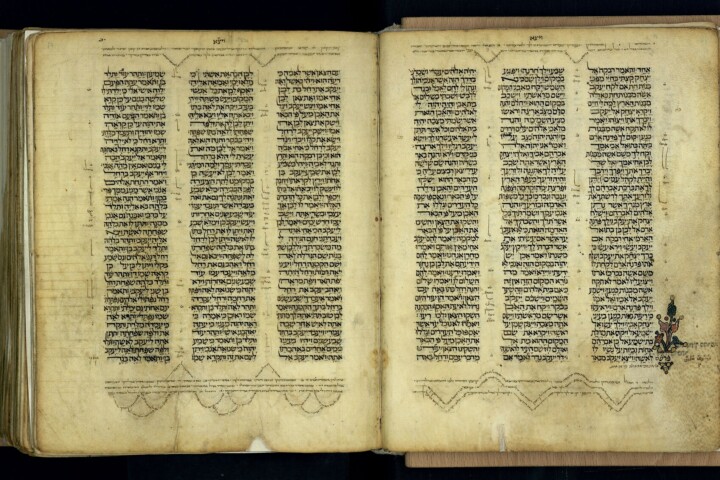
I noticed something odd with the psalm reading at Mass the other day. Our bishops’ conference here in Canada has decreed that the Mass in English – Novus Ordo – use the ‘NRSV’, the ‘New Revised Standard Version’, an ‘updated’ translation of the original RSV, first published in 1952. This ‘new translation’ has the tendency[…]Continue reading→
Saint Jean-Baptiste de la Salle: A Teacher for Teachers
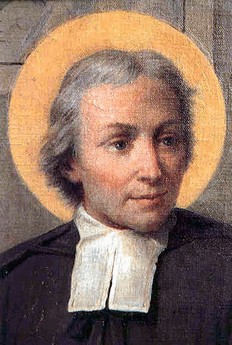
Jean-Baptiste de la Salle (1651 – 1719), a French nobleman, ordained a priest, founded the first order in the Church’s history entirely without priests, and this came about almost by accident. I say ‘almost’, for, of course, there are no accidents with God. Destined for ordination from an early age, Jean-Baptiste never looked back, even[…]Continue reading→