
King Henry’s Anglicanism Gone Awry
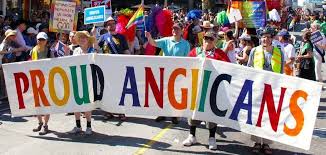
The headline the other day read that the Anglican ‘Church of Canada’ had rejected same-sex ‘marriage’ in their recent synod by one measly vote. Now, just yesterday, lo and behold, what some might consider by a Deus ex machina recount, they realize that, in fact, some votes were not counted properly, and they have indeed endorsed same-sex marriage by the slimmest of margins.
The vote likely won’t matter all that much. Many delegates declared that they would have gone ahead and ‘blessed’ same-sex unions regardless, while other Anglicans would continue in their belief that they are ‘depraved’. As I have written before, truth, not least moral truths, cannot be decided by majority vote, but rather by the light of reason and faith. As John Paul II never tired of proclaiming, democracy itself stands or falls by its adherence to the truth, especially the truth about the human person.
Furthermore, Anglicans profess to be Christian, which implies a reliance upon Scripture in determining one’s beliefs and conduct, and Scripture is decidedly against homosexuality, from the early days of Sodom to the latter days of Saint Paul. This Scriptural witness continues into the Fathers, the Church Councils, the Magisterium, and so on.
But wait, are we not beyond that now? Scripture is only one source of truth, and, apparently according to some Anglicans, a flawed, erroneous and culturally hide-bound one at that. We have evolved, become more sensitive, more, well, pink and rainbow flavoured.
Think back to poor King Henry, the eighth of that name, the one who started all this, who thought he could cast off from Rome and build a Church without a Pope and Magisterium. Of course, he also plundered and ransacked monasteries, essentially destroying every religious house in England, killing and dispersing all of their inhabitants, and giving the majestic buildings away to his sycophantic courtiers; he had murdered an untold number of innocent people, including two of his own wives, in barbarous ways. Yes, ‘good’ King Harry died with much blood dripping from his gold-furrowed brow, yet he entered whatever eternity he merited considering himself a Catholic, and, I recall, had in his will that ten thousand Masses were to be offered for his soul. Likely he thought he may well need them. Of course, with Thomas More, his most famous victim, we know not the depths of the King’s troubled conscience, but the sharp lawyerly mind of More saw where Henry’s decision to cast off from Roman and papal authority, by appointing Archbishop Cranmer to annul his marriage to Catherine in defiance of Rome, would lead. That was why More went to the scaffold and lost his head, rather than sign the document declaring Henry ‘Head of the Church in England’.
Three centuries later, Cardinal John Henry Newman saw the effects of Henry’s schismatic decision even more clearly: In his own attempt to formulate an Anglican via media between the flatness and austerity of pure Protestantism (what was then known as latitudinarianism), and what he saw as the excesses of a too-Italian-and-florid Rome, Newman diligently read the Fathers of the Church, to find an ‘essentially properly British Christianity’ in the early Church.
But the great and truthful mind of Newman soon realized, as he put it, that to delve into history is to cease to be a Protestant, for, as he discovered, from the very earliest days the Church had a Pope, who was bishop of Rome from the get-go, a world-wide episcopacy, a Magisterium, all the sacraments and many of the sacramentals, an all-male celibate priesthood, a solid teaching and disciplinary authority, canon law, rules of marriage, all of what we call the ‘Roman Catholic Church’. There was no getting around it: Christ founded the Roman Catholic Church, with a Pope, who has full, supreme, universal authority. There is no such thing as an ‘Anglican Church’, but rather the Catholic Church in England, of which the Pope is the head, not Henry, nor his current successor, Elizabeth.
Newman saw too that Protestantism, for all its claims to the contrary, by its own principles, leads eventually to agnosticism and secularism, as we have just witnessed in full display at the recent Anglican Synod. It is ironic that King Henry, who has claim as the founder of an Anglicanism now covered in rainbow flags, banners and stoles, was, to put it mildly, not tolerant of homosexuality. In fact, he would not be considered a Homophobe of the Highest Order. The year 1533 saw him spearhead law which made homosexual liasons, referred to as ‘buggery’ in the law, punishable by no less than hanging. A brutal retribution by a brutal man in a brutal age, we would say, but such was the custom of the times where even minor thefts could have you killed in even more barbarous ways (read up on what ‘hung, drawn and quartered’ really refers to). We, of course, would now universally condemn such punishment, but we nevertheless still hold as Christians, nay, even just as simple men, that same-sex eroticism is immoral, and can provide no basis for a ‘marriage’.
Sad, sad, that the Anglican community, which began in schism, drifted over the years into heresy, and now is swimming in secularity, immorality and irrelevance.
There is a big silver lining to this: With Newman and a host of others, disaffected Anglicans who no longer have a place in their ecclesial community can always swim over to Catholicism and the one, true Church. Pope Benedict XVI made this much easier, with his 2009 foundation of the Anglican Ordinariate, providing, as the document states, the general normative structure for regulating the institution and life of Personal Ordinariates for those Anglican faithful who desire to enter into the full communion of the Catholic Church in a corporate manner.
That is, the constitution permits and even encourages Anglicans who convert to the fullness of the Faith to enter as a corporate body, keeping their liturgy, customs, music and, not least, the unmatched liturgical and Scriptural translations of the Shakespearean era.
So to all Anglicans out there, I say, welcome home, fratres in Christo.
Saint Henry, Emperor, true and faithful son of the Church, ora pro nobis!
Carney’s Amoral Majority
After five defections – euphemistically described as ‘crossing the floor’ – and three by-elections, Mark Carney and his Liberals how have their coveted majority. One wonders what bowls of pottage were offered in back-room deals. In the archaic monarchical system that is the Dominion of Canada, this majority allows the newly-minted Prime Minister to rule[…]Continue reading→

Saint Kateri , Canada’s Protectress
This was the title given to Saint Kateri Tekakwitha, by Pope Benedict XVI, when he canonized her on October 28th, 2012, along with six others, in Saint Peter’ Square (she had been beatified by Pope John Paul II back in 1980). With Saint Joseph as our protector, along with the Canadian martyrs, we seem to[…]Continue reading→

Remembering Father Alphonse de Valk
(Today marks the sixth anniversary of the death of Father Alphonse de Valk, C.S.B., a faithful, courageous and indefatigable Basilian priest, pro-life-and-family apostle, and the founder of Catholic Insight magazine. Here is what we wrote those on his entering into eternity five years ago, as we continue to remember him in our prayers and thoughts)[…]Continue reading→

A Tale of Two Benedicts
A grace-filled Holy Week to all our readers! As we await and prepare for the Resurrection about to dawn upon us, we might keep in mind two Benedicts: Pope Emeritus Benedict XVI, requiescat in pace, elected on this day in 2005; and today’s commemoration of the mystic pilgrim, Benedict Joseph Labre, who died on this[…]Continue reading→

My Name is Bernadette
April 16th is a propitious day, for besides the anniversary of Father de Valk’s death, who founded Catholic Insight in its print form decades ago, and the commemoration of the ‘two Benedicts’, mentioned in accompanying posts, today we also recall Saint Bernadette Soubirous, the young visionary to whom the Virgin Mary appeared numerous times at[…]Continue reading→

Saint Lydwina of Schiedam and Suffering Joyfully
Saint Lydwina of Schiedam (1380 – 1433) was one of the countless and glorious ‘victim souls’ in the history of the Church, those whose lives are filled with suffering, often of an unimaginable intensity, but who suffer joyfully. She was a fifteen-year old Dutch girl, out skating one day, when she fell and broke one[…]Continue reading→

The Glorious Martyrdoms of Martin and Maximus
As we enter into Eastertide, we recall on this 13th of April Pope Saint Martin I (+655), one of the noblest, if most tragic, of the successors of Saint Peter. Born in Umbria, Italy, he was of noble lineage, with great intelligence combined with charity and love of the poor and the Church. While still[…]Continue reading→

Canonizing Sister Faustina and Divine Mercy
HOMILY OF THE HOLY FATHER MASS IN ST PETER’S SQUARE FOR THE CANONIZATION OF SR MARY FAUSTINA KOWALSKA Sunday, 30 April 2000 1. “Confitemini Domino quoniam bonus, quoniam in saeculum misericordia eius”; “Give thanks to the Lord for he is good; his steadfast love endures for ever” (Ps 118: 1). So the Church sings on the Octave of[…]Continue reading→

Divine Mercy Sunday – An Echo of Every Mass
Reach out your hand and put it in my side. Do not doubt but believe’… ‘My Lord and my God!’ (Jn. 20:18)). Today is Divine Mercy Sunday, and as we celebrate the end of the Easter Octave, we contemplate the wounded side of our Saviour, the Church’s source of life. On Good Friday in the[…]Continue reading→

Saint Stanislaus of Szczepanów
We celebrate Saint Stanislaus today (+ April 11, 1079), in light of this Easter Octave, a bishop and martyr who accepted the episcopacy only at the direct order of Pope Alexander II. He proved a wise and courageous leader of his flock, put to death by his own king, Boleslaus, for rebuking the monarch’s ‘immoral[…]Continue reading→