
Conservative Prudence?
I received a rather critical email in response to my last post on the Conservative capitulation, so thought I should clarify my, and hopefully your own, thoughts:
As I wrote, there may be nothing wrong with capitulation or compromise. Sometimes, they are necessary to achieve a greater good, or avoid a greater evil. When and how to capitulate (to draw up terms) or compromise (reach a mutual agreement) depends by and large on the virtue of prudence, not much discussed in today’s world.
Prudence is the ordering of means to an end or, more accurately from the Catechism, it is the “virtue that disposes practical reason to discern our true good in every circumstance and choose the right means of attaining it” (CCC, #1806). To be prudent, one must therefore know what is good, what it is one wants, before figuring out how to achieve it, here and now, in the concrete conditions in which one finds oneself.
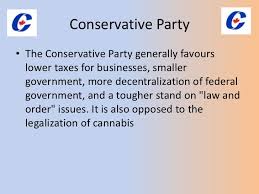
Was it prudent for the Conservative Party at their recent convention to remove any stance on marriage, same-sex, hetero-sex, or otherwise? One might argue such, with the claim that they will never again achieve political power otherwise. The charge of ‘homophobia’ is a curse upon a political party. I am willing to listen to and understand that argument.
However, I sympathize also with writers like Mark Steyn and, in a more theological way, with John Paul II and Benedict XVI, that we have capitulated too much already, and it is time for a little parrhesia, boldness, direct and clear speech, and drawing certain lines in the sand: ‘Thus far, and no farther!’ to quote the great Gandalf.
Yes, there are many things we must capitulate and compromise on in today’s world of realpolitik, or, more realistically, fantasy politics. We must to some degree play the game, and achieve what good we may. But to do so requires a clearly thought-out policy, at least in the back rooms and conventions, so at least we know whence we come and whither we go.
I have no desire to criticize the Conservative Party itself, and indeed have a number of friends and former students who have worked for them. I myself am a card-carrying member.
Hence, I have the right to ask, does not prudence itself require that we, somewhere, somehow, define our terms, our mission, our raison d’etre? In the previous post, I defined a family with a quotation from the Catechism on marriage, as ” (a) man and a woman united in marriage, together with their children…”.
But the Magisterial text goes on to make clear that “(t)his institution is prior to any recognition by public authority, which has an obligation to recognize it. It should be considered the normal reference point by which the different forms of family relationship are to be evaluated” (CCC, 2202, emphasis added).
I would just like to ask before I continue my allegiance to the Conservatives (itself a prudential decision on my part), what does the Conservative Party stand for? Can these principles be enunciated, written down, promulgated? Will a Conservative government, if elected, clearly and boldly uphold the truth about marriage and the family, requisite for any functioning, to say nothing of prosperous, society?
Or are we dependent upon individual politicians guided by their conscience, good, bad or indifferent, taking up the charge? Are there still enough social conservatives, with clear moral principles, to hold the Party together? Or is the emphasis upon a vague economic conservatism, ‘tough on crime’, which may do nothing more than slow our slide towards the abyss?
I for one would not mind knowing the Conservative’s end or purpose, so that we, united as much as prudence allows, can then order the means thereto.
This is the feast of the Visitation, and a blessed one to all…
Carney’s Amoral Majority
After five defections – euphemistically described as ‘crossing the floor’ – and three by-elections, Mark Carney and his Liberals how have their coveted majority. One wonders what bowls of pottage were offered in back-room deals. In the archaic monarchical system that is the Dominion of Canada, this majority allows the newly-minted Prime Minister to rule[…]Continue reading→

Saint Kateri , Canada’s Protectress
This was the title given to Saint Kateri Tekakwitha, by Pope Benedict XVI, when he canonized her on October 28th, 2012, along with six others, in Saint Peter’ Square (she had been beatified by Pope John Paul II back in 1980). With Saint Joseph as our protector, along with the Canadian martyrs, we seem to[…]Continue reading→

Remembering Father Alphonse de Valk
(Today marks the sixth anniversary of the death of Father Alphonse de Valk, C.S.B., a faithful, courageous and indefatigable Basilian priest, pro-life-and-family apostle, and the founder of Catholic Insight magazine. Here is what we wrote those on his entering into eternity five years ago, as we continue to remember him in our prayers and thoughts)[…]Continue reading→

A Tale of Two Benedicts
A grace-filled Holy Week to all our readers! As we await and prepare for the Resurrection about to dawn upon us, we might keep in mind two Benedicts: Pope Emeritus Benedict XVI, requiescat in pace, elected on this day in 2005; and today’s commemoration of the mystic pilgrim, Benedict Joseph Labre, who died on this[…]Continue reading→

My Name is Bernadette
April 16th is a propitious day, for besides the anniversary of Father de Valk’s death, who founded Catholic Insight in its print form decades ago, and the commemoration of the ‘two Benedicts’, mentioned in accompanying posts, today we also recall Saint Bernadette Soubirous, the young visionary to whom the Virgin Mary appeared numerous times at[…]Continue reading→

Saint Lydwina of Schiedam and Suffering Joyfully
Saint Lydwina of Schiedam (1380 – 1433) was one of the countless and glorious ‘victim souls’ in the history of the Church, those whose lives are filled with suffering, often of an unimaginable intensity, but who suffer joyfully. She was a fifteen-year old Dutch girl, out skating one day, when she fell and broke one[…]Continue reading→

The Glorious Martyrdoms of Martin and Maximus
As we enter into Eastertide, we recall on this 13th of April Pope Saint Martin I (+655), one of the noblest, if most tragic, of the successors of Saint Peter. Born in Umbria, Italy, he was of noble lineage, with great intelligence combined with charity and love of the poor and the Church. While still[…]Continue reading→

Canonizing Sister Faustina and Divine Mercy
HOMILY OF THE HOLY FATHER MASS IN ST PETER’S SQUARE FOR THE CANONIZATION OF SR MARY FAUSTINA KOWALSKA Sunday, 30 April 2000 1. “Confitemini Domino quoniam bonus, quoniam in saeculum misericordia eius”; “Give thanks to the Lord for he is good; his steadfast love endures for ever” (Ps 118: 1). So the Church sings on the Octave of[…]Continue reading→

Divine Mercy Sunday – An Echo of Every Mass
Reach out your hand and put it in my side. Do not doubt but believe’… ‘My Lord and my God!’ (Jn. 20:18)). Today is Divine Mercy Sunday, and as we celebrate the end of the Easter Octave, we contemplate the wounded side of our Saviour, the Church’s source of life. On Good Friday in the[…]Continue reading→

Saint Stanislaus of Szczepanów
We celebrate Saint Stanislaus today (+ April 11, 1079), in light of this Easter Octave, a bishop and martyr who accepted the episcopacy only at the direct order of Pope Alexander II. He proved a wise and courageous leader of his flock, put to death by his own king, Boleslaus, for rebuking the monarch’s ‘immoral[…]Continue reading→