
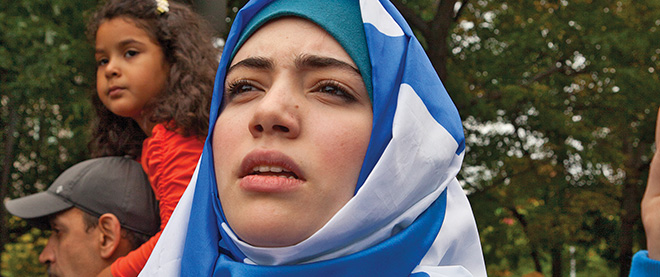
Quebec’s Demographic Demise
Quebec is back in the news, this time with a report of its death-spiral of a birth rate. It seems Quebec women by and large do not want to have children, or at least not more than 1.6, on average, per woman. This is well, well, below the requisite 2.1 just to maintain a stable population, and that is presuming good times with no major disasters, plagues, famines or other evils.
The government has tried bribing women to have children with generous government subsidies, but that did not work. It seems one must want to have children to have children. The solution currently proposed, as it is in many other regions suffering population demise, is to increase immigration. In Quebec, however, preference is given to those who speak French. Unfortunately, the traditional French countries, France, Belgium and so on, have their own demographic problems, and are not emigrating anyone much of anywhere. So, most of the immigrants come from regions that, ah, do not share Quebec values and have trouble assimilating.
As Universté de Montreal demographer Marc Termotte drily and cryptically stated:
The pool of French immigrants is not France or Belgium or Switzerland,” he said. “It’s French Africa, the Maghreb and sub-Saharan, and there are cultural and economic implications to this.
In other words, the immigrants are from Islamic countries, former colonies., and most of them end up in Montreal, in fact in one particular neighbourhood of the city. There is strength in concentrating one’s numbers.
There is a lot packed into M. Termotte’s ‘cultural and economic implications’. The unemployment rate amongst immigrants is about double the general population (probably since they cannot get government jobs), and they maintain their own Islamic culture, and not that offered to them by the moribund Quebecois culture falling apart around them.
Do the Quebeckers really think that they can import vast armies of young Muslim men who will work and toil to keep their ageing population well-entrenched in their government pensions and retirement plans? Will they maintain the Quebecois culture, the music, language, literature, family life, churches, which originally derived from their Catholicism, but is now unhinged, unmoored, without foundation and purpose?
Much has been written about the demise of Quebec, from a bastion of Catholic culture to the basket case of a socialist failed state, supported by federal transfer payments, indebting Canadians for many generations to come.
Well, that may be part of the problem: For Quebec does not seem interested in future generations, and is content to live in the present moment, ageing semi-cultured bon vivants sipping wine and artificially imposing French signage, all the while their future slips away as they slip into a bitter and regret-filled old age. Demography is destiny, and that destiny lies in the hands of those who are doing the hard, sacrificial work of having the children who will carry civilization forward.
It is sad, for I have great love and admiration for Quebec, enjoy the French language and culture, and it would be sad to see the world bereft of les belles filles of la belle province.
But unless those belles filles can be convinced to have more beaux bébés, only really possible by a rediscovery of their religious roots, it is sadly au revoir, Quebec.
Carney’s Amoral Majority
After five defections – euphemistically described as ‘crossing the floor’ – and three by-elections, Mark Carney and his Liberals how have their coveted majority. One wonders what bowls of pottage were offered in back-room deals. In the archaic monarchical system that is the Dominion of Canada, this majority allows the newly-minted Prime Minister to rule[…]Continue reading→

Saint Kateri , Canada’s Protectress
This was the title given to Saint Kateri Tekakwitha, by Pope Benedict XVI, when he canonized her on October 28th, 2012, along with six others, in Saint Peter’ Square (she had been beatified by Pope John Paul II back in 1980). With Saint Joseph as our protector, along with the Canadian martyrs, we seem to[…]Continue reading→
A Tale of Two Benedicts
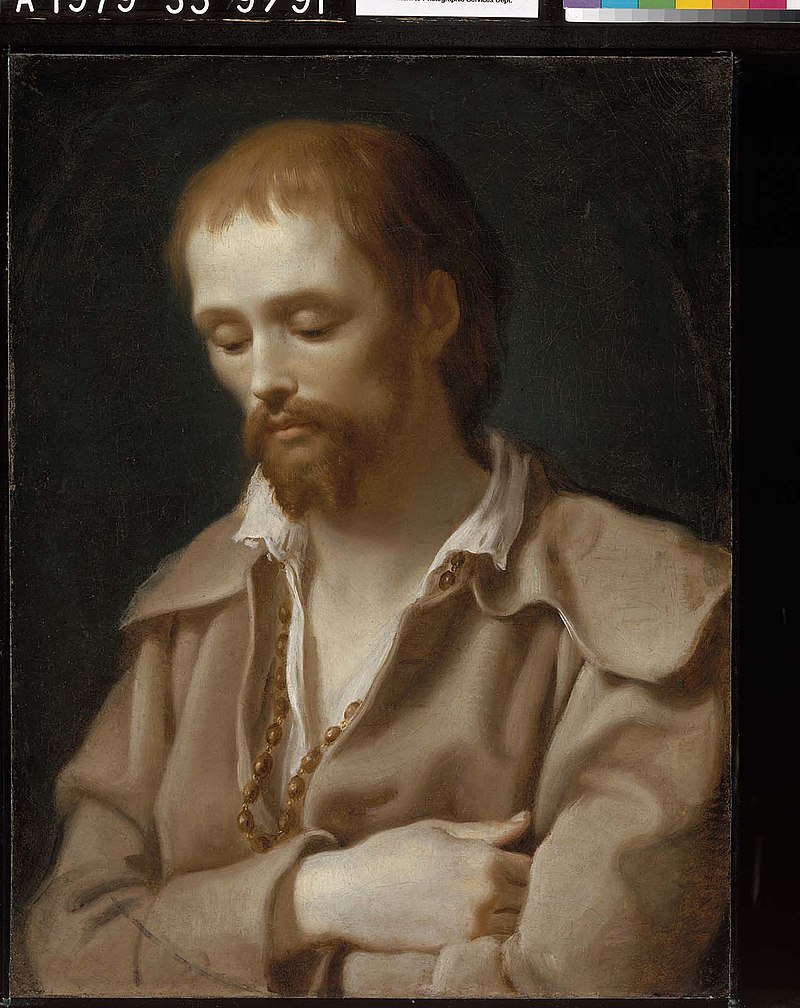
A grace-filled Holy Week to all our readers! As we await and prepare for the Resurrection about to dawn upon us, we might keep in mind two Benedicts: Pope Emeritus Benedict XVI, requiescat in pace, elected on this day in 2005; and today’s commemoration of the mystic pilgrim, Benedict Joseph Labre, who died on this[…]Continue reading→

My Name is Bernadette
April 16th is a propitious day, for besides the anniversary of Father de Valk’s death, who founded Catholic Insight in its print form decades ago, and the commemoration of the ‘two Benedicts’, mentioned in accompanying posts, today we also recall Saint Bernadette Soubirous, the young visionary to whom the Virgin Mary appeared numerous times at[…]Continue reading→
Saint Lydwina of Schiedam and Suffering Joyfully
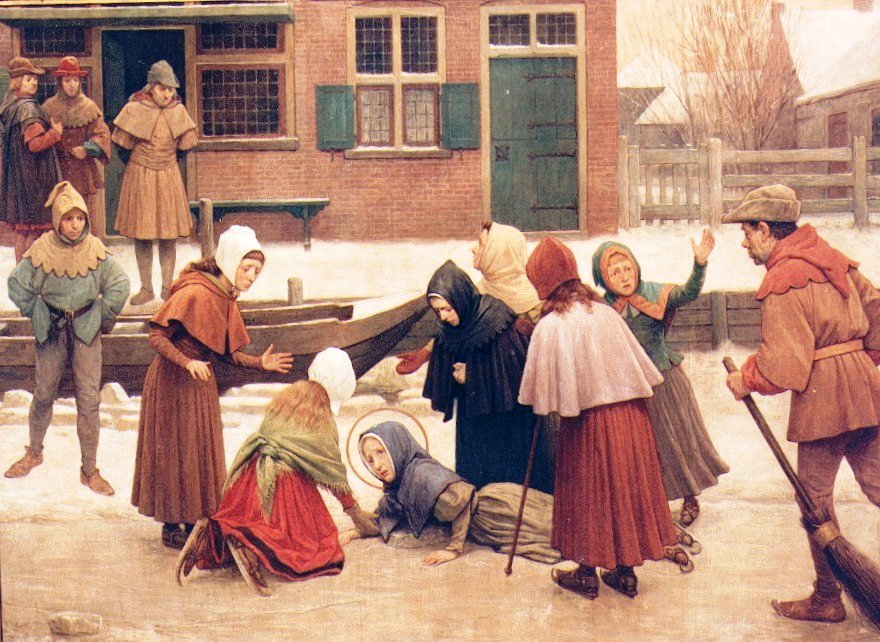
Saint Lydwina of Schiedam (1380 – 1433) was one of the countless and glorious ‘victim souls’ in the history of the Church, those whose lives are filled with suffering, often of an unimaginable intensity, but who suffer joyfully. She was a fifteen-year old Dutch girl, out skating one day, when she fell and broke one[…]Continue reading→
The Glorious Martyrdoms of Martin and Maximus
As we enter into Eastertide, we recall on this 13th of April Pope Saint Martin I (+655), one of the noblest, if most tragic, of the successors of Saint Peter. Born in Umbria, Italy, he was of noble lineage, with great intelligence combined with charity and love of the poor and the Church. While still[…]Continue reading→

Saint Stanislaus of Szczepanów
We celebrate Saint Stanislaus today (+ April 11, 1079), in light of this Easter Octave, a bishop and martyr who accepted the episcopacy only at the direct order of Pope Alexander II. He proved a wise and courageous leader of his flock, put to death by his own king, Boleslaus, for rebuking the monarch’s ‘immoral[…]Continue reading→
Saint Gemma Galgani
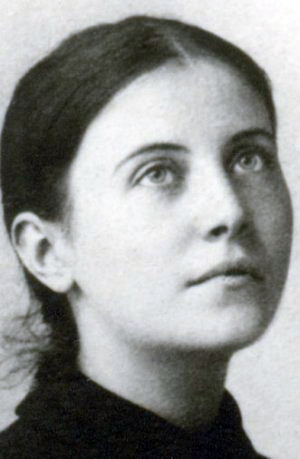
On this April 11th, in 1903 – the same year that the Italian Guiseppe Sarto was elected Pope later that summer as Pius X – a lovely, young Italian woman died, by the name of Gemma Galgani. She lived a brief life of 24 years, as did a number of other young saints, including Pier[…]Continue reading→
An Ideological and Improper Translation
I noticed something odd with the psalm reading at Mass the other day. Our bishops’ conference here in Canada has decreed that the Mass in English – Novus Ordo – use the ‘NRSV’, the ‘New Revised Standard Version’, an ‘updated’ translation of the original RSV, first published in 1952. This ‘new translation’ has the tendency[…]Continue reading→
Saint Jean-Baptiste de la Salle: A Teacher for Teachers
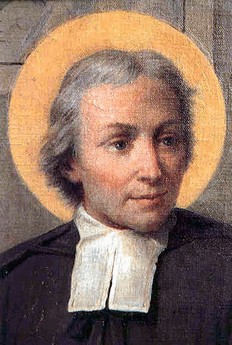
Jean-Baptiste de la Salle (1651 – 1719), a French nobleman, ordained a priest, founded the first order in the Church’s history entirely without priests, and this came about almost by accident. I say ‘almost’, for, of course, there are no accidents with God. Destined for ordination from an early age, Jean-Baptiste never looked back, even[…]Continue reading→