
The Bright Moment of Conception
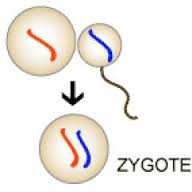
There are sometimes good things in the news, like this report from the Telegraph that when conception occurs, that is, when the male sperm fertilizes the female ovum, and the 23-chromosomal DNA of both meiotic cells fuse to form a new human with 46 chromosomes, there is a bright flash of light. (But there is always a downside: This phenomenon was discovered during in-vitro fertilization treatments, and the scientists claim that the ‘brighter the light’, the more healthy is the zygote. I wonder).
Now, the scientists explain this by natural means, something to do with a not-fully-explained ‘zinc spark’. I was surprised to hear the article describe that this luminous event “marks the very moment that a new life begins”. Hmm. What kind of life might that be? Could they be admitting that human life begins at conception when, as they say, the sperm meets the ovum at conception?
The Church has never dogmatically declared when exactly the soul is ‘infused’ into the body, a metaphysical event that transcends the physical world. As the 1987 Instruction on Reproductive Technologies, Donum Vitae, declares “no experimental datum can be in itself sufficient to bring us to the recognition of a spiritual soul”. However, the Church has always declared, well before the advent of modern science, that the zygote must be treated as a human being from the very first moment of conception, for the sacred process of life has already begun. This is the reason why human sexuality is sacred, for it itself is ordered to the divine creation of human life.
That said, we now do have strong evidence from modern genetics that the zygote is a fully ‘personal’ entity, with his own human characteristics, distinct from his parents. As the document goes on to state: “nevertheless, the conclusions of science regarding the human embryo provide a valuable indication for discerning by the use of reason a personal presence at the moment of this first appearance of a human life: how could a human individual not be a human person?”
The Church may be moving ever-closer to declaring the little one-celled zygote a human person. The 2008 follow-up Instruction, Dignitatis Personae, taught that although “Donum vitae, in order to avoid a statement of an explicitly philosophical nature, did not define the embryo as a person”, what it did to was “indicate that there is an intrinsic connection between the ontological dimension and the specific value of every human life”.
We are formed as ‘clay in the hands of the potter’, God fashioning us intricately, as the Psalmist sings, within the ‘depths of our mothers’ wombs’. This divine process of human creation begins at conception, and ends only at bodily death, and, as Instruction goes on to say: “the reality of the human being for the entire span of life, both before and after birth, does not allow us to posit either a change in nature or a gradation in moral value, since it possesses full anthropological and ethical status. The human embryo has, therefore, from the very beginning, the dignity proper to a person”.
Yes, Dr. Seuss was right (whether he meant to be or not) that “a person is a person, no matter how small”.
The bright flash could be one more ‘sign’ that what happens at conception is something unique, powerful and, yes, sacred and holy. A new soul is created, fused to a new body, to form a new person, on a trajectory towards eternity.
Saint Catherine of Siena, ora pro nobis!
Carney’s Amoral Majority
After five defections – euphemistically described as ‘crossing the floor’ – and three by-elections, Mark Carney and his Liberals how have their coveted majority. One wonders what bowls of pottage were offered in back-room deals. In the archaic monarchical system that is the Dominion of Canada, this majority allows the newly-minted Prime Minister to rule[…]Continue reading→

Saint Kateri , Canada’s Protectress
This was the title given to Saint Kateri Tekakwitha, by Pope Benedict XVI, when he canonized her on October 28th, 2012, along with six others, in Saint Peter’ Square (she had been beatified by Pope John Paul II back in 1980). With Saint Joseph as our protector, along with the Canadian martyrs, we seem to[…]Continue reading→
A Tale of Two Benedicts
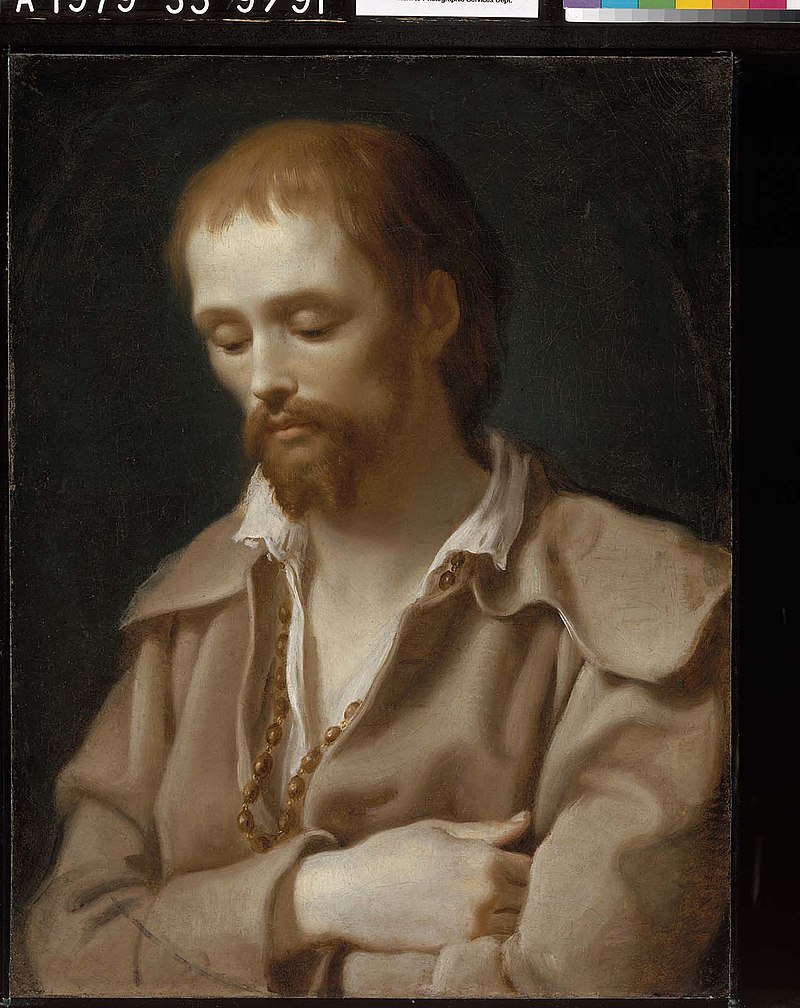
A grace-filled Holy Week to all our readers! As we await and prepare for the Resurrection about to dawn upon us, we might keep in mind two Benedicts: Pope Emeritus Benedict XVI, requiescat in pace, elected on this day in 2005; and today’s commemoration of the mystic pilgrim, Benedict Joseph Labre, who died on this[…]Continue reading→

My Name is Bernadette
April 16th is a propitious day, for besides the anniversary of Father de Valk’s death, who founded Catholic Insight in its print form decades ago, and the commemoration of the ‘two Benedicts’, mentioned in accompanying posts, today we also recall Saint Bernadette Soubirous, the young visionary to whom the Virgin Mary appeared numerous times at[…]Continue reading→
Saint Lydwina of Schiedam and Suffering Joyfully
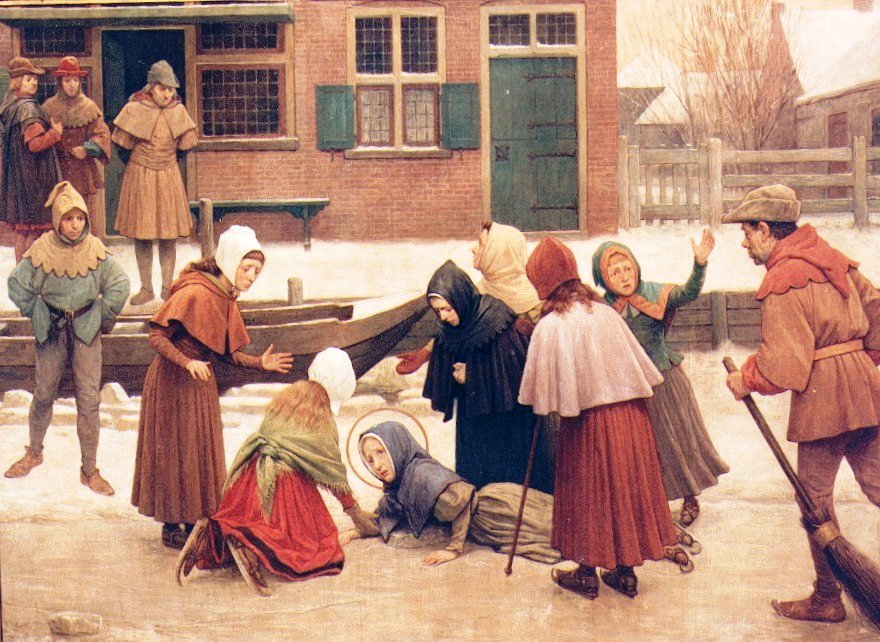
Saint Lydwina of Schiedam (1380 – 1433) was one of the countless and glorious ‘victim souls’ in the history of the Church, those whose lives are filled with suffering, often of an unimaginable intensity, but who suffer joyfully. She was a fifteen-year old Dutch girl, out skating one day, when she fell and broke one[…]Continue reading→
The Glorious Martyrdoms of Martin and Maximus
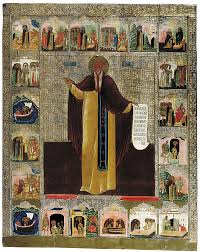
As we enter into Eastertide, we recall on this 13th of April Pope Saint Martin I (+655), one of the noblest, if most tragic, of the successors of Saint Peter. Born in Umbria, Italy, he was of noble lineage, with great intelligence combined with charity and love of the poor and the Church. While still[…]Continue reading→

Saint Stanislaus of Szczepanów
We celebrate Saint Stanislaus today (+ April 11, 1079), in light of this Easter Octave, a bishop and martyr who accepted the episcopacy only at the direct order of Pope Alexander II. He proved a wise and courageous leader of his flock, put to death by his own king, Boleslaus, for rebuking the monarch’s ‘immoral[…]Continue reading→
Saint Gemma Galgani
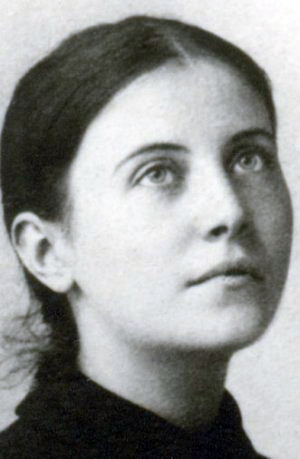
On this April 11th, in 1903 – the same year that the Italian Guiseppe Sarto was elected Pope later that summer as Pius X – a lovely, young Italian woman died, by the name of Gemma Galgani. She lived a brief life of 24 years, as did a number of other young saints, including Pier[…]Continue reading→
An Ideological and Improper Translation
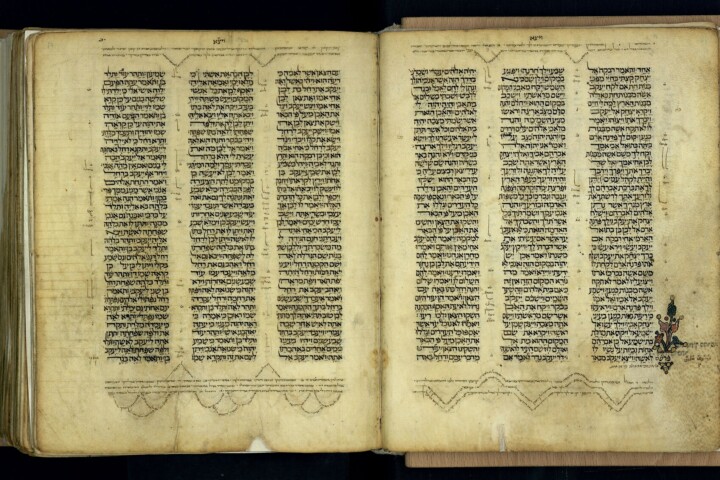
I noticed something odd with the psalm reading at Mass the other day. Our bishops’ conference here in Canada has decreed that the Mass in English – Novus Ordo – use the ‘NRSV’, the ‘New Revised Standard Version’, an ‘updated’ translation of the original RSV, first published in 1952. This ‘new translation’ has the tendency[…]Continue reading→
Saint Jean-Baptiste de la Salle: A Teacher for Teachers
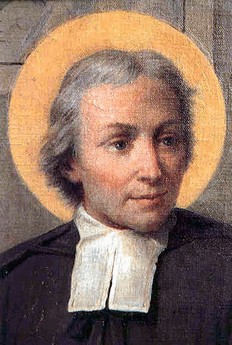
Jean-Baptiste de la Salle (1651 – 1719), a French nobleman, ordained a priest, founded the first order in the Church’s history entirely without priests, and this came about almost by accident. I say ‘almost’, for, of course, there are no accidents with God. Destined for ordination from an early age, Jean-Baptiste never looked back, even[…]Continue reading→