
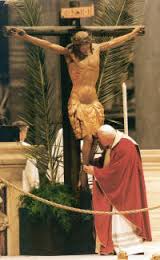
The Beauty of Suffering: Salvifici Doloris
In, 1984, Pope Saint John Paul II penned an Apostolic Letter on the mystery of human suffering, Salvifici Doloris (curiously, now looking back, the same year he made his first apostolic journey to Canada). One priest in a talk I heard recently mentioned that it may be remembered as one of his most prophetic works, with which I concur. I long ago included the Letter in my syllabus on Magisterial teaching, and now with the looming shadow of euthanasia about to inundate the world, John Paul’s words seem more a propos than ever.
Human suffering is a curious thing, not least since we live in community and in history: We can recall our sufferings, and, with a certain amount of dread, look forward to future ones. We write about our sufferings, and more commonly read of those of others, so participating vicariously in what others have gone through, whether this gives us pleasure, or pain, or perhaps a tantalizing mixture of both. I just read of a young family in Donegal, Ireland (where my father’s relatives are from, and where he and I took a cycling trip, again curiously, in 1984), father Sean McGrotty, 49, brothers Mark, 12, and Evan, 8, aunt Jodie Lee Daniels, 14, and grandmother Ruth Daniels, 59, along with a baby Rioghnach-Anne, who after dinner drove their jeep to look out over a scenic inlet, the aptly named ‘Lake of Shadows’. Tragically, the vehicle somehow slipped on the moss-and-algae covered pier, plunging into the cold, dark water. The waterlogged electronics jammed the doors and windows shut, so their SUV, at first buoyant, slipped slowly down, filling with sea water. A young man on shore, Davitt Walsh, witnessing this stripped to his boxers and courageously swam out, trying in vain to rescue them. The father, Sean, managed to pass his infant daughter to the water-treading rescuer, I suppose through a window he managed to pry open or that was ajar:
The father just looked at me and said, ‘Save my baby,’” Walsh recalled in an interview with Raidio Teilifís Eireann, the public broadcaster in Ireland. “… I couldn’t do anything else. The car went down. The whole lot went down. It was so fast
I reflected on this story on this Good Friday morning, along with the tragedy of the recent terrorist attacks in Belgium, the persecution and enslavement of Christians, the daily crimes against life, and all the other tragedies of our world, as I re-read John Paul’s letter, an unsurpassed synthesis and summary of the Church’s teaching on the mystery of suffering. We suffer, says the Pope, when we are in the presence of an ‘evil’. But we should be clear that evil has no positive existence, but is rather a state in which a good is missing, which should normally be there. The more desired is the missing good, the greater will be the experience of evil.
The Holy Father emphasizes the subjective dimension of evil, that the primary locus of evil is within the suffering subject, in what he terms the ‘world of evil’. The exterior dimensions of evil, hunger, aloneness, war, pains of the body, only give us some glimpse into what is occurring within the person. These so-called physical evils, wherein something objective is ‘missing’, are really only one of the gateways, if you will, to ‘real’ evil, spiritual or moral evil, deep within the identity of the person, in their ‘soul’.
The Holy Father examines what really is the definitive evil that Man can experience. Most might say ‘death’, the dissolution of the body, and this indeed is to many the ultimate evil, the very cessation of existence itself, or so they think. As the Pope says, the evil which is death indeed has a “definitive and total character” but is also “in a certain way…beyond all forms of suffering” . It removes our experience of evil, but is also the worst evil.
Or is it? That really is the question. It is a revealed dogma of our Faith that Man is an immortal being, whose life and actions here and now in some mysterious way determine his eternal destiny. At least somewhat mysterious: Christ has made it clear that we will be ‘judged’ at the end of our lives on love. Not some emotional, vaporous, self-indulgent love, seeking in subtle ways our own selfish good, but divine, real, sacrificial love, ‘willing the good of the other’, as Saint Thomas put it, or ‘loving our neighbour as ourselves’. There is nothing that so evinces, and is so requisite to, love than the willingness to suffer for the other.
I am more or less convinced that at some level every person knows they will be judged on love, and the real evil is to reject this love, to live a life of hatred of others, subtle or not, closed in upon oneself in bitterness and anger. To live in this state for eternity is what the Church means by ‘hell’, in the words of the Catechism, “the state of definitive self-exclusion from communion with God and the blessed”. This is the real ‘evil’ from which Christ, become Man, willed to save us.
As John Paul sums up:
Man ‘perishes’ when he loses “eternal life”. The opposite of salvation is not, therefore, only temporal suffering, any kind of suffering, but the definitive suffering: the loss of eternal life, being rejected by God, damnation. The only-begotten Son was given to humanity primarily to protect man against this definitive evil and against this definitive suffering.
It is in this light that we should see the sufferings of this life, and why they are not only to be borne with patience, but, if one can by grace muster it, even accepted with joy. As the first Pope told us, quoted by his 264th successor, “But rejoice in so far as you share Christ’s sufferings, that you may also rejoice and be glad when his glory is revealed” (1 Peter 4:13)
There is still a mystery here. Why suffering as a means to holiness and final redemption? The key to answering this mystery lies in the reality of sin, the primordial evil wherein Man rejects God, refuses to serve and obey, and exalts himself against his Creator and Father. Without sin, there would be no need for suffering, for it is suffering, John Paul states, that allows us “to become particularly susceptible, particularly open to the working of the salvific powers of God, offered to humanity in Christ”. Suffering allows us to see ourselves as we really are, by revealing to us in our “weakness and emptying of self”, that, at the end of the day, and at the end of our lives, we are totally and utterly dependent upon God.
Of course, Christ Himself did not ‘need’ to suffer, and Saint Thomas declares with logical clarity that He could have redeemed us some other way. However, the Way He did choose was the most fitting, the most perfect, both to redeem all of our own ‘evils’ at their very root, and to offer us a way to follow that He Himself trod, in all the weakness of His humanity. Again Saint Peter:
For to this you have been called, because Christ also suffered for you, leaving you an example, that you should follow in his steps. He committed no sin; no guile was found on his lips. When he was reviled, he did not revile in return; when he suffered, he did not threaten; but he trusted to him who judges justly. He himself bore our sins in his body on the tree, that we might die to sin and live to righteousness. By his wounds you have been healed. For you were straying like sheep, but have now returned to the Shepherd and Guardian of your souls (1 Peter 2:21).
Further, Christ does not need our sufferings, but allows us to suffer so that we might participate in His redemptive work for our own sake, so that we become more conformed to Him, hence to God. As John Paul puts it, “through suffering those surrounded by the mystery of Christ’s Redemption become mature enough to enter this Kingdom”.
One final note: Just as Christ could suffer for others, while needing none himself, so too we can suffer for others, even if we need it not. This is the mystery of our unity in the Mystical Body of Christ, and why innocents like Christ, our Lady, and, yes, saints and even little children can suffer, plunging unexpectedly to depths of the Irish sea on an early spring evening. Such vicarious suffering can ‘make space’ in the sin-hardened and deadened-conscience souls of others for the redemptive grace of Christ, even if they refuse to ‘make space’ themselves.
Of course, this is nowhere near the modern, utilitarian mindset, which sees all things governed by blind chance, with life nothing but a protoplasmic accident waiting to return to the oblivion whence it arose. To them, the Donegal family, the passengers waiting in the check-in line at the Brussels airport, those unlucky enough to still be stuck in Syria, were all in the wrong place at the wrong time.
But to the Catholic mind, there is always a reason, and nothing really happens by ‘chance’, for all things, from the smallest to the greatest, are in God’s providence (CCC, #303). To the victims of such manifest evils, such was their moment to enter eternity, their suffering ‘meaning something’ in the grand scheme of God’s will, a meaning to be revealed only at the end of time, when the whole creation will be brought to perfection.
Thus we reach the limits of our understanding of the mystery of salvific suffering, stretching out towards the eternity to which we are all called after this transitory existence. Life here is only a ‘penultimate good’, as John Paul would later state in Evangelium Vitae, not the ultimate good, which is eternal life. That is why he could declare that all the heinous crimes against life, abortion, genocide, terrorism, mutilation, murder “do more harm to those who practise them than to those who suffer from the injury” (par. 3). We should always keep in mind, whatever may come our way, good, bad or in-between, especially when we face our own death, to conform ourselves to Christ, recalling “that the sufferings of this present time are as nothing compared to the glory that is to be revealed to us” (Romans 8:18)
A blessed Triduum and Easter to all…
Carney’s Amoral Majority
After five defections – euphemistically described as ‘crossing the floor’ – and three by-elections, Mark Carney and his Liberals how have their coveted majority. One wonders what bowls of pottage were offered in back-room deals. In the archaic monarchical system that is the Dominion of Canada, this majority allows the newly-minted Prime Minister to rule[…]Continue reading→

Saint Kateri , Canada’s Protectress
This was the title given to Saint Kateri Tekakwitha, by Pope Benedict XVI, when he canonized her on October 28th, 2012, along with six others, in Saint Peter’ Square (she had been beatified by Pope John Paul II back in 1980). With Saint Joseph as our protector, along with the Canadian martyrs, we seem to[…]Continue reading→
A Tale of Two Benedicts
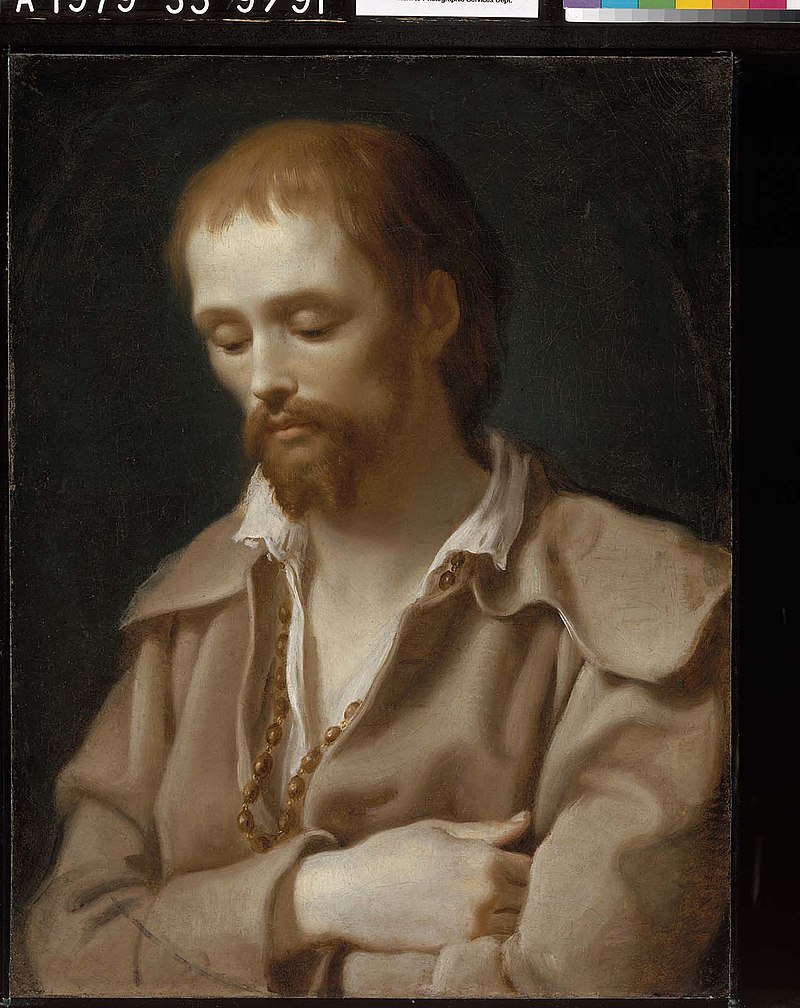
A grace-filled Holy Week to all our readers! As we await and prepare for the Resurrection about to dawn upon us, we might keep in mind two Benedicts: Pope Emeritus Benedict XVI, requiescat in pace, elected on this day in 2005; and today’s commemoration of the mystic pilgrim, Benedict Joseph Labre, who died on this[…]Continue reading→

My Name is Bernadette
April 16th is a propitious day, for besides the anniversary of Father de Valk’s death, who founded Catholic Insight in its print form decades ago, and the commemoration of the ‘two Benedicts’, mentioned in accompanying posts, today we also recall Saint Bernadette Soubirous, the young visionary to whom the Virgin Mary appeared numerous times at[…]Continue reading→
Saint Lydwina of Schiedam and Suffering Joyfully
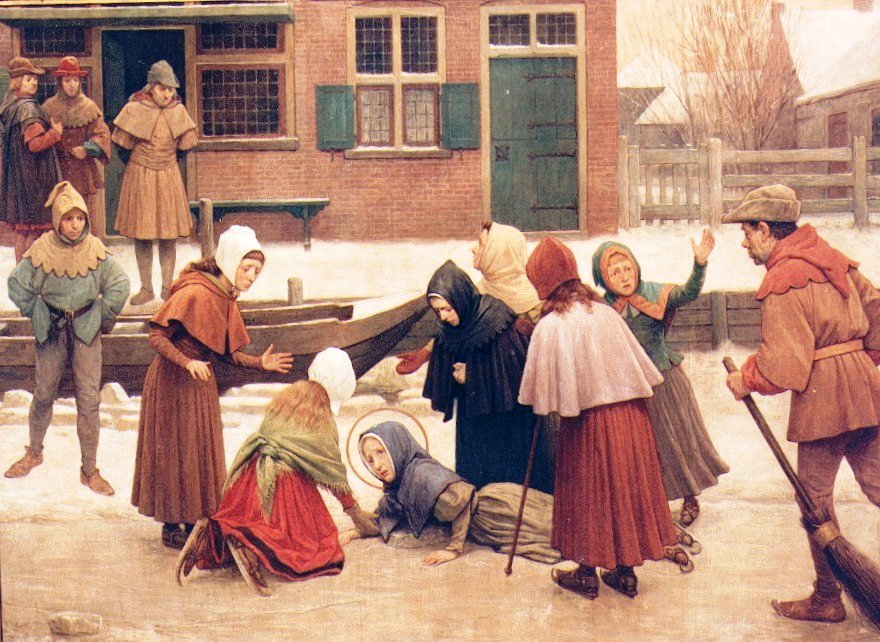
Saint Lydwina of Schiedam (1380 – 1433) was one of the countless and glorious ‘victim souls’ in the history of the Church, those whose lives are filled with suffering, often of an unimaginable intensity, but who suffer joyfully. She was a fifteen-year old Dutch girl, out skating one day, when she fell and broke one[…]Continue reading→
The Glorious Martyrdoms of Martin and Maximus
As we enter into Eastertide, we recall on this 13th of April Pope Saint Martin I (+655), one of the noblest, if most tragic, of the successors of Saint Peter. Born in Umbria, Italy, he was of noble lineage, with great intelligence combined with charity and love of the poor and the Church. While still[…]Continue reading→

Saint Stanislaus of Szczepanów
We celebrate Saint Stanislaus today (+ April 11, 1079), in light of this Easter Octave, a bishop and martyr who accepted the episcopacy only at the direct order of Pope Alexander II. He proved a wise and courageous leader of his flock, put to death by his own king, Boleslaus, for rebuking the monarch’s ‘immoral[…]Continue reading→
Saint Gemma Galgani
On this April 11th, in 1903 – the same year that the Italian Guiseppe Sarto was elected Pope later that summer as Pius X – a lovely, young Italian woman died, by the name of Gemma Galgani. She lived a brief life of 24 years, as did a number of other young saints, including Pier[…]Continue reading→
An Ideological and Improper Translation
I noticed something odd with the psalm reading at Mass the other day. Our bishops’ conference here in Canada has decreed that the Mass in English – Novus Ordo – use the ‘NRSV’, the ‘New Revised Standard Version’, an ‘updated’ translation of the original RSV, first published in 1952. This ‘new translation’ has the tendency[…]Continue reading→
Saint Jean-Baptiste de la Salle: A Teacher for Teachers
Jean-Baptiste de la Salle (1651 – 1719), a French nobleman, ordained a priest, founded the first order in the Church’s history entirely without priests, and this came about almost by accident. I say ‘almost’, for, of course, there are no accidents with God. Destined for ordination from an early age, Jean-Baptiste never looked back, even[…]Continue reading→