
Humanities, Technology and the Martian
On a news report the other evening, it was mentioned that enrolment in the humanities (philosophy, literature, history, to say nothing of theology) has dropped by 50% over the past ten years in our universities. Burgeoning onwards with full enrolments, on the other hand, are the S.T.E.M. studies, science, technology, engineering and mathematics, with which one can presumably ‘get a job’. This says many things about our culture, not many of them good and bode well. As I, and others far greater than I, have written, there is a vital need for a broader perspective in university, to delve into deep learning, to ‘see the whole’ as Cardinal Newman put it, how all the parts fit together. We are educating a whole bastion of technocratic automatons, who educate themselves for the sake of Mammon, and for those who hold Mammon’s purse strings. But as Aristotle said, most men are natural slaves, and seek only a ‘living’. We as Christians must fight this natural tendency, to learn to live free or die trying. That is what the ‘liberal’ arts strive to do: To set us free, from the slavery of ignorance and blindness.
Now, there is nothing wrong with Mammon, if he is your slave, and you are not his. Most of us need to ‘make money’, and engage in remunerative labour, especially if one is blessed with a wife and children, along with which blessing comes solicitude for their present and future, being provident as befits beings made in God’s image, as Pope Leo XIII taught in Rerum Novarum. But do we want to toggle all of our future to this one subsidiary goal of providing, and providing with money? Is ever-more perfect technology, and the money that goes with it, a goal in itself? Even secular pundits claim that we cannot lose the broad picture of how our technology, good in itself, should be used.
Also included in this is the whole notion of the why of things. Technology itself proceeds best by understanding how things work at the deepest level, only possible by metaphysical knowledge, or beyond the physical. As Aristotle put it, one only understands something by knowing it in its first principles, in its fundamental causes, in what he called propter quid knowledge, that ‘on account of which’ something works.
Besides the limited good of technology, its workings and its ongoing perfection in ever-new generations of i-phones and curved televisions, are beauty, art, literature, liturgy, prayer, good works, friendship, conversation, music, poetry, marriage and children, religious life, culinary arts, all that which makes life worth living. After all, technology, as its Greek roots signify, is a tool, always ordered to a higher end than itself. By its very definition, technology cannot exist for its own sake. What good is a tool, when one knows not why and wherefore to use it? As Anthony Esolen put it the other day, we have access to the greatest works of our civilization at a mouse click, or the swipe of a smartphone, yet many use such fantastic technology to view pornography, or to ‘tinder date’, or to play stultifying computer games.
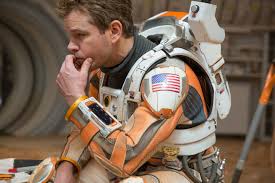
This came vividly home to me as I viewed the recent film The Martian with the ubiquitous Matt Damon (what film is he not in?). The whole endeavour seemed like a two hour (more like two and a half to be precise) infomercial for the aforementioned S.T.E.M. studies. Scarcely a whiff of culture, still less religion, in the whole saga, unless one counts Mr. Damon posing as Rodin’s ‘The Thinker’ in one of the promo shots (see the feature image); or, more to the point, his carving up a fellow astronaut’s crucifix for a fire that he needs to ignite (a mixed symbol: Is Christ giving His life in a way once again? Or is it that the only use for a crucifix is as a tool to start a fire?). There is as well as the running joke that the sole music the stranded Matt has is the left-behind playlist of his commander, containing only disco music, principally ABBA. A veiled reference to the Father, the Hebraic Abba? Methinks not, but rather a sad commentary on the state of our own anemic, two-dimensional existence. We live just to live (and perhaps dance badly), and Matt’s only purpose is ‘to survive’, which he does by technology and his scientific know-how. As he puts it in one speech, to paraphrase, it is ‘math that saved him’.
Math is all well and good, but it too is a means to an end, a tool. The humanities, however, the core subject matter of the ‘liberal arts’, are named that for a reason: As education, they are an end in themselves, for they signify most clearly what it is that makes us human, distinct from and far greater than the animals. We are, each of us, created by a special act of God in the very imago Dei. Our purpose is not to live, but, to paraphrase another sci-fi hero of more depth than the ‘Martian’, to ‘live well and prosper’. Or, again Aristotle, our purpose is to live a life of virtue, of excellence, of magnanimity, of greatness of soul.
It is the primary task of a university to hand on the ‘greatness’ of our ancestors so that it does not get lost, and we enter even further into the new dark age descending upon our civilization. Our centres of higher learning must not limit themselves to becoming corporate-driven research centres, seeking ever-more perfect technologies and the profit which they offer. As John Paul II emphasized so strongly in Fides et Ratio, we need the light of metaphysical, philosophical and, yes, spiritual and theological truth to guide us. But how many now seek such truth? Intellectual and spiritual poverty is far worse than the material variety.
Of course, there will always be lights in the darkness, reflections of that one Light, the perfect reflection of the Father, Christ, and the perfect reflection of Christ, His Mother Mary.
Speaking of whom, we commemorate today the founders of the Servite Order, priests and brothers who banded together in the early 13th century, that great century of Christendom, dedicating themselves to Our Lady, and to living a life of perfection in prayer and good works. They are one of the many too-oft untold and unsung lights in the darkness that give our life and our culture their purpose and meaning. So keep our eyes on the light, and the darkness will dispel itself.
Carney’s Amoral Majority
After five defections – euphemistically described as ‘crossing the floor’ – and three by-elections, Mark Carney and his Liberals how have their coveted majority. One wonders what bowls of pottage were offered in back-room deals. In the archaic monarchical system that is the Dominion of Canada, this majority allows the newly-minted Prime Minister to rule[…]Continue reading→

Saint Kateri , Canada’s Protectress
This was the title given to Saint Kateri Tekakwitha, by Pope Benedict XVI, when he canonized her on October 28th, 2012, along with six others, in Saint Peter’ Square (she had been beatified by Pope John Paul II back in 1980). With Saint Joseph as our protector, along with the Canadian martyrs, we seem to[…]Continue reading→
A Tale of Two Benedicts
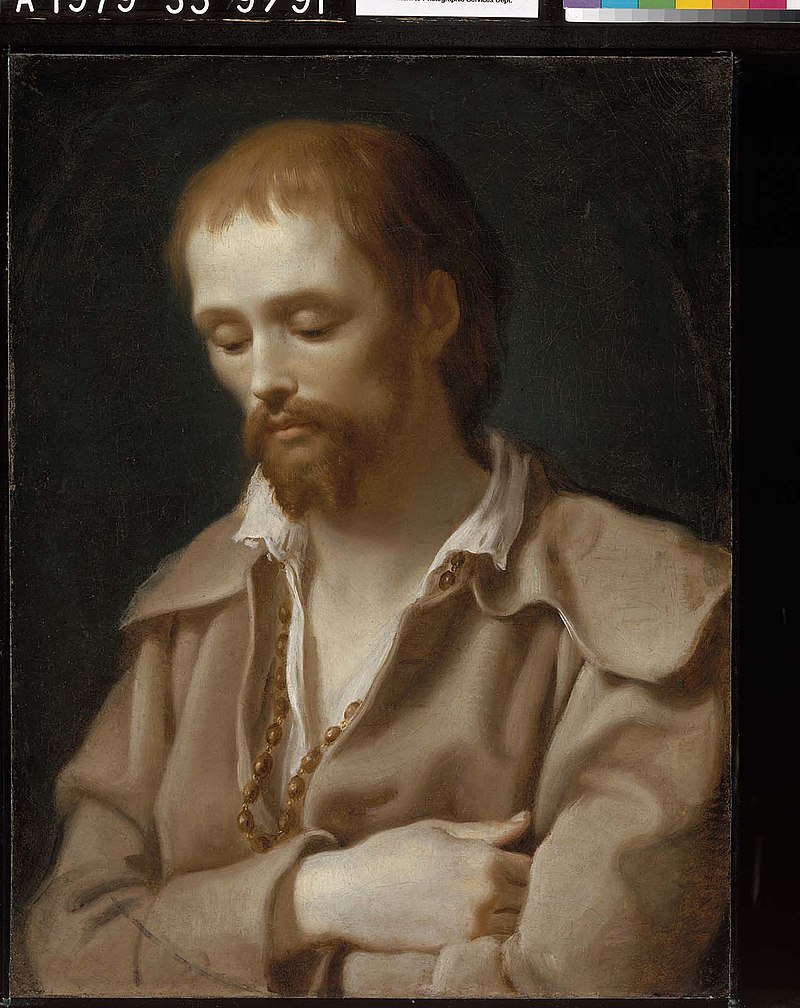
A grace-filled Holy Week to all our readers! As we await and prepare for the Resurrection about to dawn upon us, we might keep in mind two Benedicts: Pope Emeritus Benedict XVI, requiescat in pace, elected on this day in 2005; and today’s commemoration of the mystic pilgrim, Benedict Joseph Labre, who died on this[…]Continue reading→

My Name is Bernadette
April 16th is a propitious day, for besides the anniversary of Father de Valk’s death, who founded Catholic Insight in its print form decades ago, and the commemoration of the ‘two Benedicts’, mentioned in accompanying posts, today we also recall Saint Bernadette Soubirous, the young visionary to whom the Virgin Mary appeared numerous times at[…]Continue reading→
Saint Lydwina of Schiedam and Suffering Joyfully
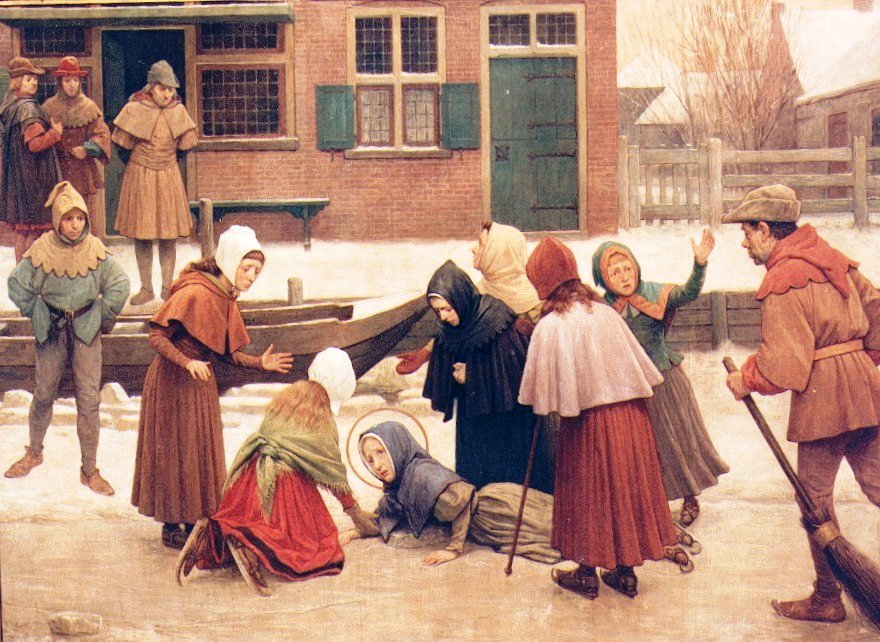
Saint Lydwina of Schiedam (1380 – 1433) was one of the countless and glorious ‘victim souls’ in the history of the Church, those whose lives are filled with suffering, often of an unimaginable intensity, but who suffer joyfully. She was a fifteen-year old Dutch girl, out skating one day, when she fell and broke one[…]Continue reading→
The Glorious Martyrdoms of Martin and Maximus
As we enter into Eastertide, we recall on this 13th of April Pope Saint Martin I (+655), one of the noblest, if most tragic, of the successors of Saint Peter. Born in Umbria, Italy, he was of noble lineage, with great intelligence combined with charity and love of the poor and the Church. While still[…]Continue reading→

Saint Stanislaus of Szczepanów
We celebrate Saint Stanislaus today (+ April 11, 1079), in light of this Easter Octave, a bishop and martyr who accepted the episcopacy only at the direct order of Pope Alexander II. He proved a wise and courageous leader of his flock, put to death by his own king, Boleslaus, for rebuking the monarch’s ‘immoral[…]Continue reading→
Saint Gemma Galgani
On this April 11th, in 1903 – the same year that the Italian Guiseppe Sarto was elected Pope later that summer as Pius X – a lovely, young Italian woman died, by the name of Gemma Galgani. She lived a brief life of 24 years, as did a number of other young saints, including Pier[…]Continue reading→
An Ideological and Improper Translation
I noticed something odd with the psalm reading at Mass the other day. Our bishops’ conference here in Canada has decreed that the Mass in English – Novus Ordo – use the ‘NRSV’, the ‘New Revised Standard Version’, an ‘updated’ translation of the original RSV, first published in 1952. This ‘new translation’ has the tendency[…]Continue reading→
Saint Jean-Baptiste de la Salle: A Teacher for Teachers
Jean-Baptiste de la Salle (1651 – 1719), a French nobleman, ordained a priest, founded the first order in the Church’s history entirely without priests, and this came about almost by accident. I say ‘almost’, for, of course, there are no accidents with God. Destined for ordination from an early age, Jean-Baptiste never looked back, even[…]Continue reading→