
Is Cash Still King?
I wonder how many of us still use cash? Reports state that we are becoming more and more a cash-less society, with Sweden (yes, always Sweden) being the most ‘advanced’ in this area. A recent article in the National Post highlighted Bjorn Ulvaeus, one of the original ABBA members (who, to be fair, does not have to worry much about cash) but who runs, you guessed it, the ABBA museum in Stockholm. The museum does not take your bills or coins: debit or credit only, var snall och. Even churches in Sweden now have swipe-machines for taking your tithes, and beggars on the street have devices for your donations. No more “I ain’t got no change” excuse, I suppose.
Canada is not far behind Sweden in moving towards solely electronic transactions, but there are concerns with a society losing its hold on cold hard cash. As Hilaire Belloc, in his inimitable way, describes in Economics for Helen, money was invented to facilitate barter trading, which is ultimately the basis for all monetary transactions. Instead of trading a cow for a sheep, or violin lessons for dental work, we trade in standardized symbols for what we think each ‘thing’ is worth, what its value is to us. At first, the money itself was worth something, being made of rare (gold, silver), or sort-of-rare (copper), metal. Eventually, as non-precious money came into currency, particularly paper bills, money was toggled to a ‘gold standard’, ensuring that the money supply did not outstrip the supply of the precious metal to avoid a deflation in the value of money.
The gold standard has been gradually dropped more or less since the Great Depression in the 1930’s, when the United States government decided to print more money than there was gold to back it up, to help the myriads of unemployed, and kick start the economy. Thus began the era of easy debit and credit. This unhinging of money from any sort of objective standard has continued, and accelerated, into our own day.
You might see where I am going with this, or rather where this is headed regardless of where I want to go with it. Money in whatever form must be connected to something ‘real’, something of ‘value’, or it becomes unreliable. I have written before on Zimbabwe under the reckless dictatorship of Robert Mugabe, whose currency is so worthless they are now printing trillion dollar bills.
But at least Zimbabwe still has cash. There is something about physicality of bills and coins that is more real than an electronic transaction. Peeling off a stack of twenty dollar bills to pay for that big-screen T.V. is a lot more difficult than swiping a pixilated $1200 on an Interac machine, to say nothing of the simple wave and blip on more current devices, where the money gets siphoned out of your account just by pulling out the card (and soon, even that won’t be necessary).
Clearly, cash offers far more resistance to impulse buying, or spending beyond one’s means
Furthermore, with an electronic transaction, there is a always a ‘paper’ trail, so to speak, which means the government, the banks and the stores all know every single thing you buy or sell. Not a big deal, perhaps, but something. Should ‘they’ know every one of our transactions?
On the plus side, there is greater security for businesses and individuals, with little or no cash on hand to tempt would-be robbers or muggers. Of course, there is the possibility computer fraud, or of forcing you to reveal your PIN number, but that is a bit more complicated than just having you hand over your wallet, hopefully (in their eyes) stuffed with cash.
And, as you may be aware, banks also make a very tidy profit on these transactions, charging a small fee for each swipe of the plastic. This is significantly less than the profit from credit cards (who charge businesses a hefty percentage for their services, and whose evil effects deserve another whole column). I was surprised to learn that Interac is governed by a non-profit organization, but nonetheless, at the end of the day, it still remains curious that we are being charged to spend our own money.
Adopting a largely electronic system without cash also results in far less cost to the banks and government. Why have a mint, and make all those expensive coins and glossy paper bills, so say nothing of paying artists to design the logos? What of tellers and money-counters? It takes a lot less manpower to keep track of blips on a screen.
And there is the problem of the connection of such electronic money to something real. What does our money now signify? Should the supply of money still be limited and controlled? Is all of our value now in credit? As its name implies, credit implies faith, that our money is worth something, and we are standing on a rather shaky foundation on that score. The global economy lost trillions of dollars in the financial collapse of October 2008; but one may wonder, if it disappeared so easily, what existence did that money have in the first place? Sub-prime mortgages, extended and over-leveraged loans, student debt and other ‘toxic’ assets do not a solid foundation make. He who builds his house on sand…
This last week we saw a deep slide in the Chinese stock market, which wisely closed down (two days in a row) to prevent a further, and irrevocable, slide into something perhaps far worse and widespread than the Great Depression. Are people losing faith in the stock market, and, if so, can a lack of faith in money be far behind? How ‘true’ is our money?
Saint Thomas defines truth as adequatio rei et intellectus, roughly translated as a ‘conformity between the mind and reality’. The same may be said of the economy, that it, and our faith in it, must be grounded in reality. At least with cash, we have something real to touch, feel and handle, something concrete and limited, which we hand over with care for those things we value. Even though debit offers more efficiency, I cannot help but feel something is lost in the transaction.
Of course, this disconnect is far worse with credit, but more on that soon.
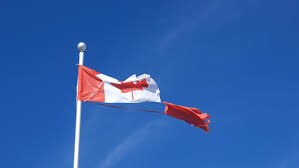
Carney’s Amoral Majority
After five defections – euphemistically described as ‘crossing the floor’ – and three by-elections, Mark Carney and his Liberals how have their coveted majority. One wonders what bowls of pottage were offered in back-room deals. In the archaic monarchical system that is the Dominion of Canada, this majority allows the newly-minted Prime Minister to rule[…]Continue reading→

Saint Kateri , Canada’s Protectress
This was the title given to Saint Kateri Tekakwitha, by Pope Benedict XVI, when he canonized her on October 28th, 2012, along with six others, in Saint Peter’ Square (she had been beatified by Pope John Paul II back in 1980). With Saint Joseph as our protector, along with the Canadian martyrs, we seem to[…]Continue reading→
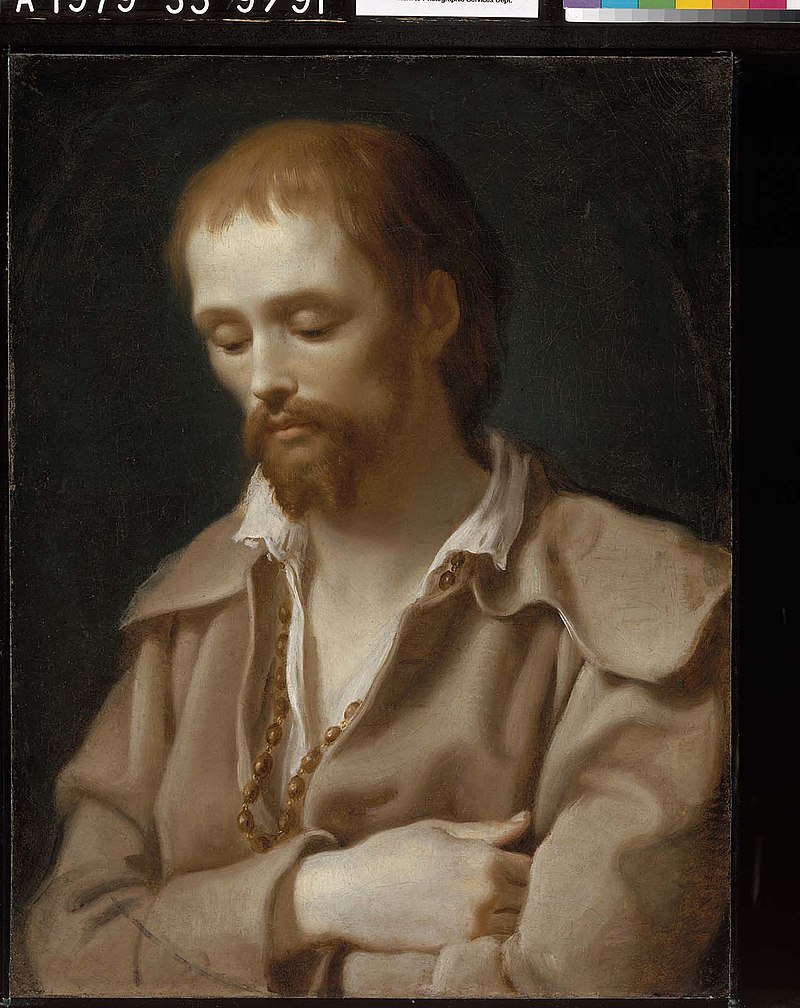
A Tale of Two Benedicts
A grace-filled Holy Week to all our readers! As we await and prepare for the Resurrection about to dawn upon us, we might keep in mind two Benedicts: Pope Emeritus Benedict XVI, requiescat in pace, elected on this day in 2005; and today’s commemoration of the mystic pilgrim, Benedict Joseph Labre, who died on this[…]Continue reading→

My Name is Bernadette
April 16th is a propitious day, for besides the anniversary of Father de Valk’s death, who founded Catholic Insight in its print form decades ago, and the commemoration of the ‘two Benedicts’, mentioned in accompanying posts, today we also recall Saint Bernadette Soubirous, the young visionary to whom the Virgin Mary appeared numerous times at[…]Continue reading→
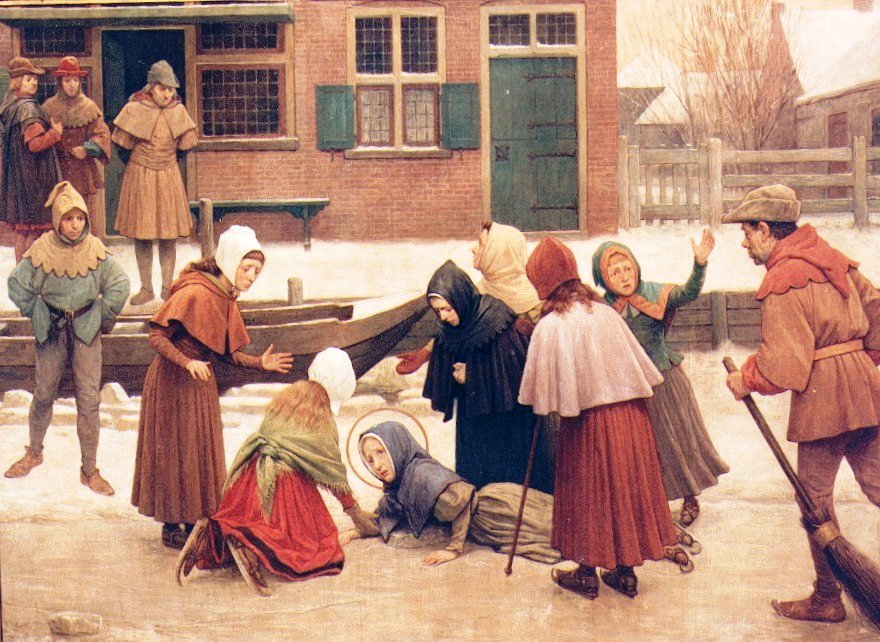
Saint Lydwina of Schiedam and Suffering Joyfully
Saint Lydwina of Schiedam (1380 – 1433) was one of the countless and glorious ‘victim souls’ in the history of the Church, those whose lives are filled with suffering, often of an unimaginable intensity, but who suffer joyfully. She was a fifteen-year old Dutch girl, out skating one day, when she fell and broke one[…]Continue reading→
The Glorious Martyrdoms of Martin and Maximus
As we enter into Eastertide, we recall on this 13th of April Pope Saint Martin I (+655), one of the noblest, if most tragic, of the successors of Saint Peter. Born in Umbria, Italy, he was of noble lineage, with great intelligence combined with charity and love of the poor and the Church. While still[…]Continue reading→

Saint Stanislaus of Szczepanów
We celebrate Saint Stanislaus today (+ April 11, 1079), in light of this Easter Octave, a bishop and martyr who accepted the episcopacy only at the direct order of Pope Alexander II. He proved a wise and courageous leader of his flock, put to death by his own king, Boleslaus, for rebuking the monarch’s ‘immoral[…]Continue reading→

Saint Gemma Galgani
On this April 11th, in 1903 – the same year that the Italian Guiseppe Sarto was elected Pope later that summer as Pius X – a lovely, young Italian woman died, by the name of Gemma Galgani. She lived a brief life of 24 years, as did a number of other young saints, including Pier[…]Continue reading→
An Ideological and Improper Translation
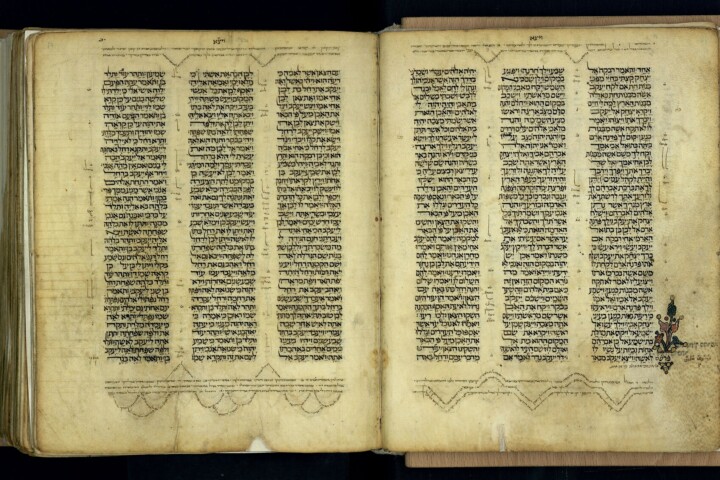
I noticed something odd with the psalm reading at Mass the other day. Our bishops’ conference here in Canada has decreed that the Mass in English – Novus Ordo – use the ‘NRSV’, the ‘New Revised Standard Version’, an ‘updated’ translation of the original RSV, first published in 1952. This ‘new translation’ has the tendency[…]Continue reading→
Saint Jean-Baptiste de la Salle: A Teacher for Teachers
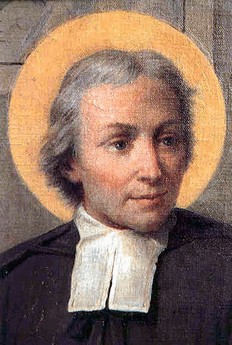
Jean-Baptiste de la Salle (1651 – 1719), a French nobleman, ordained a priest, founded the first order in the Church’s history entirely without priests, and this came about almost by accident. I say ‘almost’, for, of course, there are no accidents with God. Destined for ordination from an early age, Jean-Baptiste never looked back, even[…]Continue reading→