
Laudato Si: A Commentary on Magisterial Ecology
In light of Pope Francis’ call for September 1st to be a day dedicated to prayer for the environment and ecology, here is a post I wrote soon after the publication of the encyclical Laudato Si, which I republish here:
The Holy Father’s new encyclical, Laudato Si, whose title is taken from the canticle of Saint Francis of Assisi, lives up to radical Franciscan spirituality (from the Latin radix, going back to the root or source), sparing no punches in his denunciations of the waywardness of the world, calling for a return to a simple way of life, less dependent on technology and non-renewable resources, more focused on God, the beauty of His creation, our relationships with one another.
There are, as many of you have likely already heard or read, controversial aspects to the encyclical, largely stemming from Pope Francis’ apparent tendency to make statements that can be misinterpreted. I am not out to judge the Pope, but one must read his often exhortatory statements in the light of reason and the traditional teaching of the Church.
There is his much-touted endorsement of the scientific validity of anthropogenic global warming by carbon emissions (#23), with which the radical environmentalists are already making hay. The Church does have a limited authority to speak on scientific issues, when they pertain to faith or morals (e.g., Pius XII’s limits on the theory of human evolution in Humani Generis). However, she must be cautious in advocating as-yet unproven scientific theories, especially shaky ones rife with fraud, and drawing moral conclusions therefrom. The carbon-emission hypothesis is only a small part of the letter, however, and Francis admits later on that this question is not completely decided, that debate is possible, and that “on many concrete questions, the Church has no reason to offer a definitive opinion; she knows that honest debate must be encouraged amongst experts, while respecting divergent views” (#61). In other words, the encyclical does not oblige Catholics to believe in anthropogenic climate change or global warming.
I also have concerns with the Pope’s apparent advocacy of the Earth Charter (he mentions it without criticism in #207), and his call for an international body with legal powers to enforce environmentally-friendly policies (#170, 173), especially if we accept ‘carbon emissions’ produced by humans as pollutants (although, thankfully, the Holy Father is against the easily-abused scheme of ‘carbon credits’, #171). The Holy Father does warn that the sovereignty of nations must be protected (#38), but I would have difficulty imagining such a international body being friendly to the Church, or to large families, Catholic or otherwise.
I am also not sure how to jibe his stated goal to “eliminate poverty” (#172, 175), with Our Lord’s prediction that “the poor you will always have with you” (Mt 26:11; Mk 14:7). Reason also tells us that ‘poverty’ is a relative reality. The poor in Canada, who have access to a ‘free’ health care system and welfare, are not quite the same as the poor in Calcutta, who are left in the gutter, at least until the Sisters of Charity arrived. There will always be the ‘rich’ and the ‘poor’, both monetarily and otherwise, until the end of time. I would think the term ‘alleviate’ poverty would have made things clearer; I wholeheartedly agree that we will always have work to do for the poor.
Also, I have some sympathy for the Holy Father’s advice to turn down, or off, the air conditioner, to “wear warmer clothes” rather than turn up the heat, to avoid the “use of plastic and paper”, to reduce water consumption (cf., #211), all within the broad exhortation to wean ourselves from ‘fossil fuels’ (#165) and care for the environment. However, he does not make clear just how bad these often much-needed realities are. How are we now to view driving our cars, especially on long road trips, air travel, heating our homes, cooking our food? I would not mind having some clearer directives how to proceed. Back to the science question: How polluting really are the burning of fossil fuels and the harvesting of paper?
But, anon, enough of the controversial aspects, and on to the main emphasis of the encyclical, a call for a radical reorientation of our view towards God’s creation, and our place therein: That all things are created by God, and signify in a broad sacramental way some aspect of His glory, and that we can ascend from created things “to the greatness of God and to his loving mercy” (#77). Francis declares the need to reappropriate “a correct understanding of work” which can only come about if we first grasp the proper “relationship between human beings and things” (#124). A re-emphasis, following from John Paul II and the unbroken tradition of the Church of a true “ecology of man”, and accepting “one’s own body in its femininity or masculinity”, as well as recognizing the “family as the basic cell of society” (#157).
Along these lines, the Holy Father calls for a renewed respect and care for all of creation, to maintain its bountiful biodiversity, which not only reflects God’s beauty, but which is often helpful to man (one may consider insects and agriculture, cf., #34). Primary and inviolable protection, however, is to be given to human life. As the Holy Father asks, “(h)ow can we genuinely teach the importance of concern for other vulnerable beings, however troublesome or inconvenient they may be, if we fail to protect a human embryo, even when its presence is uncomfortable and creates difficulties?” (#120). While we must learn to care for our environment and use resources wisely and prudently, the ecological problems we facecannot be solved by a “reduction in the birth rate” (#50). Quoting the Church’s Compendium of Social Doctrine, Francis makes clear that “demographic growth is fully compatible with an integral and shared development” (#50), and that our ecological problems are rather the effect of an “extreme and selective consumerism on the part of some” (ibid.). One might surmise that the ‘some’ are those who call most vociferously for population reduction.
While recognizing the utility and even the beauty of technology as a “means of improving the quality of human life” (#103), Francis also recognizes its dangers, for our “immense technological development has not been accompanied by a development in human responsibility, values and conscience” (#105). As Francis put it earlier in the letter, “when media and the digital world become omnipresent”, and who does not see smartphones everywhere, “their influence can stop people from learning how to live wisely, to think deeply and to love generously” (#47). Would that our modern educational establishments took to heart his words that “(t)rue wisdom, as the fruit of self-examination, dialogue and generous encounter between persons, is not acquired by a mere accumulation of data which eventually leads to overload and confusion, a sort of mental pollution” (ibid.).
The Holy Father’s has some harsh words for our over-consumerist society, and I must confess that I have a good degree of sympathy for him here, more so than some of the Catholic blogosphere. He does not condemn capitalism, nor does he advocate socialism, but rather asks us to go beyond what he calls “an undifferentiated and one-dimensional paradigm” in our approach to the economy, a paradigm based on the “scientific and experimental method, which in itself is already a technique of possession, mastery and transformation” (#106). An economy cannot operate solely upon the basis of profit, especially when “finance overwhelms the real economy” (#109). This problem is not just economic, but epistemological, following upon our “fragmentation of knowledge” (a fruit of our modern university education), which leads only to partial solutions and to a “loss of the appreciation of the whole” (#110).
One vital application of ‘seeing the whole’ is the need to protect employment, and a reappropriation of the value and dignity of human work. Quoting the Pastoral Constitution on the Church from Vatican II,Gaudium et Spes, the Holy Father reiterates that “man is the source, the focus and the aim of all economic and social life” (#127; cf., GS, #63). In this context, profit is only one factor in any business enterprise, and we should beware, for example, of “laying off workers and replacing them with machines” (#128). Such loss of jobs, which is becoming a real problem in our society, in turn has a negative impact on the economy. To build a stable and long-lasting financial basis, “it is imperative to promote an economy which favours productive diversity and business creativity” (#129) and civil leaders have the “right and duty”, in concrete cases, “to adopt clear and firm measures in support of small producers and differentiated production” (ibid.). Do we want all our clothes, furniture and food to come from the same multinational companies, especially those that have unjust, even slave-like, labour policies? Should not local production and employment be fostered and supported? As Francis states, “to stop investing in people, in order to gain greater short-term financial gain, is bad business for society” (#128).
Towards the end of the encyclical, the Holy Father has a beautiful exhortation for us to attain true “joy and peace” by a “prophetic and contemplative lifestyle, one capable of deep enjoyment free of the obsession with consumption”, to be “spiritually detached from what we possess, and not to succumb to sadness of what we lack” (#222). This can only be accomplished through a “sobriety and humility” which leads to an “integrity of human life, of the need to promote and unify all the great values”, which is impossible if we “exclude God from our lives or replace him with our own ego” (#224). I agree wholeheartedly with Pope Francis that “(w)e have had enough of immorality and the mockery of ethics, goodness, faith and honesty”, and that “light-hearted superficiality has done us no good” (#229).
The primary means to attain such peace and magnanimous goodness is to recognize and reflect upon the beauty of creation and of being at peace with ourselves (#225), but most of all through participation in the sacraments, those tangible, created realities through which God offers us his grace, a participation in His very life. As Francis declares, “(i)t is in the Eucharist that all that has been created finds its greatest exaltation. Grace, which tends to manifest itself tangibly, found unsurpassable expression when God himself became man and gave himself as food for his creatures” (#236). It is here, in the Eucharist, that “fullness is already achieved; it is the living centre of the universe”. It is thus that “the Eucharist joins heaven and earth; it embraces and penetrates all creation” (ibid.).
So creation itself becomes supernaturalized, signifying that all things come from God and are held in His hands. In fact, all creation signifies the very Trinitarian reality of God, the “divine Persons” which are “subsistent relations”, in the reality of which the “human person grows more, matures more and is sanctified more to the extent that he or she enters into relationships, going out from themselves to live in communion with God, with others and with all creatures” (#240).
At the end, with Our Lady, who “in her glorified body, together with the Risen Christ…has reached the fullness of beauty”, we too “will find ourselves face to face with the infinite beauty of God”, whose creation is but a dim reflection, but nonetheless a foretaste, of this glory.
Carney’s Amoral Majority
After five defections – euphemistically described as ‘crossing the floor’ – and three by-elections, Mark Carney and his Liberals how have their coveted majority. One wonders what bowls of pottage were offered in back-room deals. In the archaic monarchical system that is the Dominion of Canada, this majority allows the newly-minted Prime Minister to rule[…]Continue reading→

Saint Kateri , Canada’s Protectress
This was the title given to Saint Kateri Tekakwitha, by Pope Benedict XVI, when he canonized her on October 28th, 2012, along with six others, in Saint Peter’ Square (she had been beatified by Pope John Paul II back in 1980). With Saint Joseph as our protector, along with the Canadian martyrs, we seem to[…]Continue reading→

Remembering Father Alphonse de Valk
(Today marks the sixth anniversary of the death of Father Alphonse de Valk, C.S.B., a faithful, courageous and indefatigable Basilian priest, pro-life-and-family apostle, and the founder of Catholic Insight magazine. Here is what we wrote those on his entering into eternity five years ago, as we continue to remember him in our prayers and thoughts)[…]Continue reading→
A Tale of Two Benedicts
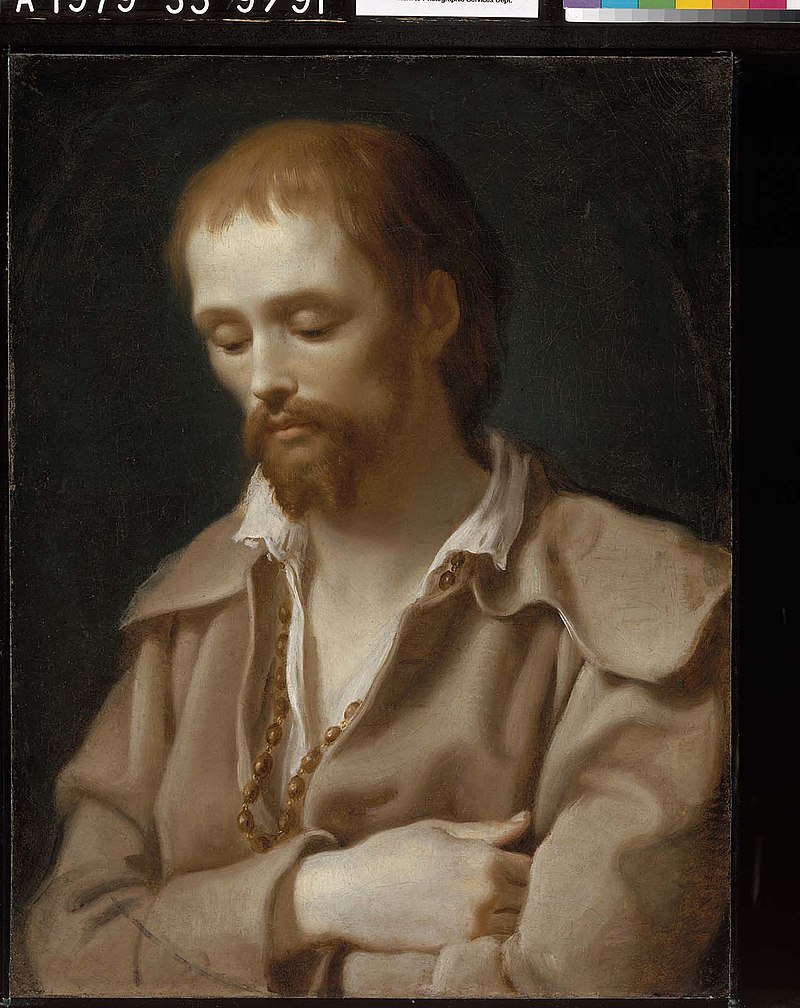
A grace-filled Holy Week to all our readers! As we await and prepare for the Resurrection about to dawn upon us, we might keep in mind two Benedicts: Pope Emeritus Benedict XVI, requiescat in pace, elected on this day in 2005; and today’s commemoration of the mystic pilgrim, Benedict Joseph Labre, who died on this[…]Continue reading→

My Name is Bernadette
April 16th is a propitious day, for besides the anniversary of Father de Valk’s death, who founded Catholic Insight in its print form decades ago, and the commemoration of the ‘two Benedicts’, mentioned in accompanying posts, today we also recall Saint Bernadette Soubirous, the young visionary to whom the Virgin Mary appeared numerous times at[…]Continue reading→
Saint Lydwina of Schiedam and Suffering Joyfully
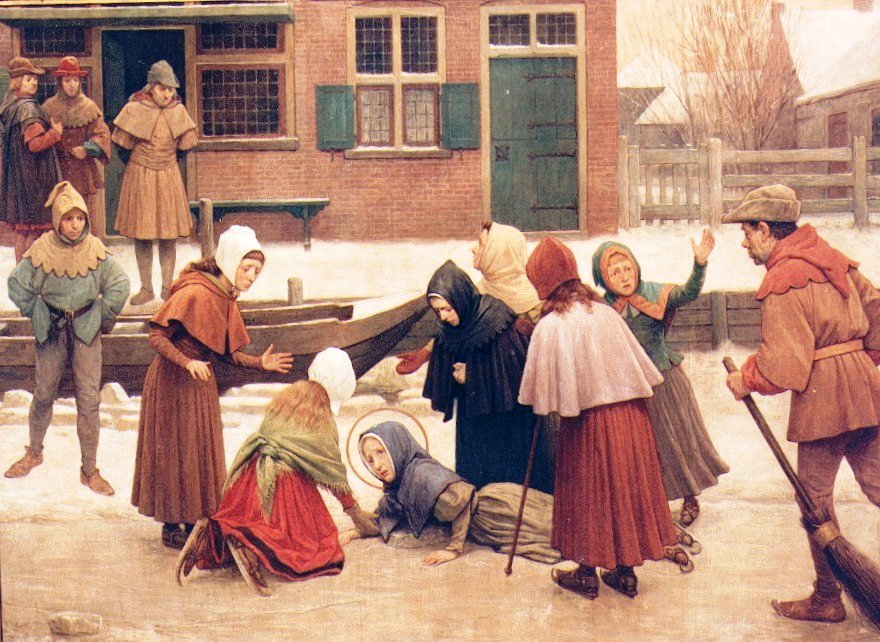
Saint Lydwina of Schiedam (1380 – 1433) was one of the countless and glorious ‘victim souls’ in the history of the Church, those whose lives are filled with suffering, often of an unimaginable intensity, but who suffer joyfully. She was a fifteen-year old Dutch girl, out skating one day, when she fell and broke one[…]Continue reading→
The Glorious Martyrdoms of Martin and Maximus
As we enter into Eastertide, we recall on this 13th of April Pope Saint Martin I (+655), one of the noblest, if most tragic, of the successors of Saint Peter. Born in Umbria, Italy, he was of noble lineage, with great intelligence combined with charity and love of the poor and the Church. While still[…]Continue reading→
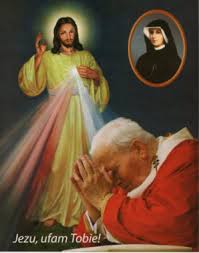
Canonizing Sister Faustina and Divine Mercy
HOMILY OF THE HOLY FATHER MASS IN ST PETER’S SQUARE FOR THE CANONIZATION OF SR MARY FAUSTINA KOWALSKA Sunday, 30 April 2000 1. “Confitemini Domino quoniam bonus, quoniam in saeculum misericordia eius”; “Give thanks to the Lord for he is good; his steadfast love endures for ever” (Ps 118: 1). So the Church sings on the Octave of[…]Continue reading→

Divine Mercy Sunday – An Echo of Every Mass
Reach out your hand and put it in my side. Do not doubt but believe’… ‘My Lord and my God!’ (Jn. 20:18)). Today is Divine Mercy Sunday, and as we celebrate the end of the Easter Octave, we contemplate the wounded side of our Saviour, the Church’s source of life. On Good Friday in the[…]Continue reading→

Saint Stanislaus of Szczepanów
We celebrate Saint Stanislaus today (+ April 11, 1079), in light of this Easter Octave, a bishop and martyr who accepted the episcopacy only at the direct order of Pope Alexander II. He proved a wise and courageous leader of his flock, put to death by his own king, Boleslaus, for rebuking the monarch’s ‘immoral[…]Continue reading→