
23rd Sunday: Sacred liturgy and Catholic culture
O come, let us worship God and bow down, before the God who made us, for He is the Lord our God (Ps 95:6-7).
In what is known as the Divine Office or the Liturgy of the Hours, the official set of daily prayers prescribed by the Church, all those who recite these prayers, whether in monasteries or religious houses or alone in private recitation, begin with the recitation of Psalm 95, the Responsorial Psalm of our Mass. “Come, let us sing to the Lord and shout with joy to the rock who saves us. Let us approach Him with praise and thanksgiving and sing joyful songs to the Lord. … O come, then, let us bow low, bending the knee before the Lord, our maker. For he is our God and we are His people, the flock He shepherds.” All of these sentiments mark our prayer during the course of the Christian day and most especially, during the celebration of the Holy Sacrifice of the Mass: joy and exultation, praise and humble adoration, weeping before the Lord, sometimes in sorrow for our sins, sometimes in the joy of His redeeming grace.
Yes, we are His people in two ways and so the Psalm gives a double reason for our worship: creation and election. The Catechism of the Catholic Church reminds us that “adoration is the first act of the virtue of religion. To adore God is to acknowledge Him as God, as the Creator and Saviour, the Lord and Master of everything that exists, as infinite merciful Love” (2096). Our worship is rooted in our identity as the Chosen People of God. Our worship which rests on who we are by reason of our election has a twofold purpose: the worship of God, and our transformation in Christ. This transformation is brought about by our drawing closer to His goodness and growing in likeness to Him. This is the effect of our worship.
Our election however is not to be understood as a guarantee of salvation, for the Psalmist exhorts us to vigilance, should memory fade and heart be hardened: “Today, listen to the voice of the Lord: Do not grow stubborn, as your fathers did in the wilderness.” The psalm contains an explicit and real warning, a warning born of bitter historical memory. What happened in the desert to Israel of old can also happen today. The day of decision is always today. This is the point of the earliest Christian interpretation of this psalm found in the Epistle to the Hebrews, a work addressed to a Christian congregation which, the author feared, was in serious danger of falling away from the faith. “Take care, brethren, lest there be in any of you an evil, unbelieving heart, leading you to fall ways from the living God. But exhort one another every day, as long as it called ‘today,’ that none of you may be hardened by the deceitfulness of sin. For we share in Christ, if only we hold our first confidence firm to the end” (Heb 3:12-14). The Psalmist’s warning is always a matter of today, whether at the beginning of our daily worship or as we assist at the celebration of the Holy Sacrifice of the Mass. So we must ask ourselves: what dispositions do we bring to prayer? Have we allowed our hearts to harden and to grow cold through indifference and mediocrity in relation to the things of God? These questions are always relevant; and in our times, more so than ever relevant.
God must be worshipped in the beauty of holiness and the holiness of beauty, with a spirit of deepest reverence. This is especially true of the worship given to God in the Holy Sacrifice of the Mass. In his last encyclical, Ecclesia de Eucharistia, Pope St. John Paul II reminded us that “like the woman who anointed Jesus in Bethany, the Church has feared no ‘extravagance,’ devoting the best of her resources to expressing her wonder and adoration before the unsurpassable gift of the Eucharist. … [T]he faith of the Church in the mystery of the Eucharist has found historical expression not only in the demand for an interior disposition of devotion, but also in outward forms meant to evoke and emphasize the grandeur of the event being celebrated” (Ecclesia de Eucharistia, April 17, 2003). The sacred liturgy is the pre-eminent means through which we receive proper religious formation and education in virtue. The sacred liturgy is both the feast and school of faith. “The worship of the one God sets man free from turning in on himself, from the slavery of sin and the idolatry of the world” (2097). Personal prayer, evangelization and the works of mercy—all of which are needed and all of which are to be exercised by each member of the Church—these derive their very meaning from the liturgy. The Second Vatican Council taught us that “every liturgical celebration, because it is an action of Christ the priest and of His Body which is the Church, is a sacred action surpassing all others” (Constitution on the Sacred Liturgy, Sacrosanctum Concilium, 7; 4 December 1963).
If our liturgical celebrations are not principally an expression and experience of adoration, then they can become a hindrance to our union with Christ our Lord. Though this may sound improbable to some, the renewal of our times depends greatly on the renewed appreciation of the importance and value of the sacred liturgy. This was the path followed by Pope St. Pius X during his pontificate, and the fifty years that followed his pontificate witnessed unparalleled growth in the Church’s outreach to the world. There is a distinct Catholic culture that we must foster and defend for the salvation of the world depends upon it. Culture is “the common way of life of a people” (Christopher Dawson). Culture embraces nearly the totality of man’s endeavours; and for the Catholic, this means that this human embrace also includes the Transcendent. In this supernatural vision, we can arrive at the full and proper understanding of our true nature as human beings, created and chosen by God to share in His life.
In the school of the sacred liturgy we are formed in goodness and grow in likeness to the God whom we adore; and this worship transforms our life. In the sacred liturgy is experienced the harmony of the human and the divine. The best of human artistry in all fields of human endeavour has always been offered to God in sacred worship.” The liturgy is at once the mirror of a culture and its culmination” (Jean Leclercq. O.S.B., The Love of Learning and the Desire for God, p. 308). In the liturgy, all our resources fully attain their potentiality; that is, they are or become what they are truly meant to be for they are restored to God in a homage which recognises that they come from Him. Thus at the end of the Eucharistic Prayer, the doxology declares: Though Him and with Him and in Him, O God, Almighty Father, in the unity of the Holy Spirit, all glory and honour is Yours, for ever and ever. In the Eucharistic Prayer, the Church is always one with our Lord, Jesus Christ as His Atoning Sacrifice is re-presented and He becomes present of the altar and united to this self-giving, the Church and each one of us individually is united to this offering. This is true worship; sincere, reverent, and devout. Lex orandi, lex credendi, lex vivendi; this ancient adage of the Church expresses both the primacy of worship in our life and its purpose: the norm of prayer is the norm of belief, is the norm of life—a unity of worship and life that gives meaning and purpose to all that we do. May our worship teach us today to seek first the kingdom of God and His righteousness (Mt 6:33). With profound reverence, let us do all that we can to adore the living God in Christ “for in Him … we have been destined and appointed to live for the praise of His glory” (Eph 1:11-12).

Saint Kateri , Canada’s Protectress
This was the title given to Saint Kateri Tekakwitha, by Pope Benedict XVI, when he canonized her on October 28th, 2012, along with six others, in Saint Peter’ Square (she had been beatified by Pope John Paul II back in 1980). With Saint Joseph as our protector, along with the Canadian martyrs, we seem to[…]Continue reading→

Remembering Father Alphonse de Valk
(Today marks the sixth anniversary of the death of Father Alphonse de Valk, C.S.B., a faithful, courageous and indefatigable Basilian priest, pro-life-and-family apostle, and the founder of Catholic Insight magazine. Here is what we wrote those on his entering into eternity five years ago, as we continue to remember him in our prayers and thoughts)[…]Continue reading→

My Name is Bernadette
April 16th is a propitious day, for besides the anniversary of Father de Valk’s death, who founded Catholic Insight in its print form decades ago, and the commemoration of the ‘two Benedicts’, mentioned in accompanying posts, today we also recall Saint Bernadette Soubirous, the young visionary to whom the Virgin Mary appeared numerous times at[…]Continue reading→

Canonizing Sister Faustina and Divine Mercy
HOMILY OF THE HOLY FATHER MASS IN ST PETER’S SQUARE FOR THE CANONIZATION OF SR MARY FAUSTINA KOWALSKA Sunday, 30 April 2000 1. “Confitemini Domino quoniam bonus, quoniam in saeculum misericordia eius”; “Give thanks to the Lord for he is good; his steadfast love endures for ever” (Ps 118: 1). So the Church sings on the Octave of[…]Continue reading→

Divine Mercy Sunday – An Echo of Every Mass
Reach out your hand and put it in my side. Do not doubt but believe’… ‘My Lord and my God!’ (Jn. 20:18)). Today is Divine Mercy Sunday, and as we celebrate the end of the Easter Octave, we contemplate the wounded side of our Saviour, the Church’s source of life. On Good Friday in the[…]Continue reading→

First Holy Communion: Sermon from May 16, 1943
Here is a sermon from the good old days by +Rev. Msgr. Vincent Nicholas Foy (August 14, 1915 – March 13, 2017), from 1943. Readers may recall that Pope Saint Pius X, by the decree Quam Singulari in 1910, lowered the customary age of reception of Holy Communion – after the rigours of the plague[…]Continue reading→

In the Glorious Light of Easter, Alleluia!
Set your minds on things that are above, not on things that are on earth, for you have died, and your life is hidden with Christ in God. When Christ who is your life is revealed, then you also will be revealed with him in glory (Col. 3:3-4). The Resurrection of Our Lord and Saviour[…]Continue reading→

An Ancient Homily for Holy Saturday
The time between Good Friday and Easter Sunday is one of waiting, in silence, as the world wonders – anticipates – what will happen, after the death of Christ. We re-live this time each year in the anamnesis of our liturgy, and in turn look forward to the glorious re-creation of all things at the[…]Continue reading→

Europe’s Long Descent
(As we meditate on this day on Christ’s burial, and His descent into hell, it is fitting to ponder here with contributor Peter Marcus how the world seems to be heading there as well. The difference is that, although God cannot ‘redeem’ hell, nor those therein, He can and did redeem the world. There is[…]Continue reading→
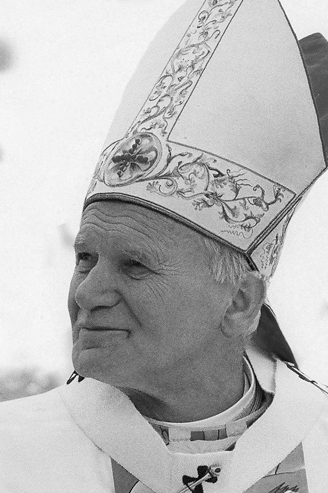
Pope Saint John Paul II’s First Good Friday Homily
ADDRESS OF HIS HOLINESS JOHN PAUL II AT THE CONCLUSION OF THE STATIONS OF THE CROSS AT THE COLOSSEUM Good Friday, 13 April 1979 When we make the Way of the Cross from one station to the next, in spirit we are always at the spot wherethis journey had its “historical” place: where it[…]Continue reading→