
22nd Sunday: Embrace the Cross
If anyone wants to become my disciple, let him deny himself and take up his cross and follow me. (Mt 16:24)
As we continue our reading of St. Matthew’s Gospel and enter more fully into the Mystery of our Lord’s identity and mission as Messiah, we learn in today’s Gospel passage that if we wish to follow Jesus we must do so on His terms, not ours; no matter how well-intentioned we may consider ourselves to be. Surely, this is the case with St. Peter who rebukes our Lord who had begun “to show his disciples that he must go to Jerusalem and undergo great suffering … and be killed and on the third day be raised” (Mt 16:21). In turn, Peter is himself rebuked with rather strong words: “Get behind me, Satan! You are a stumbling block to me; for you are thinking not as God does, but as humans do!” (Mt 16:23). Evidently, there can be no authentic Christian discipleship without the embrace of the Cross, for the Cross and all that it implies is at the heart of the Christian faith. There are, it would seem from what our Lord says to Peter, two ways to approach this mystery: as God does and as humans do.
We who profess our faith in the Crucified Christ acknowledge Him to be “the power and the wisdom of God: (1 Cor 1:23). As such, our Lord’s Cross and, to some extent, our own crosses are the means by which we come to know God and to experience His power at work in and through us. In the embrace of the Cross we come to know the true nature of God in whose image and likeness we are created. Indeed, the violent death of our Lord on the Cross is a revelation of the nature of God whose Trinitarian life is essentially self-surrender and love. The human person created in God’s own image and likeness is formed in the shape of a cross. It seems fitting that the Cross should unambiguously communicate the means to our self-fulfillment: self-giving love. If anyone wants to become my disciple, let him deny himself and take up his cross and follow me.
If the Cross is indeed the revelation of God’s very nature, then the Cross is the key to understanding all reality. Blessed John Henry Newman spoke of the Cross as the measure of the world. “In the Cross and in Him who hung upon it, all things meet, all things subserve it, all things need it. It is their centre and their interpretation. For He was lifted upon it, that He might draw all things unto Him” (The Cross of Christ the Measure of the World, Parochial and Plain Sermons). In light of these words it is very clear why the Church engages in missionary work. We preach Christ Crucified, the power of God and the wisdom of God so that all people may come to know and to understand themselves in the light of God’s truth for “the Cross is the way which leads from earth to heaven. Those who embrace it with faith, love, and hope are taken up, right up into the heart of the Trinity” (St. Teresa Benedicta of the Cross, The Science of the Cross).
If anyone wants to become my disciple, let him deny himself and take up his cross and follow me. The self-denial that our Lord speaks of confronts the self-love and selfishness that can easily lead us to think not as God does but as humans do. This is why we must never think of a Cross-less Christianity as anything but satanic; for this is what our Lord Himself calls it. At some point in life we all confront the Mystery of the Cross in a manner that is very personal and perhaps known by God alone. The power of this Mystery is such that even the worst situations can become occasions of growth and grace.
I would like to share with you a story that your faith in the power of the Cross may strengthen you in the embrace of your own crosses. Twelve years ago on the Feast of our Lady’s Assumption, 15 August, I performed an emergency Baptism of a beautiful baby boy in the delivery room of a hospital. Baby Zechariah’s parents had been told early in the pregnancy that the baby’s brain was essentially underdeveloped and that he would not survive hours beyond his birth. His parents came to see me well before the scheduled birth date and asked if I would be present so that the baby could be baptized. In the course of our conversations they also told me of how they had been advised to terminate the pregnancy so that they might spare themselves so much pain; but they steadfastly withstood this pressure. They told me that this baby would be as much a part of their family as their other children. As soon as he was baptized, baby Zechariah was given to his mother. She held him and she cried as she looked at him as only a mother can. A few days later, on a beautiful summer day, we buried him. He was buried in a cemetery close to their home so that when the parents went for a walk with their other children they would be able to visit their baby brother. I share this story with you because this family’s yes to life, their yes to suffering and to the Cross, is what builds up the Civilization of Love where the love of God and love of neighbour “are carried even to the point of contempt for self” (St. Augustine, De Civ. Dei, XIV, 28). This is what it means to think and to live as God does. St. Augustine observed that all history is a struggle between two loves: the love of self to the point of despising God; and the love of God to the point of despising oneself in martyrdom. This martyrdom is not always accompanied by the violent loss of life. Indeed, most often it implies quite simply heeding our Lord’s admonition and carrying our cross in union with Him. If anyone wants to become my disciple, let him deny himself and take up his cross and follow me. This is the path that baby Zechariah’s parents followed.
Christus vincit, regnat, imperat; ab omni malo plebem suam defendat. Christ conquers, He reigns, He commands. May he defend His people from all evil. These words are inscribed on the base of the obelisk which stands in the centre of St. Peter’s Square in Rome. Pope Sixtus V had these words engraved at the base of a monument that once stood in a Roman circus where many ancient Martyrs gave witness to Christ our Lord by the shedding of their blood. These consoling words are in the present tense to indicate that our Lord’s triumph and His command is always actual, present. We have said yes to our Lord’s invitation and our presence at the celebration of the Holy Sacrifice of the Mass is an affirmation of our assent here and now. His triumph is brought about in and by the Eucharist, the Sacrament of the Cross. May the embrace of the Cross help us to help one another along the path of devout discipleship, and may the Eucharist, the food of our journey, our viaticum, confer “on us always the blessing of salvation; that what it celebrates in mystery it may accomplish in power (Prayer over the Offerings, Twenty- First Sunday Per Annum, The Roman Missal).
Photo: Photobucket.com

Saint Kateri , Canada’s Protectress
This was the title given to Saint Kateri Tekakwitha, by Pope Benedict XVI, when he canonized her on October 28th, 2012, along with six others, in Saint Peter’ Square (she had been beatified by Pope John Paul II back in 1980). With Saint Joseph as our protector, along with the Canadian martyrs, we seem to[…]Continue reading→

Remembering Father Alphonse de Valk
(Today marks the sixth anniversary of the death of Father Alphonse de Valk, C.S.B., a faithful, courageous and indefatigable Basilian priest, pro-life-and-family apostle, and the founder of Catholic Insight magazine. Here is what we wrote those on his entering into eternity five years ago, as we continue to remember him in our prayers and thoughts)[…]Continue reading→

My Name is Bernadette
April 16th is a propitious day, for besides the anniversary of Father de Valk’s death, who founded Catholic Insight in its print form decades ago, and the commemoration of the ‘two Benedicts’, mentioned in accompanying posts, today we also recall Saint Bernadette Soubirous, the young visionary to whom the Virgin Mary appeared numerous times at[…]Continue reading→

Canonizing Sister Faustina and Divine Mercy
HOMILY OF THE HOLY FATHER MASS IN ST PETER’S SQUARE FOR THE CANONIZATION OF SR MARY FAUSTINA KOWALSKA Sunday, 30 April 2000 1. “Confitemini Domino quoniam bonus, quoniam in saeculum misericordia eius”; “Give thanks to the Lord for he is good; his steadfast love endures for ever” (Ps 118: 1). So the Church sings on the Octave of[…]Continue reading→

Divine Mercy Sunday – An Echo of Every Mass
Reach out your hand and put it in my side. Do not doubt but believe’… ‘My Lord and my God!’ (Jn. 20:18)). Today is Divine Mercy Sunday, and as we celebrate the end of the Easter Octave, we contemplate the wounded side of our Saviour, the Church’s source of life. On Good Friday in the[…]Continue reading→

First Holy Communion: Sermon from May 16, 1943
Here is a sermon from the good old days by +Rev. Msgr. Vincent Nicholas Foy (August 14, 1915 – March 13, 2017), from 1943. Readers may recall that Pope Saint Pius X, by the decree Quam Singulari in 1910, lowered the customary age of reception of Holy Communion – after the rigours of the plague[…]Continue reading→

In the Glorious Light of Easter, Alleluia!
Set your minds on things that are above, not on things that are on earth, for you have died, and your life is hidden with Christ in God. When Christ who is your life is revealed, then you also will be revealed with him in glory (Col. 3:3-4). The Resurrection of Our Lord and Saviour[…]Continue reading→

An Ancient Homily for Holy Saturday
The time between Good Friday and Easter Sunday is one of waiting, in silence, as the world wonders – anticipates – what will happen, after the death of Christ. We re-live this time each year in the anamnesis of our liturgy, and in turn look forward to the glorious re-creation of all things at the[…]Continue reading→

Europe’s Long Descent
(As we meditate on this day on Christ’s burial, and His descent into hell, it is fitting to ponder here with contributor Peter Marcus how the world seems to be heading there as well. The difference is that, although God cannot ‘redeem’ hell, nor those therein, He can and did redeem the world. There is[…]Continue reading→
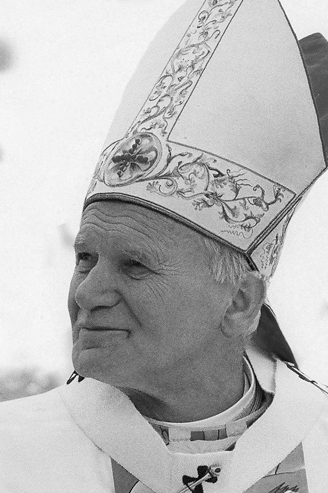
Pope Saint John Paul II’s First Good Friday Homily
ADDRESS OF HIS HOLINESS JOHN PAUL II AT THE CONCLUSION OF THE STATIONS OF THE CROSS AT THE COLOSSEUM Good Friday, 13 April 1979 When we make the Way of the Cross from one station to the next, in spirit we are always at the spot wherethis journey had its “historical” place: where it[…]Continue reading→