
Of Blood and Guts and Ancient Romans
When I hear a screaming child in a department store, I try not to draw attention to the commotion. Kids are kids. They scream, they cry, they laugh—whether it be at home, on the potty, in the store, wherever. There was one time, however, that I couldn’t tear my eyes away. A little girl, perhaps about three, had found one of those fake, life-sized, moving, cackling witches and had chained herself in fright to her dad’s neck. I couldn’t help but stare in horror as her father laughed and attempted to extricate himself from her, repeating over and over, “it’s only pretend, it’s only pretend” and all the while shoving her closer to the witch. But she was frantic and refused to even look at it, screaming and clawing at his neck.
I think of that little girl now as Halloween approaches once again, and the costumes, commercials, and movies continue to get more and more disturbing. I’m what people call a “sensitive person.” If I watch too much CSI, I wake up at 3am with thoughts of home invasions and pillage-rape-murderers in my head. I sometimes think I am that little girl gasping with fright when everyone around me is laughing and telling me it’s a fake—but my mind doesn’t know the difference. It’s one of my many gifts.
But it begs the question, what is the fascination with the frightening and the gruesome? Why is it fun or entertaining to watch movies full of graphic, gratuitous violence, psychologically and mentally disturbed people acting out their abhorrent fantasies, and enough blood and guts to sink a small ship? It’s naïve to think that this kind of garbage isn’t having a negative effect on us—and the behaviours coming out of us as well. As they say, garbage in, garbage out.
Recall the Ancient Romans. Their culture was awash in blood and guts, especially after one of the emperors conceived the brilliant plan of feeding Christian people to ravenous lions and selling tickets for the spectacle. I suppose those were the days of some of the first “splatter” or “gore” flicks, only they weren’t films. There were real body parts being strewn across the floor. I imagine that those Roman citizens had to be desensitized over the course of many years for them to go cheering into that colosseum, because no living, breathing, feeling human person in their right mind could watch that sort of carnage and think themselves unaffected or think that applauding animals as they rip apart human flesh is an afternoon well spent. Right?
Perhaps not. Aside from the obvious, what’s the difference between us and the Romans? Even for the most mature among us (i.e. those of us with a well-formed conscience who are able to discern the finer details within good and evil) what does a film full of gore do but desensitize us, bit by bloodstained bit, to psycho-pathologically “thrilling” situations and people? Or show us more blood and guts than Caligula could have ever imagined?
We’re attracted to it because we’re visual creatures, voyeuristically intrigued by the trappings of death. We can’t tear our eyes away as much as we’d like to, and the more we look, the more we want to see. The more we want to see, the more filmmakers have to shock and awe us with more blood and more guts. Before we know it, just like the Romans, we’ve built up a tolerance towards evil (or even the beginnings of evil—especially if we started during our young and impressionable years). What we have taken in has been assimilated into our psyche somehow—affecting our dreams, our thoughts, and even our decision-making processes. (How many times have I avoided a darkened alley?) I’m not saying that those who have watched Friday the 13th or Carrie become psychopathic or neurotic (although it’s not unheard of), but watching this kind of violence, no matter how fake or unbelievable it is, might diminish the value of the human person in our minds.
Slasher movies often feature psychopathic serial killers stalking and violently slaughtering their prey (which are often women). Maybe, just maybe, those who have filled their minds with that kind of gruesomeness are tempted to treat the human person with a little bit less dignity than he or she deserves. This happens with emergency room doctors who develop harsh, uncaring bedside manners when they begin to be unduly affected by the massacres they’re sometimes faced with at work. And in the average Joe this comes out initially in how he treats strangers, the lowly, the elderly, and the helpless. Human life comes to mean less and less the more we watch it being beaten, chopped up, stalked, and butchered. So it’s no wonder then that a stranger is more apt to take a picture of a man being mugged than step in to help or even call the police. We want to be titillated with entertainment containing a small bit of reality mixed with a large dose of fiction because then we can tell ourselves that the scary show is not real—it’s play-acting. We don’t have to care. And that attitude can carry over into our real lives.
The curious thing is that truth is often stranger (and MUCH scarier) than fiction. We don’t have to conjure up scary things to titillate us. Life is scary enough. You think gross = fun? Follow a doctor around for a day. You think psychopaths are interesting? Chat with a prison psychiatrist or a parent whose daughter was murdered by one. Think demon possession is amusing? Talk to an exorcist or, better yet, someone who’s come through demon possession and lived to tell about it. This is nightmarish stuff here, and it’s not to be treated lightly. I know people who slept in their parents’ rooms for weeks after watching The Exorcist. It was bloody terrifying because it was based on reality.
I don’t find it funny to watch people (especially children) being frightened out of their wits. Neither do I amuse myself with diversions of a grisly nature. People who have lived through atrocities of the worst kinds, I’m sure, feel the same way. What they have experienced has added a certain gravity to how they see the world. We here in the west have (for the most part) been protected from experiencing the truly vile and vicious, and it’s almost as if we must conjure it up just to get our blood pumping. I thank God that we are so blessed but I worry about where our viewing habits are taking us individually, and as a society. I’m not averse to a varied array of amusements, including a scare here or there, but we must draw a line somewhere before “Freddy” or “Chucky” become our teachers and mentors instead of our entertainers.

Saint Kateri , Canada’s Protectress
This was the title given to Saint Kateri Tekakwitha, by Pope Benedict XVI, when he canonized her on October 28th, 2012, along with six others, in Saint Peter’ Square (she had been beatified by Pope John Paul II back in 1980). With Saint Joseph as our protector, along with the Canadian martyrs, we seem to[…]Continue reading→

Remembering Father Alphonse de Valk
(Today marks the sixth anniversary of the death of Father Alphonse de Valk, C.S.B., a faithful, courageous and indefatigable Basilian priest, pro-life-and-family apostle, and the founder of Catholic Insight magazine. Here is what we wrote those on his entering into eternity five years ago, as we continue to remember him in our prayers and thoughts)[…]Continue reading→

My Name is Bernadette
April 16th is a propitious day, for besides the anniversary of Father de Valk’s death, who founded Catholic Insight in its print form decades ago, and the commemoration of the ‘two Benedicts’, mentioned in accompanying posts, today we also recall Saint Bernadette Soubirous, the young visionary to whom the Virgin Mary appeared numerous times at[…]Continue reading→
Canonizing Sister Faustina and Divine Mercy
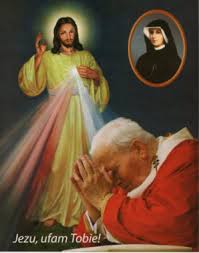
HOMILY OF THE HOLY FATHER MASS IN ST PETER’S SQUARE FOR THE CANONIZATION OF SR MARY FAUSTINA KOWALSKA Sunday, 30 April 2000 1. “Confitemini Domino quoniam bonus, quoniam in saeculum misericordia eius”; “Give thanks to the Lord for he is good; his steadfast love endures for ever” (Ps 118: 1). So the Church sings on the Octave of[…]Continue reading→

Divine Mercy Sunday – An Echo of Every Mass
Reach out your hand and put it in my side. Do not doubt but believe’… ‘My Lord and my God!’ (Jn. 20:18)). Today is Divine Mercy Sunday, and as we celebrate the end of the Easter Octave, we contemplate the wounded side of our Saviour, the Church’s source of life. On Good Friday in the[…]Continue reading→

First Holy Communion: Sermon from May 16, 1943
Here is a sermon from the good old days by +Rev. Msgr. Vincent Nicholas Foy (August 14, 1915 – March 13, 2017), from 1943. Readers may recall that Pope Saint Pius X, by the decree Quam Singulari in 1910, lowered the customary age of reception of Holy Communion – after the rigours of the plague[…]Continue reading→
In the Glorious Light of Easter, Alleluia!
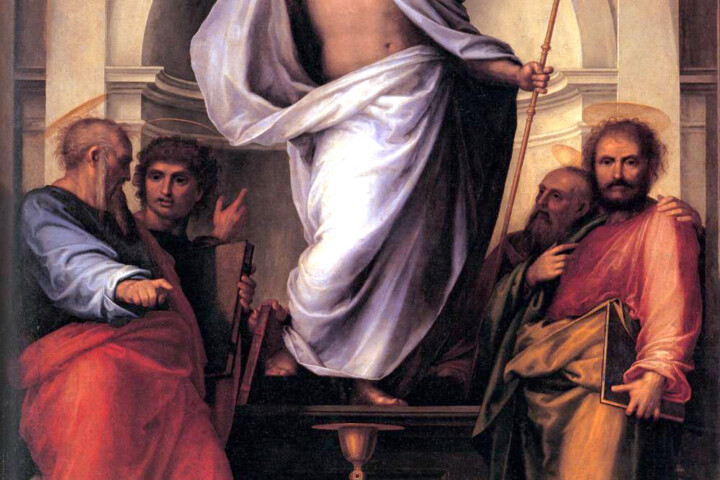
Set your minds on things that are above, not on things that are on earth, for you have died, and your life is hidden with Christ in God. When Christ who is your life is revealed, then you also will be revealed with him in glory (Col. 3:3-4). The Resurrection of Our Lord and Saviour[…]Continue reading→
An Ancient Homily for Holy Saturday
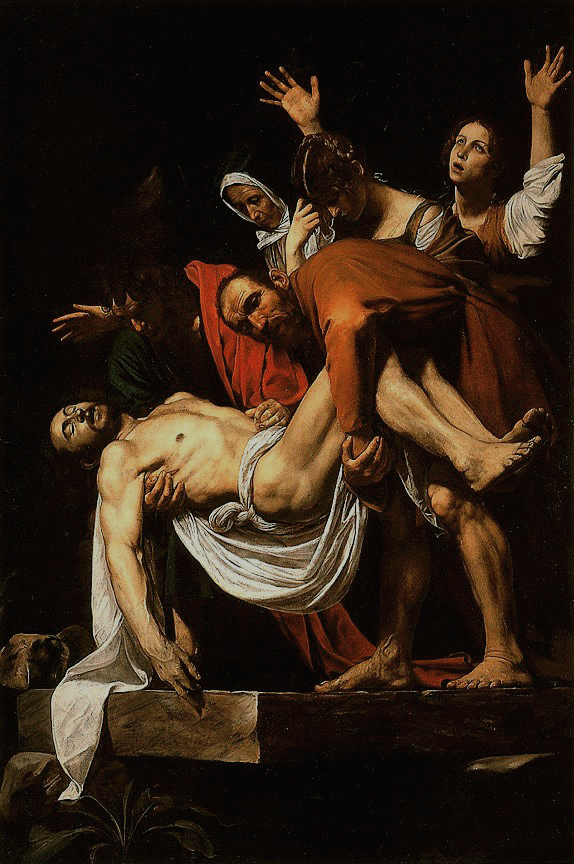
The time between Good Friday and Easter Sunday is one of waiting, in silence, as the world wonders – anticipates – what will happen, after the death of Christ. We re-live this time each year in the anamnesis of our liturgy, and in turn look forward to the glorious re-creation of all things at the[…]Continue reading→
Europe’s Long Descent
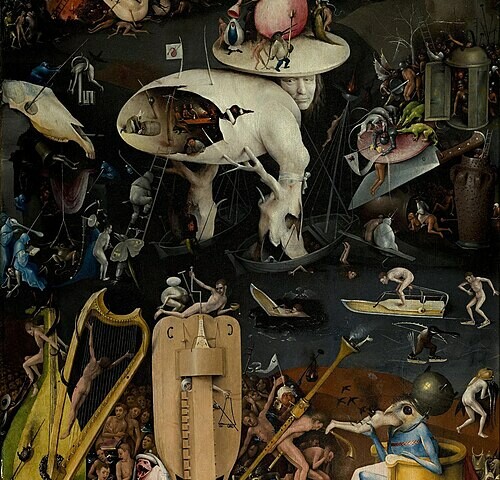
(As we meditate on this day on Christ’s burial, and His descent into hell, it is fitting to ponder here with contributor Peter Marcus how the world seems to be heading there as well. The difference is that, although God cannot ‘redeem’ hell, nor those therein, He can and did redeem the world. There is[…]Continue reading→

Pope Saint John Paul II’s First Good Friday Homily
ADDRESS OF HIS HOLINESS JOHN PAUL II AT THE CONCLUSION OF THE STATIONS OF THE CROSS AT THE COLOSSEUM Good Friday, 13 April 1979 When we make the Way of the Cross from one station to the next, in spirit we are always at the spot wherethis journey had its “historical” place: where it[…]Continue reading→