
Should Women be Educated?
The topic of women’s education has been making the social media rounds and I’m sure more than a few feminists have flown into fits of rage because of it. The whole thing seems to have started with a blog post touting eight reasons parents should not send their girls, specifically, to college. They reasons are the following:
- She will attract the wrong type of man (only good-for-nothing men go to university).
- She will be in the near occasion of sin (universities are dens of debauchery).
- She will not learn to be a wife or mother (no homemaking or how-to-be-a-good-wife courses).
- The cost of a degree is becoming more difficult to recoup.
- You don’t have anything to prove to the world.
- It could be a near occasion of sin for the parents (who may contracept to afford to send already existing kids to college).
- She will regret it (for many reasons).
- It could interfere with a religious vocation.
Now, I am a product of my generation—my “femi-nazi” or “faux-minist” generation. Some of the arguments touched a nerve, but I had to admit that some of the arguments made sense. Yet I found it quite challenging to distinguish between the propaganda I’ve been fed since I was child and the truth. My mind eventually settled on three points:
1. Homemaking is an actual profession (sometimes unpaid)—not the leftover crap work that people are forced to do when they get home from their “real” job or “have” to do because they stay at home with kids.
Feminists say they fight tooth and nail for women to do everything and anything they want to do. Well, some women want to work at home and choose to do just that, whether they have children or not. Why does this make feminists angry? What difference does it make to Gloria Steinam that a woman chooses to forgo a career for something else?
The feminist mentality seems to hold that women must have an anything-but-housekeeping job to be happy. So this is where I tend to agree with the authors of the article. For years, I was embarrassed to admit to my coworkers that I wanted to be a homemaker and that I had no big thirty-year career plans. To many of them, homemaking was a non-profession, something they forced their husband (who also worked full time) or kids to do.
Elizabeth Gilbert, in her book Committed: A Skeptic Makes Peace with Marriage, coined the phrase “Wifeless Marriages,” which refers to marriages where nobody fills the traditional role of wife. I worked with several of these couples—all of them working full time outside the home and having zero time or inclination to do work around the house, which was either below their dignity or below their interest. So they hired people to do the grunt work—cooking, cleaning, laundering, running errands, gardening, watching the children, and organizing the home—while they did the “important” work.
But contrary to (very) popular belief, homemaking is extremely important, especially if one wants to eat healthy, sleep well, have clean clothes, save money, be hygienic and relaxed, and be able to unwind in a soothing environment. There is an art and science to keeping house, and it takes a significant amount of time, energy, and effort. And—horror of all horrors—it can be fun and fulfilling and some people (like me) enjoy it. In light of this, I think arguments 3, 5, and 7 could possibly hold some water.
(As an aside, number 4 is unarguably true. For myriads of reasons the cost of a university education is getting harder to recoup as even now, people with advanced degrees are finding it difficult to secure work in their fields. Definitely worth taking into consideration when your child is considering higher education.)
2. Hypothetical situations are not real. We should not base our actions on the hypothetical but on the true.
I could be hit by a bus or struck by a meteor tomorrow morning when I walk out my door. Buses don’t generally use my road and a meteor pinging someone in the head is highly uncommon—but hey, it could happen. Does this mean I should never leave my home? I could also cut off a thumb while chopping carrots for dinner. Does this mean I should never chop carrots or, worse, never make dinner?
No, it doesn’t. Avoiding something because of what could happen isn’t prudence: it’s fear. Fear has a tendency to govern one’s life rapidly and without knowledge or consent (which flushes argument 1, 2, 6, and 8 down the hypothetical toilet). The truth is that we are God’s. He made us. We trust that he is making the sun rise and set and keeping our hearts beating and our lungs moving in and out. We hurt. We make bad decisions, and yet he is still there, loving us, moving all things to work for the good.
So it doesn’t make sense for a gal not to go to college because she might meet a lazy guy. Or because she or her parents may sin because of it. Or because she may lose her vocation. It’s true that there are lazy guys at university. It’s true that sin is lurking everywhere—on college campuses and within marriages near you. It’s true a vocation could be overlooked when surrounded by distractions. But these statements are true about everything you do and everywhere you go: church, the grocery store, the science centre, our nation’s capital—not just college.
Furthermore, hypothetical situations aren’t actually real. They are certainly not reasons to avoid doing something like getting an education, especially when higher learning may be something a girl wants (or is called) to do. The truth is that, at some point, every woman (and man) will have to learn to choose on their own the good, the true, and the beautiful from a world that is evil, false, and ugly, no matter where she goes and no matter what she does. It’s called living life in the world, but not being of the world, and we’re all required to do it.
3. Proverbs 22:6 and God’s Will for a soul.
Proverbs 22:6 says, “Train up a child in the way he should go, and when he is old he will not depart from it.” God has a specific plan for every person, which may or may not be the specific plan you have for that person. Parents, from the moment their children are born, should be learning to let them go and allowing them to be who God means them to be.
These arguments seem to be more about the parents’ will for their daughter and less about God’s. I imagine that if you asked this particular couple’s daughter if she wanted to go to university, she would say no—but after likely being drilled with these arguments who, but God and the girls themselves, truly know their own hearts? Parents are often wrong in their opinion of what’s best for their grown-up children, all the while trying to control or manipulate them in the name of love.
But the truth is this. If your child, son or daughter, shows promise and skill, naturally gravitates to something that would be greatly enhanced by attending university, and there are no real impediments (like finances or academic standing) to him or her going, there is absolutely no reason for him or her not to go. In fact it could be that the Lord wishes for them to go. Perhaps your daughter is meant to be a mathematician before, during, or after she raises her family. Perhaps her husband will die or be injured or require her help in garnering a pay check from time to time. Perhaps she will get married and be unable to have children or be the one to work outside the home, and her husband will stay home with the children. Unconventional, yes, but it has and could happen. Perhaps the order of nuns your daughter joins prefers their sisters to have a degree of some kind: nursing, teaching, accounting, etc. It also could be that your daughter desires to be a homemaker and raise children, and in that case her education could be tailored to her specific wants and needs.
The point is that there are as many different life paths as there are people in the world and it’s unfair and damaging to wrench your children (daughters included) into your own obtuse worldview. Be honest and truthful with your kids about the possible consequences that their life choices might mean for them (like what it means to have a full time job and raise children, or what it means not to attend college or university)—but after that, as much as it might kill you to do so, let them decide. You are not living their life: they are, and they answer to God alone.

Saint Kateri , Canada’s Protectress
This was the title given to Saint Kateri Tekakwitha, by Pope Benedict XVI, when he canonized her on October 28th, 2012, along with six others, in Saint Peter’ Square (she had been beatified by Pope John Paul II back in 1980). With Saint Joseph as our protector, along with the Canadian martyrs, we seem to[…]Continue reading→

Remembering Father Alphonse de Valk
(Today marks the sixth anniversary of the death of Father Alphonse de Valk, C.S.B., a faithful, courageous and indefatigable Basilian priest, pro-life-and-family apostle, and the founder of Catholic Insight magazine. Here is what we wrote those on his entering into eternity five years ago, as we continue to remember him in our prayers and thoughts)[…]Continue reading→

My Name is Bernadette
April 16th is a propitious day, for besides the anniversary of Father de Valk’s death, who founded Catholic Insight in its print form decades ago, and the commemoration of the ‘two Benedicts’, mentioned in accompanying posts, today we also recall Saint Bernadette Soubirous, the young visionary to whom the Virgin Mary appeared numerous times at[…]Continue reading→
Canonizing Sister Faustina and Divine Mercy
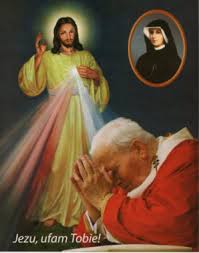
HOMILY OF THE HOLY FATHER MASS IN ST PETER’S SQUARE FOR THE CANONIZATION OF SR MARY FAUSTINA KOWALSKA Sunday, 30 April 2000 1. “Confitemini Domino quoniam bonus, quoniam in saeculum misericordia eius”; “Give thanks to the Lord for he is good; his steadfast love endures for ever” (Ps 118: 1). So the Church sings on the Octave of[…]Continue reading→

Divine Mercy Sunday – An Echo of Every Mass
Reach out your hand and put it in my side. Do not doubt but believe’… ‘My Lord and my God!’ (Jn. 20:18)). Today is Divine Mercy Sunday, and as we celebrate the end of the Easter Octave, we contemplate the wounded side of our Saviour, the Church’s source of life. On Good Friday in the[…]Continue reading→
First Holy Communion: Sermon from May 16, 1943
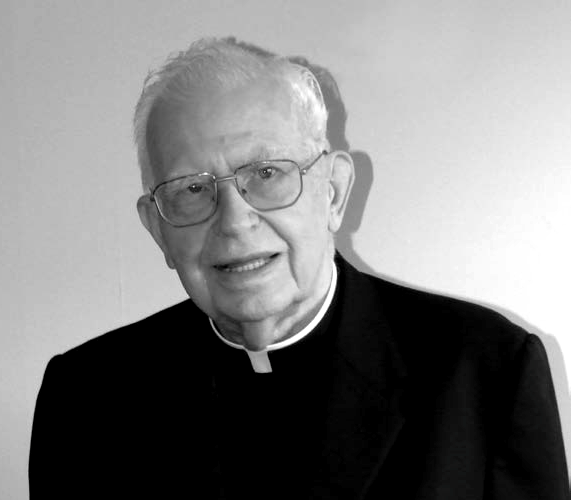
Here is a sermon from the good old days by +Rev. Msgr. Vincent Nicholas Foy (August 14, 1915 – March 13, 2017), from 1943. Readers may recall that Pope Saint Pius X, by the decree Quam Singulari in 1910, lowered the customary age of reception of Holy Communion – after the rigours of the plague[…]Continue reading→
In the Glorious Light of Easter, Alleluia!
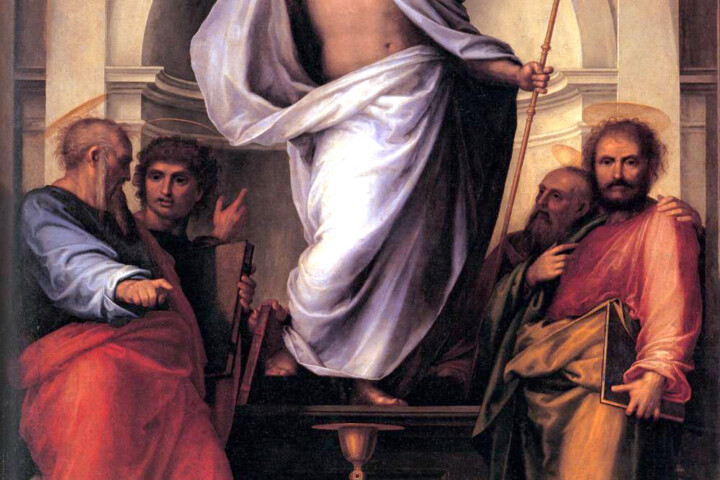
Set your minds on things that are above, not on things that are on earth, for you have died, and your life is hidden with Christ in God. When Christ who is your life is revealed, then you also will be revealed with him in glory (Col. 3:3-4). The Resurrection of Our Lord and Saviour[…]Continue reading→
An Ancient Homily for Holy Saturday
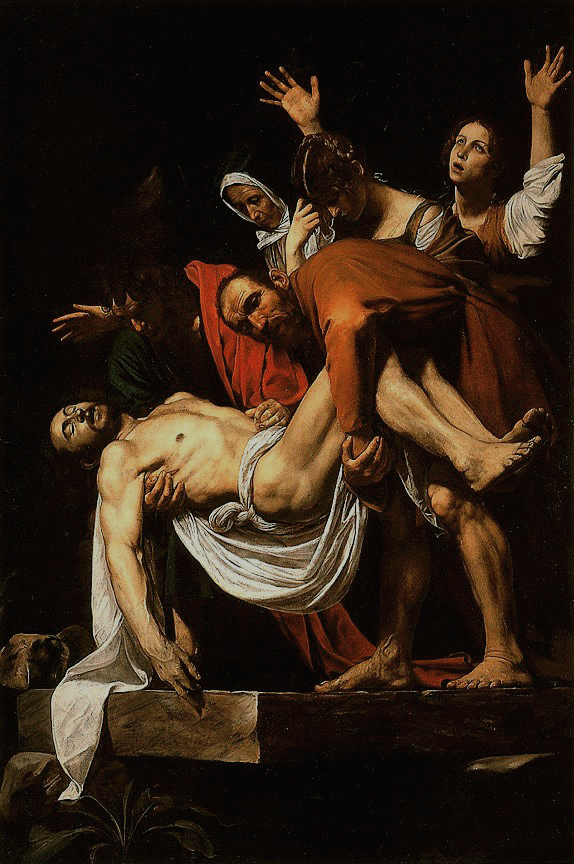
The time between Good Friday and Easter Sunday is one of waiting, in silence, as the world wonders – anticipates – what will happen, after the death of Christ. We re-live this time each year in the anamnesis of our liturgy, and in turn look forward to the glorious re-creation of all things at the[…]Continue reading→

Europe’s Long Descent
(As we meditate on this day on Christ’s burial, and His descent into hell, it is fitting to ponder here with contributor Peter Marcus how the world seems to be heading there as well. The difference is that, although God cannot ‘redeem’ hell, nor those therein, He can and did redeem the world. There is[…]Continue reading→
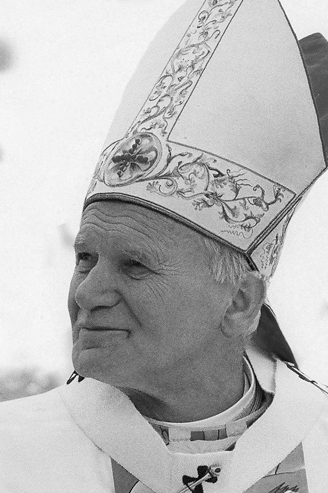
Pope Saint John Paul II’s First Good Friday Homily
ADDRESS OF HIS HOLINESS JOHN PAUL II AT THE CONCLUSION OF THE STATIONS OF THE CROSS AT THE COLOSSEUM Good Friday, 13 April 1979 When we make the Way of the Cross from one station to the next, in spirit we are always at the spot wherethis journey had its “historical” place: where it[…]Continue reading→