
Lost Lectures or The Fruits of Experience
Maurice Baring, Lost Lectures of the Fruits of Experience.
Peter Davies Ltd, London: 1932. From: High-Brows and Low-Brows
Over and over again it has been my fortune to be told about English literature by foreign high-brows in trains, and to be initiated in the secrets of the literature of my country. I once met a Serbian professor who told me that he had written a book about Shakespeare. He spoke French (not Shakespeare—the Serb). Shakespeare was a well known case, he said, of self-hallucination. He knew, because he was a mind doctor. Hamlet was a well-known case of a man who thinks he sees ghosts.
“But”, I said, “the other people in the play saw the ghost.” “They caught his infection,” he said.
“But they saw it first,” I objected.
“It was Suggestion,” he said; “it often happens. The infection comes from the brain of the man who thinks he sees a ghost before he has seen the ghost, and his coming hallucination infects other brains. Shakespeare hallucinated, or he could not have described the case so accurately. All his characters hallucinated—Macbeth, King Lear, Brutus (he saw a ghost).”
I said enough things had happened to King Lear to make him go mad. “Not in that way,” he said. “Ophelia is mad; Lady Macbeth is mad; Othello is mad; Shylock is mad; Timon of Athens is very mad; Antonio is mad; Romeo is mad. The cases are all accurately described by one who has the illness himself.”
“Was Falstaff mad?” I asked.
“Falstaff,” said the doctor, “is a case of what we call metaphenomania. He was a metaphenomaniac; he could not help altering facts and changing the facets of appearances.”
“What we call a liar?” I suggested.
The doctor said that was an unscientific way of putting it, but it was true. Then he got out.
Of foreign high-brows, Germans are the most learned, but the most comfortable; perhaps because they drink beer. Russians are the most uncompromising, because their opinions upon matters of literature and art, music and games, depend upon their politics. The French are the most lucid, the English the most arrogant. There is a story about an English high-brow who was a great mathematician and philosopher when he grew up; but he was, to start with, a little boy, and, like other little boys, he went to school. The first night he went to bed in his dormitory he noticed that all the other boys knelt down to say their prayers; but he, having been brought up among the ruthless, thought that to say one’s prayers was a piece of old-fashioned and pernicious superstition, and he went to bed without saying his prayers; and all the other boys threw boots at his head and called him a heathen and other rude names; but at the end of the term none of the boys said their prayers.
I now perceive that I have nearly finished this lecture, and I have not defined either the good or the bad low-brow, which I ought to have done at the very beginning. I will now do so at the end, because it is never too late to end. A good low-brow is a man who, although he enjoys outdoor sports and games, and likes racing, gambling, eating, drinking, smoking, telling lies, the society and affection of the female beautiful, the female vivacious and the male vivacious and hospitable, the sporting newspapers, coloured pictures, moving pictures, musical comedy, music halls, frivolous conversation, new stories and old stories, does not want to shoot pianists, painters, writers, poets, men of science, philosophers, inventors, mathematicians, thinkers, and professional chess-players. He is just as nice to them as he is to the beautiful and to the vivacious and to bookmakers. He lives and lets live, and he endures high-brows, if not gladly, with patience; whereas a bad low-brow is one who would like all books and plays to be potted and translated into American; who can only tell anecdotes that you have heard before, and which are unrefined without being witty, and repeat limericks that were made up long ago at the Shanghai Bar, and these he quotes wrongly, spoiling the rhythm.
It is a mistake to think that all high-brows belong to the learned professions: soldiers, sailors, and tinkers are often high- brows; poets and painters are often the lowest of low-brows.
All Dons are high-brows. Some high-brows are sailors. Therefore some sailors are Dons. That I believe to be a good example of false logic.
Carney’s Amoral Majority
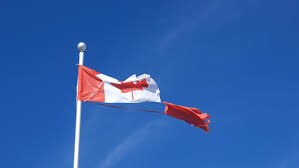
After five defections – euphemistically described as ‘crossing the floor’ – and three by-elections, Mark Carney and his Liberals how have their coveted majority. One wonders what bowls of pottage were offered in back-room deals. In the archaic monarchical system that is the Dominion of Canada, this majority allows the newly-minted Prime Minister to rule[…]Continue reading→

A Tale of Two Benedicts
A grace-filled Holy Week to all our readers! As we await and prepare for the Resurrection about to dawn upon us, we might keep in mind two Benedicts: Pope Emeritus Benedict XVI, requiescat in pace, elected on this day in 2005; and today’s commemoration of the mystic pilgrim, Benedict Joseph Labre, who died on this[…]Continue reading→

Saint Lydwina of Schiedam and Suffering Joyfully
Saint Lydwina of Schiedam (1380 – 1433) was one of the countless and glorious ‘victim souls’ in the history of the Church, those whose lives are filled with suffering, often of an unimaginable intensity, but who suffer joyfully. She was a fifteen-year old Dutch girl, out skating one day, when she fell and broke one[…]Continue reading→

The Glorious Martyrdoms of Martin and Maximus
As we enter into Eastertide, we recall on this 13th of April Pope Saint Martin I (+655), one of the noblest, if most tragic, of the successors of Saint Peter. Born in Umbria, Italy, he was of noble lineage, with great intelligence combined with charity and love of the poor and the Church. While still[…]Continue reading→

Saint Stanislaus of Szczepanów
We celebrate Saint Stanislaus today (+ April 11, 1079), in light of this Easter Octave, a bishop and martyr who accepted the episcopacy only at the direct order of Pope Alexander II. He proved a wise and courageous leader of his flock, put to death by his own king, Boleslaus, for rebuking the monarch’s ‘immoral[…]Continue reading→
Saint Gemma Galgani
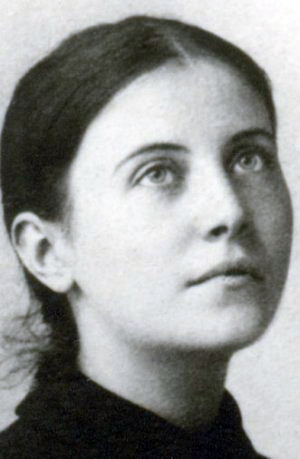
On this April 11th, in 1903 – the same year that the Italian Guiseppe Sarto was elected Pope later that summer as Pius X – a lovely, young Italian woman died, by the name of Gemma Galgani. She lived a brief life of 24 years, as did a number of other young saints, including Pier[…]Continue reading→
An Ideological and Improper Translation
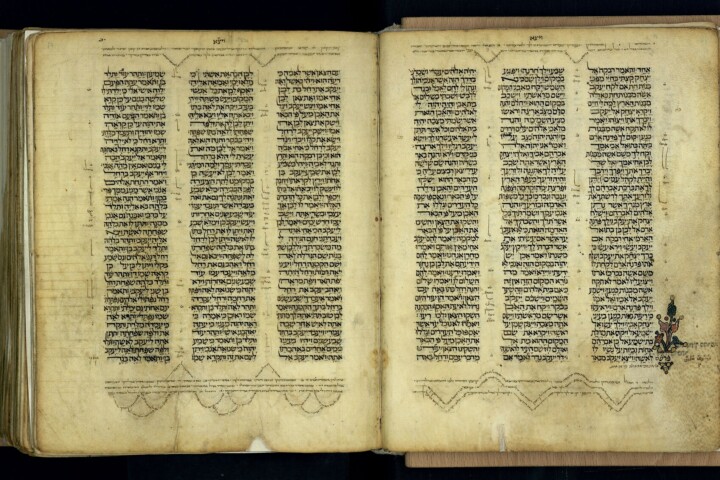
I noticed something odd with the psalm reading at Mass the other day. Our bishops’ conference here in Canada has decreed that the Mass in English – Novus Ordo – use the ‘NRSV’, the ‘New Revised Standard Version’, an ‘updated’ translation of the original RSV, first published in 1952. This ‘new translation’ has the tendency[…]Continue reading→
Saint Jean-Baptiste de la Salle: A Teacher for Teachers
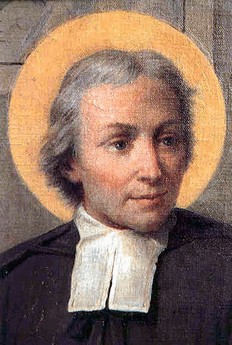
Jean-Baptiste de la Salle (1651 – 1719), a French nobleman, ordained a priest, founded the first order in the Church’s history entirely without priests, and this came about almost by accident. I say ‘almost’, for, of course, there are no accidents with God. Destined for ordination from an early age, Jean-Baptiste never looked back, even[…]Continue reading→
Three Easter Musical Gems: Bach, Palestrina and Byrd
A very blessed and glorious Easter! Christus surrexit vere, alleluia! As we begin this Easter Octave with the great Solemnity of Easter, music to lift the soul would be one of Bach’s Easter cantatas, composed during his time at Leipzig in the early 1700’s, for the six Sundays of this festive season, leading up to[…]Continue reading→
Good Friday and Suffering
Evil and pain is always a mystery, that whole mysterium iniquitatis, of which Saint Paul writes (2 Thess 2:7). In 1984, Pope Saint John Paul II penned an Apostolic Letter on the nature and purpose of human suffering, Salvifici Doloris (curiously, now looking back, the same year he made his first apostolic journey to Canada).[…]Continue reading→