
Freedom
Hence the domestic household is antecedent, as well in idea as in fact, to the gathering of men into a community. – Pope Pius XI (Quadragesimo Anno)
Families, be what you are. Pope John Paul II
At the top of the last column of this magazine, there is a picture of a wooden sign with the words The Old Ship on it. Beneath the sign is an oak barrel with a block of cheese on top and an old double barrel shotgun leaning against it. I carved this sign, and it hangs at the end of my driveway. The sign has a blue sailboat emblazoned with a large red cross, St. George’s cross. The imagery comes from specifications outlined in Chesterton’s prophetic novel The Flying Inn.
In this novel, politicians are trying to re-define marriage and use “religious tolerance” as an excuse to outlaw beer and wine. The politicians say this is to appease Muslims, but in reality their goal is to re-engineer the form of marriage to include legal polygamy for the wealthy, who are also exempt from the prohibition of alcohol. The hero of the novel collects the sign that hangs at the front of his country inn along with a block of cheese, barrel of rum, and an old shotgun, and with his friend escapes in a motor car just one step ahead of the police. As these unmarried men travel the countryside, they rally the common folk to defend their own homes and marriages, serving rum to all who ask in Christian hospitality.
In Chesterton’s imagery, these things—rum, cheese, shotguns—symbolize some aspect of the domestic church, and each has as its rightful place a Catholic home. Curiously, in Canada today, each of these things has been the focus of recent government regulations and prohibitions.
At our house, we keep a bottle of rum and a block of old cheddar on hand, as promised by the sign, for anyone who might be familiar with Chesterton’s novel and drop in on the strength of the sign. This has never happened yet, though the sign has followed us from house to house for the past twenty years. But we still wait in anticipation for the visitor who will recognize the reference and approach our door. Of course, we are unlicensed to sell rum so I could take no payment for fulfilling such a request.
This is not the only such sign; I know of several other families with similar signs at their homes. We had an idea that this sign might act as a symbol for some sort of league, households which had accepted their inherent independence. I think that there is a need for such a league. Membership requirements are simple: recognize that the home and family by nature are free things and that the home exists as the basis of the larger community—not the other way around. Membership in the league is open to all who are willing to assert their uniqueness and independence, following the request of John Paul II—“families, be what you are.”
The imagery of The Old Ship works on several levels. The ship in question is a reference to Noah’s ark and the deluge, with the deluge being equated by Chesterton to the water of a self-righteous and imposed teetotalism, Chesterton’s symbol for those reform movements that only see vice in human freedom. The ship is the Bark of Peter; it is also the domestic Church. The Old Ship represents the sanity of a free home against the encroachment of those with an insatiable appetite for power in both government and business. And, since there are those in our governments who no longer believe in freedom (e.g. bullying of Catholic Schools, bullying farmers to install windmills, bullying pro-life MPs, lying about the March for Life), The Old Ship has become symbolic of the resistance in terms of keeping up morale against the fear that leftist fanatics will intrude into our lives.
The final level of imagery that I can find in the symbol of The Old Ship is that of the individual against the vicissitudes of fate. Perhaps this is the most human of meanings, going back to the Odyssey.Yet the point of The Old Ship is that the standard emblazoned on the sail is not the standard of a modern Ulysses charting his own path against fate but the paradox of the Cross, which guarantees hardship yet with the promise of a victory already won.
For the real temptation, now as always, is that we are too small and impotent to affect good when up against the enormity of entrenched evil. The Old Ship represents our reliving of the David and Goliath story, with the victory of David promised to us all and the seeming immovability of our Goliaths revealed as sham and illusion.
I am still waiting for the day that a wandering traveler, a reader of The Flying Inn, will call, and for all I know we will immediately begin to argue and disagree on everything that is unimportant. But we will argue from first principles, united in our belief in the real-ness of reality, the freeness of freedom, and the goodness of being.

Carney’s Amoral Majority
After five defections – euphemistically described as ‘crossing the floor’ – and three by-elections, Mark Carney and his Liberals how have their coveted majority. One wonders what bowls of pottage were offered in back-room deals. In the archaic monarchical system that is the Dominion of Canada, this majority allows the newly-minted Prime Minister to rule[…]Continue reading→
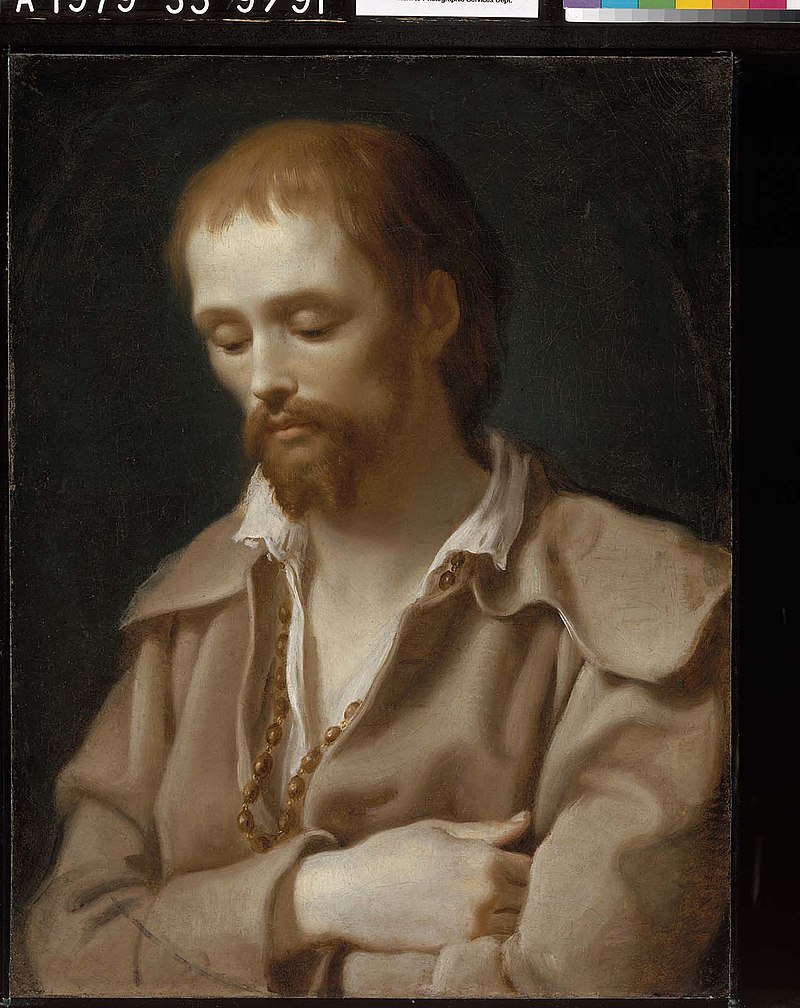
A Tale of Two Benedicts
A grace-filled Holy Week to all our readers! As we await and prepare for the Resurrection about to dawn upon us, we might keep in mind two Benedicts: Pope Emeritus Benedict XVI, requiescat in pace, elected on this day in 2005; and today’s commemoration of the mystic pilgrim, Benedict Joseph Labre, who died on this[…]Continue reading→
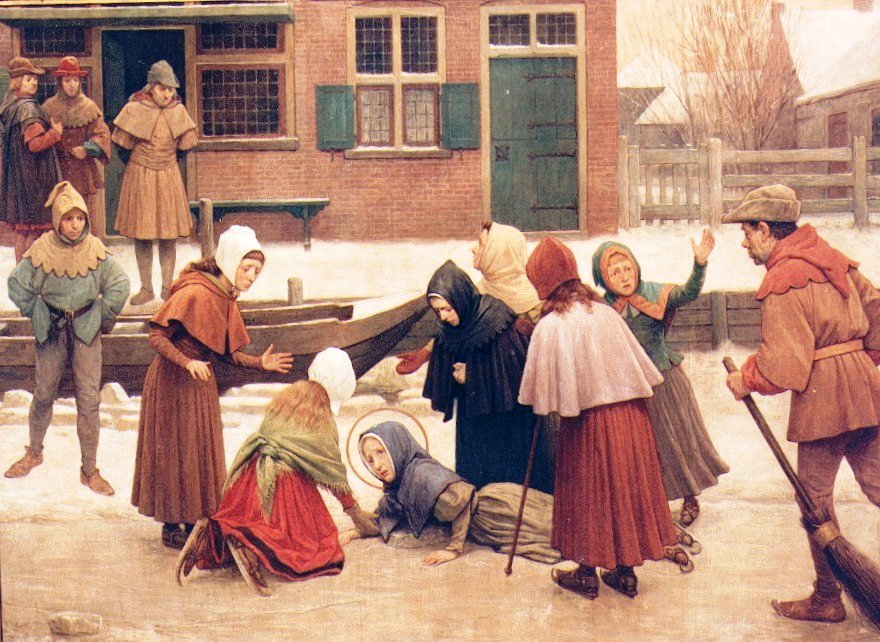
Saint Lydwina of Schiedam and Suffering Joyfully
Saint Lydwina of Schiedam (1380 – 1433) was one of the countless and glorious ‘victim souls’ in the history of the Church, those whose lives are filled with suffering, often of an unimaginable intensity, but who suffer joyfully. She was a fifteen-year old Dutch girl, out skating one day, when she fell and broke one[…]Continue reading→
The Glorious Martyrdoms of Martin and Maximus
As we enter into Eastertide, we recall on this 13th of April Pope Saint Martin I (+655), one of the noblest, if most tragic, of the successors of Saint Peter. Born in Umbria, Italy, he was of noble lineage, with great intelligence combined with charity and love of the poor and the Church. While still[…]Continue reading→

Saint Stanislaus of Szczepanów
We celebrate Saint Stanislaus today (+ April 11, 1079), in light of this Easter Octave, a bishop and martyr who accepted the episcopacy only at the direct order of Pope Alexander II. He proved a wise and courageous leader of his flock, put to death by his own king, Boleslaus, for rebuking the monarch’s ‘immoral[…]Continue reading→

Saint Gemma Galgani
On this April 11th, in 1903 – the same year that the Italian Guiseppe Sarto was elected Pope later that summer as Pius X – a lovely, young Italian woman died, by the name of Gemma Galgani. She lived a brief life of 24 years, as did a number of other young saints, including Pier[…]Continue reading→
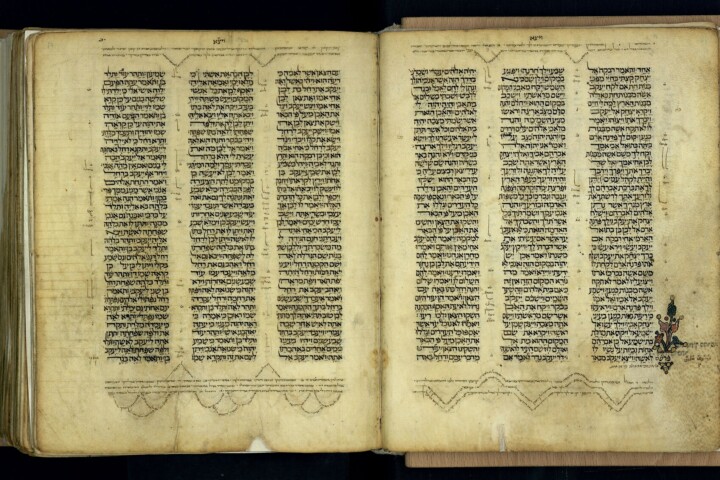
An Ideological and Improper Translation
I noticed something odd with the psalm reading at Mass the other day. Our bishops’ conference here in Canada has decreed that the Mass in English – Novus Ordo – use the ‘NRSV’, the ‘New Revised Standard Version’, an ‘updated’ translation of the original RSV, first published in 1952. This ‘new translation’ has the tendency[…]Continue reading→
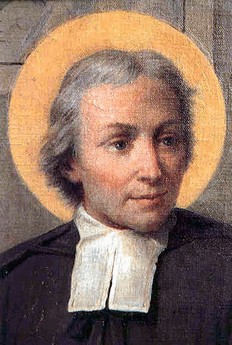
Saint Jean-Baptiste de la Salle: A Teacher for Teachers
Jean-Baptiste de la Salle (1651 – 1719), a French nobleman, ordained a priest, founded the first order in the Church’s history entirely without priests, and this came about almost by accident. I say ‘almost’, for, of course, there are no accidents with God. Destined for ordination from an early age, Jean-Baptiste never looked back, even[…]Continue reading→
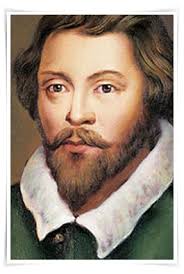
Three Easter Musical Gems: Bach, Palestrina and Byrd
A very blessed and glorious Easter! Christus surrexit vere, alleluia! As we begin this Easter Octave with the great Solemnity of Easter, music to lift the soul would be one of Bach’s Easter cantatas, composed during his time at Leipzig in the early 1700’s, for the six Sundays of this festive season, leading up to[…]Continue reading→
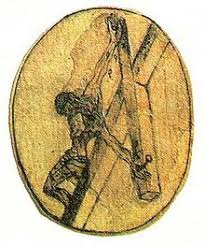
Good Friday and Suffering
Evil and pain is always a mystery, that whole mysterium iniquitatis, of which Saint Paul writes (2 Thess 2:7). In 1984, Pope Saint John Paul II penned an Apostolic Letter on the nature and purpose of human suffering, Salvifici Doloris (curiously, now looking back, the same year he made his first apostolic journey to Canada).[…]Continue reading→