
St. Patrick’s Fire
In our culture, the closest thing we have to a state religion is the worship of scientific knowledge, which is really just the worship of man. The scientific method is a good thing, perhaps one of the most important intellectual inventions of history, and we must not rid ourselves of the error by undervaluing scientific pursuit. We believe in scientific progress because we know that reason is one of the ways in which we are made in God’s likeness, and to attack science is to attack reason. Indeed, the Catholic Church is one of the few remaining institutions that still believes in reason and the scientific method. Consider the following example from a time when Quebec was truly a nation and still Catholic. It comes from a book written by a self-described Ontario Orangeman, William Moore: The Clash! A Study in Nationalities. He was no lover of Catholics, but he was an honest historian and, in 1919, he described Catholic education in Quebec as follows:
“The priests of Quebec are teaching their parishioners the doctrine that a thing well done on the farm is a thing worth while for its own sake … [but that is not all, for example,] an order of missionaries in the province, who periodically make a retreat for meditation and study. And the objects of their thought? The care of bees, the best fruits to grow on the farm, melon-culture, manuring, the breeding of horses, co-operation, dairying in all its branches, aviculture, apiculture, horticulture, and, in general, all that has to do with agriculture. They are agricultural missionaries, organised by the Catholic bishops of the Ecclesiastical Province of Quebec in the year 1894. In one year they carried the gospel of God’s land to 145,250 listening farmers.”
This is the true history of the Church and its relationship to learning and scientific reasoning in Canada, the opposite of the modern bigoted stereotypes of Catholic Quebec. But notice the type of science being promoted: a science dedicated to a culture of life.
Today, we have superstition masquerading as science, promoting a culture of death under the banner of environmentalism. There is a farce that is played out each year called Earth Hour. Earth Hour is a public display of worship to our collective selves as the news gods. Or, more accurately, to the god of the state. In Canada, it is not yet the state religion that we worship nature, but it is not hard to see that this is a real possibility. Earth Hour is an agreed time when we all are supposed to turn off our lights. Seems harmless enough—perhaps.
Turning out the lights under these circumstances is odious. Why have lights been turned out across a society? Lights are quenched during a military blackout, to protect a city from bombs, a time of intense trial, a temporary measure to save life. But to turn off lights to protect the earth is a pagan act and something that erodes our humanity. Western societies’ pagan origins in ancient Greece tell of Prometheus bringing fire to man, an act that earned him eternal punishment from jealous gods, for man was made more god-like with this gift. This myth of Prometheus is an example of how, even at a natural level the human mind reaches for truth, describing in mythical or poetic terms a truth dimly perceived. The myth of Prometheus is in some ways an example of St. Paul’s doctrine that the natural law is written on all men’s hearts.
Yet this mythological expression of a truth was opposed by pagan superstition. The early Druids plunged the whole world in darkness, demanding that no fire be lit under pain of punishment until the Druids had made sacrifices. Perhaps we can grant that this, too, was a kind of search for some way to express a profound but unknown truth.
On the first Good Friday, the world was plunged into three hours of darkness. In remembrance of this, the Church has us turn out the lights and quench the sanctuary lamp on Good Friday, when the Blessed Sacrament is not in the Tabernacle. But the whole point of Good Friday is that the lights come on at Easter. After Easter, the world is no longer the same; our minds are no longer darkened by ignorance. Easter is the true Enlightenment.
This is the reason that St. Patrick, braving the Druids, lit a huge bonfire on the druidic night of darkness; to proclaim that Christ is risen. There may have been an excuse to turn off the lights before, but not now.
So, how to respond? One can simply ignore Earth Hour, Earth Day, and all its superstitious manifestations, indulgences, and myths. In my home we light a big bonfire in the backyard. We do this for the simple reason that our religion comes from our ancestors through the missionary work of St. Patrick. It is because of this Catholic Faith that we are not superstitious.

Carney’s Amoral Majority
After five defections – euphemistically described as ‘crossing the floor’ – and three by-elections, Mark Carney and his Liberals how have their coveted majority. One wonders what bowls of pottage were offered in back-room deals. In the archaic monarchical system that is the Dominion of Canada, this majority allows the newly-minted Prime Minister to rule[…]Continue reading→
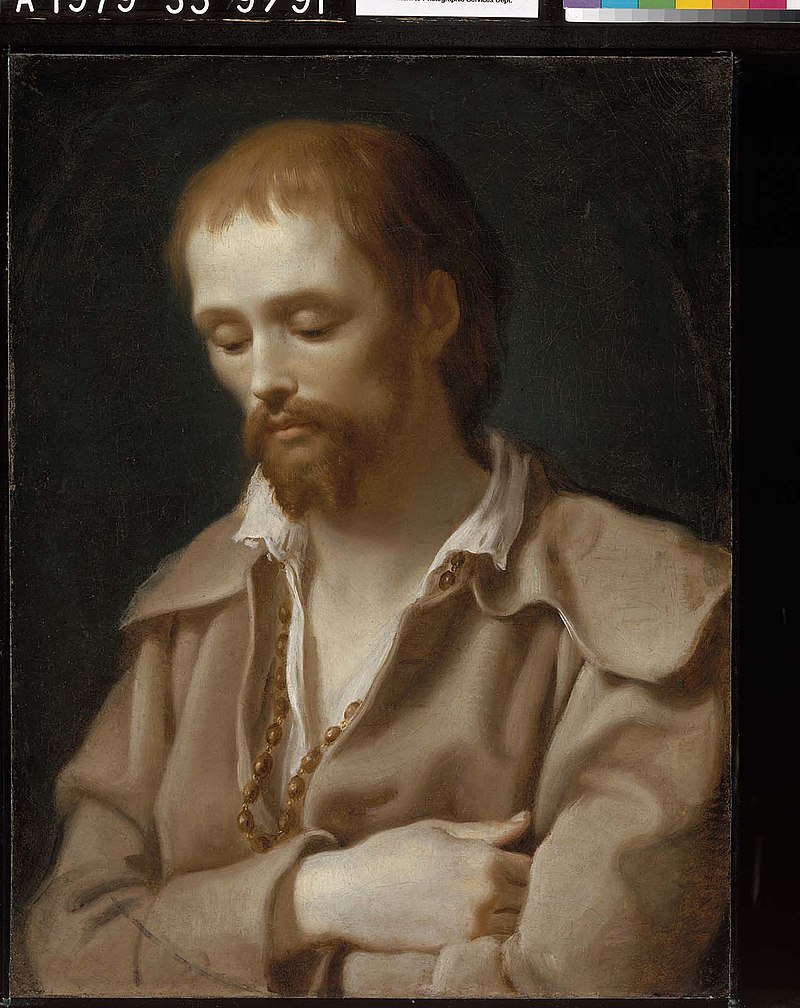
A Tale of Two Benedicts
A grace-filled Holy Week to all our readers! As we await and prepare for the Resurrection about to dawn upon us, we might keep in mind two Benedicts: Pope Emeritus Benedict XVI, requiescat in pace, elected on this day in 2005; and today’s commemoration of the mystic pilgrim, Benedict Joseph Labre, who died on this[…]Continue reading→
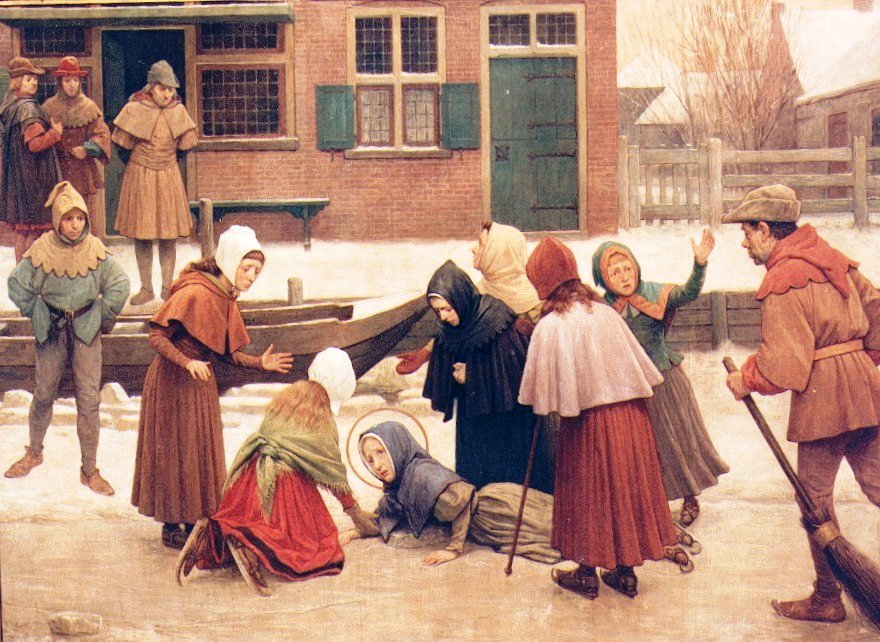
Saint Lydwina of Schiedam and Suffering Joyfully
Saint Lydwina of Schiedam (1380 – 1433) was one of the countless and glorious ‘victim souls’ in the history of the Church, those whose lives are filled with suffering, often of an unimaginable intensity, but who suffer joyfully. She was a fifteen-year old Dutch girl, out skating one day, when she fell and broke one[…]Continue reading→
The Glorious Martyrdoms of Martin and Maximus
As we enter into Eastertide, we recall on this 13th of April Pope Saint Martin I (+655), one of the noblest, if most tragic, of the successors of Saint Peter. Born in Umbria, Italy, he was of noble lineage, with great intelligence combined with charity and love of the poor and the Church. While still[…]Continue reading→

Saint Stanislaus of Szczepanów
We celebrate Saint Stanislaus today (+ April 11, 1079), in light of this Easter Octave, a bishop and martyr who accepted the episcopacy only at the direct order of Pope Alexander II. He proved a wise and courageous leader of his flock, put to death by his own king, Boleslaus, for rebuking the monarch’s ‘immoral[…]Continue reading→
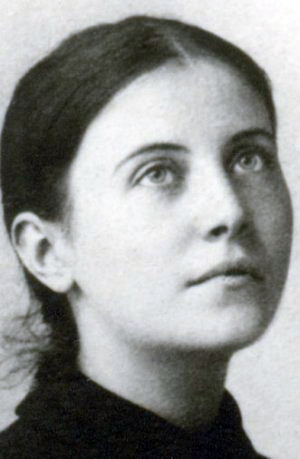
Saint Gemma Galgani
On this April 11th, in 1903 – the same year that the Italian Guiseppe Sarto was elected Pope later that summer as Pius X – a lovely, young Italian woman died, by the name of Gemma Galgani. She lived a brief life of 24 years, as did a number of other young saints, including Pier[…]Continue reading→
An Ideological and Improper Translation
I noticed something odd with the psalm reading at Mass the other day. Our bishops’ conference here in Canada has decreed that the Mass in English – Novus Ordo – use the ‘NRSV’, the ‘New Revised Standard Version’, an ‘updated’ translation of the original RSV, first published in 1952. This ‘new translation’ has the tendency[…]Continue reading→
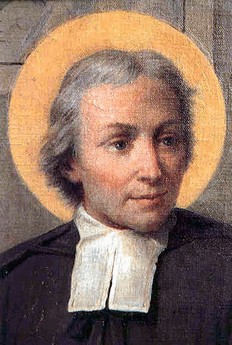
Saint Jean-Baptiste de la Salle: A Teacher for Teachers
Jean-Baptiste de la Salle (1651 – 1719), a French nobleman, ordained a priest, founded the first order in the Church’s history entirely without priests, and this came about almost by accident. I say ‘almost’, for, of course, there are no accidents with God. Destined for ordination from an early age, Jean-Baptiste never looked back, even[…]Continue reading→
Three Easter Musical Gems: Bach, Palestrina and Byrd
A very blessed and glorious Easter! Christus surrexit vere, alleluia! As we begin this Easter Octave with the great Solemnity of Easter, music to lift the soul would be one of Bach’s Easter cantatas, composed during his time at Leipzig in the early 1700’s, for the six Sundays of this festive season, leading up to[…]Continue reading→
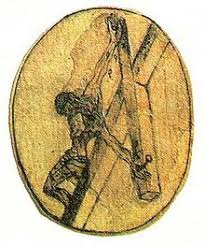
Good Friday and Suffering
Evil and pain is always a mystery, that whole mysterium iniquitatis, of which Saint Paul writes (2 Thess 2:7). In 1984, Pope Saint John Paul II penned an Apostolic Letter on the nature and purpose of human suffering, Salvifici Doloris (curiously, now looking back, the same year he made his first apostolic journey to Canada).[…]Continue reading→