
Dracula Untold: Fallen man, the tragic hero
It is perpetually wonderful to me how much truth can find its way into secularists’ stories. Dracula Untold, Universal’s newest origins story, is a prime example. This story creates—out of the historical Vlad III Dracula the Impaler, Prince of Walachia, and Stoker’s detestable Count—a noble character who resonates with the audience through his very human virtues and vices.
In Dracula Untold, Vlad Dracula is a faithful and loving father and husband, a selfless leader and protector, a fallen tragic hero. The film begins with Vlad discovering the presence of the vampyr in the mountains and being horrified and repulsed by its diabolical origin and evil existence. It is only later, under the imminent threat of utter destruction by the Turks, that Vlad seeks out the power of the dark to save his defenseless people. Throughout the film vampirism is clearly represented, despite the spectacular powers that go along with it, as an evil to be abhorred and fought against.
Vlad wages war against the Turkish enemy without—and against the monster within—with equal ferocity and courage; for the latter he demonstrates such heroic self-control and self-discipline to subdue his desires as to recall the stoics and flagellants. The source of Vlad’s ability to resist the darker vampiric urges is found in his love for his family, country, and God; his great tragedy is that he loves in that order and so his love is inherently disordered. If he had loved God first he would have trusted in the strength of the Almighty instead of placing his hope in the power of the dark—whatever the outcome. For sometimes man places a noble hope in God and to man’s littleness it seems that God has failed him. As Fr. Jacques Philippe expresses:
“Many things happen that God does not will. But he still permits them, in his wisdom, and they remain a stumbling block or scandal to our minds. God asks us to do all we can to eliminate evil. But despite our efforts, there is always a whole set of circumstances which we can do nothing about, which are not necessarily willed by God but nevertheless are permitted by him, and which God invites us to consent to trustingly and peacefully, even if they make us suffer and cause us problems. We are not being asked to consent to evil, but to consent to the mysterious wisdom of God who permits evil. Our consent is not a compromise with evil but the expression of our trust that God is stronger than evil. This is a form of obedience that is painful but very fruitful.” (Fr. Jacques Philippe, In the School of the Holy Spirit, p. 33. Emphasis added.)
So it may have been for Vlad. Surrendering to God does not ensure immediate victory in this life, but does grant great victory in the next. Conversely, Vlad’s deal with the devil offered him an element of victory for his family and country for the price of his family and country—and in some way his soul. But here it is that Hollywood, though in complete ignorance, touches on another truth: a soul in mortal sin, through the mercy of God, yet has the capacity to respond to God’s grace and live again. For the story does not end when Vlad tragically consummates his deal with the dark. He alone among the vampires is not repelled by the Cross; he alone retains a knowledge of what is objectively good and necessary versus what is objectively evil and should be purged from the earth. In his last heroic act this fallen man surrenders his child to the faithful monks and surrenders himself to the purification of the sun, just as the lost, repentant soul surrenders its disordered loves and all the evil within to the burning justice and mercy of God before whom there shall be no others.

Painting © Ani DiLollo 2014
“Dracula Untold poster” by http://www.ign.com/articles/2014/06/16/dracula-untold-poster-exclusive-first-look. Licensed under Fair use of copyrighted material in the context of Dracula Untold via Wikipedia – http://en.wikipedia.org/wiki/File:Dracula_Untold_poster.jpg#mediaviewer/File:Dracula_Untold_poster.jpg

Saint Kateri , Canada’s Protectress
This was the title given to Saint Kateri Tekakwitha, by Pope Benedict XVI, when he canonized her on October 28th, 2012, along with six others, in Saint Peter’ Square (she had been beatified by Pope John Paul II back in 1980). With Saint Joseph as our protector, along with the Canadian martyrs, we seem to[…]Continue reading→

Remembering Father Alphonse de Valk
(Today marks the sixth anniversary of the death of Father Alphonse de Valk, C.S.B., a faithful, courageous and indefatigable Basilian priest, pro-life-and-family apostle, and the founder of Catholic Insight magazine. Here is what we wrote those on his entering into eternity five years ago, as we continue to remember him in our prayers and thoughts)[…]Continue reading→

My Name is Bernadette
April 16th is a propitious day, for besides the anniversary of Father de Valk’s death, who founded Catholic Insight in its print form decades ago, and the commemoration of the ‘two Benedicts’, mentioned in accompanying posts, today we also recall Saint Bernadette Soubirous, the young visionary to whom the Virgin Mary appeared numerous times at[…]Continue reading→

Canonizing Sister Faustina and Divine Mercy
HOMILY OF THE HOLY FATHER MASS IN ST PETER’S SQUARE FOR THE CANONIZATION OF SR MARY FAUSTINA KOWALSKA Sunday, 30 April 2000 1. “Confitemini Domino quoniam bonus, quoniam in saeculum misericordia eius”; “Give thanks to the Lord for he is good; his steadfast love endures for ever” (Ps 118: 1). So the Church sings on the Octave of[…]Continue reading→

Divine Mercy Sunday – An Echo of Every Mass
Reach out your hand and put it in my side. Do not doubt but believe’… ‘My Lord and my God!’ (Jn. 20:18)). Today is Divine Mercy Sunday, and as we celebrate the end of the Easter Octave, we contemplate the wounded side of our Saviour, the Church’s source of life. On Good Friday in the[…]Continue reading→

First Holy Communion: Sermon from May 16, 1943
Here is a sermon from the good old days by +Rev. Msgr. Vincent Nicholas Foy (August 14, 1915 – March 13, 2017), from 1943. Readers may recall that Pope Saint Pius X, by the decree Quam Singulari in 1910, lowered the customary age of reception of Holy Communion – after the rigours of the plague[…]Continue reading→

In the Glorious Light of Easter, Alleluia!
Set your minds on things that are above, not on things that are on earth, for you have died, and your life is hidden with Christ in God. When Christ who is your life is revealed, then you also will be revealed with him in glory (Col. 3:3-4). The Resurrection of Our Lord and Saviour[…]Continue reading→

An Ancient Homily for Holy Saturday
The time between Good Friday and Easter Sunday is one of waiting, in silence, as the world wonders – anticipates – what will happen, after the death of Christ. We re-live this time each year in the anamnesis of our liturgy, and in turn look forward to the glorious re-creation of all things at the[…]Continue reading→

Europe’s Long Descent
(As we meditate on this day on Christ’s burial, and His descent into hell, it is fitting to ponder here with contributor Peter Marcus how the world seems to be heading there as well. The difference is that, although God cannot ‘redeem’ hell, nor those therein, He can and did redeem the world. There is[…]Continue reading→
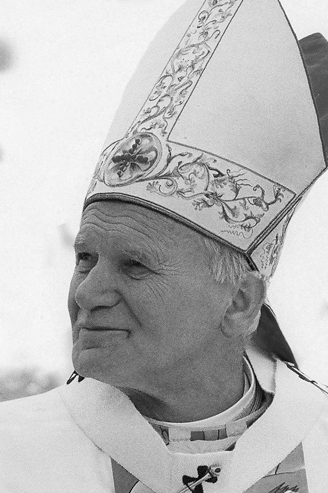
Pope Saint John Paul II’s First Good Friday Homily
ADDRESS OF HIS HOLINESS JOHN PAUL II AT THE CONCLUSION OF THE STATIONS OF THE CROSS AT THE COLOSSEUM Good Friday, 13 April 1979 When we make the Way of the Cross from one station to the next, in spirit we are always at the spot wherethis journey had its “historical” place: where it[…]Continue reading→