
30th Sunday: We will not be overcome by evil but overcome evil with good.
On these two commandments hang all the Law and the Prophets (Mt 22:40).
Our Gospel text contains what is sometimes referred to as the Great Commandment, encompassing both the love of God and the love of neighbour: “You shall love the Lord your God with all your heart, and with all your soul and with all your mind. You shall love your neighbour as you love yourself” (Mt 22:40). This formula is, in essence, a summary of the Ten Commandments. It is a summary of Christian moral teaching and of the natural law—unchanging moral principles that are the basis for all human conduct. The Great Commandment also expresses the mission of the Messiah, our Saviour who came to reveal to humanity the truth about God and the truth about the human person.
We are all familiar with the parable of the Good Samaritan in which our Lord asks, “and who is my neighbour?” (Lk 10:29). This is perhaps one of the most important questions ever posed, for the answer to this question determines so much about the quality of human life, practically and morally speaking. Human history is in many ways a chronicle of answers given to this question by both the great and mighty of this world and by ordinary people in the ordinary circumstances of life. When the answer to this question is narrow and limited, what inevitably results is the dehumanization of either certain classes of people or most certainly the vulnerable. The recognition of the other as my neighbour is an affirmation on my part of his or her human dignity. Our Catholic faith clearly teaches us that no one is excluded, not even our enemies.
The fact that the great commandment speaks of both God and man illustrates explicitly what every belief system necessarily implies. Every philosophy, ideology, religion, and belief system, even if it be irreligious, also necessarily implies an anthropology, implicitly or explicitly; that is, an approach to the reality and mystery of the human person. The world has always been a place of competing anthropologies, some exploitative and oppressive; others enabling and nurturing, liberating and divinizing. This has most certainly been the effect of the Christian outreach to the world. The Gospel liberates. Following Christ is the greatest good for man. This is an undeniable historical fact which we can unequivocally affirm by appealing not only to the witness of history but also to our own experience of life in the family of faith that is the Church.”You shall love the Lord your God with all your heart, and with all your soul and with all your mind.” It is this love, perhaps better expressed as charity, that urges us on (Cf. 2 Cor 5:14); the love of God that encompasses also the love of neighbour, created like me in God’s own image and likeness. Ours is an inclusive anthropology and our charity encompasses everyone.
Our faith provides us with a comprehensive vision or understanding that encompasses God and man and all of reality. We share in the mission of the Son who “came into the world, not to condemn the world, but that the world might be saved through him” (Jn 3:17). As Pope St. John Paul II observed at the beginning of the new millennium, “the Church itself is first and foremost, a ‘movement,’ a mission. It is the mission that begins in God the Father and that, through the Son in the Holy Spirit, continually reaches humanity and shapes it a new way. Yes, Christianity is a great action of God” (Crossing the Threshold of Hope). This saintly and courageous Pontiff wrote these words at the beginning of this new millennium, one tragically marred as it is from its inception by the constant threat of violence and terror. The events of this past week have brought these realities to our shores, indeed, to the very heart of our country, our nation’s capital. Two soldiers have been killed and others have been injured. We are a nation in mourning. In the reflection and discourse that these events have now generated we must be sober and precise both in their assessment and in the manner that solutions are proposed. It would be suicidal on our part to say that these are senseless acts. They are pre-meditated and inspired by an understanding of the human person that is exclusive and oppressive, dualistic and violent.
Every issue in life, be it political or economic, theoretical or practical, is always, ultimately, a human issue because it is we who are impacted. How can our Faith help us to understand the events of this past week and how are we to respond to what has taken place? We have recourse as we should, to the living Word of God and so with the Psalmist we ask: “What is man that you should be mindful of him, or the son of man that you should care for him? You have made him little less than the angels and crowned him with glory and honour” (Ps 8). The Psalmist asks this question precisely because God has destined us to share in the eternal exchange of love that is His life. “This is His will for all for He desires all men to be saved and to come to the knowledge of the truth” (1 Tim 2:4). Our sharing in this life is the fruit of our Lord’s Paschal Sacrifice whose Sacrament we celebrate and receive on this the Lord’s Day. By the strength of its power we preach the truth about God and man even in the face of terror and violence; and we are undeterred.
As Christians, our worldview is informed by the truth that has been revealed to us. Our approach to the mystery and reality of the human person is likewise informed by this same truth, one that liberates the individual person and which establishes and confirms each person as a moral agent. All cultures, ancient and modern are summoned to this freedom, the freedom of the children of God (Cf. Rom 8:21). The Gospel liberates; it does not dominate; and this is the fundamental difference between the Gospel that gave rise to the Christian West or Christendom and the political theory of conquest that seeks domination by any means it can, including terror and deception. The Christian West summoned the pagans (our ancestors for the most part) out of pre-history on the authority of a God whose love extends to every individual, so that as individuals they might abandon the collective identity of tribe and instead embrace an individual identity as a child of God (David P. Goldman, “Syria’s Madness and Ours” in Front Page Magazine, May 2013) begotten in grace through Baptism.
This theological truth is at the heart of the transformation of the West and indeed other cultures as well; from violent, barbaric collectives to what we rightly define as civilized. At the heart of this transformation is belief in a God whom we call Father, a God who loves, and who abhors violence, for violence is incompatible with the nature of God. This God whom we love with all our heart and with all our soul and with all our mind unites us with the mission of His Son so that humanity, that is to say, the men and women of our times may be liberated from the tyranny of the collective, from the horror of violence, from the limitations that are imposed by hatred, from a dualism that subjugates and dehumanizes the other: the weak, the vulnerable, the unbeliever. We will not be overcome by evil. Rather, we will “overcome evil with good” (Rom 12:21). Yes, our hearts are heavy with sorrow; but in hope and in gratitude for the Gospel of Life, we renew and affirm our Christian Faith so the action of God in our times and in our nation may bring forth fruits of justice and holiness, of freedom and peace.

Saint Kateri , Canada’s Protectress
This was the title given to Saint Kateri Tekakwitha, by Pope Benedict XVI, when he canonized her on October 28th, 2012, along with six others, in Saint Peter’ Square (she had been beatified by Pope John Paul II back in 1980). With Saint Joseph as our protector, along with the Canadian martyrs, we seem to[…]Continue reading→

Remembering Father Alphonse de Valk
(Today marks the sixth anniversary of the death of Father Alphonse de Valk, C.S.B., a faithful, courageous and indefatigable Basilian priest, pro-life-and-family apostle, and the founder of Catholic Insight magazine. Here is what we wrote those on his entering into eternity five years ago, as we continue to remember him in our prayers and thoughts)[…]Continue reading→

My Name is Bernadette
April 16th is a propitious day, for besides the anniversary of Father de Valk’s death, who founded Catholic Insight in its print form decades ago, and the commemoration of the ‘two Benedicts’, mentioned in accompanying posts, today we also recall Saint Bernadette Soubirous, the young visionary to whom the Virgin Mary appeared numerous times at[…]Continue reading→
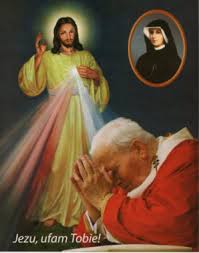
Canonizing Sister Faustina and Divine Mercy
HOMILY OF THE HOLY FATHER MASS IN ST PETER’S SQUARE FOR THE CANONIZATION OF SR MARY FAUSTINA KOWALSKA Sunday, 30 April 2000 1. “Confitemini Domino quoniam bonus, quoniam in saeculum misericordia eius”; “Give thanks to the Lord for he is good; his steadfast love endures for ever” (Ps 118: 1). So the Church sings on the Octave of[…]Continue reading→

Divine Mercy Sunday – An Echo of Every Mass
Reach out your hand and put it in my side. Do not doubt but believe’… ‘My Lord and my God!’ (Jn. 20:18)). Today is Divine Mercy Sunday, and as we celebrate the end of the Easter Octave, we contemplate the wounded side of our Saviour, the Church’s source of life. On Good Friday in the[…]Continue reading→
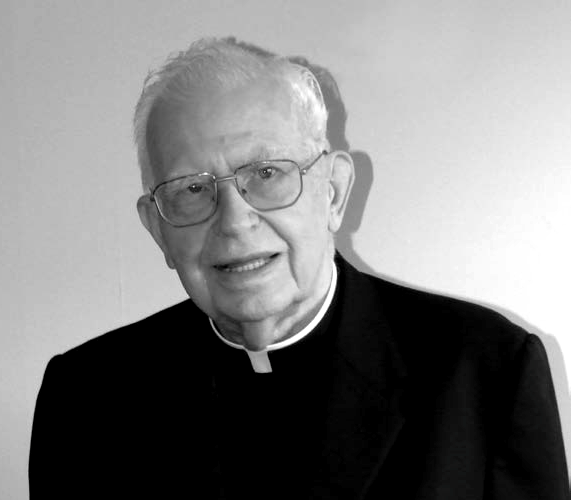
First Holy Communion: Sermon from May 16, 1943
Here is a sermon from the good old days by +Rev. Msgr. Vincent Nicholas Foy (August 14, 1915 – March 13, 2017), from 1943. Readers may recall that Pope Saint Pius X, by the decree Quam Singulari in 1910, lowered the customary age of reception of Holy Communion – after the rigours of the plague[…]Continue reading→
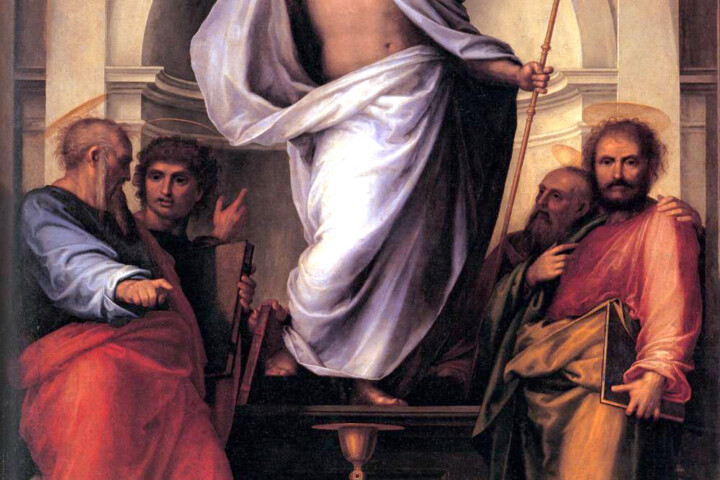
In the Glorious Light of Easter, Alleluia!
Set your minds on things that are above, not on things that are on earth, for you have died, and your life is hidden with Christ in God. When Christ who is your life is revealed, then you also will be revealed with him in glory (Col. 3:3-4). The Resurrection of Our Lord and Saviour[…]Continue reading→
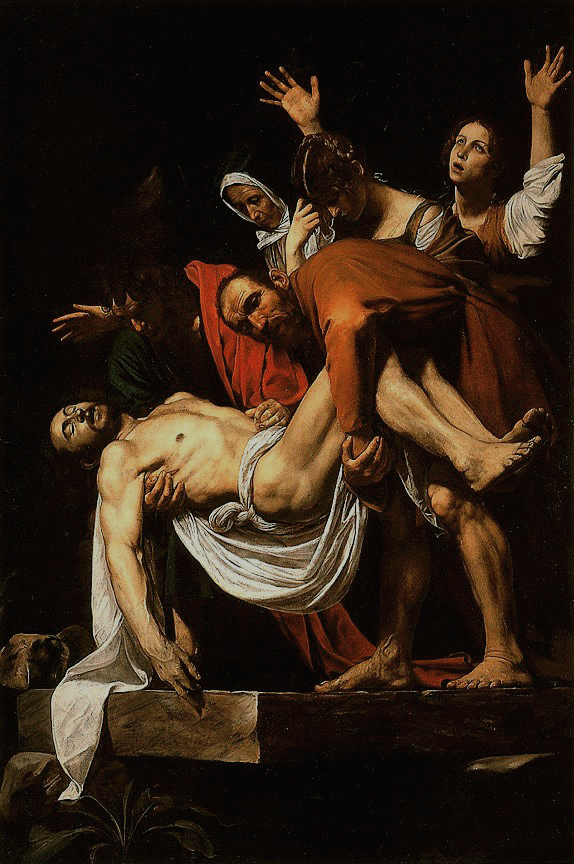
An Ancient Homily for Holy Saturday
The time between Good Friday and Easter Sunday is one of waiting, in silence, as the world wonders – anticipates – what will happen, after the death of Christ. We re-live this time each year in the anamnesis of our liturgy, and in turn look forward to the glorious re-creation of all things at the[…]Continue reading→
Europe’s Long Descent
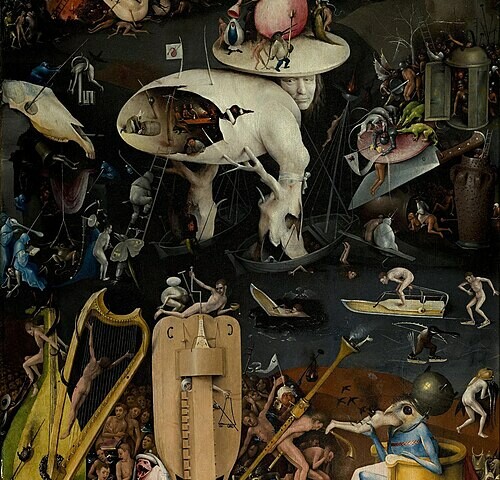
(As we meditate on this day on Christ’s burial, and His descent into hell, it is fitting to ponder here with contributor Peter Marcus how the world seems to be heading there as well. The difference is that, although God cannot ‘redeem’ hell, nor those therein, He can and did redeem the world. There is[…]Continue reading→
Pope Saint John Paul II’s First Good Friday Homily
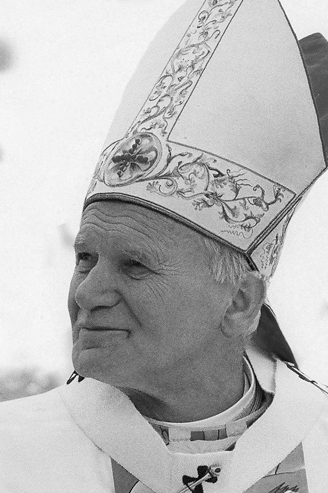
ADDRESS OF HIS HOLINESS JOHN PAUL II AT THE CONCLUSION OF THE STATIONS OF THE CROSS AT THE COLOSSEUM Good Friday, 13 April 1979 When we make the Way of the Cross from one station to the next, in spirit we are always at the spot wherethis journey had its “historical” place: where it[…]Continue reading→