
What’s in a dome?
Children of divorce, researchers say, often enter adult life with an impaired memory. No one knows for sure why their childhoods seem less vivid. One explanation is that memory works best when it can graft details onto a continuous narrative. Divorce ruptures that narrative. For much of the twentieth century Communists tried to inflict just such a rupture in the lives of eastern Christians. When the Ukrainians fled to Canada, they kept alive the memory of Faith, in part by remaining resolute in their customs, including church design.
What’s in a dome? As I mentioned last month, the Emperor Constantine was the Church’s first architectural patron. The Church’s first prototype was the basilica. Her second was the mausoleum. This round Roman structure was a house for the dead, essentially a grand tomb. Don’t believe the bad press. After Constantine’s conversion he attempted the unthinkable: the Christianization of an empire. He made divorce difficult, gave public standing to Sunday, banned gladiatorial games, and tried to stop the abduction of little girls. Not bad for a rough warrior. The signature temple for the new Christian rule would be Constantinople’s domed Hagia Sophia, the “mother church” of all eastern houses of worship. (The present iteration was built by Justinian I.) There’s more. In 1453, Moslem invaders razed the city and turned the church into a mosque. To this day, every dome bears silent witness to the civilizing influence of faith upon culture, and how that culture can be lost.

One of the distinctive marks of the Canadian prairie, at least where I grew up around Saskatoon, are the twisty onion tops that dot the horizon. The Ukrainians brought with them more than pierogies. Along with the liturgy of St. John Chrysostom and the memory of living saints (like Bl. Vasyl Velychkovsky, a martyr at the hand of the Soviets), they brought their dome. Let us not forget their lessons.


Saint Kateri , Canada’s Protectress
This was the title given to Saint Kateri Tekakwitha, by Pope Benedict XVI, when he canonized her on October 28th, 2012, along with six others, in Saint Peter’ Square (she had been beatified by Pope John Paul II back in 1980). With Saint Joseph as our protector, along with the Canadian martyrs, we seem to[…]Continue reading→

Remembering Father Alphonse de Valk
(Today marks the sixth anniversary of the death of Father Alphonse de Valk, C.S.B., a faithful, courageous and indefatigable Basilian priest, pro-life-and-family apostle, and the founder of Catholic Insight magazine. Here is what we wrote those on his entering into eternity five years ago, as we continue to remember him in our prayers and thoughts)[…]Continue reading→

My Name is Bernadette
April 16th is a propitious day, for besides the anniversary of Father de Valk’s death, who founded Catholic Insight in its print form decades ago, and the commemoration of the ‘two Benedicts’, mentioned in accompanying posts, today we also recall Saint Bernadette Soubirous, the young visionary to whom the Virgin Mary appeared numerous times at[…]Continue reading→

Canonizing Sister Faustina and Divine Mercy
HOMILY OF THE HOLY FATHER MASS IN ST PETER’S SQUARE FOR THE CANONIZATION OF SR MARY FAUSTINA KOWALSKA Sunday, 30 April 2000 1. “Confitemini Domino quoniam bonus, quoniam in saeculum misericordia eius”; “Give thanks to the Lord for he is good; his steadfast love endures for ever” (Ps 118: 1). So the Church sings on the Octave of[…]Continue reading→

Divine Mercy Sunday – An Echo of Every Mass
Reach out your hand and put it in my side. Do not doubt but believe’… ‘My Lord and my God!’ (Jn. 20:18)). Today is Divine Mercy Sunday, and as we celebrate the end of the Easter Octave, we contemplate the wounded side of our Saviour, the Church’s source of life. On Good Friday in the[…]Continue reading→
First Holy Communion: Sermon from May 16, 1943
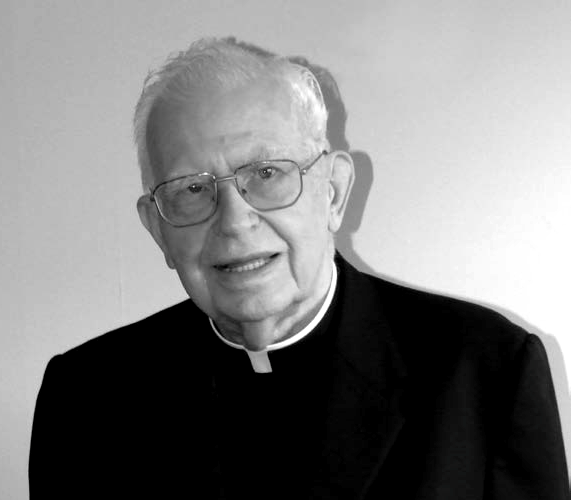
Here is a sermon from the good old days by +Rev. Msgr. Vincent Nicholas Foy (August 14, 1915 – March 13, 2017), from 1943. Readers may recall that Pope Saint Pius X, by the decree Quam Singulari in 1910, lowered the customary age of reception of Holy Communion – after the rigours of the plague[…]Continue reading→
In the Glorious Light of Easter, Alleluia!
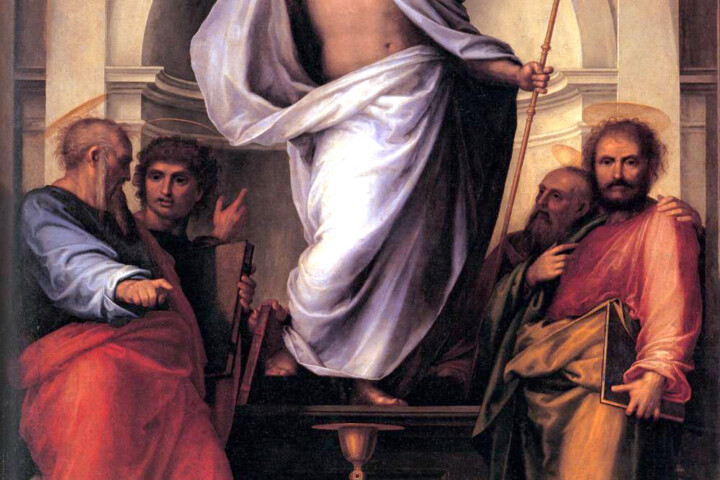
Set your minds on things that are above, not on things that are on earth, for you have died, and your life is hidden with Christ in God. When Christ who is your life is revealed, then you also will be revealed with him in glory (Col. 3:3-4). The Resurrection of Our Lord and Saviour[…]Continue reading→
An Ancient Homily for Holy Saturday
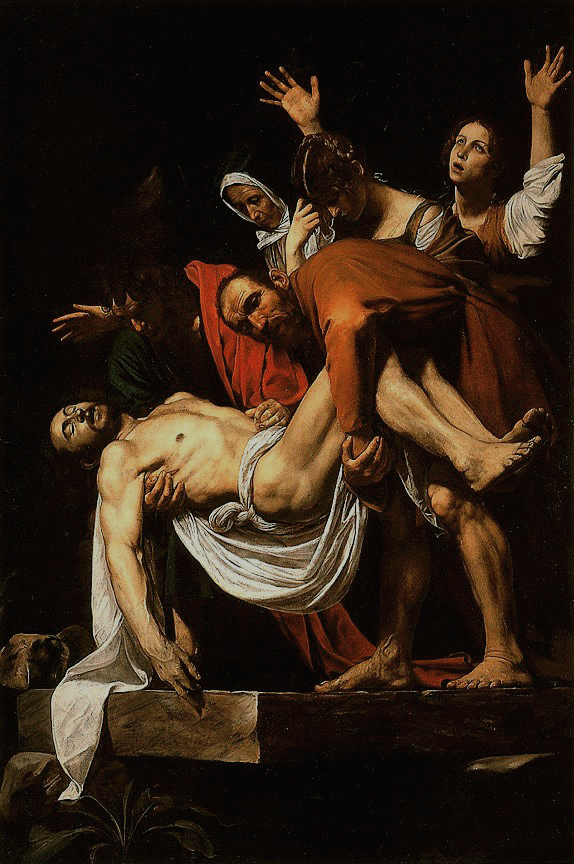
The time between Good Friday and Easter Sunday is one of waiting, in silence, as the world wonders – anticipates – what will happen, after the death of Christ. We re-live this time each year in the anamnesis of our liturgy, and in turn look forward to the glorious re-creation of all things at the[…]Continue reading→
Europe’s Long Descent
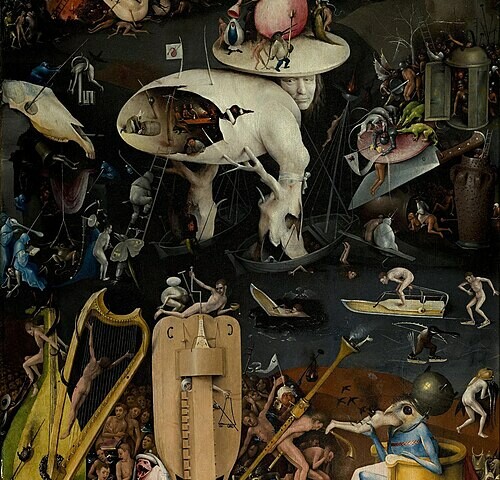
(As we meditate on this day on Christ’s burial, and His descent into hell, it is fitting to ponder here with contributor Peter Marcus how the world seems to be heading there as well. The difference is that, although God cannot ‘redeem’ hell, nor those therein, He can and did redeem the world. There is[…]Continue reading→
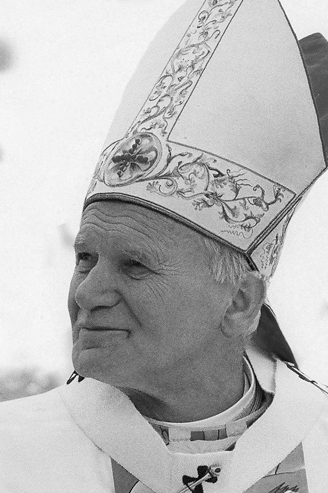
Pope Saint John Paul II’s First Good Friday Homily
ADDRESS OF HIS HOLINESS JOHN PAUL II AT THE CONCLUSION OF THE STATIONS OF THE CROSS AT THE COLOSSEUM Good Friday, 13 April 1979 When we make the Way of the Cross from one station to the next, in spirit we are always at the spot wherethis journey had its “historical” place: where it[…]Continue reading→