
29th Sunday: The truth of Christ
Worship the Lord in holy splendour; tremble before Him all the earth. Say among the nations, “The Lord is King! He will judge the peoples with equity” (Ps 96).
Today is World Mission Sunday and Catholics throughout the whole world are invited to pray and sacrifice for the mission of the Church. Today, even the poorest parishes around the world give from their poverty to support the propagation of the Gospel. The Society for the Propagation of the Faith reminds us this year that “every disciple is a missionary.” The mission of the Church, like that of our Lord Himself, is essentially to speak of God, to acknowledge His sovereignty, and to remind everyone of God’s sovereignty over what belongs to Him, which is our lives. Though this is a self-evident truth we did not make ourselves, the idea of God’s sovereignty is an absurd concept for many in the secularised context in which we live and in which we must bear witness to the Faith. Likewise, the relativist belief that all cultures are the same and that no belief system is superior to another, make the idea of missionary outreach offensive, a form of cultural imperialism, as it were. Nevertheless, faith and belief are essential to human life.
Even the person who professes to have no religious belief or faith is guided by a vision or ideology, even if it be irreligious. The facility with which ideas are shared and propagated makes ours a culture of competing ideologies and by consequence, competing anthropologies; that is, different approaches to the mystery and reality of the human person. It would seem that especially in what concerns the human person, our nature, our purpose, and our destiny, the world is suffering from what can only be described as a diabolical disorientation. The devil, diabolos, is literally one who sows confusion, and the effects of this confusion are everywhere to be seen; the casualties are legion. The reduction of the human person solely to the material or the physical is a powerful force to contend with; and even more insidiously dangerous is the reduction of the individual exclusively to one’s sexual function or orientation, in a cultural context that refuses to recognise the immutability of human nature. It is a recipe for chaos. It is in this milieu that we must bear witness to the truth of the Gospel; the Gospel of Life that liberates man from the darkness of ignorance and error, for knowledge precedes conduct. Our world needs the truth of Christ.
The Christian Faith that we profess and endeavour to live provides us with a comprehensive vision or understanding that encompasses God and man and all of reality. “I believe in one God, the Father Almighty” are the first words of our profession of Faith. It is our Lord Jesus Christ who reveals to us the truth about God and He does this not as a distant historical figure but as the living God present and living among us in the living Word of the Gospel and most especially in His Eucharistic Presence. The Gospels clearly illustrate that our Lord’s earthly life consists in being the one sent by the Father, in being totally relative to Him, completely determined by obedience to Him. We also learn from the Gospels that our Lord’s manner of entering into relation with people and things was shaped by the acknowledgment of the place that the Father had assigned them. We who bear His Name are also sent and do likewise, for “every disciple is a missionary.”
There is a divinely established order that governs the world and this order reflects a logic that we are not permitted to pervert without dire consequences. Sadly, recent human history is a chronicle of attempts to usurp God’s established order especially as this pertains to life and life’s purpose and meaning. In all such attempts it is the weak and vulnerable who suffer most. As our nation once again debates the alleged “merits” of assisted suicide, we are reminded of the necessity of our faithful witness to the Gospel of Life. G. K. Chesterton observed that “the Catholic Church is the only thing that saves man from the degrading slavery of being a child of his age.” St. Paul reminds us that the mission of the Church in which we share is always the same in every age: “Do not be conformed to this world, but be transformed by the renewal of your mind, that you may prove what is the will of God, what is good and acceptable and perfect” (Rom 12:2). The renewal of our mind is quite simply our willingness to be engaged by the truth of Christ at every stage of life’s journey. This truth is challenging but transformative and the transformation that it effects is comprehensive, affecting both mind and heart.
Christian life, the life that we are endeavouring to live, is a progressive identification with the life of Jesus. This is why before we proclaim the Gospel to others we first proclaim it to ourselves. We meditate on it, here in the sacred assembly (synaxis) and the Gospel also nurtures our personal prayer. Christian life is the personal relationship with Jesus that culminates in union with Him through grace, love, and imitation. We can affirm unequivocally that following Christ along the path of devout humility, the path of discipleship, is the greatest good for man. The witness of history attests to this. The human rights and freedoms that we cherish and uphold are not extraneous to the Christian understanding of the human person in relation to God, oneself, others and the world; they are born of the Gospel. Outside of this Christian logic however, freedom becomes licence; a self-destructive pursuit of an elusive fulfillment that ends only in frustration and what is worse, the loss of oneself. When authentically lived, Christian Faith and life provide us with a comprehensive understanding of ourselves and the world around us. Necessarily, this begins with our very self because what we say about human nature determines what direction our lives will take. Human nature, it must be said, is immutable in itself and it is governed by natural law. When this truth is respected, the gift of grace enhances and perfects our nature. When this truth is denied or violated grace is obstructed and we easily become slaves to our passions, our ignorance, and our vices. The gift of grace that is ours in Christ Jesus who shares our human nature, and the progressive identification with the life of Jesus that is the essence of our discipleship, these enable us to experience the indwelling of the Trinity; a foretaste of the eternal life that God offers us in Christ our Lord. Our Lord Himself said: “If a man loves me, he will keep my word, and my Father will love him, and we will come to him and make our home with him” (Jn 14:23).
In Christ our Saviour, the Father continues to offer to humanity a purposeful and meaningful life; an ordered life governed by a logic that engages all our human faculties—and our bodies no less. These are perfected by grace and Christian life culminates in the Trinitarian Love that embraces the whole of the reality of God and the human being, of heaven and earth, of the Church and of the world. On this Mission Sunday, we are especially aware that Christian discipleship is also a participation in our Lord’s mission to the world. Christian life is a call to holiness; a call experienced as the profound desire of the human heart to enter into intimate communion with the Heart of God. This communion presupposes fidelity to the Law of God, both divine and natural. In this divine economy, we render to “Caesar the things that are Caesar’s, and to God the things that are God’s” (Mt 22:21). We therefore pray today that we may persevere in the profession of our Catholic Faith. We also ask our Heavenly Father to give us the grace to bear witness to the reality of His Love at work in our lives through the work of faith, the labour of love and the steadfastness of hope (Cf. 1 Thes 1:4).

Saint Kateri , Canada’s Protectress
This was the title given to Saint Kateri Tekakwitha, by Pope Benedict XVI, when he canonized her on October 28th, 2012, along with six others, in Saint Peter’ Square (she had been beatified by Pope John Paul II back in 1980). With Saint Joseph as our protector, along with the Canadian martyrs, we seem to[…]Continue reading→

Remembering Father Alphonse de Valk
(Today marks the sixth anniversary of the death of Father Alphonse de Valk, C.S.B., a faithful, courageous and indefatigable Basilian priest, pro-life-and-family apostle, and the founder of Catholic Insight magazine. Here is what we wrote those on his entering into eternity five years ago, as we continue to remember him in our prayers and thoughts)[…]Continue reading→

My Name is Bernadette
April 16th is a propitious day, for besides the anniversary of Father de Valk’s death, who founded Catholic Insight in its print form decades ago, and the commemoration of the ‘two Benedicts’, mentioned in accompanying posts, today we also recall Saint Bernadette Soubirous, the young visionary to whom the Virgin Mary appeared numerous times at[…]Continue reading→
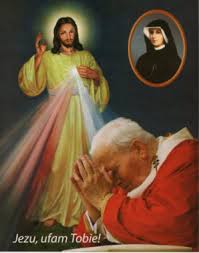
Canonizing Sister Faustina and Divine Mercy
HOMILY OF THE HOLY FATHER MASS IN ST PETER’S SQUARE FOR THE CANONIZATION OF SR MARY FAUSTINA KOWALSKA Sunday, 30 April 2000 1. “Confitemini Domino quoniam bonus, quoniam in saeculum misericordia eius”; “Give thanks to the Lord for he is good; his steadfast love endures for ever” (Ps 118: 1). So the Church sings on the Octave of[…]Continue reading→

Divine Mercy Sunday – An Echo of Every Mass
Reach out your hand and put it in my side. Do not doubt but believe’… ‘My Lord and my God!’ (Jn. 20:18)). Today is Divine Mercy Sunday, and as we celebrate the end of the Easter Octave, we contemplate the wounded side of our Saviour, the Church’s source of life. On Good Friday in the[…]Continue reading→
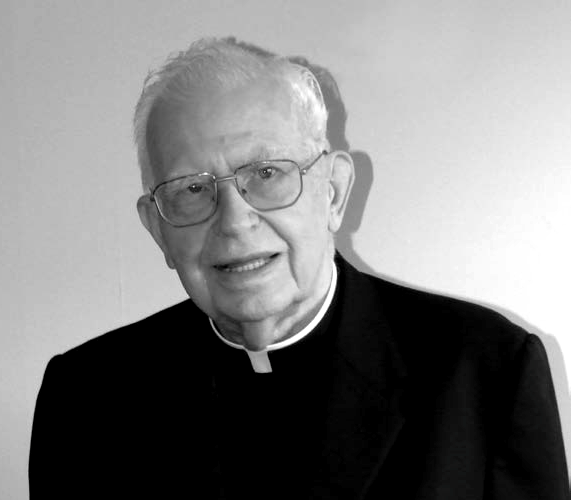
First Holy Communion: Sermon from May 16, 1943
Here is a sermon from the good old days by +Rev. Msgr. Vincent Nicholas Foy (August 14, 1915 – March 13, 2017), from 1943. Readers may recall that Pope Saint Pius X, by the decree Quam Singulari in 1910, lowered the customary age of reception of Holy Communion – after the rigours of the plague[…]Continue reading→
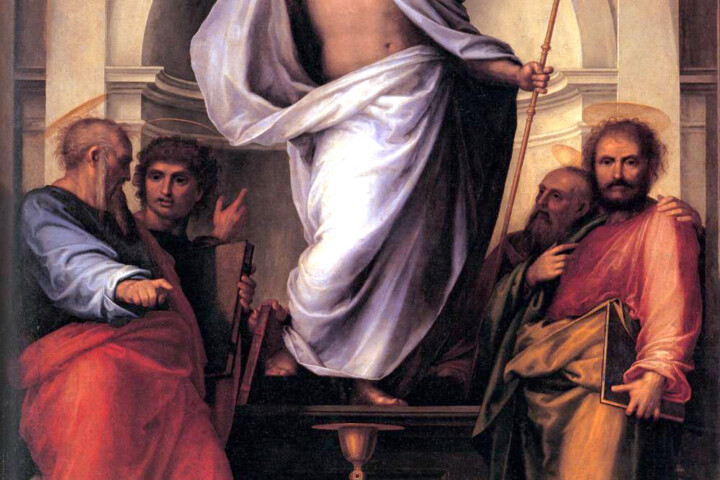
In the Glorious Light of Easter, Alleluia!
Set your minds on things that are above, not on things that are on earth, for you have died, and your life is hidden with Christ in God. When Christ who is your life is revealed, then you also will be revealed with him in glory (Col. 3:3-4). The Resurrection of Our Lord and Saviour[…]Continue reading→
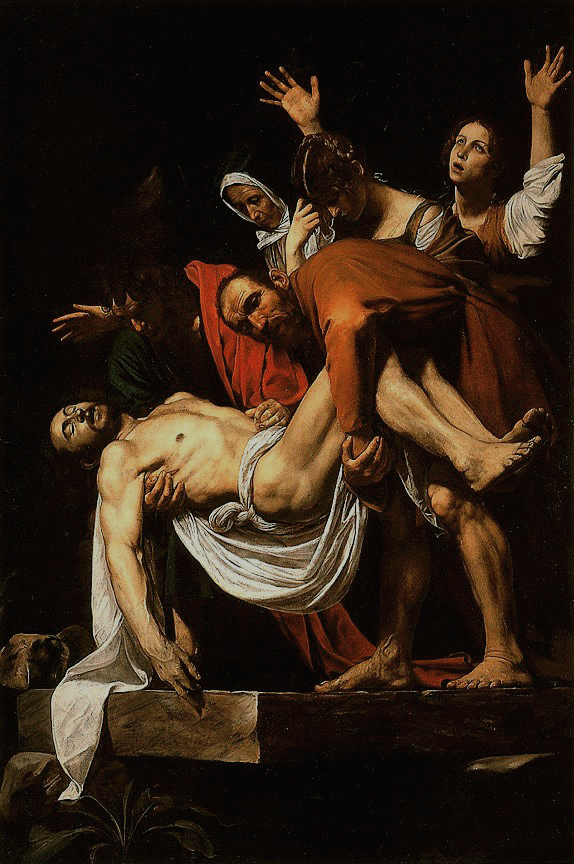
An Ancient Homily for Holy Saturday
The time between Good Friday and Easter Sunday is one of waiting, in silence, as the world wonders – anticipates – what will happen, after the death of Christ. We re-live this time each year in the anamnesis of our liturgy, and in turn look forward to the glorious re-creation of all things at the[…]Continue reading→
Europe’s Long Descent
(As we meditate on this day on Christ’s burial, and His descent into hell, it is fitting to ponder here with contributor Peter Marcus how the world seems to be heading there as well. The difference is that, although God cannot ‘redeem’ hell, nor those therein, He can and did redeem the world. There is[…]Continue reading→
Pope Saint John Paul II’s First Good Friday Homily
ADDRESS OF HIS HOLINESS JOHN PAUL II AT THE CONCLUSION OF THE STATIONS OF THE CROSS AT THE COLOSSEUM Good Friday, 13 April 1979 When we make the Way of the Cross from one station to the next, in spirit we are always at the spot wherethis journey had its “historical” place: where it[…]Continue reading→