
21st Sunday: You are the Christ
You are the Christ, the Son of the living God (Mt 16:16).
St. Peter’s statement of faith is the foundation of the Christian faith, just as it is the foundation of the Church’s life and mission. Christians are so called because we believe in the divinity of Christ; namely, that Jesus Christ is the Only Begotten Son of God, born of the Father before all ages. God from God, Light from Light, true God from true God, begotten, not made, consubstantial with the Father (the Nicene Creed). This affirmation, to paraphrase our Lord, is the leaven of Christians; the teaching upon which all of the Church’s doctrines are based. It is the divinity of our Lord that guarantees the reality of the Eucharist as the Sacrament of His Body and Blood. It is self-evident that were Jesus not God the Eucharist would be but a symbol, at best.
St. Peter’s confession of faith is no less an act of worship for if we acknowledge the truth of God’s existence it necessarily follows that we must also worship Him. St. Vincent de Paul, the French priest whose charity continues to inspire us today, observed that “a man’s value is his prayers and the value of his prayers is that of his self-denial.” As we know, much later, in the year 64 or 67 AD, St. Peter witnessed to the truth of his confession of faith and worship by his martyrdom. His self-denial was absolute and as such it has given the Church through the ages an example to follow. This was no less true of St. Paul, the Apostle to the Gentiles who declared: Indeed I count everything as loss because of the surpassing worth of knowing Christ Jesus my Lord … that I may know Him and the power of His resurrection, and may share His sufferings, becoming like Him in His death, that if possible I may attain the resurrection from the dead (Phil 3:8-11). These two champions of our faith and the multitude of believers who have followed our Lord teach us by their example that worship must always involve the offering of a sacrifice. The Prophet Samuel declared: Behold, to obey is better than sacrifice, and to hearken than the fat of rams (1 Sam 15:22). The sacrifice that is most pleasing to God is a humble heart; and to possess such a heart we need only look to the Heart of our Saviour. As we read in the Epistle to the Hebrews, consequently when Christ came into the world, He said, “Sacrifices and offerings thou hast not desired, but a body thou hast prepared for me; in burnt offerings and sin offerings thou hast taken no pleasure. Then I said, Lo, I have come to do thy will, O God, as it is written of me in the roll of the book” (10:5-7).
The prayer and self-denial or sacrifices that accompany our act of faith ensure that our knowledge of the Mystery of Christ is not merely notional or at best a vague assent to the existence of God, a higher power of sorts. Sunday after Sunday we make our way to assist at the Holy Sacrifice of the Mass no matter what because we too have come to know and believe that Jesus Christ is the Son of the living God and perhaps also because we may have strayed, and having returned to our Lord, we have made our own these words of the Apostle Peter: Lord, to whom shall we go? You have the words of eternal life; and we have believed and have come to know, that you are the Holy One of God (Jn 6:68-69). This knowledge is the source of our never ending renewal and growth as disciples of our Lord and as the Church of God. The source of the Church’s vibrancy in every age is the confession of faith that St. Peter made in the district of Caesarea Philippi: You are the Christ, the Son of the living God (Mt 16:16).
It was the affirmation of this fundamental Christian truth that reinvigorated the Church in the first half of the twentieth century. This year marks the one hundredth anniversary of the death of Pope St. Pius X, whose memory we kept on 21 August. It also marks the one hundredth anniversary of the beginning of the First World War or the Great War as it came to be known because of its intensity and ferocity. Pope St. Pius X died exactly eighteen days after his appeal for peace in Europe. It was the unanimous judgment at the time of his death that he had died for peace; that he had died of a broken heart. While it is true that the Great War tragically defined the twentieth century at least politically, in the fifty years that followed the death of Pope St. Pius X, the bloodiest period in human history, the wickedness and error that that he had so forcefully denounced was unbelievably kept from the Church. What is more, the Church was vibrant and strong and able in those most difficult times to bring solace and hope to a suffering humanity. At the very beginning of his pontificate, Pope St. Pius X had clearly stated that his only aim was to re-establish all things in Christ (Eph 1:10); instaurare omnia in Christo (E. Supremi Apostolatus, 4 October 1903). His reforms were far-reaching and effective and they were all guided by his one overriding concern for the integrity of the faith. You are the Christ, the Son of the living God (Mt 16:16). This is the foundation upon which the whole structure of the Church is founded and for this reason St. Peter’s confession of faith is followed by the promise which makes us secure in our faith. “And I tell you, you are Peter, and on this rock I will build my Church, and the gates of Hades will not prevail against it. I will give you the keys of the kingdom of heaven, and whatever you bind on earth will be bound in heaven, and whatever you loose on earth will be loosed in heaven” (Mt 16:18-19).
The divinity of our Lord which we affirm in the Creed, in the Eucharistic Sacrifice, in the observance of His moral law and in our life of prayer and of piety is the foundation upon which we seek always to re-establish all things. The profession of faith that we make with the Apostle Peter, You are the Christ, the Son of the living God; this is the foundation of the edifice that is our life. It is the source of unity and integrity of life that alone gives peace. Our times are ominous and rumours of war and acts of war are not uncommon. It seems that 2014 is not unlike 1914. The wisdom of Christ alone can save us as it has consoled and saved those before us. This saving wisdom is found in the Church to which we belong. At this perilous time, let us implore the mercy of God; that we may hold to these truths with courage and conviction out of love for God who has saved us and out of love for our neighbour who is no less in need of salvation.
Photo: Photobucket.com

Saint Kateri , Canada’s Protectress
This was the title given to Saint Kateri Tekakwitha, by Pope Benedict XVI, when he canonized her on October 28th, 2012, along with six others, in Saint Peter’ Square (she had been beatified by Pope John Paul II back in 1980). With Saint Joseph as our protector, along with the Canadian martyrs, we seem to[…]Continue reading→

Remembering Father Alphonse de Valk
(Today marks the sixth anniversary of the death of Father Alphonse de Valk, C.S.B., a faithful, courageous and indefatigable Basilian priest, pro-life-and-family apostle, and the founder of Catholic Insight magazine. Here is what we wrote those on his entering into eternity five years ago, as we continue to remember him in our prayers and thoughts)[…]Continue reading→

My Name is Bernadette
April 16th is a propitious day, for besides the anniversary of Father de Valk’s death, who founded Catholic Insight in its print form decades ago, and the commemoration of the ‘two Benedicts’, mentioned in accompanying posts, today we also recall Saint Bernadette Soubirous, the young visionary to whom the Virgin Mary appeared numerous times at[…]Continue reading→
Canonizing Sister Faustina and Divine Mercy
HOMILY OF THE HOLY FATHER MASS IN ST PETER’S SQUARE FOR THE CANONIZATION OF SR MARY FAUSTINA KOWALSKA Sunday, 30 April 2000 1. “Confitemini Domino quoniam bonus, quoniam in saeculum misericordia eius”; “Give thanks to the Lord for he is good; his steadfast love endures for ever” (Ps 118: 1). So the Church sings on the Octave of[…]Continue reading→
Divine Mercy Sunday – An Echo of Every Mass
Reach out your hand and put it in my side. Do not doubt but believe’… ‘My Lord and my God!’ (Jn. 20:18)). Today is Divine Mercy Sunday, and as we celebrate the end of the Easter Octave, we contemplate the wounded side of our Saviour, the Church’s source of life. On Good Friday in the[…]Continue reading→
First Holy Communion: Sermon from May 16, 1943
Here is a sermon from the good old days by +Rev. Msgr. Vincent Nicholas Foy (August 14, 1915 – March 13, 2017), from 1943. Readers may recall that Pope Saint Pius X, by the decree Quam Singulari in 1910, lowered the customary age of reception of Holy Communion – after the rigours of the plague[…]Continue reading→
In the Glorious Light of Easter, Alleluia!
Set your minds on things that are above, not on things that are on earth, for you have died, and your life is hidden with Christ in God. When Christ who is your life is revealed, then you also will be revealed with him in glory (Col. 3:3-4). The Resurrection of Our Lord and Saviour[…]Continue reading→
An Ancient Homily for Holy Saturday
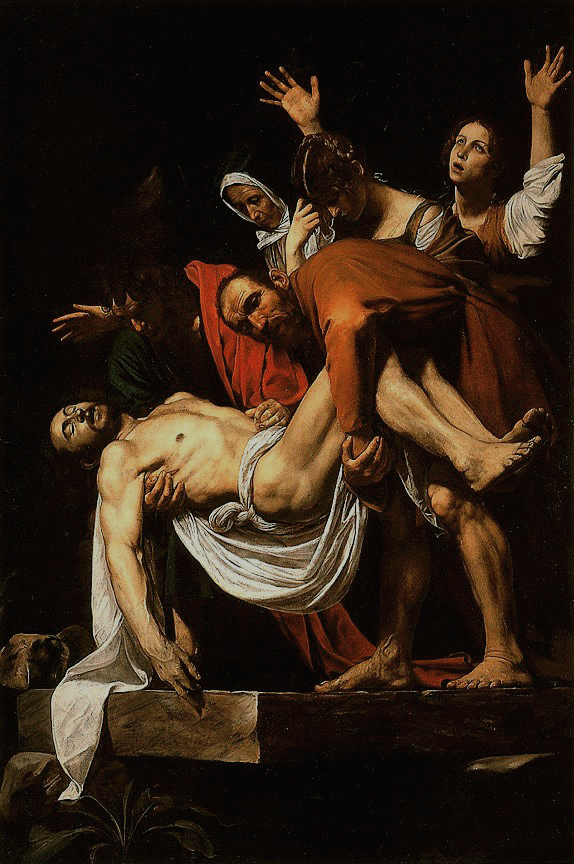
The time between Good Friday and Easter Sunday is one of waiting, in silence, as the world wonders – anticipates – what will happen, after the death of Christ. We re-live this time each year in the anamnesis of our liturgy, and in turn look forward to the glorious re-creation of all things at the[…]Continue reading→
Europe’s Long Descent
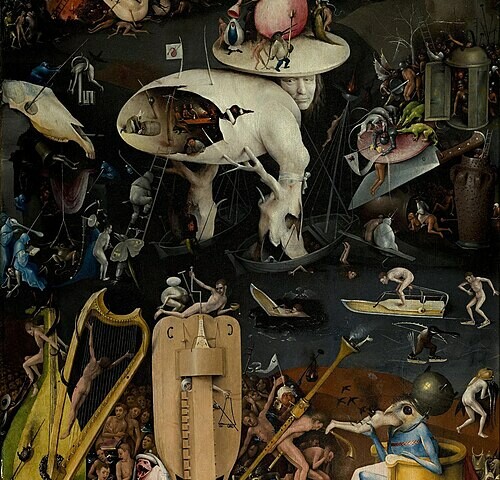
(As we meditate on this day on Christ’s burial, and His descent into hell, it is fitting to ponder here with contributor Peter Marcus how the world seems to be heading there as well. The difference is that, although God cannot ‘redeem’ hell, nor those therein, He can and did redeem the world. There is[…]Continue reading→
Pope Saint John Paul II’s First Good Friday Homily
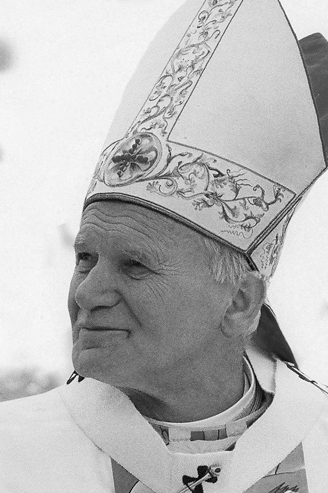
ADDRESS OF HIS HOLINESS JOHN PAUL II AT THE CONCLUSION OF THE STATIONS OF THE CROSS AT THE COLOSSEUM Good Friday, 13 April 1979 When we make the Way of the Cross from one station to the next, in spirit we are always at the spot wherethis journey had its “historical” place: where it[…]Continue reading→