
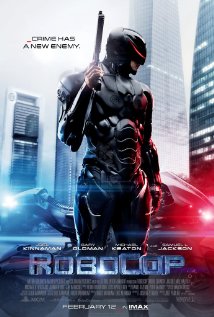
RoboCops
The 1987 movie RoboCop has become a household classic over the last 27 years and even if you have not seen it, chances are you have heard of it or know the premise. The name speaks for itself: the movie is about a cop who is a robot. On 12 February 2014, RoboCop hit theatres again with an all-new cast, updated graphics, and a slightly different plot. The question that remains is: Which RoboCop is better—the original or the remake?
Let’s recap (keep in mind both stories occur in the future). In the 1987 RoboCop, Officer Alex J. Murphy (Peter Weller) transfers to the Detroit police force and partners with Officer Anne Lewis (Nancy Allen). Their first mission is to chase some robbers and take back the money they stole. They follow the thieves to an abandoned warehouse, but backup is unavailable. They decide to go in alone, splitting up as they walk in. Things turn ugly and both officers lose their respective fights. Murphy is taken by the robbers and shot in the head by their leader, Clarence J. Boddicker (Kurtwood Smith)—but does not completely die.
Meanwhile, the company who sponsors the DCP (Detroit City Police), Omni Consumer Products (OCP), wishes to release a crime-fighting robot to stop the police force from going on strike, gain control of Detroit, and make it the perfect city: “Delta City.” The robot they design ends up killing one of the board members in its introduction meeting, so OCP decides to reconstruct Officer Murphy with robotic parts—renaming him RoboCop—to give them a hold in the crime-fighting industry and win public favour. RoboCop is released into the police force and Officer Lewis realizes RoboCop is actually Officer Murphy, although he has lost much of his humanity. He slowly regains memories through dreams and Lewis’ encouragement and he begins hunting his killer, Boddicker. He discovers OCP board director Dick Jones (Ronny Cox) has been killing people through Boddicker and plans to take over OCP, but he cannot arrest Jones due to a secret directive that prevents RoboCop from taking action against an OCP executive. RoboCop returns after killing Boddicker’s gang and shows the board of executives Jones’ plans, and when Jones gets fired by the OCP chairman, RoboCop shoots him out a window.
The 2014 RoboCop was very different. The movie starts in a news show called The Novak Element with host Pat Novak (Samuel L. Jackson) talking about how robotic law enforcement drones created by Omnicorp are used in other countries, but not legal in the United States. This angers Novak and he rants about how Americans should not be risking their lives to catch criminals when they could have robots do the same thing. He cuts to live footage of robots patrolling in another country. But the people in the country are unhappy with the constant patrols and scans from the robots—so on camera, a few activists provoke the robots and are killed by them to show that the robots are not hesitant to pull the trigger. The executives at Omnicorp have made it their goal to have the law against robot law enforcement revoked, and in order to sway public opinion, they decide to use a man in a robotic suit to make the robots seem more humane. Omnicorp seeks out Dr. Dennett Norton (Gary Oldman), a robotic limb rehabilitation specialist, to help train and create RoboCop.
Enter Alex Murphy (Joel Kinnaman) and partner, Jack Lewis (Michael K. Williams). They are both undercover agents infiltrating a drug gang to discover the supplier and leader. Their cover is blown when meeting the gang’s leader, Antoine Vallon (Patrick Garrow), because he receives an unidentified phone call telling him that Murphy and Lewis are cops. A shooting match ensues between the cops and the gang. Lewis ends up gravely injured, but Murphy gets away virtually unscathed. Vallon does not wish to be caught, so he sends men to kill Murphy—whose car explodes. He is caught in the explosion and on the brink of death, when Omnicorp finds him to be a worthy candidate for their RoboCop project. After consulting his wife, Clara Murphy (Abbie Cornish), they operate and begin training him. However, because his mind is human he is not as efficient as a drone as his reaction time is slower. Omnicorp slowly takes his will away and reduces his dopamine levels when he cannot handle all the information they give him. He becomes less human, and his wife is highly displeased with the empty promises of Omnicorp. She begins intercepting RoboCop and telling the media about his loss of emotions. She eventually gets through to RoboCop and he begins seeking answers to his murder. Omnicorp tries to shut him down permanently as he slips out of their control. But RoboCop regains his humanity, kills off Vallon’s gang, and invades the Omnicorp tower. To kill the Omnicorp CEO, Raymond Sellars (Michael Keaton), he must ignore his programing that prevents him from harming anyone wearing an electronic red band. The film closes on Pat Novak, still insisting that robots should be allowed to enforce crime in America.
When considering which film is better, we have to ignore the improvements in CGI and graphics. Twenty-seven years is a long time, so it would be unfair to say the 2014 version is better due to graphics (even though it was a lot easier to watch than the out-dated and comical CGI of 1987). However, it is fair to consider the acting in both films. In the 1987 RoboCop, the actors were not very subtle with their delivery. Their behaviours seemed overly exaggerated at times, especially when it came to injuries or death sequences. The 2014 RoboCop was less over-exaggerated, but there were times when the characters seemed dull and flat. Out of the two, I would probably prefer the 2014 actors because they were more believable, but it could have been much better.
In terms of plot and storyline, I preferred the 2014 RoboCop. The plot delved more into the side of the bad guys than the original did. They show the background and decisions behind picking Alex Murphy to be RoboCop. They show more character development with the Omnicorp employees, especially that of Dr. Dennett Norton, who seems to be the only person other than RoboCop to find his humanity and go against the inhumane will of Omnicorp. The 1987 RoboCop was also very macho and gory and the plot suffered for it. (I understand that censorship laws then were not what they are now, but I was not prepared for the extent of gore and guts they had in the 1987 version.) That being said, the story wasn’t bad. But I preferred the inside look at Omnicorp and its executives, which was not present in the 1987 RoboCop. (The 1987 RoboCop does have a very memorable line that the 2014 version did not have. When RoboCop is struggling to arrest Dick Jones, the OCP chairman screams, “You’re fired!” RoboCop replies, “Thank you, sir,” and shoots Jones out the window. That was probably my favourite part of the two movies.)
All in all, I like the message behind the RoboCop franchise: Robots can’t replace humans no matter how hard we try, and if we do try humanity will always win out—or at least put up a good fight. It’s because of that message that I recommend the RoboCop movies, but the 1987 RoboCop is not for the faint of heart (or weak of stomach). The are both entertaining movies especially if you like action-packed crime fighting. In a time where we almost entirely depend on technology, I think movies about not putting our full trust in technology are necessary reminders. After all, maybe robots will take over the world someday. Who knows?

Saint Kateri , Canada’s Protectress
This was the title given to Saint Kateri Tekakwitha, by Pope Benedict XVI, when he canonized her on October 28th, 2012, along with six others, in Saint Peter’ Square (she had been beatified by Pope John Paul II back in 1980). With Saint Joseph as our protector, along with the Canadian martyrs, we seem to[…]Continue reading→

Remembering Father Alphonse de Valk
(Today marks the sixth anniversary of the death of Father Alphonse de Valk, C.S.B., a faithful, courageous and indefatigable Basilian priest, pro-life-and-family apostle, and the founder of Catholic Insight magazine. Here is what we wrote those on his entering into eternity five years ago, as we continue to remember him in our prayers and thoughts)[…]Continue reading→

My Name is Bernadette
April 16th is a propitious day, for besides the anniversary of Father de Valk’s death, who founded Catholic Insight in its print form decades ago, and the commemoration of the ‘two Benedicts’, mentioned in accompanying posts, today we also recall Saint Bernadette Soubirous, the young visionary to whom the Virgin Mary appeared numerous times at[…]Continue reading→
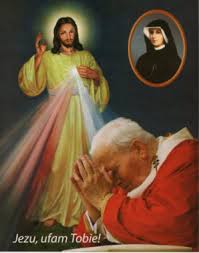
Canonizing Sister Faustina and Divine Mercy
HOMILY OF THE HOLY FATHER MASS IN ST PETER’S SQUARE FOR THE CANONIZATION OF SR MARY FAUSTINA KOWALSKA Sunday, 30 April 2000 1. “Confitemini Domino quoniam bonus, quoniam in saeculum misericordia eius”; “Give thanks to the Lord for he is good; his steadfast love endures for ever” (Ps 118: 1). So the Church sings on the Octave of[…]Continue reading→

Divine Mercy Sunday – An Echo of Every Mass
Reach out your hand and put it in my side. Do not doubt but believe’… ‘My Lord and my God!’ (Jn. 20:18)). Today is Divine Mercy Sunday, and as we celebrate the end of the Easter Octave, we contemplate the wounded side of our Saviour, the Church’s source of life. On Good Friday in the[…]Continue reading→
First Holy Communion: Sermon from May 16, 1943
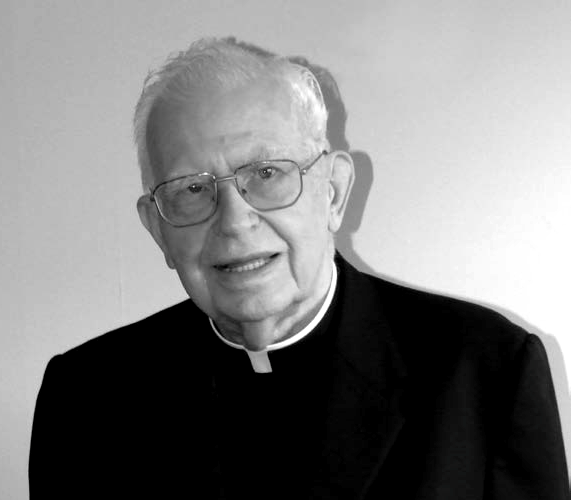
Here is a sermon from the good old days by +Rev. Msgr. Vincent Nicholas Foy (August 14, 1915 – March 13, 2017), from 1943. Readers may recall that Pope Saint Pius X, by the decree Quam Singulari in 1910, lowered the customary age of reception of Holy Communion – after the rigours of the plague[…]Continue reading→
In the Glorious Light of Easter, Alleluia!
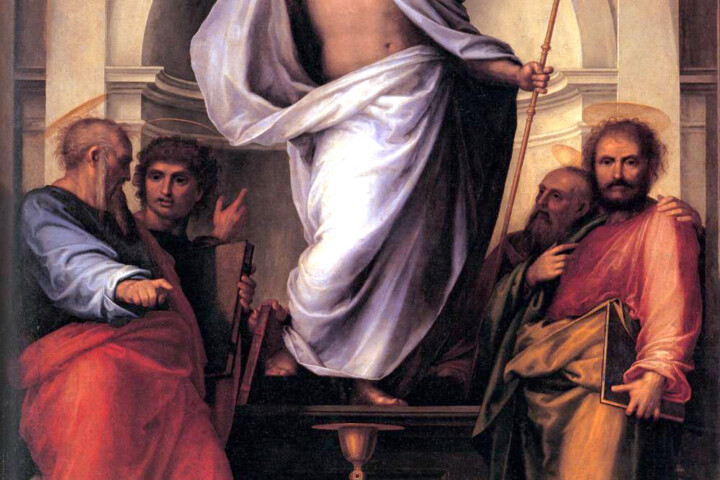
Set your minds on things that are above, not on things that are on earth, for you have died, and your life is hidden with Christ in God. When Christ who is your life is revealed, then you also will be revealed with him in glory (Col. 3:3-4). The Resurrection of Our Lord and Saviour[…]Continue reading→
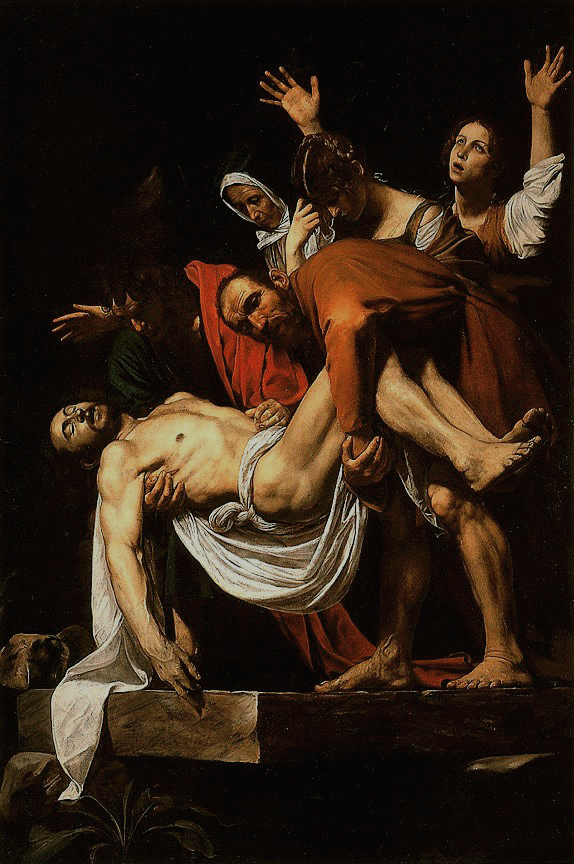
An Ancient Homily for Holy Saturday
The time between Good Friday and Easter Sunday is one of waiting, in silence, as the world wonders – anticipates – what will happen, after the death of Christ. We re-live this time each year in the anamnesis of our liturgy, and in turn look forward to the glorious re-creation of all things at the[…]Continue reading→
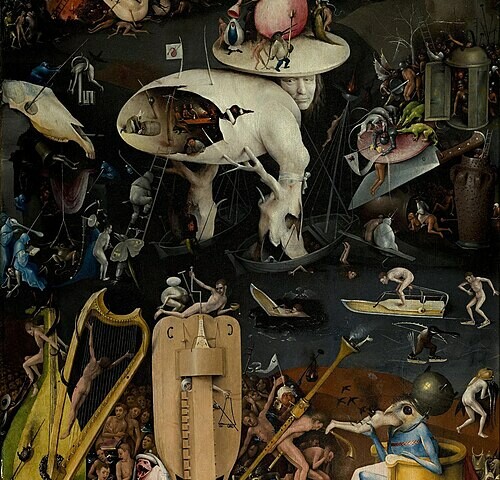
Europe’s Long Descent
(As we meditate on this day on Christ’s burial, and His descent into hell, it is fitting to ponder here with contributor Peter Marcus how the world seems to be heading there as well. The difference is that, although God cannot ‘redeem’ hell, nor those therein, He can and did redeem the world. There is[…]Continue reading→
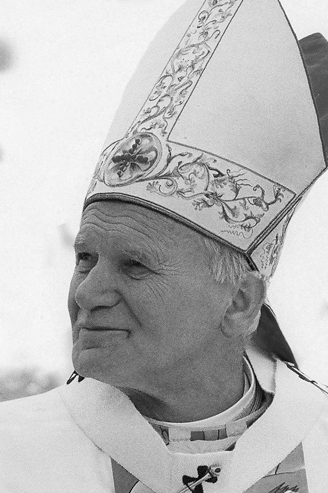
Pope Saint John Paul II’s First Good Friday Homily
ADDRESS OF HIS HOLINESS JOHN PAUL II AT THE CONCLUSION OF THE STATIONS OF THE CROSS AT THE COLOSSEUM Good Friday, 13 April 1979 When we make the Way of the Cross from one station to the next, in spirit we are always at the spot wherethis journey had its “historical” place: where it[…]Continue reading→