

Wanderings
from Wanderings in South America, the North-West of the United States, and the Antilles, in the years 1812, 1810, 1820, and 1824. With Original Instructions for the perfect preservation of Birds, Etc. for Cabinets of Natural History
Note: Charles Waterton was a ninth descendant of St. Thomas More. He was born in 1782, and established the first reserve for conservation of birds and other wildlife, and was a devout Catholic. The following is from his description of his schooling at a Jesuit College at Stonyhurst. He was unable to sit still during class, and had a habit of suddenly leaping and running outdoors to hunt rats. The Hanoverian rat is his joke at the expense of King George, who, Waterton insisted, introduced rats from his native Hanover to England.
The good fathers were aware of my predominant propensity. Though it was innocent in itself, nevertheless it was productive of harm in its consequences, by causing me to break the college rules, and thus to give a bad example to the community at large. Wherefore, with a magnanimity, and excellent exercise of judgment, which are only the province of those who have acquired a consummate knowledge of human nature, and who know how to turn to advantage the extraordinary dispositions of those intrusted to their care, they sagaciously managed matters in such a way as to enable me to ride my hobby to a certain extent, and still, at the same time, to prevent me from giving a bad example.
As the establishment was very large, and as it contained an abundance of prey, the Hanoverian rat, which fattens so well on English food, and which always contrives to thrust its nose into every man’s house when there is anything to be got, swarmed throughout the vast extent of this antiquated mansion. The ability which I showed in curtailing the career of this voracious intruder did not fail to bring me into considerable notice. The cook, the baker, the gardener, and my friend old Bowren, could all bear testimony to my progress in this line. By a mutual understanding I was made rat-catcher to the establishment, and also fox-taker, foumart-killer, and crossbow-charger at the time when the young rooks were fledged. Moreover, I fulfilled the duties of organ-blower and football-maker with entire satisfaction to the public.
I was now at the height of my ambition. I followed up my calling with great success. The vermin disappeared by the dozen; the books were moderately well thumbed; and, according to my notion of things, all went on perfectly right.
Photo credit: By William Hoiles from Basking Ridge, NJ, USA (Old books Uploaded by guillom) [CC-BY-2.0 (http://creativecommons.org/licenses/by/2.0)], via Wikimedia Commons.

Saint Kateri , Canada’s Protectress
This was the title given to Saint Kateri Tekakwitha, by Pope Benedict XVI, when he canonized her on October 28th, 2012, along with six others, in Saint Peter’ Square (she had been beatified by Pope John Paul II back in 1980). With Saint Joseph as our protector, along with the Canadian martyrs, we seem to[…]Continue reading→

Remembering Father Alphonse de Valk
(Today marks the sixth anniversary of the death of Father Alphonse de Valk, C.S.B., a faithful, courageous and indefatigable Basilian priest, pro-life-and-family apostle, and the founder of Catholic Insight magazine. Here is what we wrote those on his entering into eternity five years ago, as we continue to remember him in our prayers and thoughts)[…]Continue reading→

My Name is Bernadette
April 16th is a propitious day, for besides the anniversary of Father de Valk’s death, who founded Catholic Insight in its print form decades ago, and the commemoration of the ‘two Benedicts’, mentioned in accompanying posts, today we also recall Saint Bernadette Soubirous, the young visionary to whom the Virgin Mary appeared numerous times at[…]Continue reading→
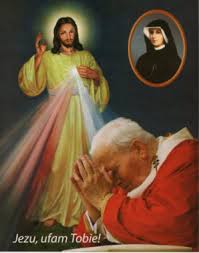
Canonizing Sister Faustina and Divine Mercy
HOMILY OF THE HOLY FATHER MASS IN ST PETER’S SQUARE FOR THE CANONIZATION OF SR MARY FAUSTINA KOWALSKA Sunday, 30 April 2000 1. “Confitemini Domino quoniam bonus, quoniam in saeculum misericordia eius”; “Give thanks to the Lord for he is good; his steadfast love endures for ever” (Ps 118: 1). So the Church sings on the Octave of[…]Continue reading→

Divine Mercy Sunday – An Echo of Every Mass
Reach out your hand and put it in my side. Do not doubt but believe’… ‘My Lord and my God!’ (Jn. 20:18)). Today is Divine Mercy Sunday, and as we celebrate the end of the Easter Octave, we contemplate the wounded side of our Saviour, the Church’s source of life. On Good Friday in the[…]Continue reading→
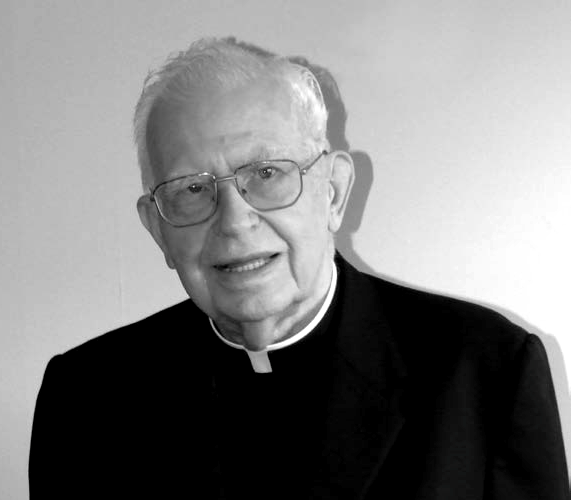
First Holy Communion: Sermon from May 16, 1943
Here is a sermon from the good old days by +Rev. Msgr. Vincent Nicholas Foy (August 14, 1915 – March 13, 2017), from 1943. Readers may recall that Pope Saint Pius X, by the decree Quam Singulari in 1910, lowered the customary age of reception of Holy Communion – after the rigours of the plague[…]Continue reading→
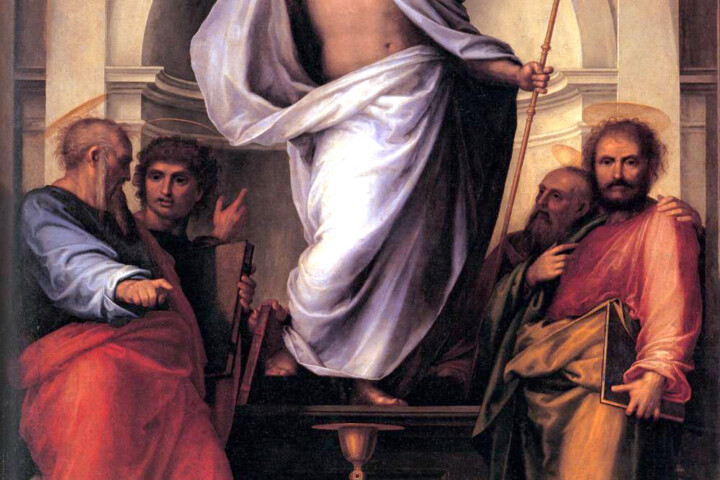
In the Glorious Light of Easter, Alleluia!
Set your minds on things that are above, not on things that are on earth, for you have died, and your life is hidden with Christ in God. When Christ who is your life is revealed, then you also will be revealed with him in glory (Col. 3:3-4). The Resurrection of Our Lord and Saviour[…]Continue reading→
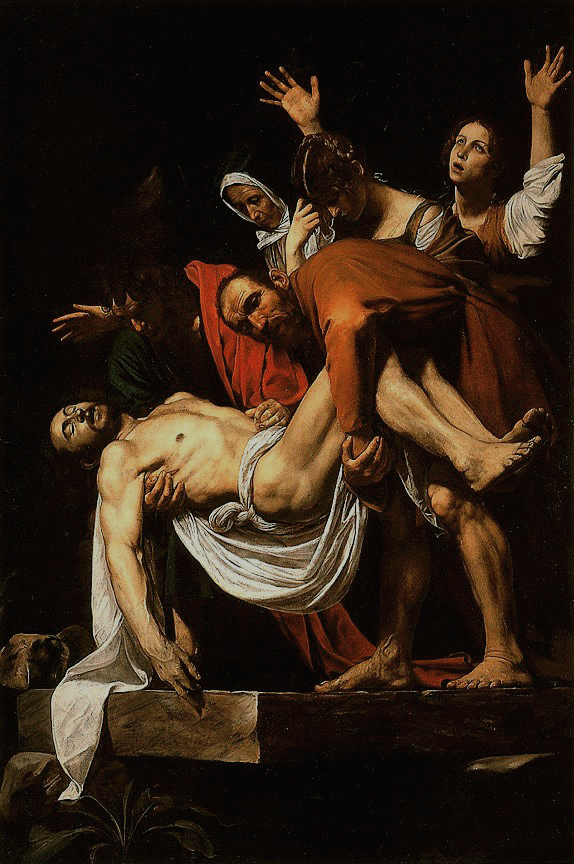
An Ancient Homily for Holy Saturday
The time between Good Friday and Easter Sunday is one of waiting, in silence, as the world wonders – anticipates – what will happen, after the death of Christ. We re-live this time each year in the anamnesis of our liturgy, and in turn look forward to the glorious re-creation of all things at the[…]Continue reading→
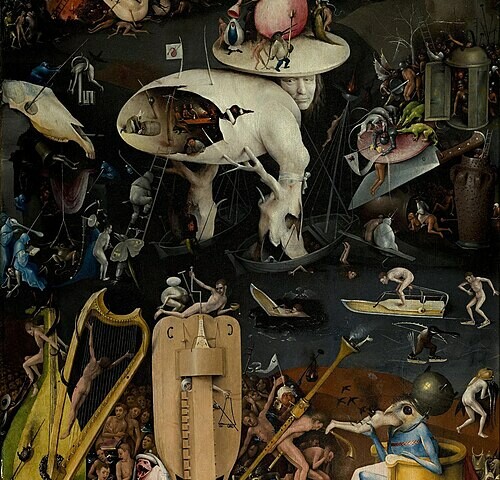
Europe’s Long Descent
(As we meditate on this day on Christ’s burial, and His descent into hell, it is fitting to ponder here with contributor Peter Marcus how the world seems to be heading there as well. The difference is that, although God cannot ‘redeem’ hell, nor those therein, He can and did redeem the world. There is[…]Continue reading→
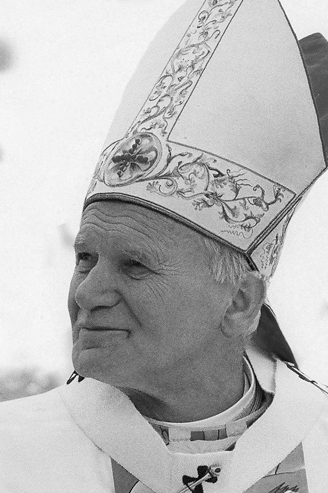
Pope Saint John Paul II’s First Good Friday Homily
ADDRESS OF HIS HOLINESS JOHN PAUL II AT THE CONCLUSION OF THE STATIONS OF THE CROSS AT THE COLOSSEUM Good Friday, 13 April 1979 When we make the Way of the Cross from one station to the next, in spirit we are always at the spot wherethis journey had its “historical” place: where it[…]Continue reading→