
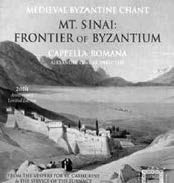
Mt. Sinai: Frontier of Byzantium
Mt. Sinai: Frontier of Byzantium
Featuring Cappella Romana and Alexander Lingas (Conductor)
Cappella Romana, 2012
ASIN: B007VHJVSM
On their new CD, Cappella Romana performs Byzantine musical treasures from the cathedrals and monasteries of the Eastern Roman Empire which were preserved from destruction in the Egyptian desert at the Greek Orthodox Monastery of St. Catherine at Mt. Sinai.
When the Byzantine empire fell in 1453, the emperor and his entire court were butchered inside Hagia Sophia after the almost thousand-year-old bronze doors were breached. The city’s churches were sacked, mosaics white-washed, and icons destroyed. The treasured missals, ancient books, choir and theoretical manuscripts each sold for a penny after the jewelled covers had been ripped off for plunder. Piles were made all over the city of religious materials which were summarily burned. The loss of liturgical, imperial, and secular libraries, archives going back to the fourth century, was incalculable.
Mt. Sinai had fallen to the Muslims centuries before. They continued to tolerate the existence of the ancient monastery and its community of monks, which became a repository for the liturgical and musical masterpieces of the destroyed Byzantine culture. The musical traditions of ancient Greece and Rome are the antecedents of this musical tradition, coupled with the influence of the orient, which was added to the mix by the fact that the Byzantine capital Constantinople was the centre of trade between the east and west. All these influences are readily heard in this music.
Its exotic nature is strange to us in our day but can become a quickly acquired taste. Europeans, especially in the Balkans and Greece, have seen a revival of the programming of these musical masterpieces, but sadly North Americans have had little access for various reasons. Interestingly, post-modern composers (again mostly European) have realized the wealth of this repertoire and have readily acknowledged its influence on their own work, along with its power and importance. Quite possibly there is an eschatological connection as they return to their own continent’s musical foundations, closing the hermeneutic circle.
This music speaks to a higher self: its target is the divine and focuses the soul in direct union with God. One of its hallmarks is the luxurious usage of time. Time seems to be suspended as you listen. Crescendos, suspensions, and intensity are not lacking but the spirit of calmness is suffused as one enters into a reality that is purely spiritual. As in many oriental musical forms the repetition of notes has a proto-hypnotic effect but in this timeless musical system one does not space out but holds the musical vocabulary and deeply embedded symbolic intentions in an alert and focused gesture of containment. One thinks of cupped hands gently supporting the most perfumed and beautiful of flowers in a meditation without end.
This disc contains major sections of two seminal masterpieces of this musical art form. The Vespers of St. Catherine, (14th c.), has excerpts from Psalms 103 (Septuagint), 116, 129, and 140 (Septuagint), excerpts from the great vespers sung on the vigil of the feast of the martyr St. Catherine of Alexandria, the patron of the Mt. Sinai monastery.
The Service of the Furnace: A liturgical account of the Three Holy Children (late 15th c.) has some earlier fourteenth century additions on the same subject texts. This work is a liturgical drama of the three Hebrew youths Ananias, Azarias, Misael and the angel in the fiery furnace, sentenced after refusing to worship the golden statue of King Nabuchodonosor, taken from the Bible’s Old Testament. This service is the sole survivor from Byzantium that is devoted to dramatic representation, offering a parallel to European medieval traditions of liturgical dramas. It was celebrated in Constantinople and Thessalonica for a hundred years until the Ottoman conquest in 1453.
“This style of liturgical singing was characterized generally by vocal virtuosity, encompassing also the addition of new texts to existing chants (troping), highly florid melodies, and even textless vocalizations on nonsense syllables (teretisms),” writes Alexander Lingas. Cappella Romana has released over a dozen compact discs. The artists on this CD include five singers as melodists and four singers listed as isokrates, with the performing editions by Dr. Ioannis Arvanitis, Cappella Romana’s chief editor for scores of medieval Byzantine period chant. The vocal ensemble’s founder and artistic director Alexander Lingas is credited as one of the melodists. Dr. Lingas is a senior lecturer in music at the City University, London and a fellow at Oxford’s European Humanities Research Centre.
Cappella Romana was founded in 1991 as a vocal chamber ensemble exploring the musical traditions of the Christian East and West with a scholarly emphasis on early and contemporary music. The name refers to the medieval Greek concept of the Roman oikoumene (inhabited world), which embraced Rome and western Europe as well as the “New Rome,” Constantinople, and the Byzantine Empire with its Balkin Slavic commonwealth.
The performance by the all-male ensemble is best qualified as powerful, radiant, and transcendent. It was recorded in Holy Rosary Catholic Church, Seattle in 2007, an acoustic setting that places one in an environment of its historical origins and that is capacious, rich, and vibrant.
© Paul-James Dwyer 2014

Saint Kateri , Canada’s Protectress
This was the title given to Saint Kateri Tekakwitha, by Pope Benedict XVI, when he canonized her on October 28th, 2012, along with six others, in Saint Peter’ Square (she had been beatified by Pope John Paul II back in 1980). With Saint Joseph as our protector, along with the Canadian martyrs, we seem to[…]Continue reading→

Remembering Father Alphonse de Valk
(Today marks the sixth anniversary of the death of Father Alphonse de Valk, C.S.B., a faithful, courageous and indefatigable Basilian priest, pro-life-and-family apostle, and the founder of Catholic Insight magazine. Here is what we wrote those on his entering into eternity five years ago, as we continue to remember him in our prayers and thoughts)[…]Continue reading→

My Name is Bernadette
April 16th is a propitious day, for besides the anniversary of Father de Valk’s death, who founded Catholic Insight in its print form decades ago, and the commemoration of the ‘two Benedicts’, mentioned in accompanying posts, today we also recall Saint Bernadette Soubirous, the young visionary to whom the Virgin Mary appeared numerous times at[…]Continue reading→

Canonizing Sister Faustina and Divine Mercy
HOMILY OF THE HOLY FATHER MASS IN ST PETER’S SQUARE FOR THE CANONIZATION OF SR MARY FAUSTINA KOWALSKA Sunday, 30 April 2000 1. “Confitemini Domino quoniam bonus, quoniam in saeculum misericordia eius”; “Give thanks to the Lord for he is good; his steadfast love endures for ever” (Ps 118: 1). So the Church sings on the Octave of[…]Continue reading→

Divine Mercy Sunday – An Echo of Every Mass
Reach out your hand and put it in my side. Do not doubt but believe’… ‘My Lord and my God!’ (Jn. 20:18)). Today is Divine Mercy Sunday, and as we celebrate the end of the Easter Octave, we contemplate the wounded side of our Saviour, the Church’s source of life. On Good Friday in the[…]Continue reading→
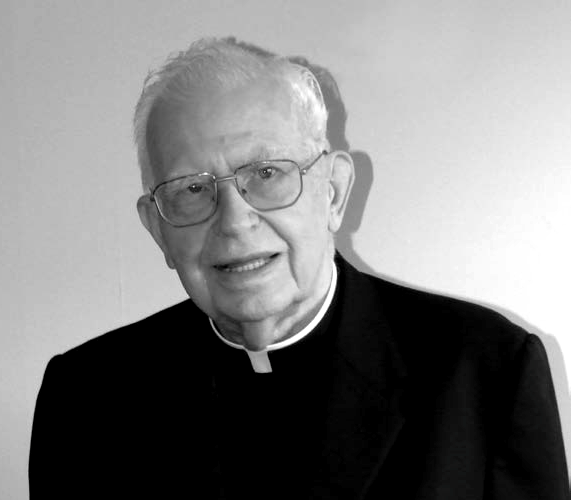
First Holy Communion: Sermon from May 16, 1943
Here is a sermon from the good old days by +Rev. Msgr. Vincent Nicholas Foy (August 14, 1915 – March 13, 2017), from 1943. Readers may recall that Pope Saint Pius X, by the decree Quam Singulari in 1910, lowered the customary age of reception of Holy Communion – after the rigours of the plague[…]Continue reading→
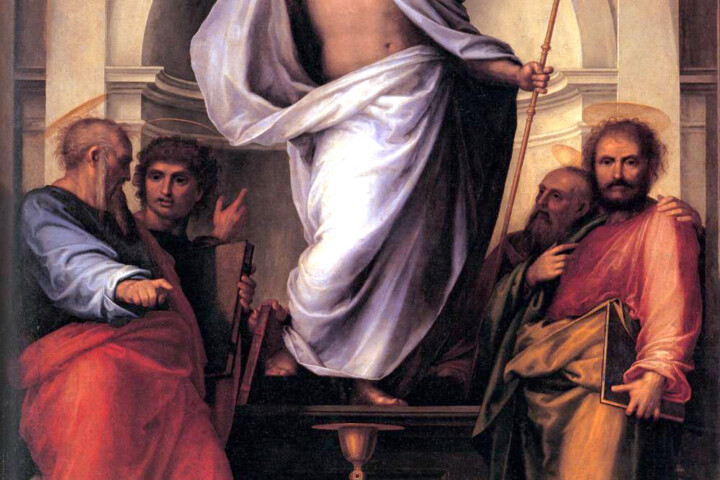
In the Glorious Light of Easter, Alleluia!
Set your minds on things that are above, not on things that are on earth, for you have died, and your life is hidden with Christ in God. When Christ who is your life is revealed, then you also will be revealed with him in glory (Col. 3:3-4). The Resurrection of Our Lord and Saviour[…]Continue reading→
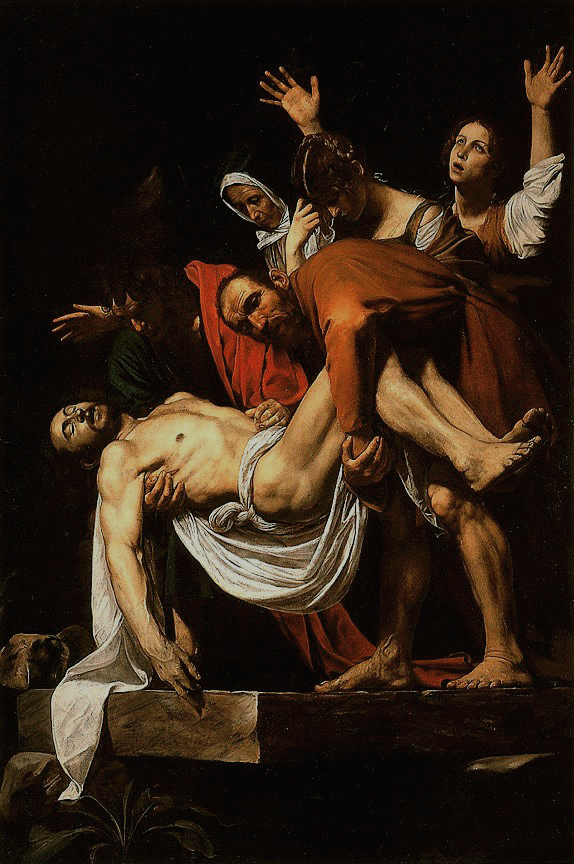
An Ancient Homily for Holy Saturday
The time between Good Friday and Easter Sunday is one of waiting, in silence, as the world wonders – anticipates – what will happen, after the death of Christ. We re-live this time each year in the anamnesis of our liturgy, and in turn look forward to the glorious re-creation of all things at the[…]Continue reading→
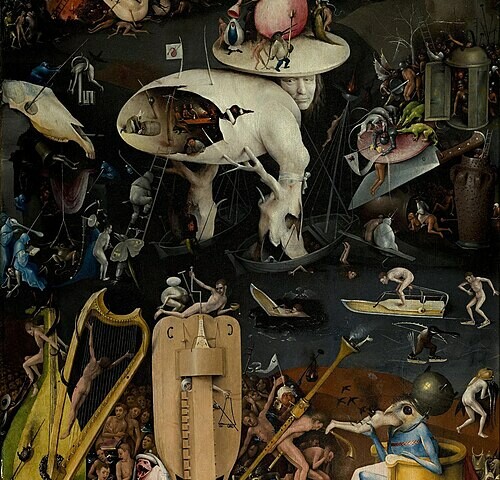
Europe’s Long Descent
(As we meditate on this day on Christ’s burial, and His descent into hell, it is fitting to ponder here with contributor Peter Marcus how the world seems to be heading there as well. The difference is that, although God cannot ‘redeem’ hell, nor those therein, He can and did redeem the world. There is[…]Continue reading→
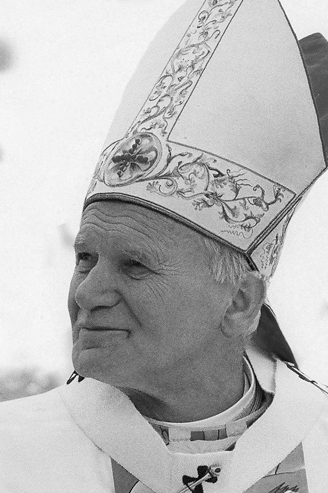
Pope Saint John Paul II’s First Good Friday Homily
ADDRESS OF HIS HOLINESS JOHN PAUL II AT THE CONCLUSION OF THE STATIONS OF THE CROSS AT THE COLOSSEUM Good Friday, 13 April 1979 When we make the Way of the Cross from one station to the next, in spirit we are always at the spot wherethis journey had its “historical” place: where it[…]Continue reading→