
Lumen Fidei
16. The clearest proof of the reliability of Christ’s love is to be found in his dying for our sake. If laying down one’s life for one’s friends is the greatest proof of love (cf. Jn 15:13), Jesus offered his own life for all, even for his enemies, to transform their hearts. This explains why the evangelists could see the hour of Christ’s crucifixion as the culmination of the gaze of faith; in that hour the depth and breadth of God’s love shone forth. It was then that Saint John offered his solemn testimony, as together with the Mother of Jesus he gazed upon the pierced one (cf. Jn 19:37): “He who saw this has borne witness, so that you also may believe. His testimony is true, and he knows that he tells the truth” (Jn 19:35). In Dostoevsky’s The Idiot, Prince Myshkin sees a painting by Hans Holbein the Younger depicting Christ dead in the tomb and says: “Looking at that painting might cause one to lose his faith” (Part II, IV). The painting is a gruesome portrayal of the destructive effects of death on Christ’s body. Yet it is precisely in contemplating Jesus’ death that faith grows stronger and receives a dazzling light; then it is revealed as faith in Christ’s steadfast love for us, a love capable of embracing death to bring us salvation. This love, which did not recoil before death in order to show its depth, is something I can believe in; Christ’s total self-gift overcomes every suspicion and enables me to entrust myself to him completely.
17. Christ’s death discloses the utter reliability of God’s love above all in the light of his resurrection. As the risen one, Christ is the trustworthy witness, deserving of faith (cf. Rev 1:5; Heb 2:17), and a solid support for our faith. “If Christ has not been raised, your faith is futile,” says Saint Paul (1 Cor 15:17). Had the Father’s love not caused Jesus to rise from the dead, had it not been able to restore his body to life, then it would not be a completely reliable love, capable of illuminating also the gloom of death. When Saint Paul describes his new life in Christ, he speaks of “faith in the Son of God, who loved me and gave himself for me” (Gal 2:20). Clearly, this “faith in the Son of God” means Paul’s faith in Jesus, but it also presumes that Jesus himself is worthy of faith, based not only on his having loved us even unto death but also on his divine sonship. Precisely because Jesus is the Son, because he is absolutely grounded in the Father, he was able to conquer death and make the fullness of life shine forth. Our culture has lost its sense of God’s tangible presence and activity in our world. We think that God is to be found in the beyond, on another level of reality, far removed from our everyday relationships. But if this were the case, if God could not act in the world, his love would not be truly powerful, truly real, and thus not even true, a love capable of delivering the bliss that it promises. It would make no difference at all whether we believed in him or not. Christians, on the contrary, profess their faith in God’s tangible and powerful love which really does act in history and determines its final destiny: a love that can be encountered, a love fully revealed in Christ’s passion, death, and resurrection.
18. This fullness which Jesus brings to faith has another decisive aspect. In faith, Christ is not simply the one in whom we believe, the supreme manifestation of God’s love; he is also the one with whom we are united precisely in order to believe. Faith does not merely gaze at Jesus, but sees things as Jesus himself sees them, with his own eyes: it is a participation in his way of seeing. In many areas in our lives we trust others who know more than we do. We trust the architect who builds our home, the pharmacist who gives us medicine for healing, the lawyer who defends us in court. We also need someone trustworthy and knowledgeable where God is concerned. Jesus, the Son of God, is the one who makes God known to us (cf. Jn 1:18). Christ’s life, his way of knowing the Father and living in complete and constant relationship with him, opens up new and inviting vistas for human experience. Saint John brings out the importance of a personal relationship with Jesus for our faith by using various forms of the verb “to believe.” In addition to “believing that” what Jesus tells us is true, John also speaks of “believing” Jesus and “believing in” Jesus. We “believe” Jesus when we accept his word, his testimony, because he is truthful. We “believe in” Jesus when we personally welcome him into our lives and journey toward him, clinging to him in love and following in his footsteps along the way.
To enable us to know, accept and follow him, the Son of God took on our flesh. In this way he also saw the Father humanly, within the setting of a journey unfolding in time. Christian faith is faith in the incarnation of the Word and his bodily resurrection; it is faith in a God who is so close to us that he entered our human history. Far from divorcing us from reality, our faith in the Son of God made man in Jesus of Nazareth enables us to grasp reality’s deepest meaning and to see how much God loves this world and is constantly guiding it toward himself. This leads us, as Christians, to live our lives in this world with ever greater commitment and intensity.
© Libreria Editrice Vaticana © Life Ethics Information Centre 2014
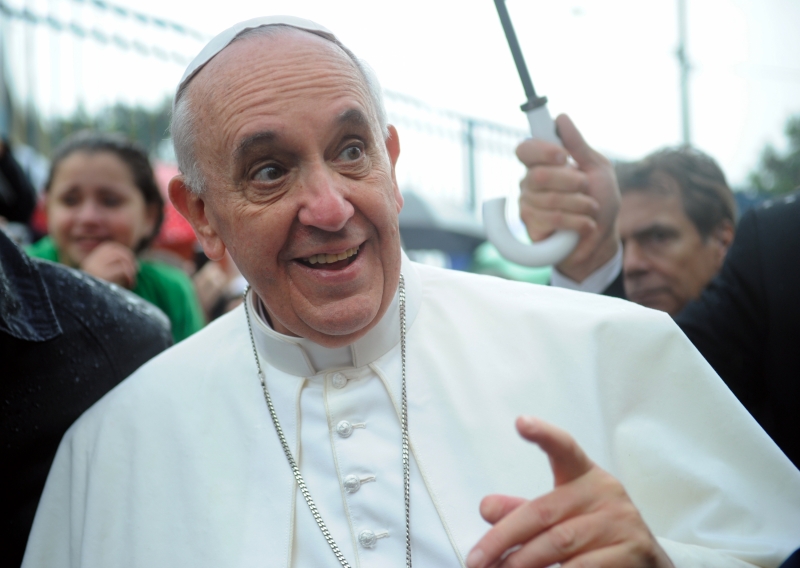
Photo credit: By Tânia Rêgo/ABr (Agência Brasil) [CC-BY-3.0-br (http://creativecommons.org/licenses/by/3.0/br/deed.en)], via Wikimedia Commons.

Saint Kateri , Canada’s Protectress
This was the title given to Saint Kateri Tekakwitha, by Pope Benedict XVI, when he canonized her on October 28th, 2012, along with six others, in Saint Peter’ Square (she had been beatified by Pope John Paul II back in 1980). With Saint Joseph as our protector, along with the Canadian martyrs, we seem to[…]Continue reading→

Remembering Father Alphonse de Valk
(Today marks the sixth anniversary of the death of Father Alphonse de Valk, C.S.B., a faithful, courageous and indefatigable Basilian priest, pro-life-and-family apostle, and the founder of Catholic Insight magazine. Here is what we wrote those on his entering into eternity five years ago, as we continue to remember him in our prayers and thoughts)[…]Continue reading→

My Name is Bernadette
April 16th is a propitious day, for besides the anniversary of Father de Valk’s death, who founded Catholic Insight in its print form decades ago, and the commemoration of the ‘two Benedicts’, mentioned in accompanying posts, today we also recall Saint Bernadette Soubirous, the young visionary to whom the Virgin Mary appeared numerous times at[…]Continue reading→

Canonizing Sister Faustina and Divine Mercy
HOMILY OF THE HOLY FATHER MASS IN ST PETER’S SQUARE FOR THE CANONIZATION OF SR MARY FAUSTINA KOWALSKA Sunday, 30 April 2000 1. “Confitemini Domino quoniam bonus, quoniam in saeculum misericordia eius”; “Give thanks to the Lord for he is good; his steadfast love endures for ever” (Ps 118: 1). So the Church sings on the Octave of[…]Continue reading→

Divine Mercy Sunday – An Echo of Every Mass
Reach out your hand and put it in my side. Do not doubt but believe’… ‘My Lord and my God!’ (Jn. 20:18)). Today is Divine Mercy Sunday, and as we celebrate the end of the Easter Octave, we contemplate the wounded side of our Saviour, the Church’s source of life. On Good Friday in the[…]Continue reading→
First Holy Communion: Sermon from May 16, 1943
Here is a sermon from the good old days by +Rev. Msgr. Vincent Nicholas Foy (August 14, 1915 – March 13, 2017), from 1943. Readers may recall that Pope Saint Pius X, by the decree Quam Singulari in 1910, lowered the customary age of reception of Holy Communion – after the rigours of the plague[…]Continue reading→
In the Glorious Light of Easter, Alleluia!
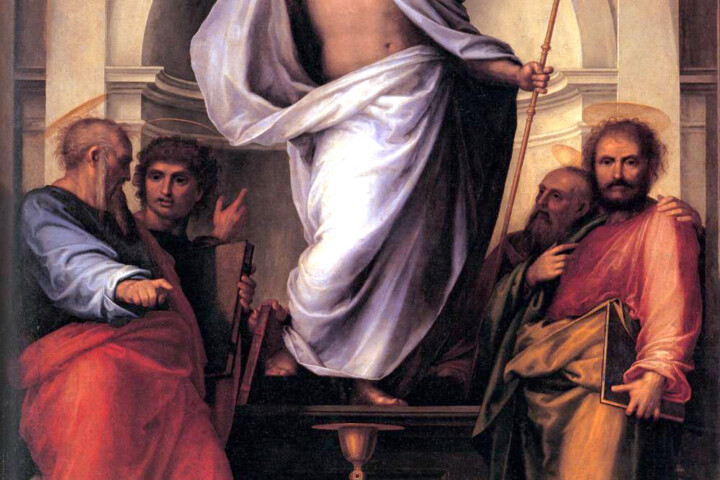
Set your minds on things that are above, not on things that are on earth, for you have died, and your life is hidden with Christ in God. When Christ who is your life is revealed, then you also will be revealed with him in glory (Col. 3:3-4). The Resurrection of Our Lord and Saviour[…]Continue reading→
An Ancient Homily for Holy Saturday
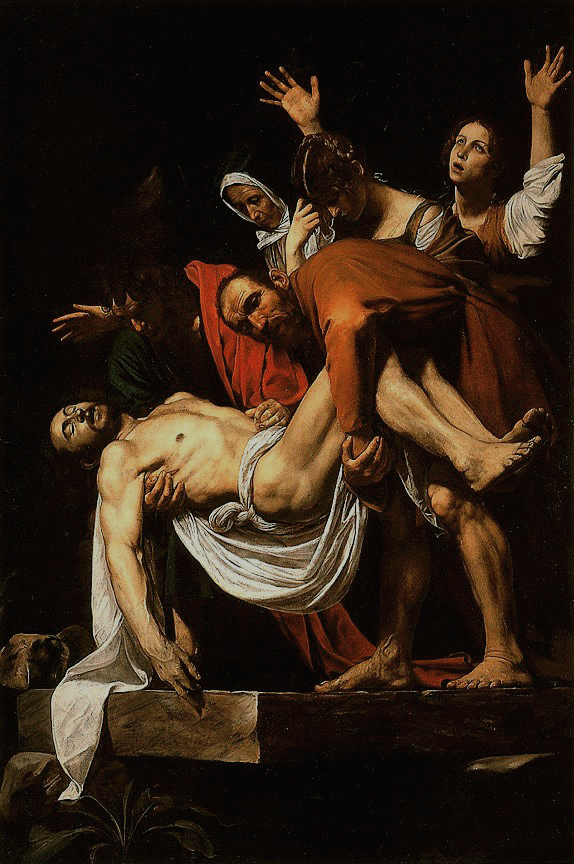
The time between Good Friday and Easter Sunday is one of waiting, in silence, as the world wonders – anticipates – what will happen, after the death of Christ. We re-live this time each year in the anamnesis of our liturgy, and in turn look forward to the glorious re-creation of all things at the[…]Continue reading→
Europe’s Long Descent
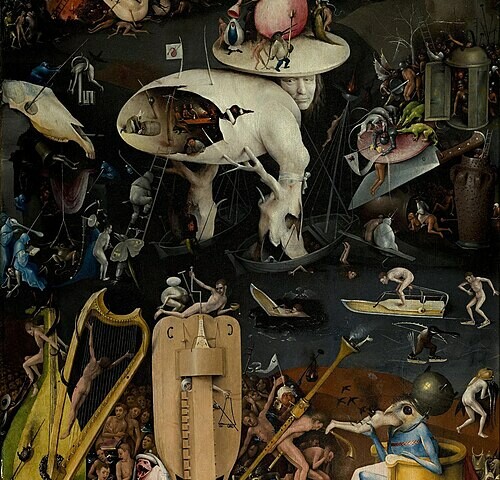
(As we meditate on this day on Christ’s burial, and His descent into hell, it is fitting to ponder here with contributor Peter Marcus how the world seems to be heading there as well. The difference is that, although God cannot ‘redeem’ hell, nor those therein, He can and did redeem the world. There is[…]Continue reading→
Pope Saint John Paul II’s First Good Friday Homily
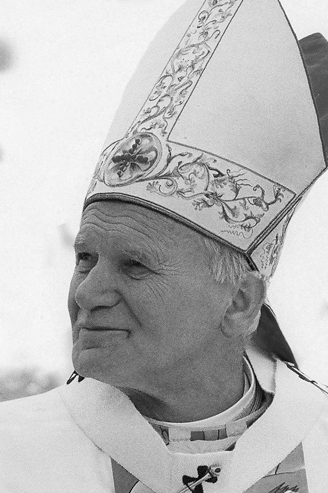
ADDRESS OF HIS HOLINESS JOHN PAUL II AT THE CONCLUSION OF THE STATIONS OF THE CROSS AT THE COLOSSEUM Good Friday, 13 April 1979 When we make the Way of the Cross from one station to the next, in spirit we are always at the spot wherethis journey had its “historical” place: where it[…]Continue reading→