
Altar Boys
I found an old picture of my father in an attic drawer. It was taken on the occasion of the St. Peter’s Altar Boy picnic on the steps of the Cathedral. There are about thirty altar boys in the picture with Fr. Morocco. I was pleased to find this picture, and it brought to my mind many of my own experiences as an altar boy in the late 60s, also at St Peter’s. As in my father’s time, there were thirty of us. Fr. O’Dette trained us, our duties being to ring the bell, carry the incense and sensor, and light the candles.
I recall the excitement that I felt when it was my turn to ring the bells or walk with the priest carrying the bucket as he sprinkled holy water on the congregation. But the greatest thrill of all was the incense. Being an altar boy gave me a chance to do things that we were not allowed to do at home. As young as eight years old I could light wooden matches and carry candles. One of the hardest jobs was to pour water from a huge pitcher onto a flat brass plate. This took real skill as the water would swirl around the polished brass and spill over the sides. It was a matter of pride to be able to do this with a steady hand under the critical eyes of my more experienced peers. On Sundays, the older boys took charge of the incense, water bowl, or bell, leaving us young lads to serve as Acolytes. It was only during the weekday Masses that we new altar boys could perform these duties.
My favourite Mass to serve was the 7:15 on weekday mornings. The other two daily mass times were 8:10 AM and 5:20 PM. The 5:20 was for people coming home from work, with most of these either on foot or riding bicycles. The 8:10 was the bishop’s Mass and was well attended. But the 7:15 was for people going to work. In the winter I used to walk to St. Peter’s in the dark before dawn and then, once inside, slowly bring the church to life by lighting the candles around the altar. There would be two of us assigned to serve, and for a ten-year-old it was an exciting adventure to meet up with a friend before breakfast. Sometimes, especially during Lent or Advent, there would be three or four altar boys; we used to challenge each other to go to Mass in the cold winter mornings.
During Mass itself, the sunlight would slowly start shining in through the stained glass windows, causing all the colours to dance in splendour all over the north and west walls, the altar, and the priest’s vestments. These coloured shadows would start high, near the ceiling, and then slowly drop down the walls as the sun rose. After Mass was finished, it was wonderful to emerge from the warm bath of soft lights into the bright sunny morning. I would run home for a porridge breakfast before school or, in the summer, before spending my day catching crayfish in Jackson’s Creek.
As altar boys, we got to skip class for training sessions, and on weekends we sometimes went ice fishing with Fr. Moran. These outings were highly prized perks of the job and, indeed, often the things that attracted us to be altar boys in the first place. Fr. Leahy came to our school and asked if any of the boys wanted to serve on the altar. Almost our entire cub pack and scout troop showed up at the first meeting. And, what seems remarkable in retrospect, everyone stayed!
Things began to change as I aged: I had missed the training in Latin that my older friends received, something I regret. I also recall the first day the bell was removed from the credence table, taken by a zealot priest to modernize the liturgy. After that, as each duty disappeared, so did the need for altar boys, and gradually our number diminished to nil.
All of these memories have come back to me, since I now have two boys serving on the altar at our parish in Lakefield. There, the bell, incense, and holy water are back. And, delightfully, so are the altar boys. Last Sunday, for instance, there were eight lads, a usual occurrence. These always divide up the duties so that everyone always has something to do, with the older boys looking after the young ones. And what makes me feel both proud and curiously wistful at the same time, my two boys can sing many of the old Latin prayers: the Sanctus, Agnus Dei, and even the Pater Noster—something I never learned how to do. It demonstrates a great truth of the Catholic revival: wherever the renewal succeeds, it is always a renewal of a timeless liturgy that appeals to the young.

Carney’s Amoral Majority
After five defections – euphemistically described as ‘crossing the floor’ – and three by-elections, Mark Carney and his Liberals how have their coveted majority. One wonders what bowls of pottage were offered in back-room deals. In the archaic monarchical system that is the Dominion of Canada, this majority allows the newly-minted Prime Minister to rule[…]Continue reading→

A Tale of Two Benedicts
A grace-filled Holy Week to all our readers! As we await and prepare for the Resurrection about to dawn upon us, we might keep in mind two Benedicts: Pope Emeritus Benedict XVI, requiescat in pace, elected on this day in 2005; and today’s commemoration of the mystic pilgrim, Benedict Joseph Labre, who died on this[…]Continue reading→

Saint Lydwina of Schiedam and Suffering Joyfully
Saint Lydwina of Schiedam (1380 – 1433) was one of the countless and glorious ‘victim souls’ in the history of the Church, those whose lives are filled with suffering, often of an unimaginable intensity, but who suffer joyfully. She was a fifteen-year old Dutch girl, out skating one day, when she fell and broke one[…]Continue reading→

The Glorious Martyrdoms of Martin and Maximus
As we enter into Eastertide, we recall on this 13th of April Pope Saint Martin I (+655), one of the noblest, if most tragic, of the successors of Saint Peter. Born in Umbria, Italy, he was of noble lineage, with great intelligence combined with charity and love of the poor and the Church. While still[…]Continue reading→

Saint Stanislaus of Szczepanów
We celebrate Saint Stanislaus today (+ April 11, 1079), in light of this Easter Octave, a bishop and martyr who accepted the episcopacy only at the direct order of Pope Alexander II. He proved a wise and courageous leader of his flock, put to death by his own king, Boleslaus, for rebuking the monarch’s ‘immoral[…]Continue reading→

Saint Gemma Galgani
On this April 11th, in 1903 – the same year that the Italian Guiseppe Sarto was elected Pope later that summer as Pius X – a lovely, young Italian woman died, by the name of Gemma Galgani. She lived a brief life of 24 years, as did a number of other young saints, including Pier[…]Continue reading→
An Ideological and Improper Translation
I noticed something odd with the psalm reading at Mass the other day. Our bishops’ conference here in Canada has decreed that the Mass in English – Novus Ordo – use the ‘NRSV’, the ‘New Revised Standard Version’, an ‘updated’ translation of the original RSV, first published in 1952. This ‘new translation’ has the tendency[…]Continue reading→
Saint Jean-Baptiste de la Salle: A Teacher for Teachers
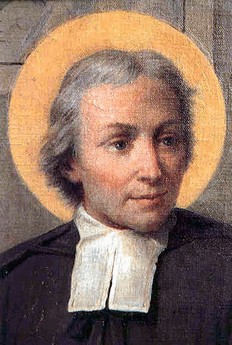
Jean-Baptiste de la Salle (1651 – 1719), a French nobleman, ordained a priest, founded the first order in the Church’s history entirely without priests, and this came about almost by accident. I say ‘almost’, for, of course, there are no accidents with God. Destined for ordination from an early age, Jean-Baptiste never looked back, even[…]Continue reading→
Three Easter Musical Gems: Bach, Palestrina and Byrd
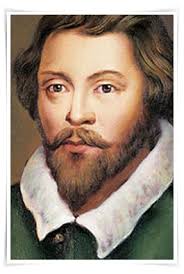
A very blessed and glorious Easter! Christus surrexit vere, alleluia! As we begin this Easter Octave with the great Solemnity of Easter, music to lift the soul would be one of Bach’s Easter cantatas, composed during his time at Leipzig in the early 1700’s, for the six Sundays of this festive season, leading up to[…]Continue reading→
Good Friday and Suffering
Evil and pain is always a mystery, that whole mysterium iniquitatis, of which Saint Paul writes (2 Thess 2:7). In 1984, Pope Saint John Paul II penned an Apostolic Letter on the nature and purpose of human suffering, Salvifici Doloris (curiously, now looking back, the same year he made his first apostolic journey to Canada).[…]Continue reading→