

The Rule of Law
“Why does each small thing in the world have to fight against the world itself? … So that each thing that obeys law may have the glory and isolation of the anarchist.” – G. K. Chesterton, The Man Who Was Thursday
Twenty-five years ago I attended teachers’ college after finishing an undergraduate degree. One of our courses was Teaching High School Science, in which we learned how to explain the DNA molecule, competition and survival of the fittest, carrying capacity, the usual biological stuff. Our professor was a kind, soft-spoken fellow. He believed that a new world order was emerging in which all human society would be based on reason, and that religious superstition would dissapear—a kind of Age of Aquarius. This new world was going to come about through the actions of self-interest and Darwinian struggle. In his new world, all human suffering would disappear because self-interest would produce community co-operation. In this happy future, everyone would share their goods for the benefit of all—a secular monastic paradise.
Based on his theories, he had invented a class exercise or game that used role playing and he taught us his new game. The idea was that we would become agents of change in the public schools, missionaries of co-operation in the classrooms of the world, and bring about a utopia that had advanced beyond the need for rules.
We were broken up into groups of five, and each group was assigned to play the role of a separate nation. Each group was given a random allotment of resources that we drew from a hat. Our group (the Blues) received two cards, saying Surplus Capital and The Ability to Extend Credit, but we did not get any of the Natural Resources cards. The other groups had combinations of things such as Large Populations of Manual Labour, or Vast Reserves of Natural Resources, but with no Surplus Capital develop them.
He told us that the only objective for each team was to win, and winning meant producing a stable economy. To do this we were to spend the next three hours mingling and visiting all the other groups and make agreements with them. This process would produce a kind of interconnected classroom economy in which everyone would benefit only if we all cooperated. The game was rigged so that any group that closed its borders would lose.
Me, being a dogmatist, asked my professor what the rules of the game were.
“Rules? Why, there are no rules! That is what has caused all the trouble in the world already, the suffocating use of rules born of superstition! We are going to sweep away the old order with its need for rules. When you play this game, you will discover that you do not need any rules at all except Darwin’s rule of survival of the fittest!” he said in rapturous glee.
And so we began. Each of us scattered to find out what the other groups had, and then our team gathered for a little conference.
“Here’s is an idea,” I suggested. “First, he said no rules, so let’s take him up on this—no rules. It is 9:54 now. Each of us goes to a different table. Then with a big smile we hold out our right hand and…”
At 10 o’clock, we struck. Each of us grabbed all the resource cards from the top of the other groups’ tables and then raced to the professor’s desk, put the cards in his top drawer and then linked arms for the onslaught that we expected. It took a minute or so for the other teams to grasp what had just happened; but when they did, they got it—good.
There was a yell, and a charge, and then we were all being shoved over tables and chairs. The other groups kept attacking but we held firm with arms linked together. Lunch food and notebooks went flying at us through the air. Some students, not knowing what else to do, hid under their desks. Others just kept walking around saying over and over that it was unfair.
At first, the professor was speechless.
Then he yelled.
Then he cried.
His religion had abandoned him. His god had died.
I like to think that my professor had learned that some rules should never be taken down. But I can’t say for sure; he never spoke to me after that.
Carney’s Amoral Majority
After five defections – euphemistically described as ‘crossing the floor’ – and three by-elections, Mark Carney and his Liberals how have their coveted majority. One wonders what bowls of pottage were offered in back-room deals. In the archaic monarchical system that is the Dominion of Canada, this majority allows the newly-minted Prime Minister to rule[…]Continue reading→
A Tale of Two Benedicts
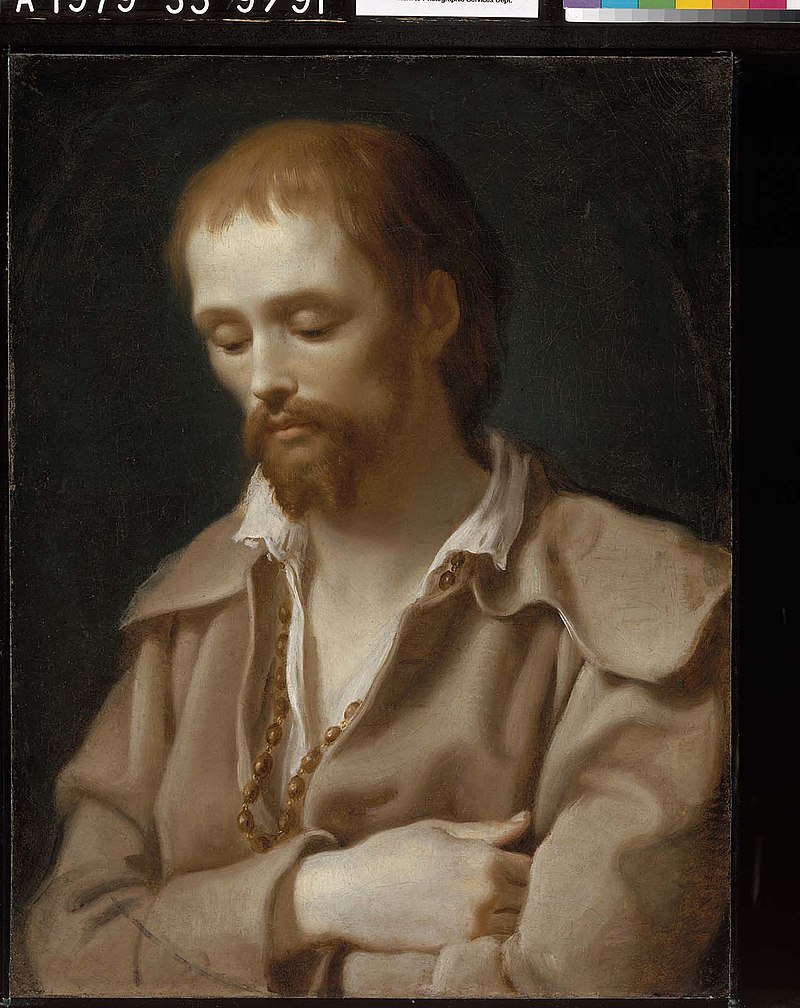
A grace-filled Holy Week to all our readers! As we await and prepare for the Resurrection about to dawn upon us, we might keep in mind two Benedicts: Pope Emeritus Benedict XVI, requiescat in pace, elected on this day in 2005; and today’s commemoration of the mystic pilgrim, Benedict Joseph Labre, who died on this[…]Continue reading→
Saint Lydwina of Schiedam and Suffering Joyfully
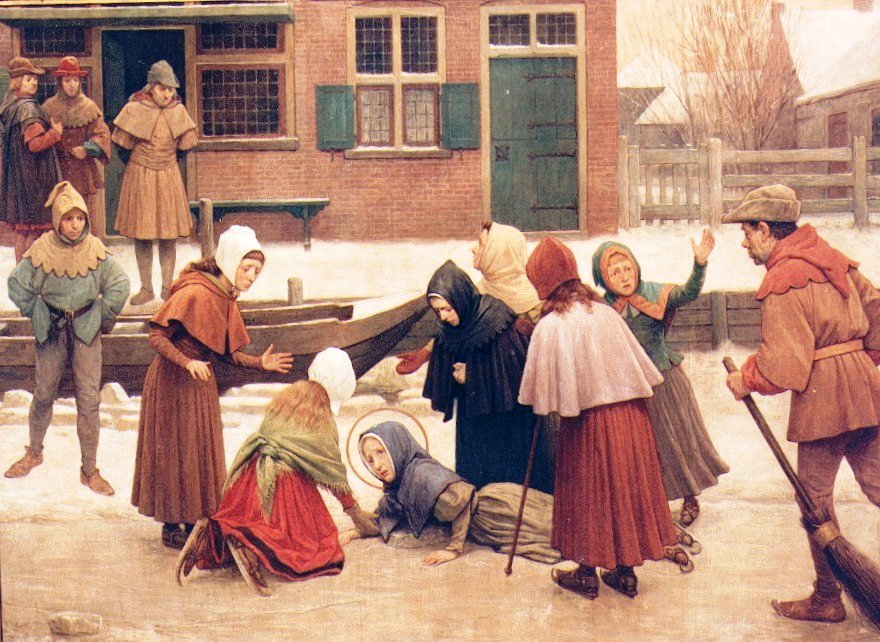
Saint Lydwina of Schiedam (1380 – 1433) was one of the countless and glorious ‘victim souls’ in the history of the Church, those whose lives are filled with suffering, often of an unimaginable intensity, but who suffer joyfully. She was a fifteen-year old Dutch girl, out skating one day, when she fell and broke one[…]Continue reading→
The Glorious Martyrdoms of Martin and Maximus
As we enter into Eastertide, we recall on this 13th of April Pope Saint Martin I (+655), one of the noblest, if most tragic, of the successors of Saint Peter. Born in Umbria, Italy, he was of noble lineage, with great intelligence combined with charity and love of the poor and the Church. While still[…]Continue reading→

Saint Stanislaus of Szczepanów
We celebrate Saint Stanislaus today (+ April 11, 1079), in light of this Easter Octave, a bishop and martyr who accepted the episcopacy only at the direct order of Pope Alexander II. He proved a wise and courageous leader of his flock, put to death by his own king, Boleslaus, for rebuking the monarch’s ‘immoral[…]Continue reading→
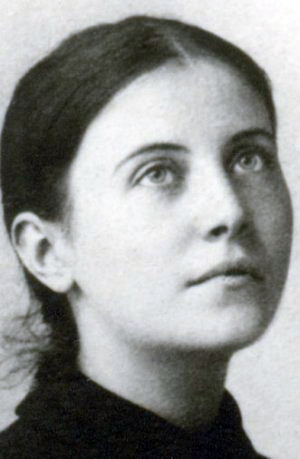
Saint Gemma Galgani
On this April 11th, in 1903 – the same year that the Italian Guiseppe Sarto was elected Pope later that summer as Pius X – a lovely, young Italian woman died, by the name of Gemma Galgani. She lived a brief life of 24 years, as did a number of other young saints, including Pier[…]Continue reading→
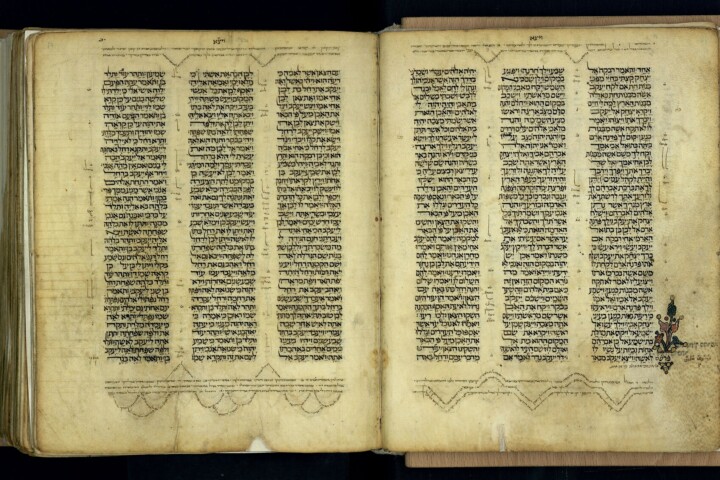
An Ideological and Improper Translation
I noticed something odd with the psalm reading at Mass the other day. Our bishops’ conference here in Canada has decreed that the Mass in English – Novus Ordo – use the ‘NRSV’, the ‘New Revised Standard Version’, an ‘updated’ translation of the original RSV, first published in 1952. This ‘new translation’ has the tendency[…]Continue reading→
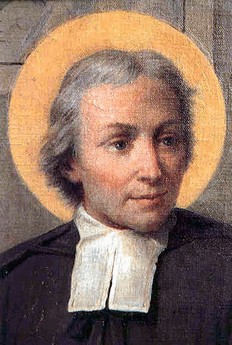
Saint Jean-Baptiste de la Salle: A Teacher for Teachers
Jean-Baptiste de la Salle (1651 – 1719), a French nobleman, ordained a priest, founded the first order in the Church’s history entirely without priests, and this came about almost by accident. I say ‘almost’, for, of course, there are no accidents with God. Destined for ordination from an early age, Jean-Baptiste never looked back, even[…]Continue reading→
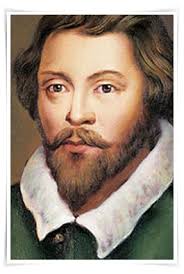
Three Easter Musical Gems: Bach, Palestrina and Byrd
A very blessed and glorious Easter! Christus surrexit vere, alleluia! As we begin this Easter Octave with the great Solemnity of Easter, music to lift the soul would be one of Bach’s Easter cantatas, composed during his time at Leipzig in the early 1700’s, for the six Sundays of this festive season, leading up to[…]Continue reading→
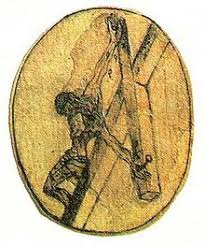
Good Friday and Suffering
Evil and pain is always a mystery, that whole mysterium iniquitatis, of which Saint Paul writes (2 Thess 2:7). In 1984, Pope Saint John Paul II penned an Apostolic Letter on the nature and purpose of human suffering, Salvifici Doloris (curiously, now looking back, the same year he made his first apostolic journey to Canada).[…]Continue reading→