
Lessons from Picasso
I love art—particularly paintings. I love the way that paintings have their own language, where so much can be conveyed in a single image. Generally, I prefer classical works. I’m not big on modern works, and up until a few years ago, there were absolutely no modern artists in my favorites list. Then one day, quite by accident, I fell in love with Picasso.
It was all because of a single work, painted in 1896 when Picasso was a mere fourteen years old. I looked at this painting, “The First Communion,” and I had no choice but to reevaluate everything I knew about Picasso. Because for anyone to go from this
 to this (“Portrait of Dora Maar”):
 there had to be a reason. There had to be motive. Something massive had to affect the young artist. No one changes their style that dramatically without some fundamental change of ideals.
So I read a handful of biographies on Picasso and I finally found it—the thing that changed.
Any account of Pablo Picasso’s life tells us that around 1899 he returned to Barcelona after studying in Madrid. He left behind the classical techniques of his youth. He threw off the authority of his parents. And around the same time, he left the Church.
The fascinating thing about Picasso’s work is that in it one sees the arc of art in general. The rejection of the classics, the embracing of first the Avant-garde and then the meaningless is all there. And curiously enough, the thing that triggers the whole process is a rejection of God.
Art is inextricably connected to God. We humans are made in the image of a creator and it is in our nature to try to create things of our own. We can’t manage without art any more than we can manage without deities. We just can’t. The only alternative then is to break art down—to lower it to a level that anyone could reach. Picasso once said, “It took me four years to paint like Raphael, but a lifetime to paint like a child.” Why? Because if a master painter chose to paint like a child, then anyone could be a master painter. An elephant could be a master painter, and if an elephant can be a master painter, then humans are not anything special—just another species that evolved randomly from the primordial ooze. And as we learned years ago from The Incredibles, “When everyone’s special, no one is.”
Picasso’s works tell the story of what happens to art when artists reject God. They highlight the journey of art from the sublime to the ridiculous, from genius to insanity, from deeply connected to God to as secular as possible. It is a journey that is repeated in nearly every area of study from literature to science.
There is some speculation that Picasso strove to die in full communion with the Church. I sincerely hope that that is true. Whatever the case, he left the world an intriguing visual on a world without God.
A Closed, Unsustainable, Descending Loop
As a follow-up to my thoughts on Payette’s payout, here be a stark image of where are here in Canada. As the graph shows in, well, graphic terms, since 2025, the public sector has contributed to 95.5% of economic growth. The private sector – which funds the public sector, or is supposed to – has[…]Continue reading→
Pope Leo and a Rosary for Peace
Pope Leo XIV has asked Catholics across the world to join him in a Rosary for peace today, at 18:00 Rome time (6 pm), which would be noon from where I write (EST). If you are able, whether at that time or another, and in whatever way you pray, to join in intercession with the[…]Continue reading→
Payette’s Payout
I was glancing through some headlines, and noticed a mention of Julie Payette – engineer and astronaut and sometime the Queen’s representative in Canada – which brought back vague memories. She was appointed Governor-General by Justin Trudeau in 2017. Ms. Payette resigned in 2021, amidst claims that she created a ‘toxic work environment’, with allegations[…]Continue reading→
Your Easter Prayer
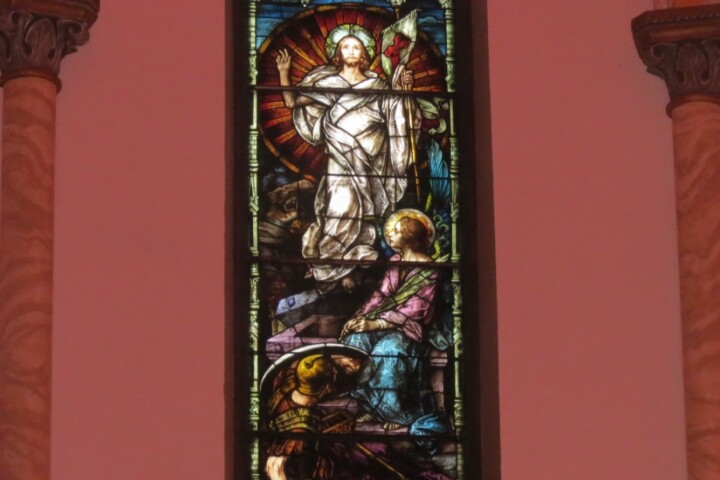
Happy Easter Lord Jesus Christ. It’s Easter day and we smile In the Lord’s in gentle light and His tomb is bare the stone is rolled A story new that must be told And Lord Jesus Christ We love you it’s so true and Lord Jesus Christ has risen From his sleep and the Promises[…]Continue reading→
Three Musical Offerings for the Annunciation
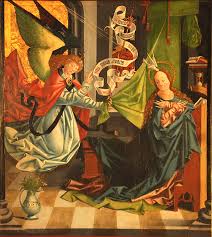
A very blessed Solemnity of the Annunciation to one and all! This March 25th marking the greatest event in history – the Incarnation of the Son of God – goes back to the very origins of the Church, and changed everything. What was lost, is now found, what was dead, is now very much alive.[…]Continue reading→
Eleganti Sums up the SSPX
Bishop Marian Eleganti, auxiliary emeritus of Chur, Switzerland, through which I happened to pilgrimage last summer, sums up the irregular situation of the SSPX. His thoughts bear pondering: Firstly, acting with full autonomy without papal mandate or confirmed mission; secondly, operating with bishops not in union with the Pope and the episcopal college; thirdly, maintaining[…]Continue reading→
The Perils of Sedevacantism
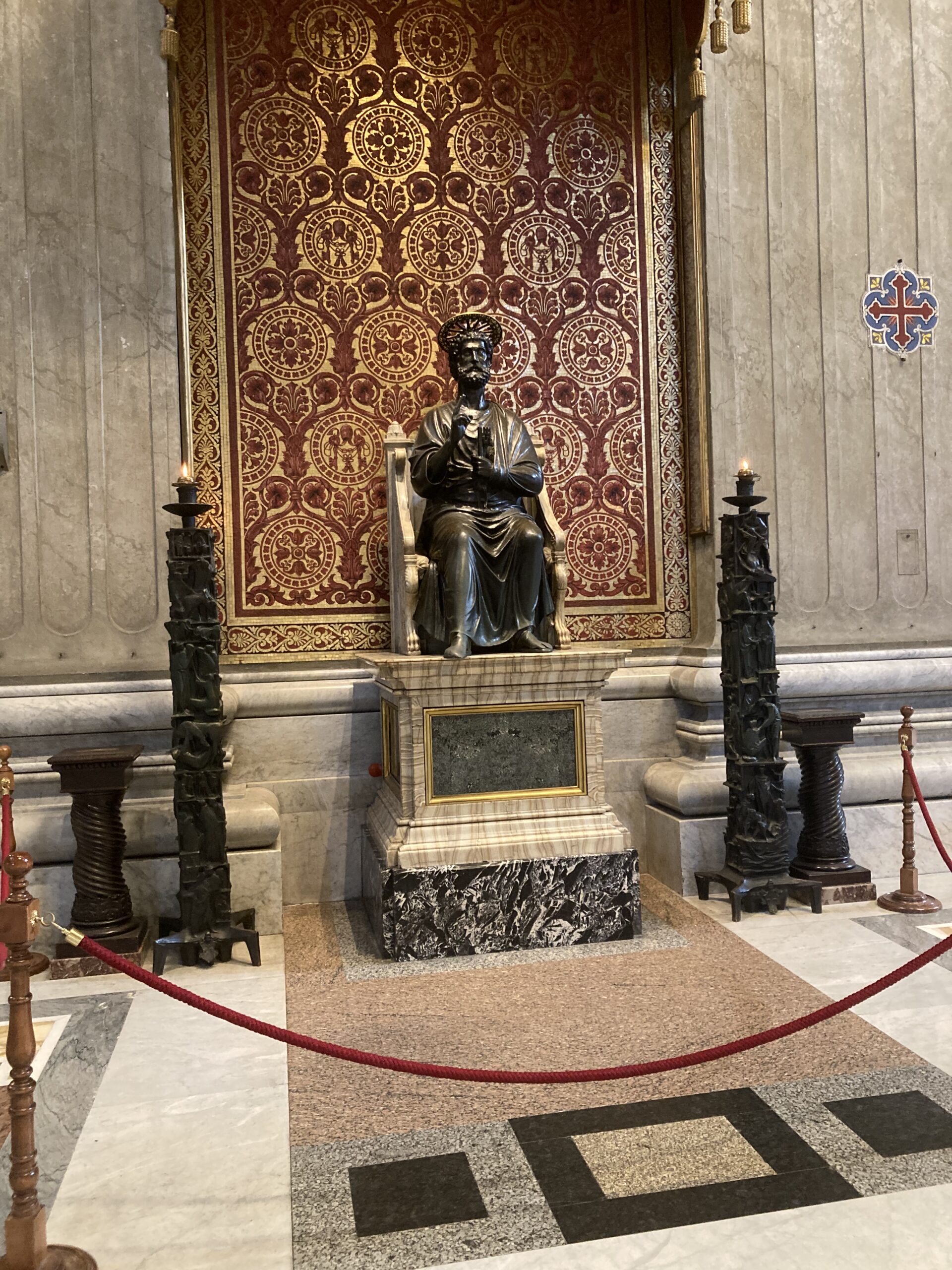
(With John-Henry Westen of LifeSite raising the question of sedevacantism, urging a petition for the cardinals to question the validity of Francis’ and Leo’s papacies, here is a re-post of something I wrote earlier, on why we must tread with great caution in declaring a papacy, or any given pope, null and void. Whatever good[…]Continue reading→

Entropic AI
Entropy may be described as the tendency of all things degrade, to move from order to disorder, from cosmos to chaos, from specificity to entropy. It is the inevitable consequence of any closed system, and encapsulated as the Second Law of Thermodynamics. Any such system – whether that be a machine, a living organism, a[…]Continue reading→
How Do We Know Christ Really Lived?
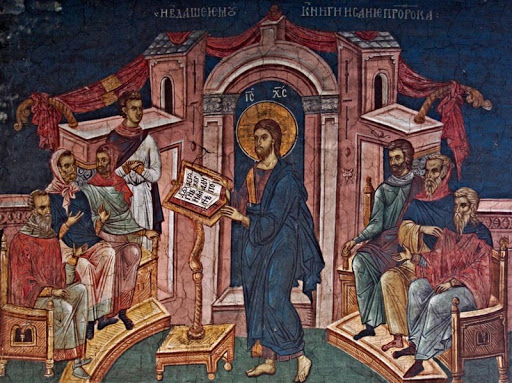
Every now and then we hear in various and sundry places one of the greatest blasphemies of them all: that Jesus never really lived and that the reports of his life and teachings, his death and resurrection, were all made up by unscrupulous men apparently bent on exploiting others for greed and power. At this[…]Continue reading→
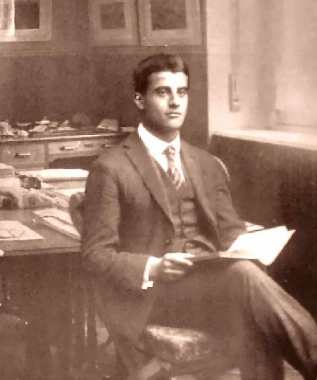
“Verso L ’Alto” – A Meditation on the Hidden Sanctity of Pier Giorgio Frassati
The Italian Alps — that formidable stretch of Europe’s great mountain arc — rise in dramatic splendour above the landscape that so enduringly shaped St. Pier Giorgio Frassati’s life of prayer and adventure. The Australian Alps, sharing the name only in part, resemble their European counterparts more in spirit than in scale. In the former,[…]Continue reading→