
Confessions of a Recovering Almost-Hoarder
When my grandmother moved out of the house she had lived in for 35 years, it took the family several days to clean it out. She had saved everything from balls of yarn to scraps of fabric, ratty tea towels and dish cloths to scads of decrepit plastic bags and flattened bits of cardboard. You name it, she had it stashed away somewhere. I always thought she kept all this stuff because she had lived through the poverty of a world war—and that sort of scarcity sometimes leaves a person with hoarding tendencies. It seemed to me that in the spirit of being not-wasteful, Oma kept everything remotely useful. Whether or not she would actually use the stuff was a whole other ball of wax. Or twine. Or rubber bands.
I’m definitely my grandmother’s granddaughter. I’ve written a few times about how I’m attached to my things and how I have a hard time getting rid of stuff. I’ve been slowly undergoing my third major stuff-purge in as many years, and I’m still amazed at how I can be surrounded by papers, all of which mean little or nothing to me, and still choose to keep 90% of them. The same goes for home décor, magazines, books, office supplies, kitchen gadgets, and much more. I’ll give you a little example. I found a big box of CD’s my husband and I have collected over the last 20 years. Neither of us have looked for or even thought of one of these CD’s since we last moved a year ago. So the logical thing to do, at this point, would be to just give the whole lot away without a second thought—but not me. I felt compelled to look through every CD, reminiscing, thinking about the one song I liked on this one, or the three songs that were good on that one, and I ended with almost all of them in the “keep” pile.
So maybe I’m a keeper-of-things like my grandma. Maybe I like to hoard bits of cardboard, soap, and paper in the hopes of re-purposing it or something. So what?
Or maybe I have a problem.
Several years ago my husband lost his job. It came out of left field and it was something for which we were completely unprepared, financially and otherwise (who really is prepared for that?). Over the following weeks I launched into Scarcity Mode something fierce. I began buying. Whatever was on sale, I loaded up. It didn’t matter that we had 25 cans of beans already, I bought 6 more…just…in…case. I couldn’t be sure when the next paycheck was coming in, so I had to get stuff when the gettin’ was good. The tendency extended beyond food too. While I have always been a pack-rat, this brought me to a whole new level of packing it in. It got so bad that I had to figure out creative storage solutions for the stuff I was acquiring but couldn’t use fast enough.
Turned out, his unemployment only lasted a short while, but Scarcity Mode is still alive and well in me many years later. Not only do I buy 20 of the things on sale (even though there’s only two of us), I also have great difficulty getting rid of the stuff that only sort of’ works, or things that I may use in the future, or things that hold a modicum of sentimental value, like the citrus grater that doesn’t grate or the box of wooden beads I wanted to make jewelry with or the boatload of CD’s from my teenage years. I hate to waste not only these things, but also the money that I spent on them, so I keep them. Forever. And I cart them around with me from house to house.
Yet I’m coming to the fast and not-so-pleasant reality of what this stuff is costing me, not just in the storage of it all, but in the moving of it. After two house moves in two years and standing on the brink of a third, it occurs to me that that I’m carrying—or rather paying others to carry—loads of deadweight. And it’s weighing me down.
In her book The Happiness Project, Gretchin Rubin wanted to cultivate a better relationship with her things. She wrote, “I often found myself saving things, even when it made no sense. … As part of my happiness project I wanted to stop hoarding, to trust in abundance, so that I could use things up, give things away, throw things [out]. Not only that—I wanted to stop worrying so much about keeping score and profit and loss. I wanted to spend out.”
The words must have been written just for me because when I read them I practically shouted, “YES!” That’s exactly what I want to do! I want to trust wholeheartedly in Divine Providence and spend out, as she puts it, and not be saddled with extraneous-ness. But it’s a lot harder than it seems—at least for me.
So I’ve been thinking and praying about this for months now, psyching myself up to go through all my things. Again. And it seems to be getting easier, not because I don’t have this uncontrollable urge to keep old soap remnants, outdated canned goods and yucky toothpaste, but because with prayer and practice, parting with things gets easier.
I can bless others with things that I’ve been holding on to—things they may need or enjoy now (not the grotty soap or toothpaste, mind you). I can let go of meaningless trash, not in the spirit of wastefulness, but in the spirit of clean, uncluttered living, and at the same time refrain from replacing one type of trash by bringing in another. And I can keep only what is essential to life—and be free from the rest—without worrying about whether I’m being wasteful by throwing away good and useful stuff. I’m not. I’m being wasteful by keeping good stuff that I don’t use.
Because you want to know what? It feels good to be rid of extraneous things; more and more peaceful the more I give away. Not that I’ll ever be accused of having a minimalist look but at least my home won’t have packed-in closets and storage containers with stuff falling out of them. My goal is to have at least one shelf in every closet empty, ready for the storage of oft-used items like toilet paper or cleaning supplies and to actually run out of things before I buy them again. Lofty goal, I know, but for a recovering almost-hoarder like me, it’s better than the alternative.
A Closed, Unsustainable, Descending Loop
As a follow-up to my thoughts on Payette’s payout, here be a stark image of where are here in Canada. As the graph shows in, well, graphic terms, since 2025, the public sector has contributed to 95.5% of economic growth. The private sector – which funds the public sector, or is supposed to – has[…]Continue reading→
Pope Leo and a Rosary for Peace
Pope Leo XIV has asked Catholics across the world to join him in a Rosary for peace today, at 18:00 Rome time (6 pm), which would be noon from where I write (EST). If you are able, whether at that time or another, and in whatever way you pray, to join in intercession with the[…]Continue reading→
Payette’s Payout
I was glancing through some headlines, and noticed a mention of Julie Payette – engineer and astronaut and sometime the Queen’s representative in Canada – which brought back vague memories. She was appointed Governor-General by Justin Trudeau in 2017. Ms. Payette resigned in 2021, amidst claims that she created a ‘toxic work environment’, with allegations[…]Continue reading→

Your Easter Prayer
Happy Easter Lord Jesus Christ. It’s Easter day and we smile In the Lord’s in gentle light and His tomb is bare the stone is rolled A story new that must be told And Lord Jesus Christ We love you it’s so true and Lord Jesus Christ has risen From his sleep and the Promises[…]Continue reading→

Three Musical Offerings for the Annunciation
A very blessed Solemnity of the Annunciation to one and all! This March 25th marking the greatest event in history – the Incarnation of the Son of God – goes back to the very origins of the Church, and changed everything. What was lost, is now found, what was dead, is now very much alive.[…]Continue reading→
Eleganti Sums up the SSPX
Bishop Marian Eleganti, auxiliary emeritus of Chur, Switzerland, through which I happened to pilgrimage last summer, sums up the irregular situation of the SSPX. His thoughts bear pondering: Firstly, acting with full autonomy without papal mandate or confirmed mission; secondly, operating with bishops not in union with the Pope and the episcopal college; thirdly, maintaining[…]Continue reading→
The Perils of Sedevacantism
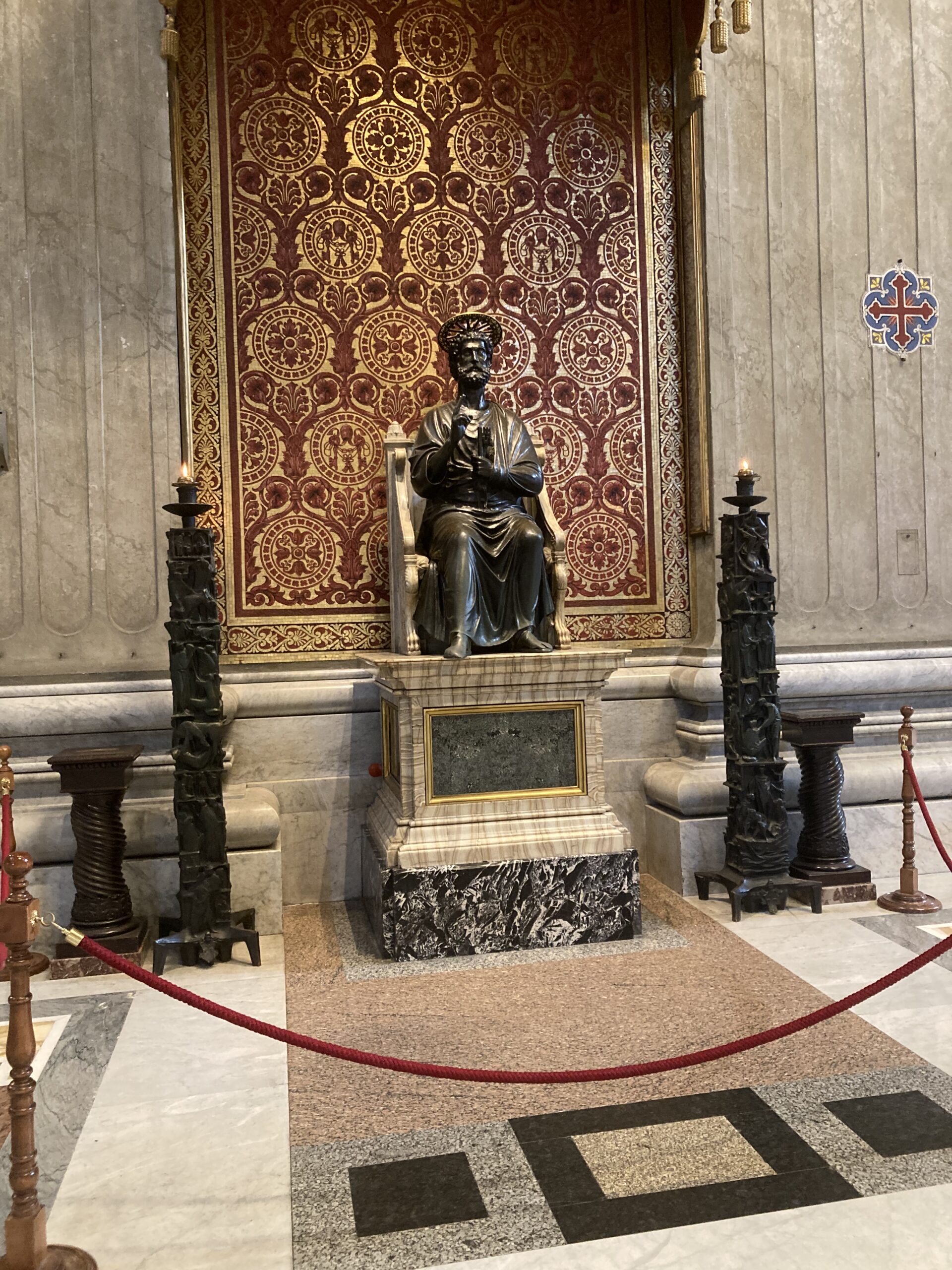
(With John-Henry Westen of LifeSite raising the question of sedevacantism, urging a petition for the cardinals to question the validity of Francis’ and Leo’s papacies, here is a re-post of something I wrote earlier, on why we must tread with great caution in declaring a papacy, or any given pope, null and void. Whatever good[…]Continue reading→

Entropic AI
Entropy may be described as the tendency of all things degrade, to move from order to disorder, from cosmos to chaos, from specificity to entropy. It is the inevitable consequence of any closed system, and encapsulated as the Second Law of Thermodynamics. Any such system – whether that be a machine, a living organism, a[…]Continue reading→
How Do We Know Christ Really Lived?
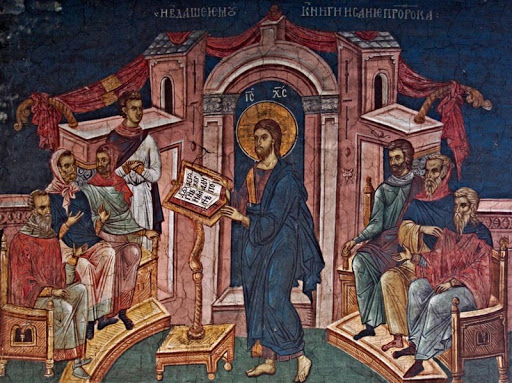
Every now and then we hear in various and sundry places one of the greatest blasphemies of them all: that Jesus never really lived and that the reports of his life and teachings, his death and resurrection, were all made up by unscrupulous men apparently bent on exploiting others for greed and power. At this[…]Continue reading→
“Verso L ’Alto” – A Meditation on the Hidden Sanctity of Pier Giorgio Frassati
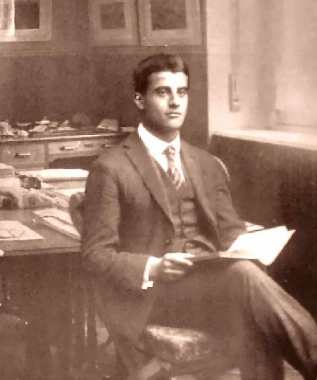
The Italian Alps — that formidable stretch of Europe’s great mountain arc — rise in dramatic splendour above the landscape that so enduringly shaped St. Pier Giorgio Frassati’s life of prayer and adventure. The Australian Alps, sharing the name only in part, resemble their European counterparts more in spirit than in scale. In the former,[…]Continue reading→