
Of Siberian Exiles and Feistiness
Life is a funny thing, isn’t it? We walk around assuming that everyone’s had the same, or similar, experiences as ourselves—growing up in a peaceful home surrounded by love and middle-class money, getting everything you need with more than a little of what you want thrown in. That was my experience, but it wasn’t my mother’s or my grandmother’s. So I don’t know why I assume it’s true for everyone, because it’s not.
Take, for instance, the widow of 80+ living a small, quiet life down the street from me. One minute, she and her family were living a comfortable life on a farm in Poland in the 40s. The next, Russians with rifles took over. When she was ten, they burst onto their property early one morning, shot their dog, sat her father down, put a gun in his face, and told her mother she has one hour to pack before the family was herded down to the train station for a two-week train trip to Siberia to live there indefinitely. A similar thing happened to my grandmother, except in a different country, by a different people. She and her family had to walk across the mountains of Croatia. That’s right. Walk. Across mountains. And this was no romantic Sound-of-Music-esque walk here. It was a desperate fleeing for her life.
I cannot fathom it. And thank God I can’t.
But I can consider what would I do faced with such a prospect. There’s not much arguing that can be done in a situation where men armed with abominable political ideology and shotguns are involved. But what would I take with me? How would my husband and I survive? What kind of stuff is so important that I’d deem it absolutely necessary, considering three things: Siberia is very cold, we would probably never come back to our home, and we’d very likely have to carry everything on our backs for an indefinite amount of time.
So here’s my one-hour packing list to Siberia:
1. The warmest clothes known to man and as many of them as I can find and/or carry.
2. The Bible and maybe one book like Caryll Houselander’s Reed of God or Josemaria Escriva’s The Way (they’re little, not heavy and readily available books).
3. My icons (there are five) and a cross.
4. Everything of value that I can find (i.e. gold and silver jewelry, booze, coffee, tea).
5. And as much food and water as I can possibly carry.
6. A family photo (which at the moment I don’t even have printed out).
7. Hygiene items and as many of the basics like soap and toothpaste as possible.
8. Our identification and any money—passports, wallets, cash, etc.
As I write this, I’m looking around my living room surrounded by things—bookcases full of books, pictures, knick knacks, electronics–everything that makes my living room feel comfy and homey. My mind thinks it’d be easy to part with everything all at once, and in one sense it probably would be. Acts of God or man that destroy all your things are devastating, sure, yet in another sense, are strangely freeing. But my heart wants to take all my things, if only I could carry them. I’m not sure I’ve got a good sense of what is essential.
I distinctly remember an episode of one of those re-decorating shows. This particular woman had a house bursting at the seams with tchochkes. The host gave her a challenge: here’s a normal sized box and there’s a hurricane warning, you have to get out of your house immediately and only take this box with you. What do you take? It took the woman days to decide and she finally gave up and didn’t complete the exercise because she couldn’t take just one box of things. I remember shaking my head at her thinking, “I’m so glad I’m detached from my things,” but as I write I’m remembering things that I “can’t live without” and adding them to my list. There’s no way I’d get my list of “needs” into two backpacks or suitcases. My husband and I would be the ones you see in the movies laden down with crap, things falling left and right off their over-packed carts. I mean do I NEED five icons and a cross?
Not only that, but we (my husband and I) distinctly lack the skills we would require to live without the creature comforts we live with today. We are utterly dependant on the grocery store, the gas station, the pharmacy, etc. Why would I need to bring twenty-five bars of soap or tubes of toothpaste with me if I knew the different antiseptics or cleansing agents that grow naturally around us—herbs, grasses, trees? Or how to catch and skin a rabbit with next to nothing? Okay, I’m not advocating for everyone to join a commune or become Paul Bunyan, but there’s something to be said for getting back to nature in small ways—growing vegetables, learning how to distinguish one wild herb or mushroom from another or how to cleanse water from a stream, basic survival training, etc. My widowed neighbour told the story of how she remembered that spider webs and mud stop bleeding after her mother was hit in the head with a rock. That kind of knowledge comes in handy sometimes when you least expect it.
And while our basic human rights should be inalienable and protected at all costs, they are only as important as the next person or government thinks they are. I don’t say this for us to live in fear, but rather so that we can live confident and ready for whatever comes in the next moment. Despite the fact that for my neighbour that morning was the start of some terrible years, she was a feisty one! My hat goes off to her—a true woman of fierceness and grace just like my grandmother. Even though they were both young girls, they got through the hard times with much ingeniousness and courage. My neighbour figured out how to get the doctors to see her bleeding mother—by screaming and acting crazy, which brought immediate medical attention. My grandma, this ninety-pound wisp of a thing when she immigrated in her twenties, was called a “scrawny girl” by one of the border guards and says at the time she wanted to “punch him in the nose!” But you wouldn’t know any of that now, when you look at my grandma or even my neighbour, as she sat in her living room, beautifully dressed and elegant. She still has a smile on her face while recalling the filth, starvation, and utter savagery she endured. I suppose all the knowledge in the world can’t replace that fierce will to live. May we all be blessed with it in times of trouble.

Saint Kateri , Canada’s Protectress
This was the title given to Saint Kateri Tekakwitha, by Pope Benedict XVI, when he canonized her on October 28th, 2012, along with six others, in Saint Peter’ Square (she had been beatified by Pope John Paul II back in 1980). With Saint Joseph as our protector, along with the Canadian martyrs, we seem to[…]Continue reading→

Remembering Father Alphonse de Valk
(Today marks the sixth anniversary of the death of Father Alphonse de Valk, C.S.B., a faithful, courageous and indefatigable Basilian priest, pro-life-and-family apostle, and the founder of Catholic Insight magazine. Here is what we wrote those on his entering into eternity five years ago, as we continue to remember him in our prayers and thoughts)[…]Continue reading→

My Name is Bernadette
April 16th is a propitious day, for besides the anniversary of Father de Valk’s death, who founded Catholic Insight in its print form decades ago, and the commemoration of the ‘two Benedicts’, mentioned in accompanying posts, today we also recall Saint Bernadette Soubirous, the young visionary to whom the Virgin Mary appeared numerous times at[…]Continue reading→

Canonizing Sister Faustina and Divine Mercy
HOMILY OF THE HOLY FATHER MASS IN ST PETER’S SQUARE FOR THE CANONIZATION OF SR MARY FAUSTINA KOWALSKA Sunday, 30 April 2000 1. “Confitemini Domino quoniam bonus, quoniam in saeculum misericordia eius”; “Give thanks to the Lord for he is good; his steadfast love endures for ever” (Ps 118: 1). So the Church sings on the Octave of[…]Continue reading→

Divine Mercy Sunday – An Echo of Every Mass
Reach out your hand and put it in my side. Do not doubt but believe’… ‘My Lord and my God!’ (Jn. 20:18)). Today is Divine Mercy Sunday, and as we celebrate the end of the Easter Octave, we contemplate the wounded side of our Saviour, the Church’s source of life. On Good Friday in the[…]Continue reading→

First Holy Communion: Sermon from May 16, 1943
Here is a sermon from the good old days by +Rev. Msgr. Vincent Nicholas Foy (August 14, 1915 – March 13, 2017), from 1943. Readers may recall that Pope Saint Pius X, by the decree Quam Singulari in 1910, lowered the customary age of reception of Holy Communion – after the rigours of the plague[…]Continue reading→

In the Glorious Light of Easter, Alleluia!
Set your minds on things that are above, not on things that are on earth, for you have died, and your life is hidden with Christ in God. When Christ who is your life is revealed, then you also will be revealed with him in glory (Col. 3:3-4). The Resurrection of Our Lord and Saviour[…]Continue reading→

An Ancient Homily for Holy Saturday
The time between Good Friday and Easter Sunday is one of waiting, in silence, as the world wonders – anticipates – what will happen, after the death of Christ. We re-live this time each year in the anamnesis of our liturgy, and in turn look forward to the glorious re-creation of all things at the[…]Continue reading→

Europe’s Long Descent
(As we meditate on this day on Christ’s burial, and His descent into hell, it is fitting to ponder here with contributor Peter Marcus how the world seems to be heading there as well. The difference is that, although God cannot ‘redeem’ hell, nor those therein, He can and did redeem the world. There is[…]Continue reading→
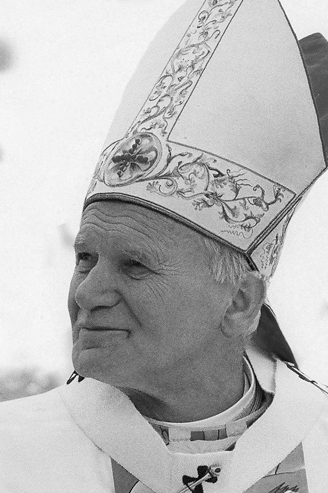
Pope Saint John Paul II’s First Good Friday Homily
ADDRESS OF HIS HOLINESS JOHN PAUL II AT THE CONCLUSION OF THE STATIONS OF THE CROSS AT THE COLOSSEUM Good Friday, 13 April 1979 When we make the Way of the Cross from one station to the next, in spirit we are always at the spot wherethis journey had its “historical” place: where it[…]Continue reading→