
Helpless, but not hopeless
Yesterday I was sitting in a fairly uncomfortable chair in the dentist’s office with my mouth full of dental equipment and a couple pairs of hands. As I sat there, without even the ability to say “ouch,” I was struck by a feeling of helplessness. In addition to being unable to speak, I couldn’t see what was happening. I could hear, but since the language being spoken was dentalese, the only thing I knew was that the procedure had something to do with Number Thirteen. Since my mouth was (fortunately) numbed pretty thoroughly, I couldn’t even feel. Really, all I could do was stare beyond the masked faces and trust that the dentist knew what he was doing.
This afternoon (having survived my dental procedure) I was looking after my niece as she played outside. She wandered around. She played with the dog. She took some food to the chickens, and finally, she headed down into the woods that cover most of our property. Of course, since my niece is not yet two years old, I was watching her very, very closely most of the time, and carrying her the rest of the time. Nonetheless, as I followed her down the path that led into the woods, I wondered what her mother would think of her exploring the wilderness (in sandals, no less), even with supervision. I took a moment to think of all the dangers; it was a warm day, easily the sort that gets nice, venomous snakes moving around in the woods. There are plenty of deer back in the woods, as well as foxes, raccoons, bobcats, semi-deadly spiders, nasty thorn vines (we’re talking the inch-long variety), poison ivy, and plenty of other things. Once again, I began to feel pretty helpless, because although I like walking through the woods, and I have spent plenty of time exploring the back portion of our property, there are problems that might surprise a toddler before her grown-up noticed. I know what to look out for, and I know where there are likely to be dangers, but I cannot be absolutely sure of not running into something. Snakes are really, really good at the whole camouflage deal and spiders can be pretty well invisible. And no matter how familiar with the woods you are, there are still circumstances you are helpless to anticipate or prevent.
Gary Paulsen wrote a book, Guts, which is entirely about the adventures he has had surviving in the wilderness. These stories are about a man actively combating helplessness by doing things like waterproofing his matches and knowing how to catch and cook his own food. And yet, despite Paulsen’s extensive knowledge on how to survive, he STILL finds himself in situations where he is helpless. For instance, the book contains a couple accounts of nasty encounters with moose. Being battered by a raging moose for no real reason, with no clue as to when or if the animal will choose to give up the attack and walk away, and being totally unable to do anything to improve the situation seems to be a prime example of helplessness. However, when the moose finally gave up their attack, Paulsen was not only still alive (albeit barely), but in the end gained knowledge about how to predict when a moose was likely to attack, and something about how to endure until the moose gave up.
Like most things, the idea of being helpless during a moose attack (or at the dentists or walking through the woods) can lead to some interesting thoughts. According to Paulsen—and since there are no moose anywhere near south Alabama, I don’t have any personal experience to go on—moose in general are no more or less dangerous than any other animal. If one obeys certain safety guidelines, one is likely to avoid confrontation. However, from time to time, there are moose that don’t play by the rules. They attack ruthlessly, without provocation, and the goal is to make the attacked person be dead.
In the current culture, secularism is attacking like an insane moose. Christianity is being battered and there is no good way to stop the beating. It is impossible to argue with the figurative mad moose because the moose has no intention of listening to reason or stopping its attack long enough to think about the logic behind its violence. The enemies of the Church believe that they would like nothing better than for the Church to die a quick, painful death. They see the many fallen away Catholics as victories, signs of impending triumph.
The thing is, in the end, the mad moose is convinced Paulsen is dead. It thinks it has succeeded, but in reality, he is not only alive, but also willing to do anything necessary to reverse the situation, should he ever meet that particular moose again.
We are told that we live in a post-Christian society. The idea that “God is dead” is scattered throughout every available media. According to the “mad moose” of society, Christianity has been battered almost out of being by its steel hooves, science, and logic, and that all remains are fragments—on one hand, people who only pretend that their religions are important to them, and on the other hand, fundamentalist freaks. It is, in short, no longer a threat to those who would throw off the chains of tradition.
Realistically though, this is just a moment of helplessness for the citizens of Earth. Physically, being helpless often results in increased strength. My tooth is all the better for having been filled. Gary Paulsen took away his own lessons from encountering a mad moose in the Alaskan wilderness. If Christianity is currently helpless to defend itself, then perhaps that will just pull its attention back in the direction it ought to be looking, to God. When we are helpless, we are forced to rely on something outside of ourselves. As the moral crisis continues to grow, spreading to the farthest corners of society, and corrupting or destroying the most innocent hearts, we, as Christians, have the task of withstanding whatever the moose cares to dish out. Then, when the crazy beast finally stops for a breath, we get to crawl back onto our feet and forgive it as we prepare for the next assault.

Saint Kateri , Canada’s Protectress
This was the title given to Saint Kateri Tekakwitha, by Pope Benedict XVI, when he canonized her on October 28th, 2012, along with six others, in Saint Peter’ Square (she had been beatified by Pope John Paul II back in 1980). With Saint Joseph as our protector, along with the Canadian martyrs, we seem to[…]Continue reading→

Remembering Father Alphonse de Valk
(Today marks the sixth anniversary of the death of Father Alphonse de Valk, C.S.B., a faithful, courageous and indefatigable Basilian priest, pro-life-and-family apostle, and the founder of Catholic Insight magazine. Here is what we wrote those on his entering into eternity five years ago, as we continue to remember him in our prayers and thoughts)[…]Continue reading→

My Name is Bernadette
April 16th is a propitious day, for besides the anniversary of Father de Valk’s death, who founded Catholic Insight in its print form decades ago, and the commemoration of the ‘two Benedicts’, mentioned in accompanying posts, today we also recall Saint Bernadette Soubirous, the young visionary to whom the Virgin Mary appeared numerous times at[…]Continue reading→

Canonizing Sister Faustina and Divine Mercy
HOMILY OF THE HOLY FATHER MASS IN ST PETER’S SQUARE FOR THE CANONIZATION OF SR MARY FAUSTINA KOWALSKA Sunday, 30 April 2000 1. “Confitemini Domino quoniam bonus, quoniam in saeculum misericordia eius”; “Give thanks to the Lord for he is good; his steadfast love endures for ever” (Ps 118: 1). So the Church sings on the Octave of[…]Continue reading→

Divine Mercy Sunday – An Echo of Every Mass
Reach out your hand and put it in my side. Do not doubt but believe’… ‘My Lord and my God!’ (Jn. 20:18)). Today is Divine Mercy Sunday, and as we celebrate the end of the Easter Octave, we contemplate the wounded side of our Saviour, the Church’s source of life. On Good Friday in the[…]Continue reading→

First Holy Communion: Sermon from May 16, 1943
Here is a sermon from the good old days by +Rev. Msgr. Vincent Nicholas Foy (August 14, 1915 – March 13, 2017), from 1943. Readers may recall that Pope Saint Pius X, by the decree Quam Singulari in 1910, lowered the customary age of reception of Holy Communion – after the rigours of the plague[…]Continue reading→

In the Glorious Light of Easter, Alleluia!
Set your minds on things that are above, not on things that are on earth, for you have died, and your life is hidden with Christ in God. When Christ who is your life is revealed, then you also will be revealed with him in glory (Col. 3:3-4). The Resurrection of Our Lord and Saviour[…]Continue reading→

An Ancient Homily for Holy Saturday
The time between Good Friday and Easter Sunday is one of waiting, in silence, as the world wonders – anticipates – what will happen, after the death of Christ. We re-live this time each year in the anamnesis of our liturgy, and in turn look forward to the glorious re-creation of all things at the[…]Continue reading→

Europe’s Long Descent
(As we meditate on this day on Christ’s burial, and His descent into hell, it is fitting to ponder here with contributor Peter Marcus how the world seems to be heading there as well. The difference is that, although God cannot ‘redeem’ hell, nor those therein, He can and did redeem the world. There is[…]Continue reading→
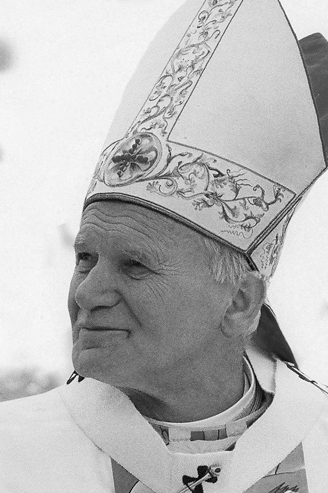
Pope Saint John Paul II’s First Good Friday Homily
ADDRESS OF HIS HOLINESS JOHN PAUL II AT THE CONCLUSION OF THE STATIONS OF THE CROSS AT THE COLOSSEUM Good Friday, 13 April 1979 When we make the Way of the Cross from one station to the next, in spirit we are always at the spot wherethis journey had its “historical” place: where it[…]Continue reading→