
Waiting and Knitting and Hoping
About twelve years ago, I learned how to knit. I learned the basics and then set it aside for a few years. Eventually, I took it up again and became a pretty good knitter.
Knitting is a remarkably useful skill. Keeping your hands busy is good for focusing, whether on schoolwork or prayers, and it means that even watching TV is not a totally useless activity. If civilization crashed and burned, I could still have a nice pair of warm socks or a halfway decent sweater. And as long as I have my knitting, I never have to be bored during a long car ride or waiting in a doctor’s office. Waiting, in general, is no longer as tedious as it once was.
People don’t usually like waiting. I have never heard anyone tell me how much fun waiting is, and I don’t expect to hear it any time in the near future. People have all sorts of devices to keep them from having to wait for things like books or movies or music. People want faster internet, faster cars, faster food, and, of course, faster lines in the grocery store. With such an attitude toward waiting, it is hardly surprising that Advent, a season that is almost entirely about waiting, is pretty much hidden under the Christmas shopping list.
Literature is surprisingly full of people waiting. You would think that, given the ability, authors would cut out the waiting part and get to the action. But that is not the case. Literature has to reflect life. Life is full of scenarios where people have to wait, so literature must also include waiting. In Franz Kafka’s Metamorphosis, Gregor spends almost the entire story waiting to not be a cockroach anymore. In Edith Pattou’s East (as well as just about every other version of the polar bear king/prince tale) Rose spends a year (or more) just waiting for the polar bear to be freed from the curse. Harry Potter waits seven years to have the chance to really fight Voldemort. Bilbo Baggins spends the whole way “there” waiting to do the burgling job that he was hired for. Most stories are not at all about doing something; they are about waiting to do them.
The thing is, there are two very distinct forms of waiting. Waiting is only detestable when it is passive. I don’t mind sitting in waiting room knitting. I really don’t like sitting in a waiting room hoping that time actually does move faster if you sit still. For the most part, characters in stories are making good use of their waiting time. Rose spends a year in an ice palace weaving magical dresses and a polar bear fur shirt that will eventually help her defeat the troll queen who cursed the prince. Harry Potter studies and continually faces challenges that give him the tools he will need to fight Voldemort. Bilbo does a few lesser burgling jobs that get him ready to sneak into Smaug’s cave. They all use their waiting time to prepare for the job they were created for and destined to do.
According to the Baltimore Catechism, man was made “to know [God], to love Him, and to serve Him in this world, and to be happy with Him forever in heaven.” This is our duty and our calling as surely as burgling is Bilbo Baggins’s, and being prepared is every bit as important. The Catechism of the Catholic Church says “The coming of God’s Son to earth is an event of such immensity that God willed to prepare for it over centuries. He makes everything converge on Christ: all the rituals and sacrifices, figures and symbols of the “First Covenant.” When the Church celebrates the liturgy of Advent each year, she makes present this ancient expectancy of the Messiah, for by sharing in the long preparation for the Savior’s first coming, the faithful renew their ardent desire for his second coming” (CCC 522-524).
It is almost impossible to avoid preparing for Christmas. There are decorations to put up and presents to shop for. There are menus to plan and things to clean. When the rituals of Christmas preparation converge on Christ, we link physical preparation with spiritual preparation, which is always a good thing.
When the rituals of Christmas preparation stop converging on Christ, when commercialism and materialism get in the way, the month before Christmas loses its spiritual quality. The birth of Christ is just something that happened 2,000 years ago. We deny the fact that we are made to know, love, and serve God and in separating the spiritual from the physical, we lose some of what makes us human. We end up like Kafka’s Gregor. After waking up as a giant bug one morning, Gregor spends the rest of the story waiting to not be a bug anymore. He hangs from the ceiling, he hides under the bed. He occasionally breaks out of his room and terrifies his family. He doesn’t really sleep, or eat, or do much of anything. In the end, he doesn’t even hope anymore.
It is unlikely that not focusing on the spiritual aspect of Advent will result in anyone dying a slow, painful, horrific death, but ignoring or even under-appreciating this time of year robs us of valuable spiritual food. We are given a season that does everything short of shoving spirituality down people’s throats. If someone handed me some yarn and knitting needles while I was sitting around being bored in a waiting room, it would be a bit foolish of me to ignore them and continue sitting there being bored. Likewise, it is a bit foolish to attend wholeheartedly to the physical preparations for Christmas while leaving the spiritual preparations out in the waiting room without any knitting to pass the time.
Photo source.

Saint Kateri , Canada’s Protectress
This was the title given to Saint Kateri Tekakwitha, by Pope Benedict XVI, when he canonized her on October 28th, 2012, along with six others, in Saint Peter’ Square (she had been beatified by Pope John Paul II back in 1980). With Saint Joseph as our protector, along with the Canadian martyrs, we seem to[…]Continue reading→

Remembering Father Alphonse de Valk
(Today marks the sixth anniversary of the death of Father Alphonse de Valk, C.S.B., a faithful, courageous and indefatigable Basilian priest, pro-life-and-family apostle, and the founder of Catholic Insight magazine. Here is what we wrote those on his entering into eternity five years ago, as we continue to remember him in our prayers and thoughts)[…]Continue reading→

My Name is Bernadette
April 16th is a propitious day, for besides the anniversary of Father de Valk’s death, who founded Catholic Insight in its print form decades ago, and the commemoration of the ‘two Benedicts’, mentioned in accompanying posts, today we also recall Saint Bernadette Soubirous, the young visionary to whom the Virgin Mary appeared numerous times at[…]Continue reading→

Canonizing Sister Faustina and Divine Mercy
HOMILY OF THE HOLY FATHER MASS IN ST PETER’S SQUARE FOR THE CANONIZATION OF SR MARY FAUSTINA KOWALSKA Sunday, 30 April 2000 1. “Confitemini Domino quoniam bonus, quoniam in saeculum misericordia eius”; “Give thanks to the Lord for he is good; his steadfast love endures for ever” (Ps 118: 1). So the Church sings on the Octave of[…]Continue reading→
Divine Mercy Sunday – An Echo of Every Mass
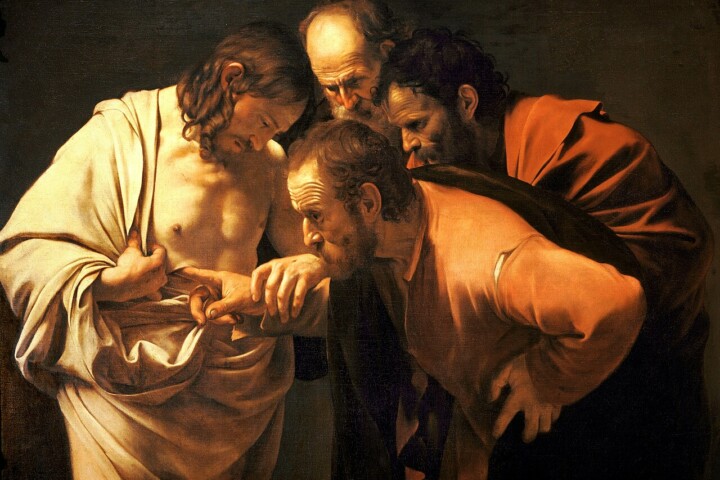
Reach out your hand and put it in my side. Do not doubt but believe’… ‘My Lord and my God!’ (Jn. 20:18)). Today is Divine Mercy Sunday, and as we celebrate the end of the Easter Octave, we contemplate the wounded side of our Saviour, the Church’s source of life. On Good Friday in the[…]Continue reading→
First Holy Communion: Sermon from May 16, 1943
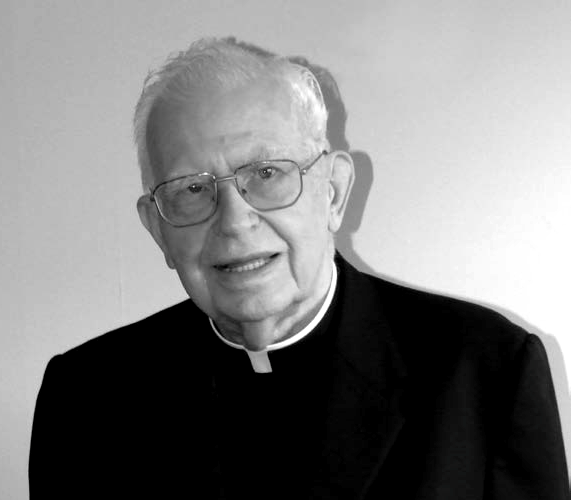
Here is a sermon from the good old days by +Rev. Msgr. Vincent Nicholas Foy (August 14, 1915 – March 13, 2017), from 1943. Readers may recall that Pope Saint Pius X, by the decree Quam Singulari in 1910, lowered the customary age of reception of Holy Communion – after the rigours of the plague[…]Continue reading→
In the Glorious Light of Easter, Alleluia!
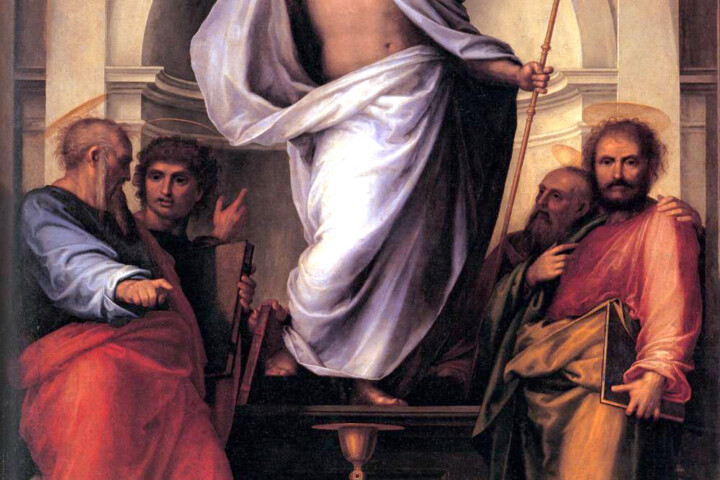
Set your minds on things that are above, not on things that are on earth, for you have died, and your life is hidden with Christ in God. When Christ who is your life is revealed, then you also will be revealed with him in glory (Col. 3:3-4). The Resurrection of Our Lord and Saviour[…]Continue reading→
An Ancient Homily for Holy Saturday
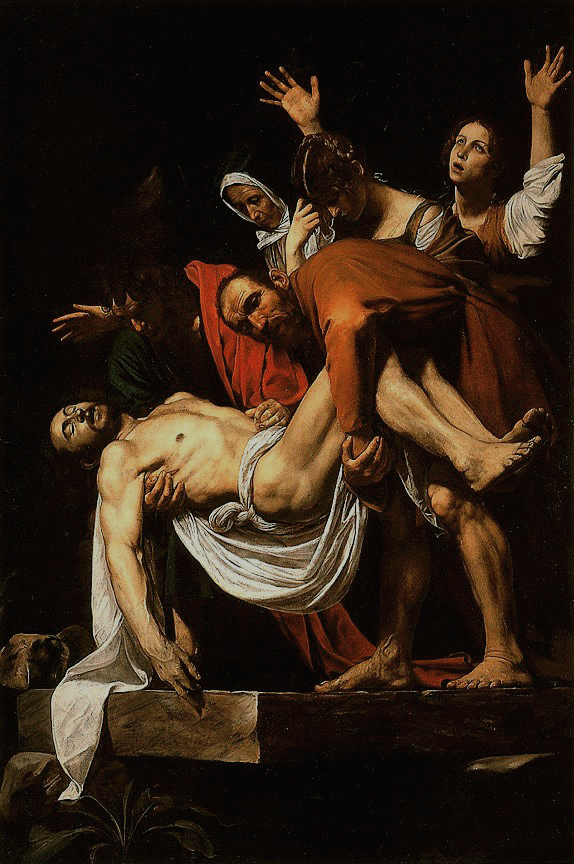
The time between Good Friday and Easter Sunday is one of waiting, in silence, as the world wonders – anticipates – what will happen, after the death of Christ. We re-live this time each year in the anamnesis of our liturgy, and in turn look forward to the glorious re-creation of all things at the[…]Continue reading→
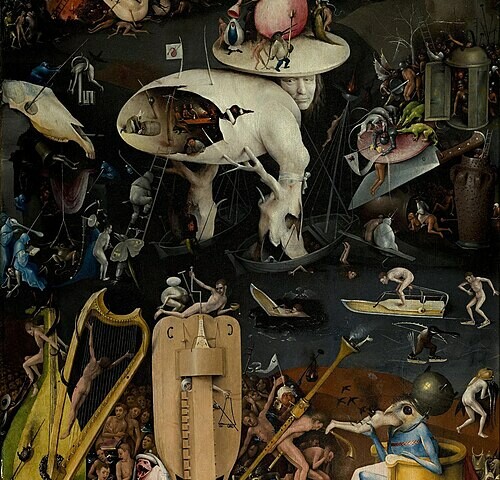
Europe’s Long Descent
(As we meditate on this day on Christ’s burial, and His descent into hell, it is fitting to ponder here with contributor Peter Marcus how the world seems to be heading there as well. The difference is that, although God cannot ‘redeem’ hell, nor those therein, He can and did redeem the world. There is[…]Continue reading→
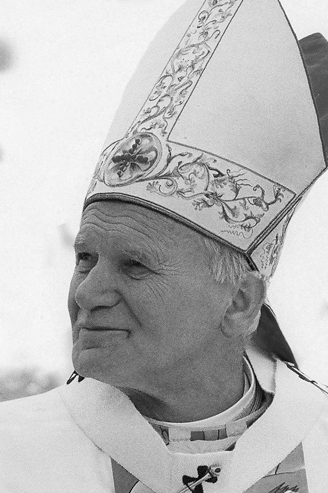
Pope Saint John Paul II’s First Good Friday Homily
ADDRESS OF HIS HOLINESS JOHN PAUL II AT THE CONCLUSION OF THE STATIONS OF THE CROSS AT THE COLOSSEUM Good Friday, 13 April 1979 When we make the Way of the Cross from one station to the next, in spirit we are always at the spot wherethis journey had its “historical” place: where it[…]Continue reading→