
Catholic marriage: you’re worth it.
A few days ago, one of my fellow bloggers posted an article entitled, “Marry that virtuous Atheist!” I respect Mary’s opinion—but I think she is dead wrong. And my reasons are based on Church teaching and logic.
The belief that you can marry an atheist and be happy is based on hope—hope that your atheist spouse will eventually convert and espouse your faith. This is true and it can happen; anything is possible with God and with prayer. St. Monica spent her entire life praying for her wayward son, Augustine. St. Rita prayed unceasingly for her two sons, both of whom would come into the fold. That is not to say both St. Monica and St. Rita did not suffer tremendously.
This hope is based on faith in the natural goodness of the atheist—faith that “goodness counts for a whole heck of a lot.” But is goodness virtue? And what is virtue?
There is virtue as understood by Aristotle and Plato: virtue founded on natural law. Then there is the virtue of the Church: heroic virtue, Christ-like virtue, virtue that is cultivated and developed by the seed of faith and watered with Sanctifying Grace.
Many people are virtuous in the Aristotelian sense. They are kind, generous, charitable, loving, and amiable. Generally speaking, we all exhibit these virtues no matter our faith or lack thereof. Atheists are no different; they too live by the unspoken code of Natural Law and thus are quite capable of living “good” lives.
Goodness in this sense is neither heroic nor truly “virtuous” when it comes to being sanctified and worthy of Heaven and the Beatific Vision.
We forget that Sanctifying Grace is a powerful and fundamentally necessary component of our lives. Grace comes from frequenting the sacraments; it is bestowed on the sacred bond of Marriage; it operates in our lives; it makes sanctity and the practice of virtue possible. However, we have to be open to it. God will never infringe upon our free will, so He can only give us with Grace when we ask for it.
Atheists and “bad” Christians are not open to Grace. This means not only will Grace not work in their lives; Grace will not work in their married lives. The Grace bestowed in Marriage is sacramental grace, but is only present when both spouses are baptized and in the State of Grace It is for this very reason that Catholics should not marry good atheists. Simply put, marrying an atheist or anyone not open to sanctifying grace is a bad idea.
I’m not saying that miracles can’t happen. I’m not saying that some atheists would make better companions or parents than many Christians. But here again, I must clarify: bad Christians are no better than good atheists. A man who claims to be Christian does not necessarily practice his Faith. An abusive Christian husband is not, in fact, a true Christian. He does not follow the teachings of Christ or practice heroic virtue. He is a sinner who makes decisions based on his own sinful nature, as do atheists, as do we all.
The difference between practicing Christians and bad Christians or atheists is that the former are open to sanctifying grace and thereby better able to grow in virtue and holiness. This is what Catholics should want in a potential spouse.
The second issue is the statement that sharing your Faith with your spouse is ideal, but not always preferable. I beg to differ and so does the Catholic Church.
Sharing your Faith with your spouse is ideal and it is preferable. The ideal is always preferable. The Catholic Church has long frowned on mixed marriages because, in Her wisdom, She knows that if we are faithful Catholics then our Faith informs everything we do. How do we expect to share a life with someone, become one with someone, if we close a part of ourselves to the other? It is an oxymoron and it does not work. Obviously, there are exceptions, but they are only that. We cannot base a life decision on the very dim hope that it might work.
A final logical flaw is to assume that Catholics have only two options when it comes to marriage: either marry a bad Christian or marry a good atheist. Since we are faced with the very real possibility in our current world of not being able to marry someone who shares our Faith, we should choose the person who is kind and good, no matter his religious affiliation, right?
That sounds a lot like settling. We should never settle—not for the good atheist and not for the bad Christian. It is better to not marry at all then to settle for either of those poor choices.
Marriage is lofty, and beautiful, and sanctifying, but it is hard. It is so hard. Why should Catholics who struggle day in and day out to live our Faith in accordance with the Church settle for second best? We are the children of a King—let us act accordingly and choose the best!
It’s a hell of a world out there. – CB

Saint Kateri , Canada’s Protectress
This was the title given to Saint Kateri Tekakwitha, by Pope Benedict XVI, when he canonized her on October 28th, 2012, along with six others, in Saint Peter’ Square (she had been beatified by Pope John Paul II back in 1980). With Saint Joseph as our protector, along with the Canadian martyrs, we seem to[…]Continue reading→

Remembering Father Alphonse de Valk
(Today marks the sixth anniversary of the death of Father Alphonse de Valk, C.S.B., a faithful, courageous and indefatigable Basilian priest, pro-life-and-family apostle, and the founder of Catholic Insight magazine. Here is what we wrote those on his entering into eternity five years ago, as we continue to remember him in our prayers and thoughts)[…]Continue reading→

My Name is Bernadette
April 16th is a propitious day, for besides the anniversary of Father de Valk’s death, who founded Catholic Insight in its print form decades ago, and the commemoration of the ‘two Benedicts’, mentioned in accompanying posts, today we also recall Saint Bernadette Soubirous, the young visionary to whom the Virgin Mary appeared numerous times at[…]Continue reading→

Canonizing Sister Faustina and Divine Mercy
HOMILY OF THE HOLY FATHER MASS IN ST PETER’S SQUARE FOR THE CANONIZATION OF SR MARY FAUSTINA KOWALSKA Sunday, 30 April 2000 1. “Confitemini Domino quoniam bonus, quoniam in saeculum misericordia eius”; “Give thanks to the Lord for he is good; his steadfast love endures for ever” (Ps 118: 1). So the Church sings on the Octave of[…]Continue reading→

Divine Mercy Sunday – An Echo of Every Mass
Reach out your hand and put it in my side. Do not doubt but believe’… ‘My Lord and my God!’ (Jn. 20:18)). Today is Divine Mercy Sunday, and as we celebrate the end of the Easter Octave, we contemplate the wounded side of our Saviour, the Church’s source of life. On Good Friday in the[…]Continue reading→

First Holy Communion: Sermon from May 16, 1943
Here is a sermon from the good old days by +Rev. Msgr. Vincent Nicholas Foy (August 14, 1915 – March 13, 2017), from 1943. Readers may recall that Pope Saint Pius X, by the decree Quam Singulari in 1910, lowered the customary age of reception of Holy Communion – after the rigours of the plague[…]Continue reading→
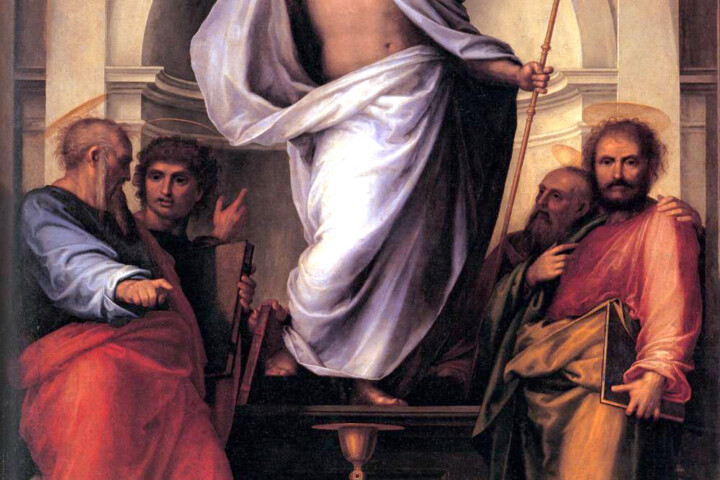
In the Glorious Light of Easter, Alleluia!
Set your minds on things that are above, not on things that are on earth, for you have died, and your life is hidden with Christ in God. When Christ who is your life is revealed, then you also will be revealed with him in glory (Col. 3:3-4). The Resurrection of Our Lord and Saviour[…]Continue reading→
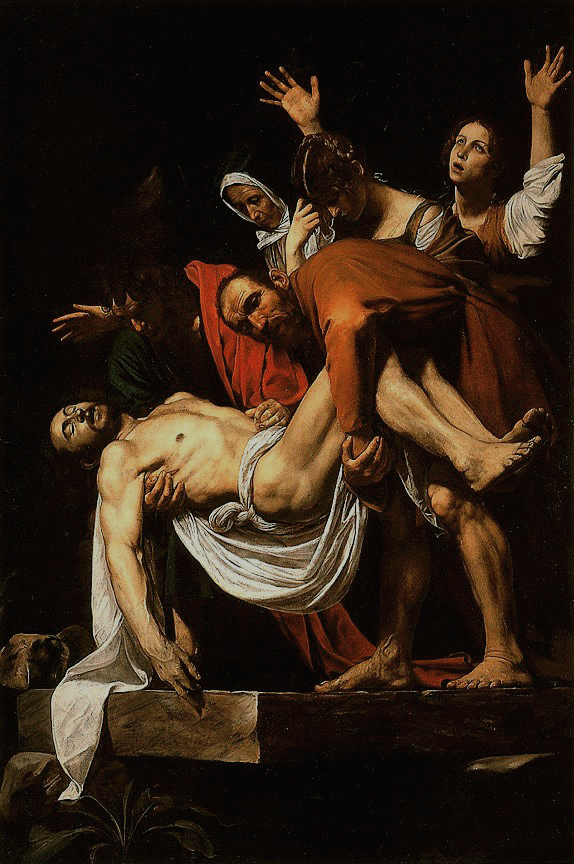
An Ancient Homily for Holy Saturday
The time between Good Friday and Easter Sunday is one of waiting, in silence, as the world wonders – anticipates – what will happen, after the death of Christ. We re-live this time each year in the anamnesis of our liturgy, and in turn look forward to the glorious re-creation of all things at the[…]Continue reading→
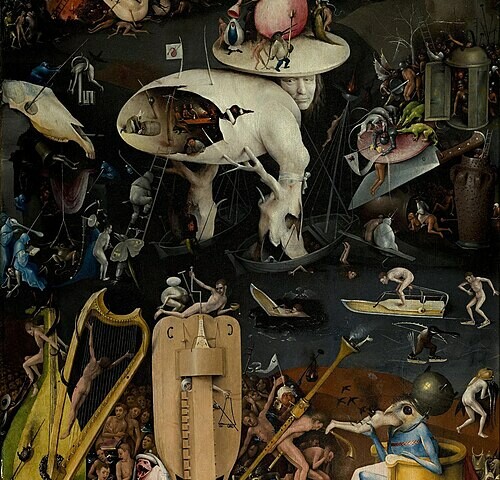
Europe’s Long Descent
(As we meditate on this day on Christ’s burial, and His descent into hell, it is fitting to ponder here with contributor Peter Marcus how the world seems to be heading there as well. The difference is that, although God cannot ‘redeem’ hell, nor those therein, He can and did redeem the world. There is[…]Continue reading→
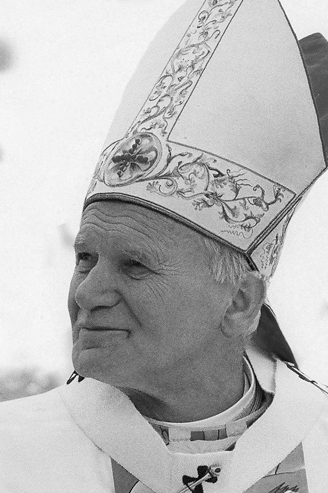
Pope Saint John Paul II’s First Good Friday Homily
ADDRESS OF HIS HOLINESS JOHN PAUL II AT THE CONCLUSION OF THE STATIONS OF THE CROSS AT THE COLOSSEUM Good Friday, 13 April 1979 When we make the Way of the Cross from one station to the next, in spirit we are always at the spot wherethis journey had its “historical” place: where it[…]Continue reading→