
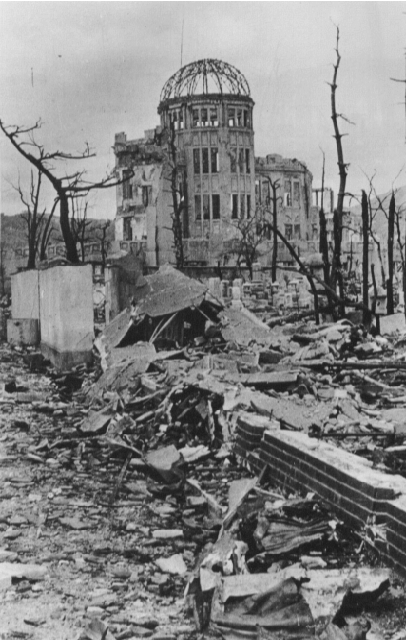
The Moral Quagmire of Total War and Unconditional Surrender
War is always a bad business, even in the most just of them, the criteria for which the current conflagration does not seem fit. Whatever one’s view, as one of the worst of evils to afflict Man – along with plagues and, say, giant asteroids – we should strive to keep wars as brief as possible, to minimize said evils. To paraphrase Hobbes, nasty, brutish…and short.
The way to do that is to offer one’s enemies some sort of mercy and a way out, even if it be pro forma, some means to sue for peace, as the Gospel says, and keep their dignity.
The two evils of total war and unconditional surrender do not do that. In fact, quite the opposite.
Wars in the Middle Ages, suffused in Christianity, had clear limits and end goals. Civilian targets – especially women, children, the elderly and sick – were in general off limits. With the ‘truce of God’, they even stopped fighting on great feast days, echoes of which were found in our modern era with the Christmas Eve sharing of gifts between the Germans and Brits in World War I. Sure, there were violations galore throughout history, but at least the principle was there. It was soldiers who fought, in uniform, until victory was declared by one side. This meant they would ask for terms, before more or all of their men – and it was always men – were killed or injured.
In total war, anything goes: One side must be annihilated, brought to nothing, crushed. Whole regions laid waste and entire cities destroyed, made all the more possible by modern weapons of mass destruction, whether that be carpet bombing or nuclear incineration.
On March 10th, 1945, Tokyo was obliterated by the Allies, with 100,000 people killed, almost all of them civilians.
This was followed six months later by the destruction of the cities of Hiroshima and Nagasaki by two nuclear bombs, the only use of such weaponry in war, by the United States. Again, over 200,000 deaths, by the fireball, the shockwave, and ensuring radiation.
Of course, this was preceded by the Nazi targeting of London with their V-2 rockets and the murder of untold numbers of civilians in their death camps (the full extent of which was only revealed after the war).
Such destruction has continued into our present day, with the ‘shock and awe’ tactics, and the indiscriminate, targeting of schools, hospitals, homes and what not, as ‘collateral damage’, necessary for victory.
Here is senator Lindsay Graham in an interview exchange recently:
LINDSEY GRAHAM: Israel and the United States — you just wait to see what comes the next two weeks
BARTIROMO: Meaning what?
GRAHAM: We’re going to blow the hell out of these people
Which people, we may ask? The citizens of Tehran, whom this war is meant to ‘liberate’? The 150 children in a school reduced to rubble based on ‘outdated intel’? All the unborn, children, old people, the sick in hospitals? What harm have they done, and who are you to impose death upon them?
And then we have Peter Hegseth musing on what might be necessary in war, responding to a question on whether the U.S. should follow the Geneva Conventions:
What if we treated the enemy the way they treated us? Would that not be an incentive for the other side to reconsider their barbarism? Hey, Al Qaeda: If you surrender, we might spare your life. If you do not, we will rip your arms off and feed them to hogs.” Maybe, he pondered, we’re “better off winning our wars according to our own rules?! Who cares what other countries think.”
It’s not what other countries think, Mr. Hegseth. It’s what God thinks, and what your conscience tells us, which will be laid bare in judgement before that same God. Enemies are still persons made in God’s image, as Pope John Paul states in Evangelium Vitae, even in the midst of war and conflict. That’s why we have the Geneva Conventions, and why we don’t want to become like the Nazis.
As the Pope also says in the same encyclical, in all the crimes against life, more harm is done to those who practise them than to those who suffer from the injury. Even in a just defensive war we cannot descend to the level of those who do grave evil, for all such actions are a supreme dishonour to the Creator.
The Secretary of War – or, if we use the previous and more customary title ‘of Defense’ – stated to reporters that this conflict will last as long as it takes – two weeks, four weeks, umpteen weeks. It’s all up to the ‘Commander in Chief’, who promised no more forever wars, and no more blood spilled on futile foreign conflicts.
Of course, I could be entirely wrong, and this brief analysis bears pondering. God can bring good out of all things, even great evil and destruction. But we cannot do evil that good may come. It profits a man nothing to lose his soul for sake of the whole world, but for a bit of desert and the Straight of Hormuz?
Which brings us to unconditional surrender, which President Trump says is the only way this war will end.
Pat Buchanan makes a solid case that this is what prolonged the war with Japan in 1945, right up to the dropping of the two nuclear bombs, the only use of those weapons in war, and we hope it remains the only.
But pushing Iran to the brink courts the danger of bringing the world to the same precipice. How far will the Iranians – descendants of the Persians – go, before they submit unreservedly and unconditionally to the ‘Great Satan and’ Donald Trump, who wants a say on who succeeds their Supreme Leader, whom many revere with fanatical and apocalyptic religious fervour? What desperate might they use, and what will the Americans do in return, or in anticipation? They do not fear Armageddon, and may even delight in hurrying it along.
We as Catholics know that the form of this world in passing away, and there will be an end to time and history, but in God’s time, not ours. All these cataclysmic events must be seen in that light, sub specie aeternitatis, under the aspect of eternity. There are principalities and powers battling around and above us (Eph 6:12), in the conflict between the devil and Saint Michael, and their respective legions, between the forces of good and evil, bleeds into our world.
Still, we pray for peace, and for some resolution to this conflict. All is in the hands of our good and providential God, and may He move the hearts of the powerful to justice and reconciliation, in ways known only to Him.
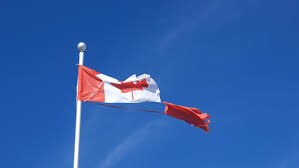
Carney’s Amoral Majority
After five defections – euphemistically described as ‘crossing the floor’ – and three by-elections, Mark Carney and his Liberals how have their coveted majority. One wonders what bowls of pottage were offered in back-room deals. In the archaic monarchical system that is the Dominion of Canada, this majority allows the newly-minted Prime Minister to rule[…]Continue reading→

Saint Kateri , Canada’s Protectress
This was the title given to Saint Kateri Tekakwitha, by Pope Benedict XVI, when he canonized her on October 28th, 2012, along with six others, in Saint Peter’ Square (she had been beatified by Pope John Paul II back in 1980). With Saint Joseph as our protector, along with the Canadian martyrs, we seem to[…]Continue reading→
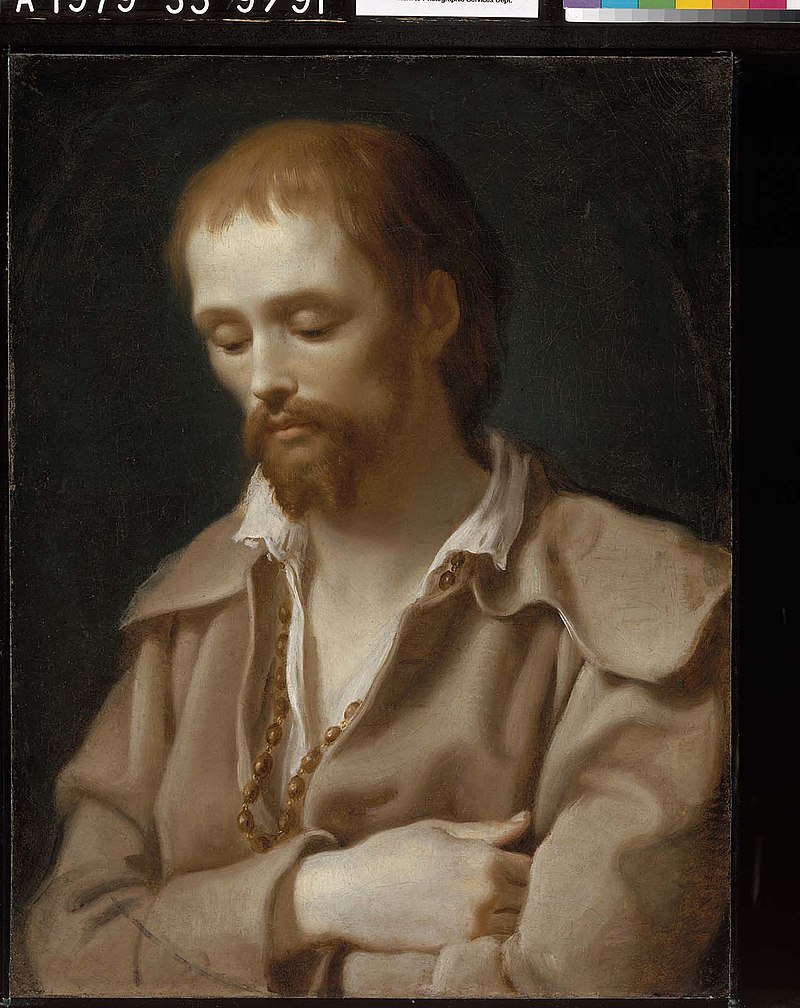
A Tale of Two Benedicts
A grace-filled Holy Week to all our readers! As we await and prepare for the Resurrection about to dawn upon us, we might keep in mind two Benedicts: Pope Emeritus Benedict XVI, requiescat in pace, elected on this day in 2005; and today’s commemoration of the mystic pilgrim, Benedict Joseph Labre, who died on this[…]Continue reading→

My Name is Bernadette
April 16th is a propitious day, for besides the anniversary of Father de Valk’s death, who founded Catholic Insight in its print form decades ago, and the commemoration of the ‘two Benedicts’, mentioned in accompanying posts, today we also recall Saint Bernadette Soubirous, the young visionary to whom the Virgin Mary appeared numerous times at[…]Continue reading→
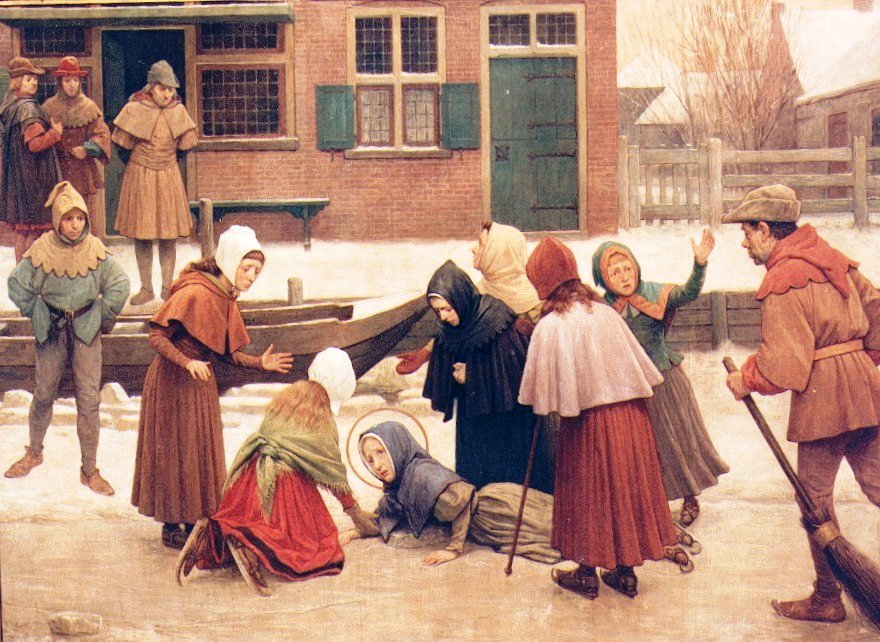
Saint Lydwina of Schiedam and Suffering Joyfully
Saint Lydwina of Schiedam (1380 – 1433) was one of the countless and glorious ‘victim souls’ in the history of the Church, those whose lives are filled with suffering, often of an unimaginable intensity, but who suffer joyfully. She was a fifteen-year old Dutch girl, out skating one day, when she fell and broke one[…]Continue reading→
The Glorious Martyrdoms of Martin and Maximus
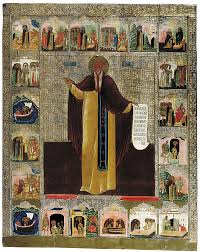
As we enter into Eastertide, we recall on this 13th of April Pope Saint Martin I (+655), one of the noblest, if most tragic, of the successors of Saint Peter. Born in Umbria, Italy, he was of noble lineage, with great intelligence combined with charity and love of the poor and the Church. While still[…]Continue reading→

Saint Stanislaus of Szczepanów
We celebrate Saint Stanislaus today (+ April 11, 1079), in light of this Easter Octave, a bishop and martyr who accepted the episcopacy only at the direct order of Pope Alexander II. He proved a wise and courageous leader of his flock, put to death by his own king, Boleslaus, for rebuking the monarch’s ‘immoral[…]Continue reading→
Saint Gemma Galgani
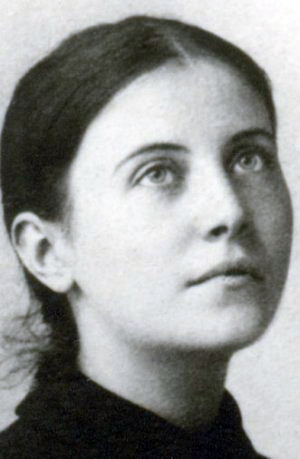
On this April 11th, in 1903 – the same year that the Italian Guiseppe Sarto was elected Pope later that summer as Pius X – a lovely, young Italian woman died, by the name of Gemma Galgani. She lived a brief life of 24 years, as did a number of other young saints, including Pier[…]Continue reading→
An Ideological and Improper Translation
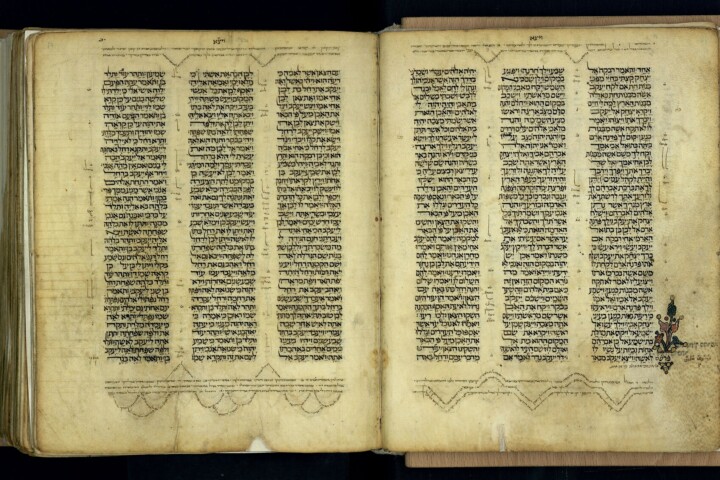
I noticed something odd with the psalm reading at Mass the other day. Our bishops’ conference here in Canada has decreed that the Mass in English – Novus Ordo – use the ‘NRSV’, the ‘New Revised Standard Version’, an ‘updated’ translation of the original RSV, first published in 1952. This ‘new translation’ has the tendency[…]Continue reading→
Saint Jean-Baptiste de la Salle: A Teacher for Teachers
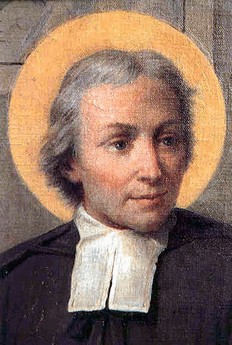
Jean-Baptiste de la Salle (1651 – 1719), a French nobleman, ordained a priest, founded the first order in the Church’s history entirely without priests, and this came about almost by accident. I say ‘almost’, for, of course, there are no accidents with God. Destined for ordination from an early age, Jean-Baptiste never looked back, even[…]Continue reading→